studio / on-this-day / Dec 19
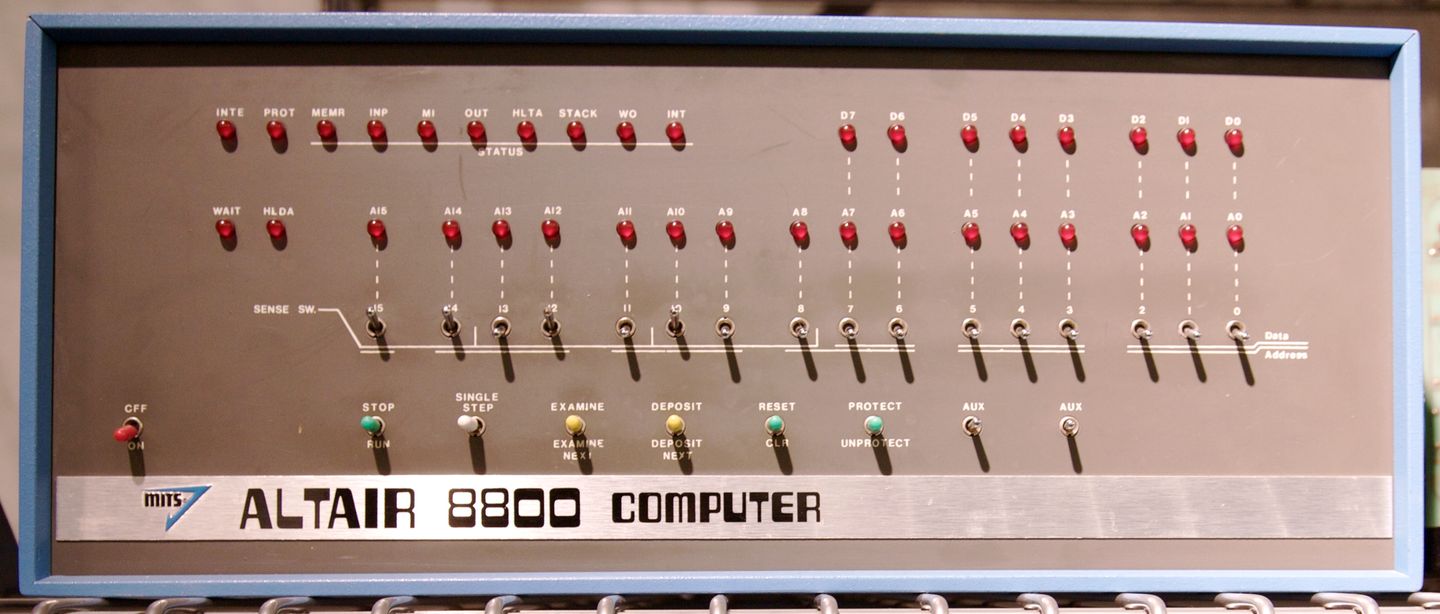
Altair 8800, the machine that launched the personal Computer revolution. Todd Dailey, CC BY-SA 2.0, via Wikimedia Commons
The Box That Started Everything
On this day in 1974 — the Altair 8800 was unveiled, the unassuming kit that lit the fuse on the personal computer revolution.
3 min read
The December 1974 issue of Popular Electronics featured a boxy blue machine on its cover with the headline "PROJECT BREAKTHROUGH! World's First Minicomputer Kit to Rival Commercial Models." The Altair 8800 cost $397 in kit form. It had no keyboard, no monitor, no storage. You programmed it by flipping switches on the front panel, and the output was a row of blinking lights. It was barely a computer by modern standards. But it was the spark.
MITS, the company behind the Altair, was on the verge of bankruptcy. They made calculator kits, but the market had collapsed. Ed Roberts, the founder, needed something new. He bet everything on a computer built around Intel's new 8080 microprocessor. The name Altair came from an episode of Star Trek. The machine itself was designed in desperation. Roberts did not expect it to change the world. He expected it to save his company.
The response was overwhelming. MITS received thousands of orders in the first weeks. The factory could not keep up. Kits shipped incomplete. Some arrived as bags of parts with no instructions. It did not matter. The people buying the Altair were not looking for a finished product. They were looking for a starting point. This was a machine you could understand, a computer you could own and control, not rent time on at a university or corporation.
Hobbyists formed clubs. The Homebrew Computer Club in Silicon Valley became legendary. Steve Wozniak attended. So did Steve Jobs. Members shared designs, swapped parts, and argued about what a personal computer should be. The Altair was the excuse for the conversation. It proved that a microprocessor-based computer could exist outside of a lab or a business. That was enough.
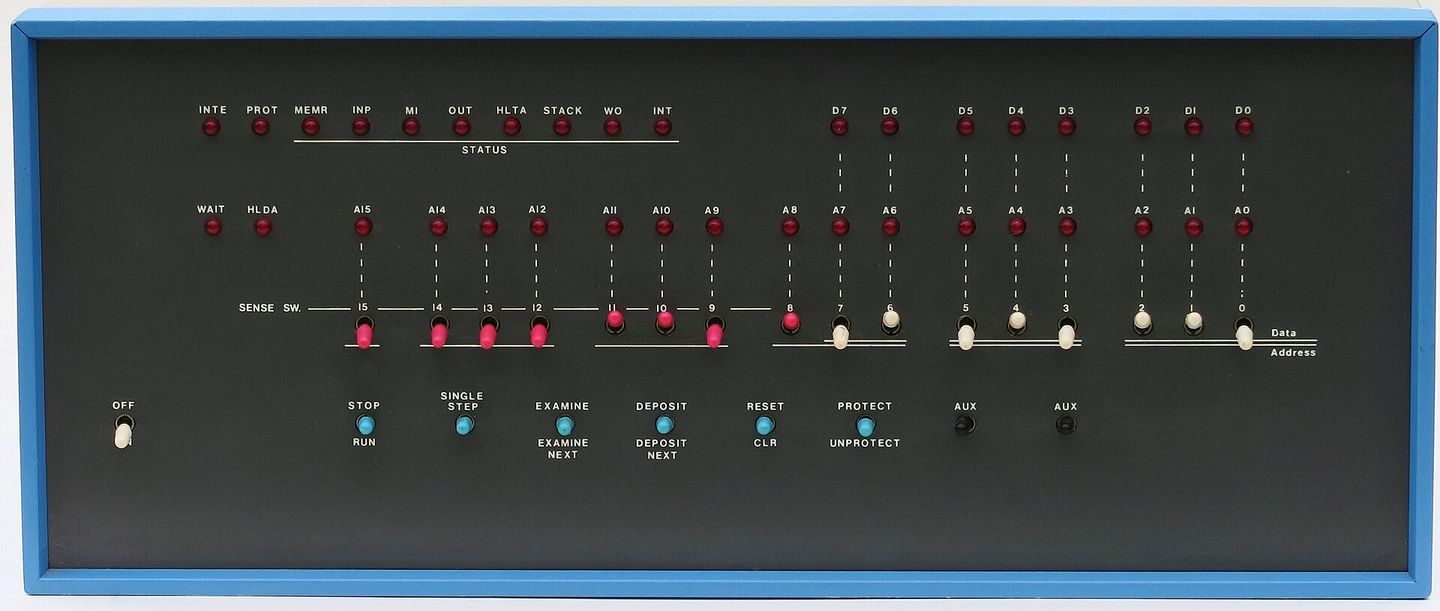
Altair 8800 front panel with toggle switches and led lights. Cromemco, CC BY-SA 4.0, via Wikimedia Commons
Two college students in Boston read about the Altair and saw an opportunity. Paul Allen and Bill Gates wrote a version of the BASIC programming language for the machine. They did not own an Altair. They wrote the software on a mainframe and tested it using a simulator. When they finally ran it on the real hardware, it worked. MITS licensed their software. Gates dropped out of Harvard. Microsoft was born.
The Altair itself did not last. By 1977, better machines had arrived. The Apple II, the Commodore PET, and the TRS-80 all offered what the Altair lacked: keyboards, screens, and ease of use. MITS was sold to another company. Ed Roberts left the tech industry and became a doctor. But the Altair had already done its job. It proved there was a market for personal computers. It showed that ordinary people, not just engineers, wanted access to computing.
What made the Altair important was not what it could do, but what it represented. Before 1974, computers were institutional. They belonged to universities, corporations, and governments. They were expensive, room-sized, and inaccessible. The Altair changed the mental model. A computer could be small. It could be cheap. It could be yours. This was the same shift that the Macintosh would complete a decade later, making the interface friendly and the machine beautiful. But the Altair was the first step, the rough prototype that convinced people the idea was possible.
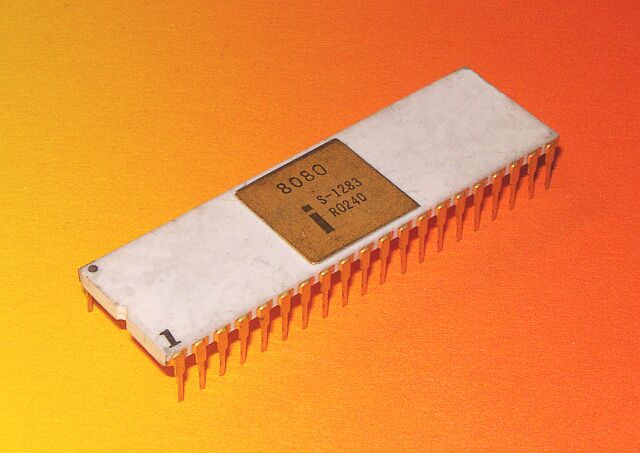
The Intel 8080, the microprocessor ed Roberts built the Altair around. Christian Bassow, CC BY-SA 4.0, via Wikimedia Commons
The personal computer revolution did not start with a polished product. It started with a kit that barely worked, sold by a failing calculator company, assembled by hobbyists who just wanted to see what they could build. The Altair was not elegant. It was not user-friendly. But it was available, and that was revolutionary enough. Within a decade, millions of people would own computers. Within two decades, those computers would connect to a global network. It all traced back to a box with switches and lights, announced in a magazine in December 1974, built by people who had no idea what they were starting.
studio / on-this-day / Dec 19