studio / on-this-day / Jan 24
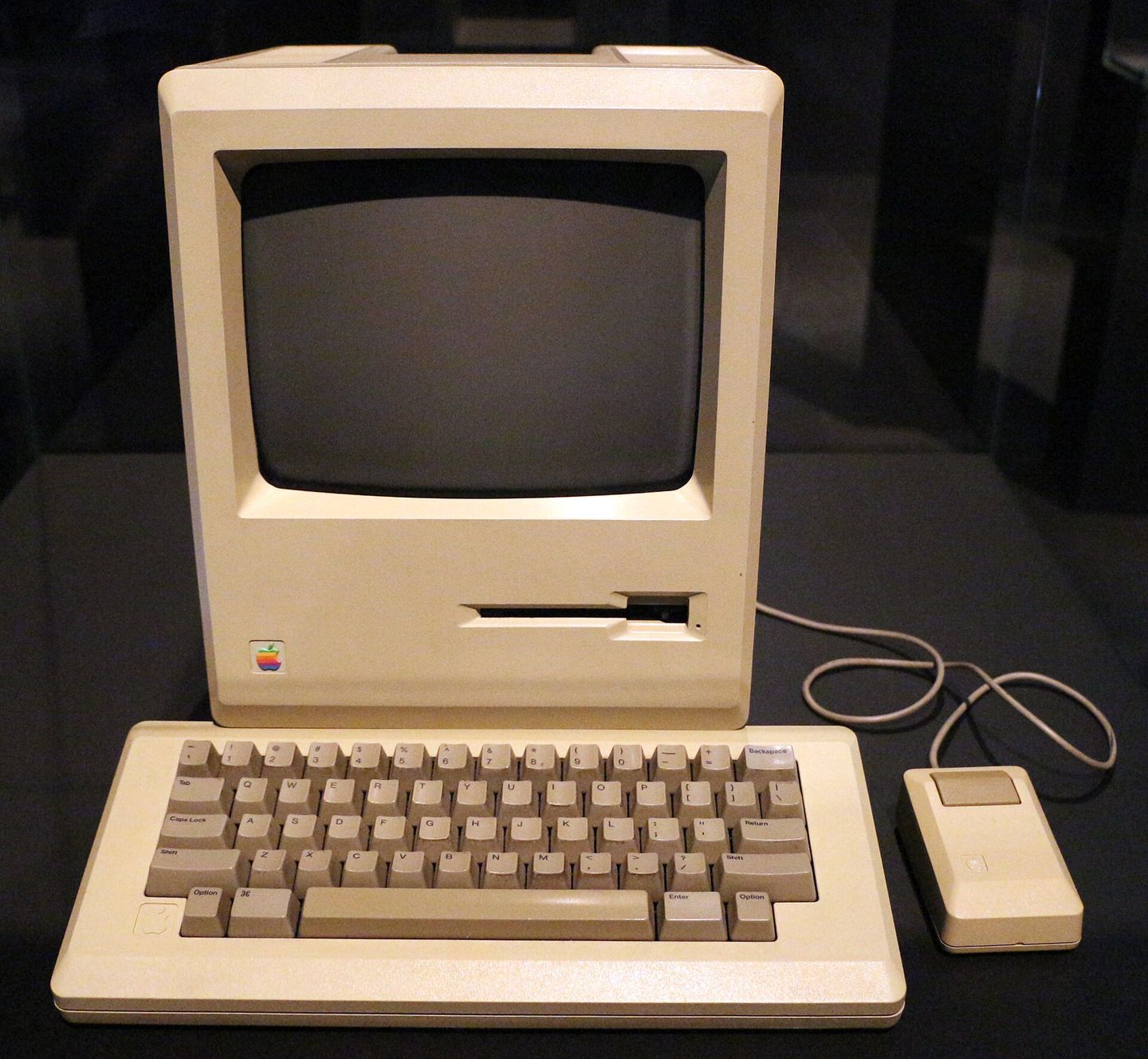
The original Apple Macintosh 128k personal computer, 1984, with its distinctive beige case and built-in nine-inch screen. Sailko, CC BY 3.0, via Wikimedia Commons
The Computer for the Rest of Us
On this day in 1984 — Apple unveiled the Macintosh, betting a computer could be friendly enough for the people who were afraid of computers.
3 min read
On January 24, 1984, Steve Jobs walked onto a stage at the De Anza College Flint Center in Cupertino and introduced the Macintosh. The audience saw a beige box with a nine-inch black-and-white screen. Then the computer spoke. It said hello, introduced itself, and told the crowd it was glad to be out of that bag. The applause lasted over a minute. A computer had just performed theater, and the interface between humans and machines had fundamentally shifted.
The Macintosh wasn't the first personal computer. The Apple II had been on the market since 1977. IBM's PC dominated business computing. But every other computer required you to learn its language: command lines, syntax, file paths typed from memory. The Mac inverted that relationship. It spoke in metaphors humans already understood: desktops, folders, files, trash cans. You didn't type commands. You pointed and clicked. The graphical user interface wasn't invented at Apple; it came from Xerox PARC. But Apple was the first to ship it in a product normal people could afford.
The design decisions were obsessive. Jobs insisted the Mac be a single integrated unit, no separate monitor or keyboard clutter. The case had rounded edges because sharp corners felt hostile. The fonts were proportionally spaced and named after cities: Chicago, Geneva, New York. Typography mattered because the screen was where you did your thinking. Bill Atkinson's QuickDraw graphics routines made everything feel immediate, responsive. Clicking an icon opened a window in real time, no loading delays. The machine had to feel alive.
The marketing was just as deliberate. The famous "1984" commercial, directed by Ridley Scott, aired during the Super Bowl two days before launch. It positioned the Mac as a tool for rebels, not corporations. IBM was Big Brother. The Mac was liberation. This framing worked because it was partially true. The Mac enabled desktop publishing, graphic design, music production, things previously requiring expensive specialized equipment. People who weren't programmers could suddenly create professional-quality work. The computer became a tool for creativity, not just calculation.
Technically, the first Mac was limited. It had 128KB of RAM, no hard drive, and a single floppy disk slot. It couldn't multitask. It was slower than competing machines. But none of that mattered as much as the experience. Using a Mac felt different. The interface made sense. Dragging a file to the trash was intuitive in a way that typing "del filename.txt" never would be. The learning curve flattened. Non-technical users could sit down and start working without reading a manual.
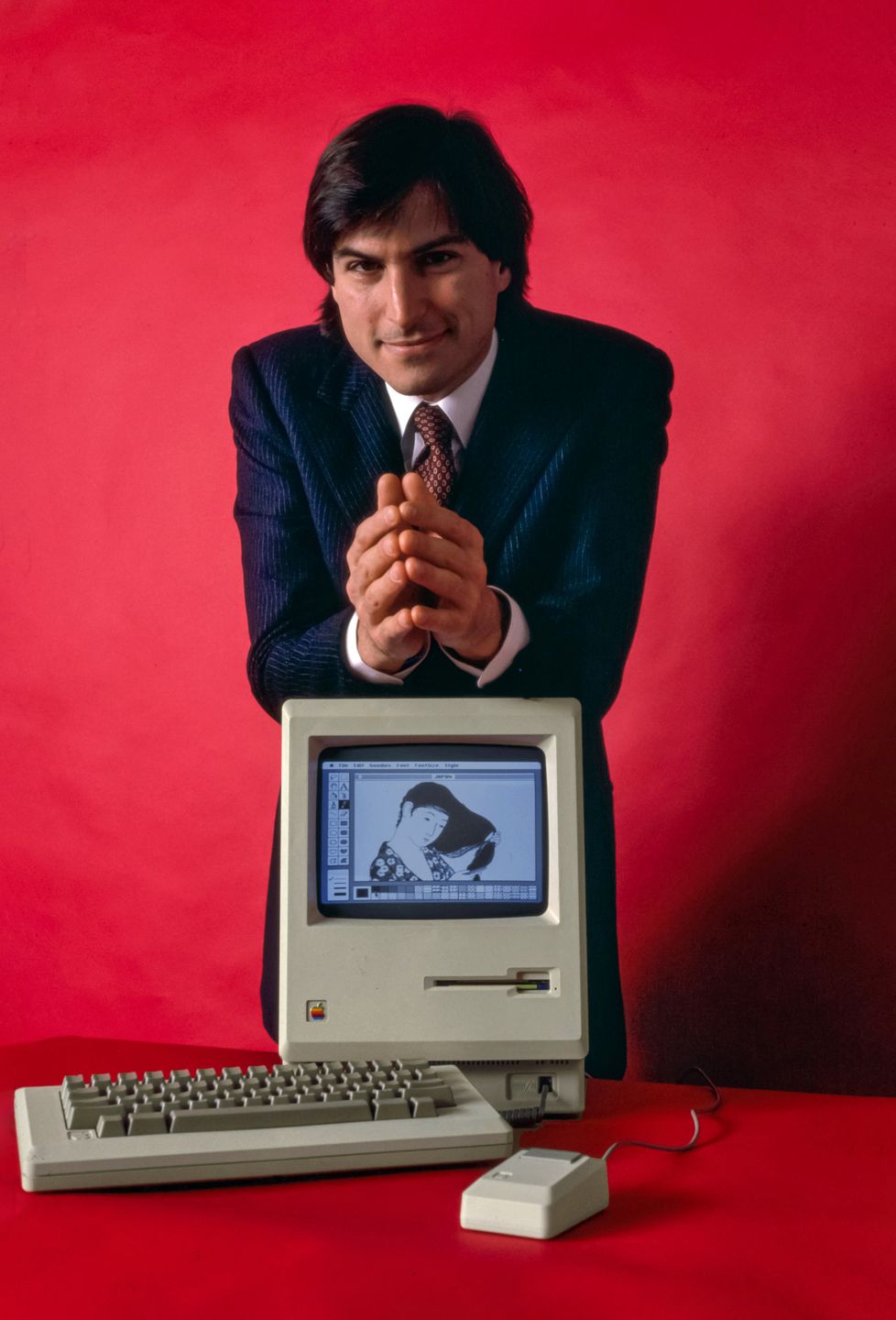
Steve Jobs with the Macintosh at its Public introduction, January 1984. photograph by bernard Gotfryd. Photo: Bernard Gotfryd - Edited from tif by Cart, Public domain, via Wikimedia Commons
The broader impact took years to materialize. Microsoft eventually adopted the GUI with Windows. Every modern operating system now uses point-and-click interfaces, icons, and visual metaphors. Touch screens are just an evolution of the same principle: make the interface match human intuition instead of forcing humans to adapt to machine logic. The Mac didn't just change computers. It established the expectation that technology should be approachable, understandable, even delightful.
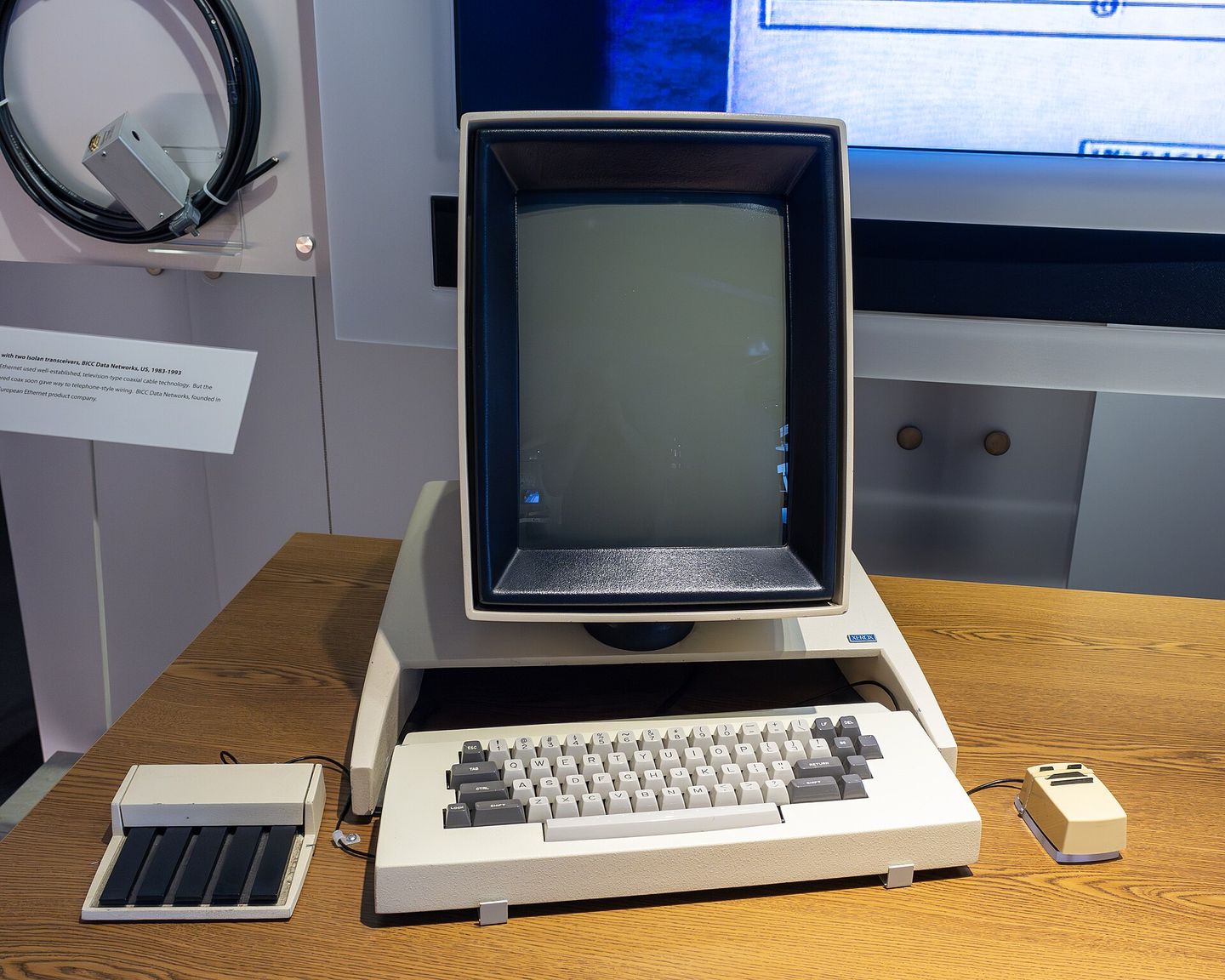
The Xerox alto, 1973, where the graphical user interface and mouse were pioneered at Xerox PARC years before the Macintosh shipped them to the Public. The wub, CC BY-SA 4.0, via Wikimedia Commons
The Macintosh sold 70,000 units in the first 100 days. Within a decade, Apple nearly went bankrupt. But the ideas it introduced, interface as experience, design as differentiation, technology as tool for individual creativity, became foundational principles for every digital product since. The computer stopped being a machine you operated and became an environment you inhabited. That shift started here.
studio / on-this-day / Jan 24