studio / on-this-day / Jan 9
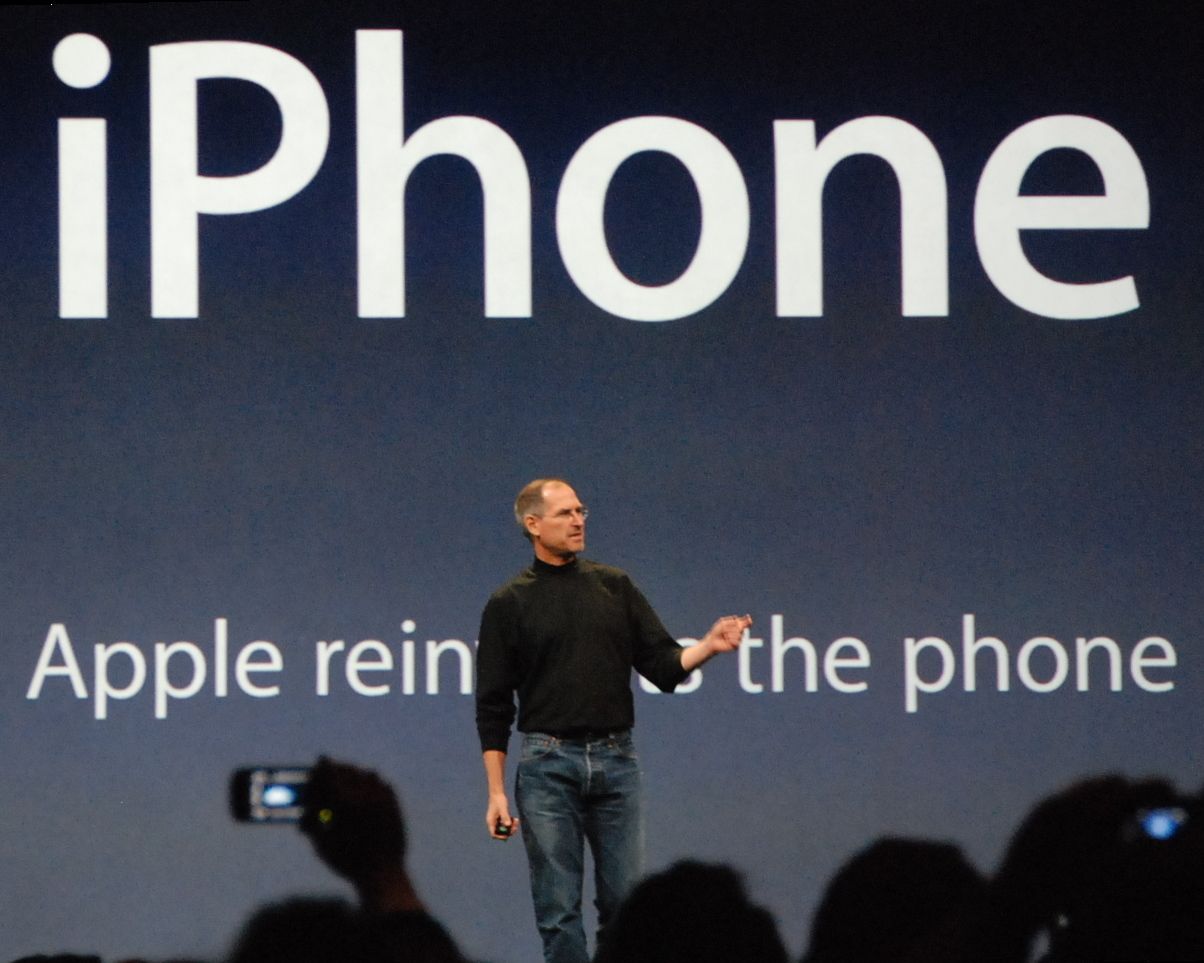
Steve Jobs presenting the original iphone at the macworld conference, January 9, 2007. Blake Patterson, CC BY 2.0, via Wikimedia Commons
The Rectangle That Ate the World
On this day in 2007 — Steve Jobs held up the first iPhone, and the pocket computer stopped being a keyboard and became a sheet of glass.
3 min read
On January 9, 2007, Steve Jobs walked onto a stage in San Francisco and told the audience that Apple was introducing three revolutionary products: a widescreen iPod with touch controls, a revolutionary mobile phone, and a breakthrough Internet communicator. He repeated the list. Then he stopped. "Are you getting it? These are not three separate devices. This is one device. And we are calling it iPhone."
The phone industry didn't take it seriously at first. Microsoft CEO Steve Ballmer laughed at the $499 price tag and said there was no chance the iPhone would gain significant market share. BlackBerry co-CEO Jim Balsillie said it was a novelty that wouldn't appeal to business customers. Nokia was the dominant phone maker in the world, selling more than a million phones a day. They thought they had time.
They were wrong. The iPhone didn't just replace phones. It replaced cameras, GPS devices, music players, alarm clocks, flashlights, calculators, maps, notebooks, and a dozen other single-purpose objects. It became the remote control for modern life, the interface layer between humans and digital infrastructure. Within a decade, smartphones were ubiquitous. Nokia collapsed. BlackBerry became irrelevant. The phone industry was redesigned around a glass touchscreen.
The key insight wasn't the hardware. Touchscreens existed. Mobile Internet existed. What Apple did was eliminate the keyboard. Every other smartphone had physical buttons because everyone assumed you needed them to type. Jobs bet that software could replace hardware, that an on-screen keyboard would be good enough, and that the flexibility of a programmable interface would outweigh the tactile certainty of physical keys. He was right. The screen became the entire front of the device, a blank canvas that could be anything: a keyboard, a game controller, a book, a video player, a map.
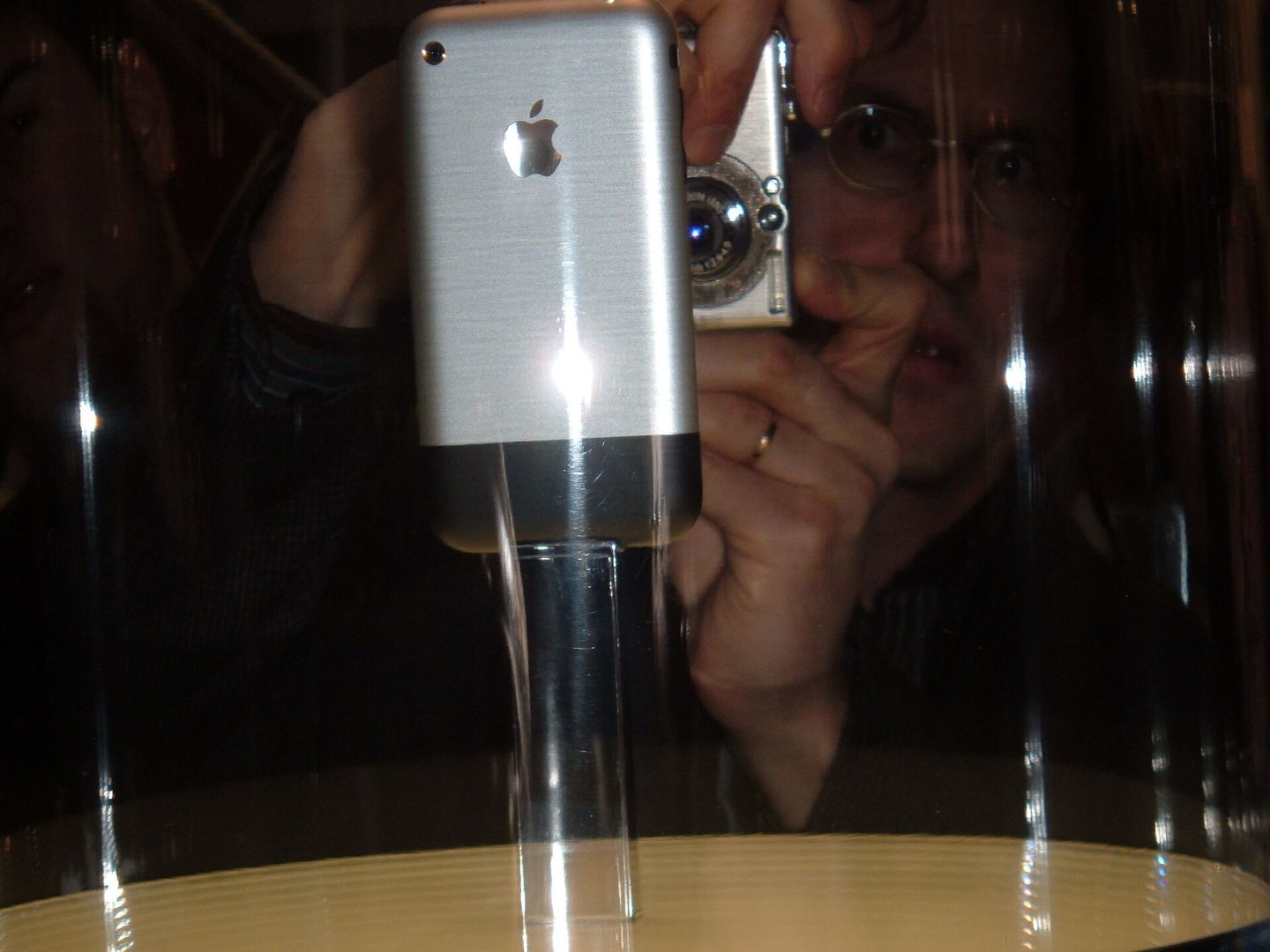
The original Apple iphone on display at macworld 2007. ArnoldReinhold, CC BY-SA 4.0, via Wikimedia Commons
The app ecosystem came later, in 2008. At first, the iPhone had only the apps Apple built. But once third-party developers could build software for it, the device exploded into a platform. Apps replaced entire industries. Uber, Instagram, WhatsApp, Spotify, all built on the assumption that everyone would soon have a pocket computer with a camera, GPS, and always-on Internet connection. The iPhone didn't just enable new services; it made them inevitable.
The cultural impact was harder to measure but more profound. People stopped looking up. They started photographing everything. They stopped asking for directions. They stopped wondering about facts they could Google in seconds. The phone became an extension of cognition, a prosthetic memory, an external brain. It changed how we experience boredom, solitude, and waiting. It turned every idle moment into an opportunity for distraction.
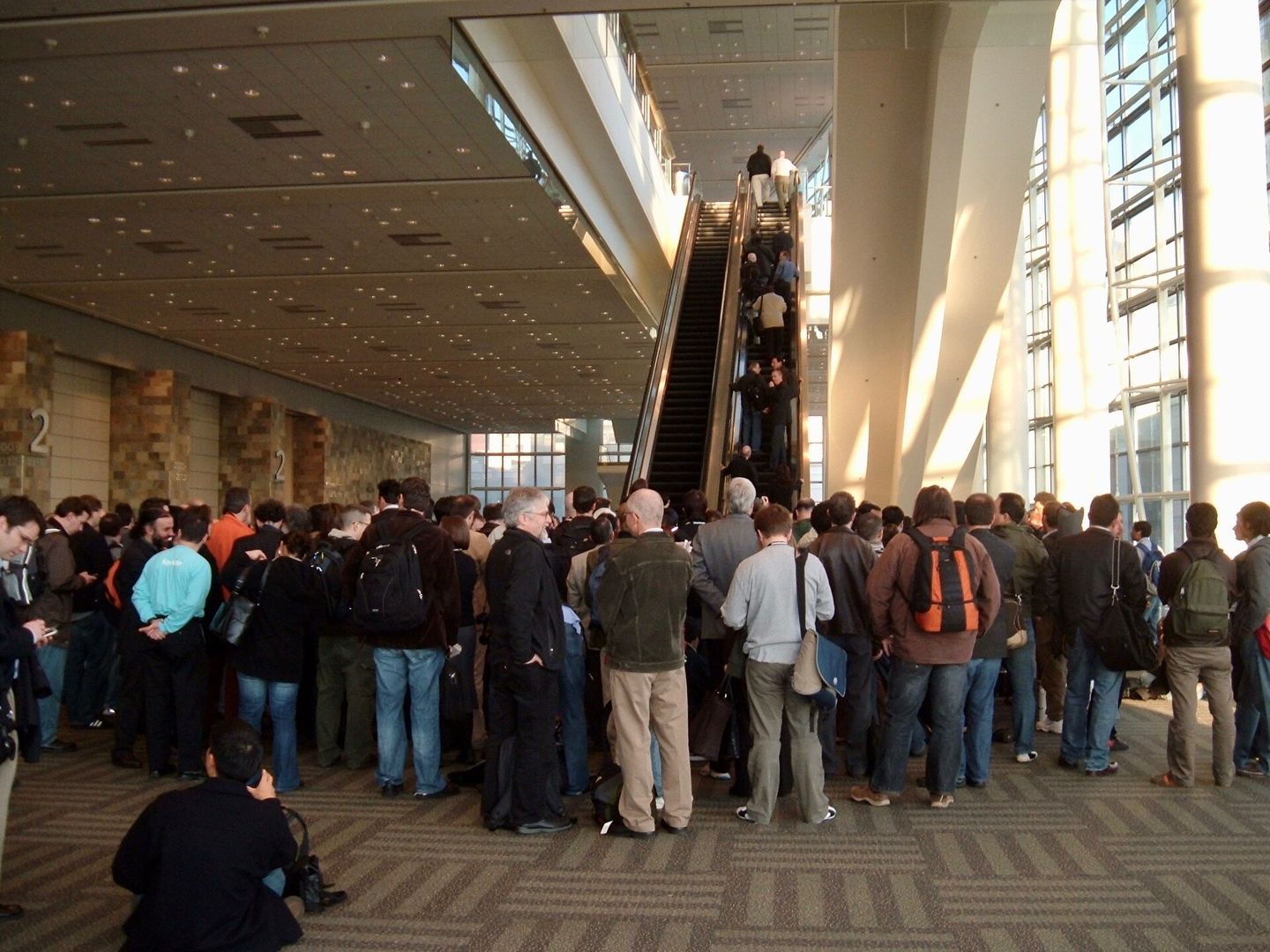
The crowd waiting to enter the moscone center for the macworld keynote, January 9, 2007 — moments before the iphone was revealed. ArnoldReinhold, CC BY-SA 4.0, via Wikimedia Commons
Critics said the iPhone made people less present, less connected to the physical world. That's true. But it also made them more connected to people thousands of miles away, more able to navigate unfamiliar cities, more capable of capturing and sharing moments that would have otherwise vanished. The phone became a tool for both connection and isolation, depending on how you used it. Just as the electric watch replaced mechanical springs, the iPhone replaced physical buttons with software, making the device infinitely reconfigurable.
Today, the smartphone is invisible in the same way electricity is invisible. We don't think about it as a technology anymore. It's just how things work. The rectangle in your pocket is the interface to everything else: banking, communication, entertainment, work, health, transportation. It's the most successful consumer product in history, the device that redesigned daily life around a touchscreen. And it all started with a presentation in San Francisco, January 9, 2007, when Steve Jobs held up a glass rectangle and told the world to pay attention.
studio / on-this-day / Jan 9