studio / on-this-day / Sep 8
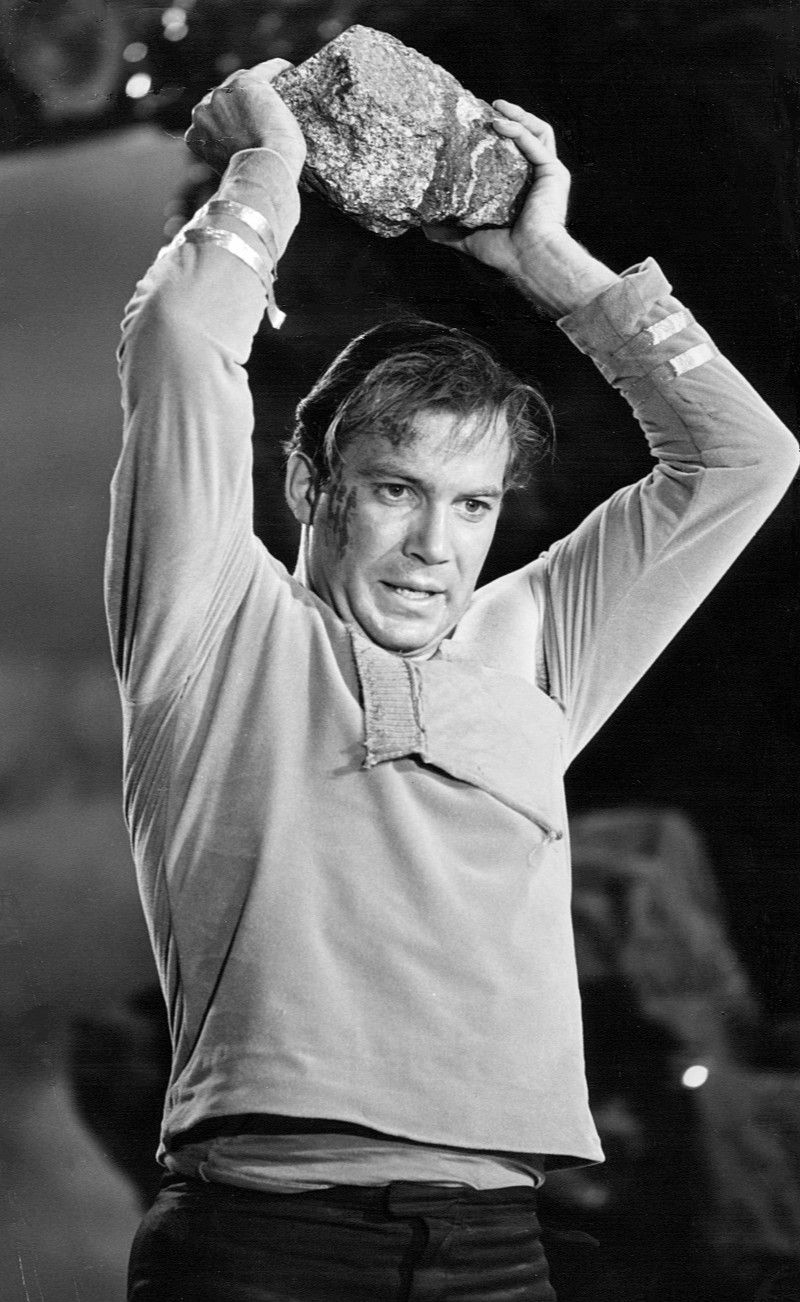
William Shatner in the first episode of Star Trek, 1966. NBC Television, Public domain, via Wikimedia Commons
The Future We Designed for Ourselves
On this day in 1966 — Star Trek first aired, quietly proposing a future in which humanity had solved most of its own worst problems.
3 min read
On September 8, 1966, at 8:30 p.m. Eastern Time, NBC aired the first episode of Star Trek. The show was a space adventure set in the 23rd century, following the crew of the USS Enterprise as they explored strange new worlds and sought out new life. It lasted three seasons, struggled in the ratings, and was canceled in 1969. It should have been forgotten. Instead, it became one of the most influential pieces of speculative design in television history, a blueprint for a future where humanity had figured out how to live with itself.
Gene Roddenberry, the show's creator, was not primarily interested in aliens or spaceships. He was interested in using science fiction as a way to explore contemporary social issues that network television would not normally touch. In 1960s America, you could not easily put a racially integrated bridge crew on a naval vessel in a prime-time drama. But you could in space. The Enterprise had a Black woman as communications officer, an Asian man at the helm, and a Russian navigator during the height of the Cold War. The message was subtle but radical: by the 23rd century, these divisions would no longer matter.
The design of the Enterprise itself was significant. It was not a warship. It was an exploration vessel, a floating city designed for long-term missions of discovery. The bridge was open, collaborative, with the captain surrounded by specialists rather than isolated in a command chair. The technology was sleek, functional, and optimistic. Sliding doors, communicators that resembled flip phones, computers that responded to voice commands,these were not just props. They were design concepts that shaped how engineers and designers imagined future interfaces. Martin Cooper, the inventor of the mobile phone, cited the Star Trek communicator as an inspiration.
What made Star Trek different from other science fiction of its era was the future it assumed. This was not a dystopia. There were no post-apocalyptic wastelands, no totalitarian regimes, no warnings about technology run amok. The Federation was a post-scarcity society where money had been abolished, poverty eliminated, and humanity united under a shared mission of exploration and understanding. Roddenberry designed a future where the problems of the 20th century,war, inequality, prejudice,had been solved, not through force but through reason, cooperation, and a commitment to improving the human condition.
The show was not preachy, but it was deliberate. The first interracial kiss on American television happened on Star Trek in 1968, between Captain Kirk and Lieutenant Uhura. The episode "Let That Be Your Last Battlefield" was a blunt allegory about racism, featuring two aliens who hated each other because one was black on the left side and white on the right, while the other was the reverse. "The Devil in the Dark" reframed a monster story as a first-contact scenario where the real threat was human misunderstanding. Star Trek used aliens as mirrors, forcing viewers to confront their own assumptions about what was normal, civilized, or dangerous.
The original series was canceled after three seasons, but it never really died. Syndication introduced it to new audiences. Fan conventions started in the 1970s and grew into massive events. The success of Star Wars in 1977 proved there was a market for space adventure, and Star Trek returned as a film franchise in 1979. That led to The Next Generation in 1987, then Deep Space Nine, Voyager, Enterprise, and a parade of films and reboots that continue to this day. The franchise became a multi-billion-dollar property, but its influence goes far beyond box office receipts.
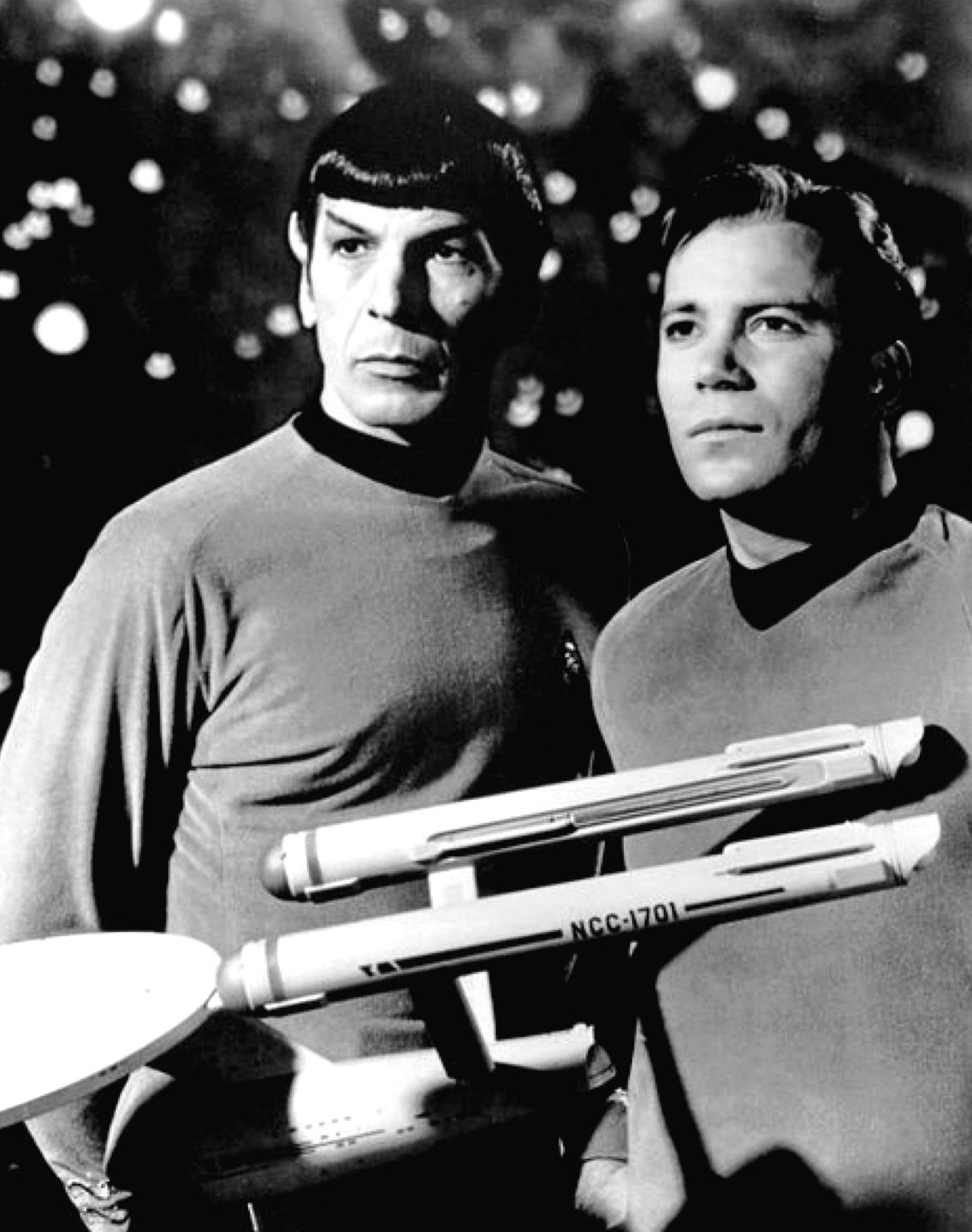
Leonard Nimoy as Mr. Spock and William Shatner as Captain Kirk in Star Trek: the original series, 1968. NBC Television, Public domain, via Wikimedia Commons
Star Trek shaped how generations of engineers, scientists, and designers think about the future. It presented technology as a tool for solving problems, not creating them. It showed diversity as a strength, not a compromise. It treated space exploration as a collaborative effort rather than a competitive race. The show imagined a future worth building, and then inspired people to try building it. Tablet computers, voice-activated assistants, video calls, universal translators,these were all Star Trek ideas before they were products. The show did not invent these technologies, but it made them feel inevitable.
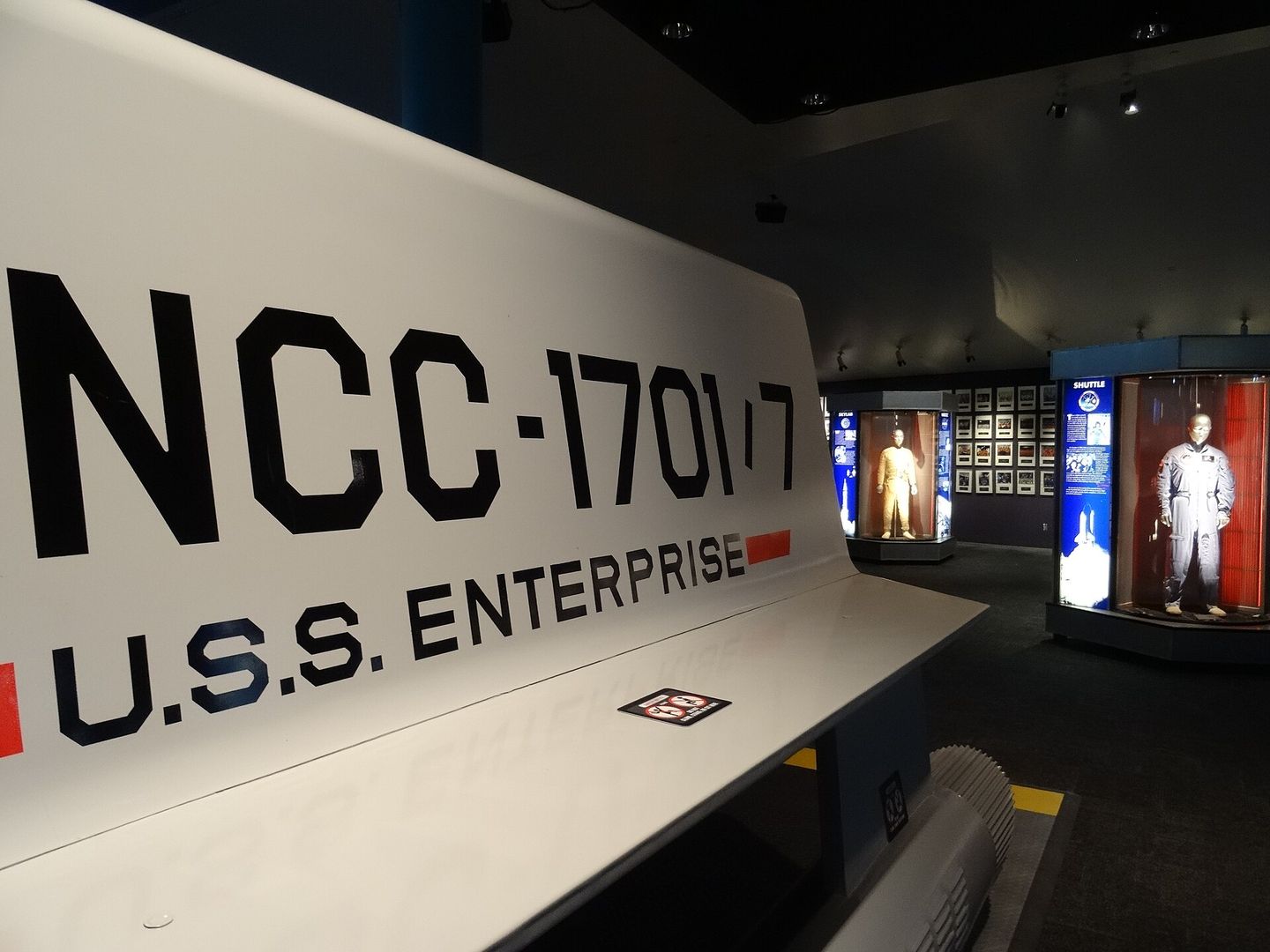
A model of the NCC-1701 USS Enterprise on display at NASA's Johnson Space Center in houston, texas. Adam Jones from Kelowna, BC, Canada, CC BY-SA 2.0, via Wikimedia Commons
More than anything, Star Trek was an act of optimism. In 1966, America was tearing itself apart over civil rights, Vietnam, and generational conflict. The future looked uncertain at best, catastrophic at worst. Roddenberry looked at that moment and decided to design something different: a future where humanity had survived, grown up, and turned its energy outward. It was speculative design at its most ambitious, a fictional universe built to show what might be possible if we could get past our own worst instincts. Fifty-plus years later, we are still trying to catch up to the future Star Trek designed for us.
studio / on-this-day / Sep 8