studio / on-this-day / Dec 1
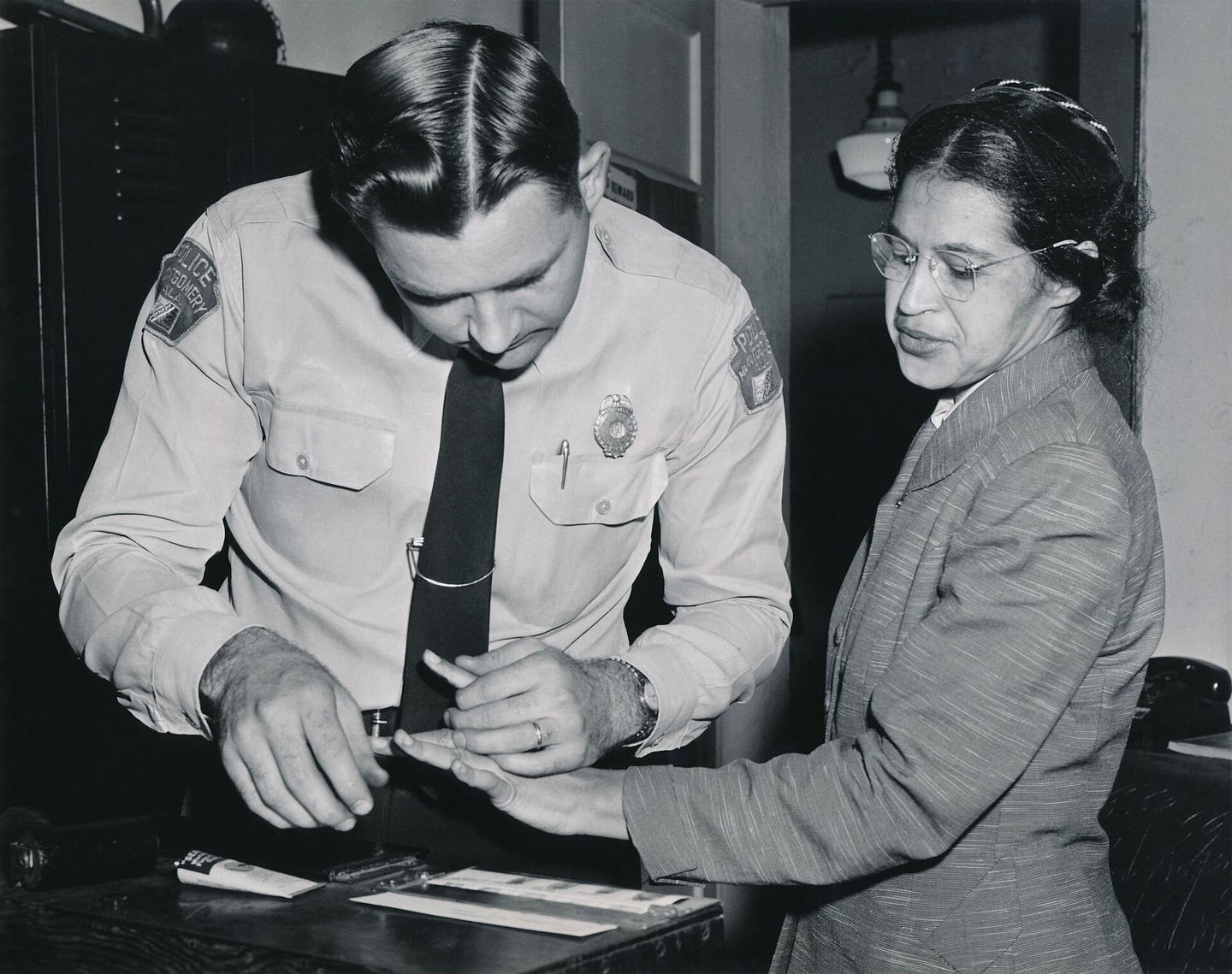
Rosa Parks being fingerprinted in Montgomery in 1956, during the boycott her December 1955 stand had sparked. Public domain, via Wikimedia Commons
The Woman Who Stayed Seated
On this day in 1955 — Rosa Parks refused to give up her bus seat in Montgomery, and a single act of stillness began to collapse a system that had seemed permanent.
4 min read
On December 1, 1955, in Montgomery, Alabama, a 42-year-old seamstress named Rosa Parks was riding home from work when the driver ordered her to give up her seat so a white passenger could sit. City law required it. She had done nothing but occupy a seat she had paid for. She said no, and stayed where she was, and was arrested. It is one of the most consequential refusals in American history, and almost nothing about it was accidental.
The popular story is that she was simply tired. Parks corrected that herself: she was not physically tired, she said, she was tired of giving in. She was a trained, experienced organizer, secretary of the local NAACP chapter, who understood exactly what she was doing and what it might cost. The stillness looked spontaneous. The judgment behind it was not.
What she did was expose a system by refusing to lubricate it. Segregation on the buses worked only because, every day, thousands of Black riders complied with rules they hated, because the cost of not complying, arrest, humiliation, danger, was too high to bear alone. Parks was willing to pay that cost in public, and in doing so she turned a private daily indignity into a visible, undeniable act that others could gather around.
And they gathered. Within days, Montgomery's Black community, roughly three-quarters of the bus system's ridership, organized a boycott. They walked, carpooled, and shared rides for 381 days, starving the bus line of the fares it depended on, while a young minister named Martin Luther King Jr. found his voice leading them. A single arrest had become a coordinated withdrawal of the one thing the system could not run without: their participation.
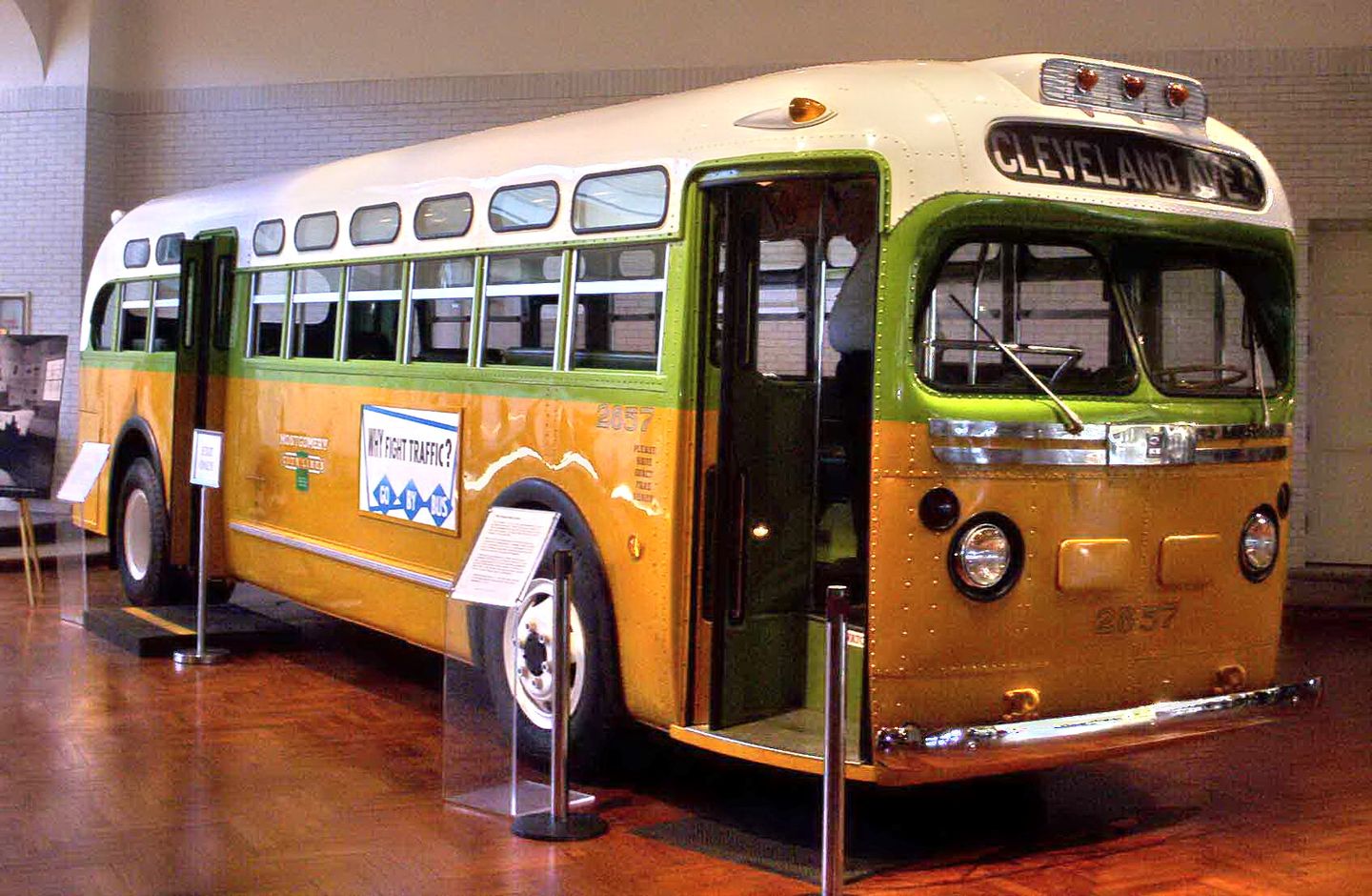
The Montgomery city bus on which Parks was arrested, now preserved at a museum in michigan. Rmhermen, CC BY-SA 3.0, via Wikimedia Commons
The design lesson is stark. A system that depends on the daily cooperation of the people it oppresses is far more fragile than it looks. Its power is real but borrowed, extended every morning by everyone who goes along. Withdraw that cooperation in a visible, organized way, and the whole apparatus, which had seemed as fixed as concrete, is revealed to be a standing agreement that can be revoked.
It did not end cleanly or quickly. The boycott was met with arrests, bombings, and threats, and legal segregation would take years more to dismantle. But the Supreme Court ruled Montgomery's bus segregation unconstitutional in 1956, and the template, disciplined, nonviolent, mass noncompliance, spread across the movement. Parks had shown what one clearly chosen refusal, backed by an organized community, could do.
She paid for it, losing her job and facing years of hardship and danger. She is remembered, too tidily, as a tired woman who happened to spark something. The truer picture is more useful: a disciplined person who understood a system's hidden dependency, chose her moment, and refused, on purpose, to keep it running. The seat she kept was small. What it revealed was not.
studio / on-this-day / Dec 1