studio / on-this-day / Nov 30
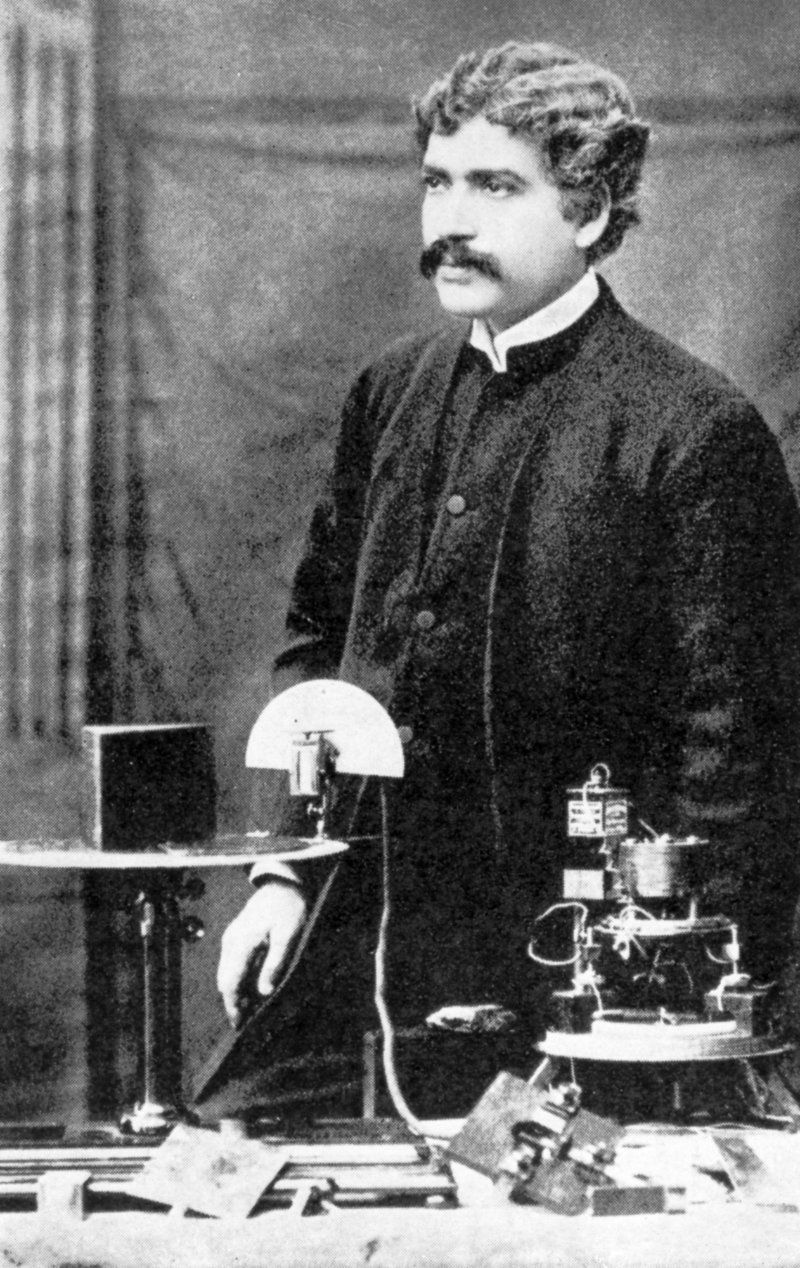
Jagadish Chandra Bose, 1926. The Birth Centenary Committee, printed by P.C. Ray, Public domain, via Wikimedia Commons
The Scientist Who Listened to Plants
On this day in 1858 — Jagadish Chandra Bose was born, and would show that even plants respond to stimuli, widening the boundaries of biology.
2 min read
Jagadish Chandra Bose was born on November 30, 1858, in Mymensingh, Bengal, then part of British India. He studied physics at Cambridge, returned to India, and became a professor at Presidency College in Calcutta. His early work focused on radio waves, building some of the first wireless communication devices in the 1890s, years before Marconi's famous demonstrations. But Bose never patented his inventions. He believed scientific knowledge should be freely shared, not owned. Instead, he turned his attention to something stranger and less commercially valuable: the inner life of plants.
Bose built instruments to measure plant responses at scales invisible to the human eye. His crescograph could magnify plant movements by 10,000 times, recording how stems bent, how leaves adjusted to light, how roots responded to water. What he discovered contradicted the prevailing assumption that plants were passive, mechanical organisms. Plants reacted to stimuli. They responded to touch, temperature, light, and chemicals. When injured, they exhibited something that resembled a stress response. When exposed to toxins, they recoiled. Bose argued that the boundary between plant and animal life was not as clear as biologists assumed. Sensitivity was not exclusive to nervous systems.
His claims were controversial. Western scientists dismissed his work as anthropomorphism, the mistake of projecting human qualities onto non-human systems. Plants don't have brains, they said. They don't feel. Bose countered that feeling and response are different things. A plant doesn't need consciousness to react to its environment. It just needs a system for sensing and responding, and plants have that. His experiments demonstrated electrical signals traveling through plant tissue, similar to nerve impulses in animals. He showed that plants could be anesthetized, paralyzed, even poisoned, and that they recovered or died depending on the treatment. The evidence was reproducible, measurable, documented.
Bose's broader vision was that life exists on a continuum, not in rigid categories. He saw similarities between the fatigue of metals under stress and the exhaustion of living tissue. He believed that all matter, living or not, responded to external forces in ways that could be studied and understood. This was not mysticism. It was systems thinking applied to biology, the idea that responsiveness is a fundamental property of organized matter, whether that matter is arranged into cells, tissues, or crystalline structures. He was looking for universal principles, patterns that scaled across different forms of complexity.
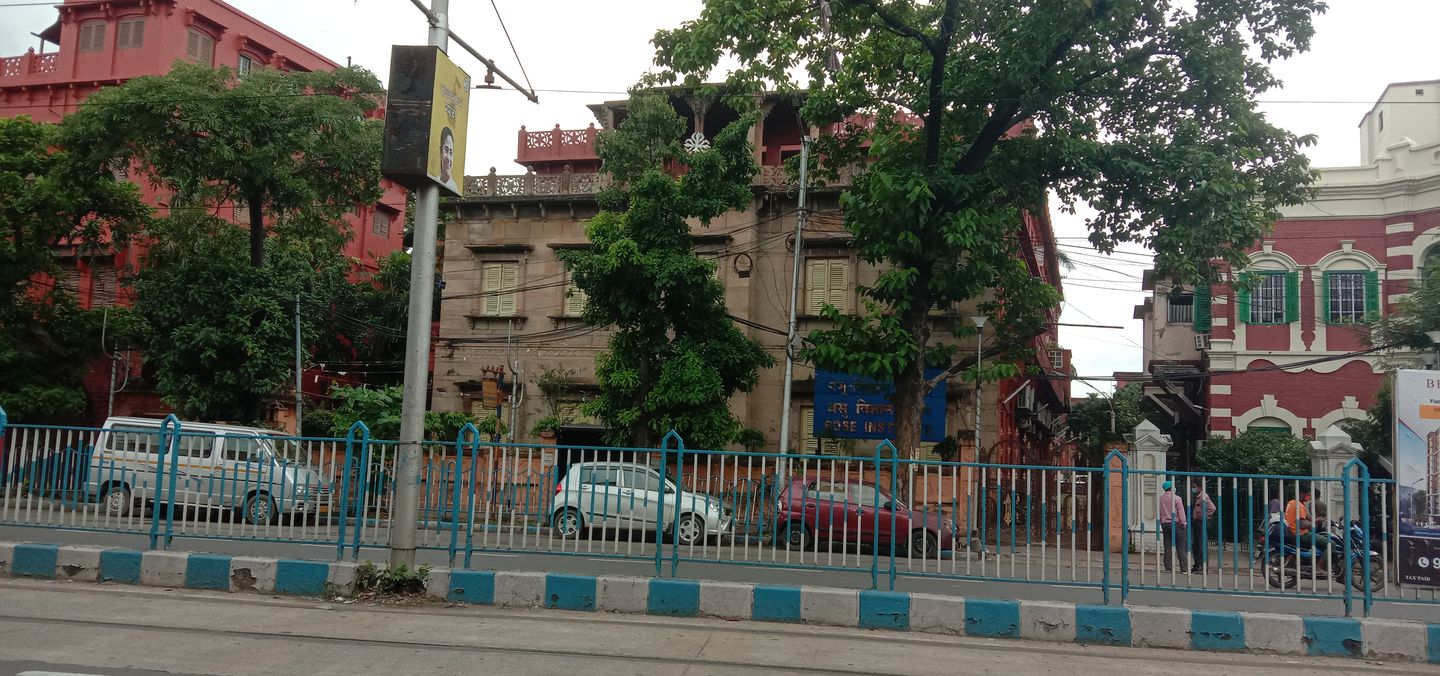
The Bose Institute in Kolkata, the interdisciplinary research institution Bose founded in 1917. Anupamdutta73, CC BY-SA 4.0, via Wikimedia Commons
In 1917, Bose founded the Bose Institute in Calcutta, one of the first research institutions in India dedicated to interdisciplinary science. He worked there until his death in 1937, studying plant physiology, biophysics, and the mechanisms of sensory response. His legacy is mixed. Some of his ideas were ahead of their time, anticipating discoveries in plant neurobiology and signaling pathways. Others were speculative, pushing beyond what the data could support. But he established a tradition of looking at life as a design problem, of asking how systems sense, process, and respond to information. Plants may not think, but they compute. They solve problems. They adapt. Bose spent his life proving that biology is wider, stranger, and more interconnected than the categories we use to contain it.
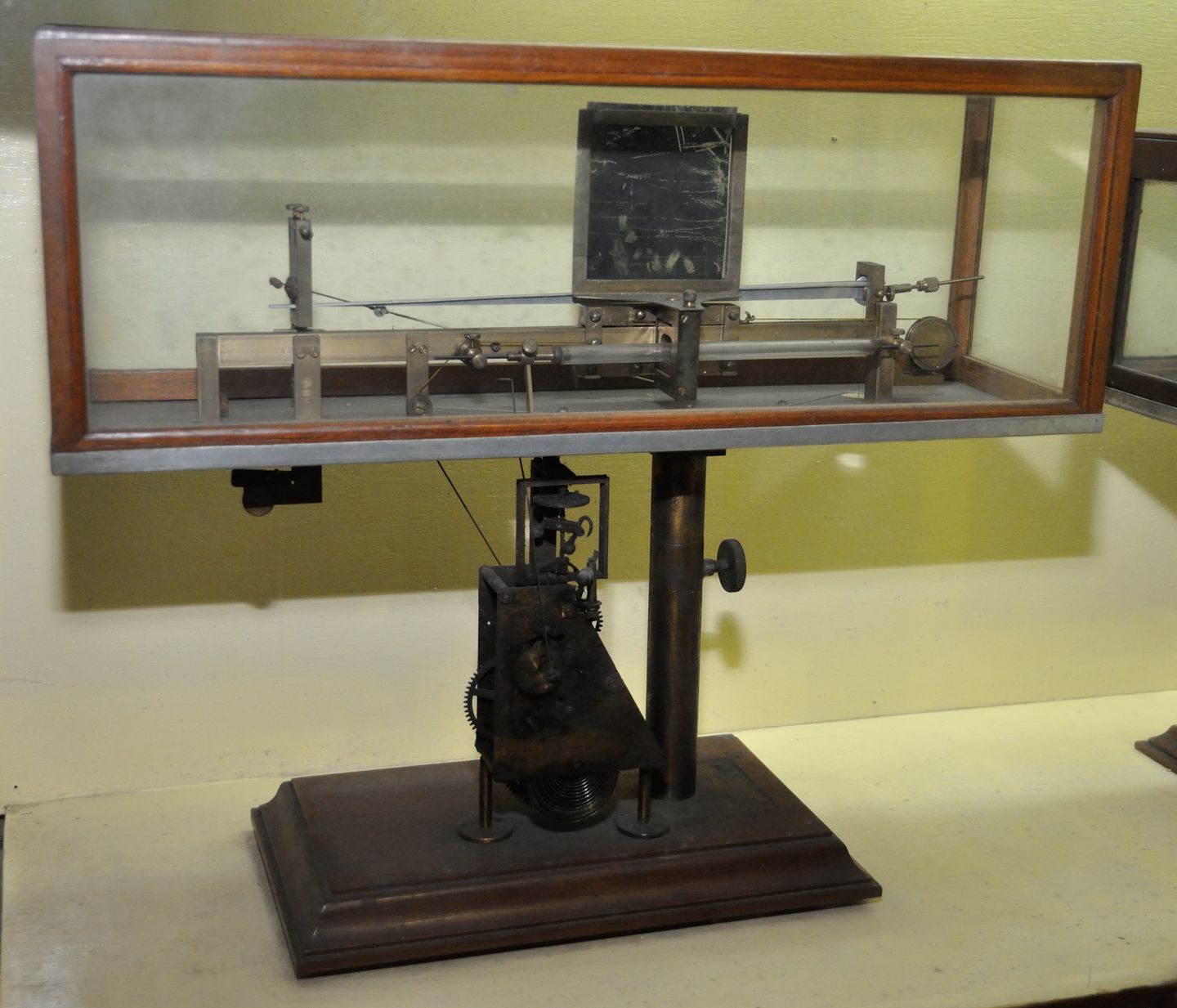
The crescograph, Bose's invention for measuring plant responses — capable of magnifying plant movement 10,000 times, Bose Institute museum, Kolkata. Biswarup Ganguly, CC BY 3.0, via Wikimedia Commons
studio / on-this-day / Nov 30