studio / on-this-day / Jan 5
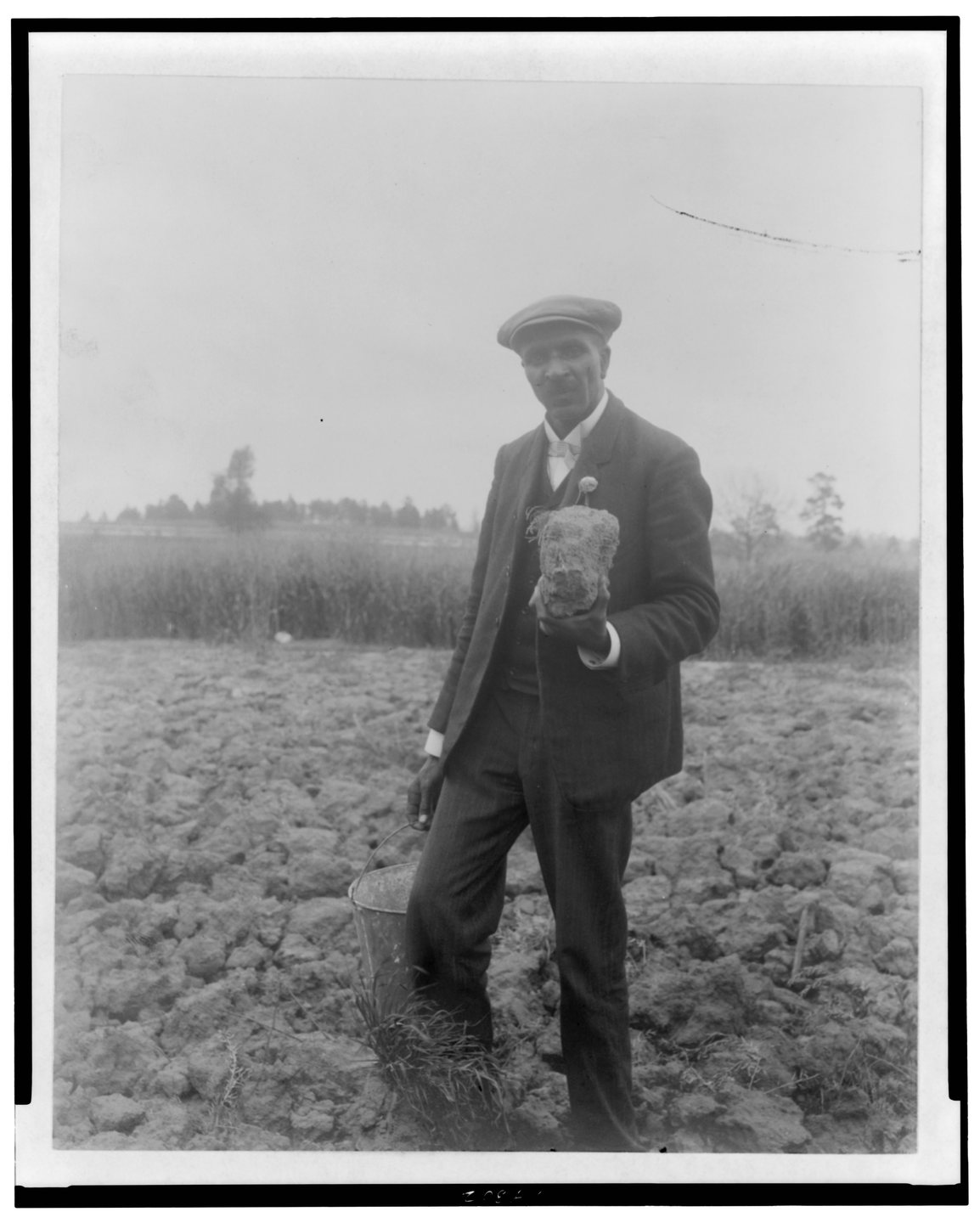
George Washington Carver at Tuskegee, 1906. Frances Benjamin Johnston, Library of Congress, no known restrictions, via Wikimedia Commons
The Man Who Made More From Less
On this day in 1943 — George Washington Carver died at Tuskegee. Born into slavery, he became the agricultural scientist who turned exhausted land and humble crops into a system of renewal.
3 min read
George Washington Carver was born into slavery in Diamond, Missouri, around 1864 — the exact date was never recorded, because the birth of an enslaved child was not something anyone wrote down. Freed as an infant when slavery ended, he grew up hungry to learn, walking miles to schools that would admit him and working his way to a degree from Iowa State, where he became the college’s first Black student and, later, its first Black faculty member. From the start he treated the living world as a system to be understood, earning the nickname "the plant doctor" long before he had any formal training.
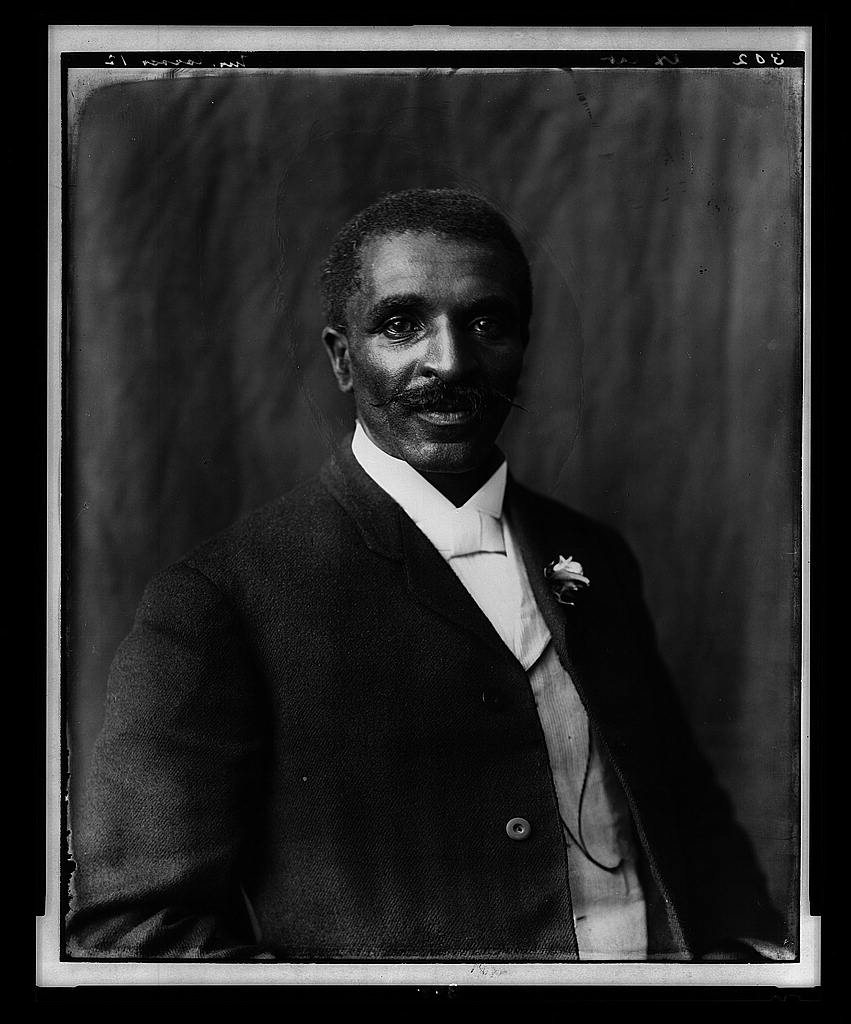
Carver at Tuskegee Institute, 1906. Frances Benjamin Johnston, Library of Congress, no known restrictions, via Wikimedia Commons
In 1896, Booker T. Washington invited Carver to run the agriculture department at the Tuskegee Institute in Alabama. He arrived to find a regional catastrophe hiding in plain sight: generations of cotton had stripped the soil of nitrogen, and the Black tenant farmers who worked that land were trapped in deepening poverty. Carver’s response was systemic. Cotton exhausts the soil; legumes such as peanuts, and crops like the sweet potato, replenish it. Rotate them, he taught, and the land heals itself while still producing a harvest.
Crop rotation worked, but it created a new problem: fields full of peanuts and sweet potatoes that had little market. So Carver manufactured demand from his laboratory. He compiled a now-famous catalogue — commonly cited at more than three hundred — of things that could be made from the peanut alone: flour and milk, dyes and cosmetics, wood stains, soaps, even early plastics. He did the same for the sweet potato. Crucially, he published the findings as free, plain-language bulletins, so poor farmers could use them without paying anyone.
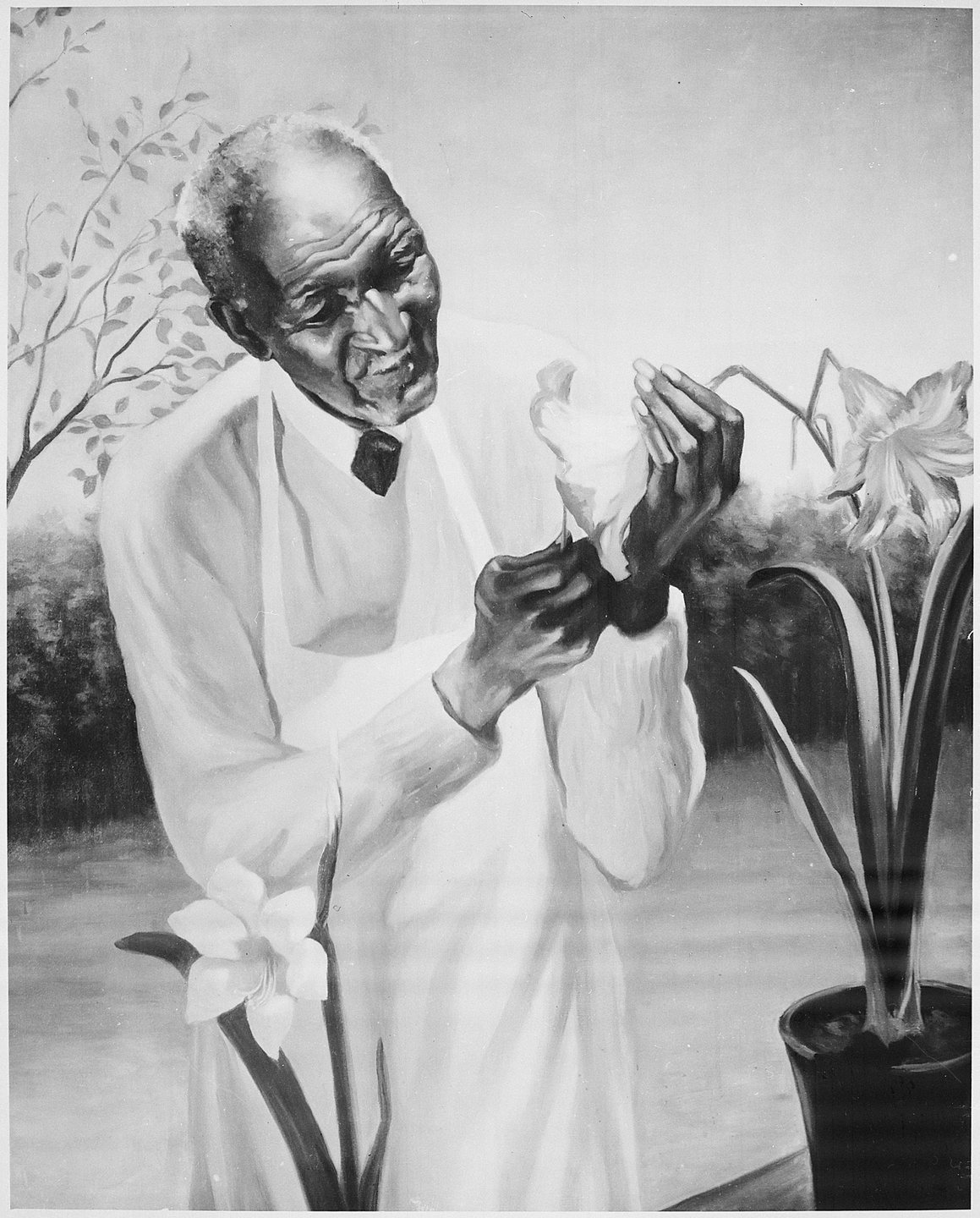
Carver painted for the "Portraits of Outstanding Americans of Negro Origin" series. Betsy Graves Reyneau, National Archives, Public domain, via Wikimedia Commons
A myth grew up around him — that he invented peanut butter. He did not; versions of it long predated him. What he actually did was harder and more useful: he turned an overlooked crop into a cash crop and a symbol, and he refused to patent most of his discoveries, believing that knowledge which lifted the poor should be given away rather than sold. By the 1920s he was among the most famous scientists in America, testifying before Congress about the humble peanut and corresponding with the likes of Thomas Edison and Henry Ford.
Carver died on January 5, 1943, at seventy-eight, after a fall at his home on the Tuskegee campus. He left his life savings to a foundation for research. His deepest invention was not any single product but a way of seeing: that the most exhausted, discarded, overlooked material — depleted dirt, a weed, a waste crop — could be redesigned into abundance. In Carver’s hands, less was never a limit. It was where the work began.
studio / on-this-day / Jan 5