studio / on-this-day / Oct 7
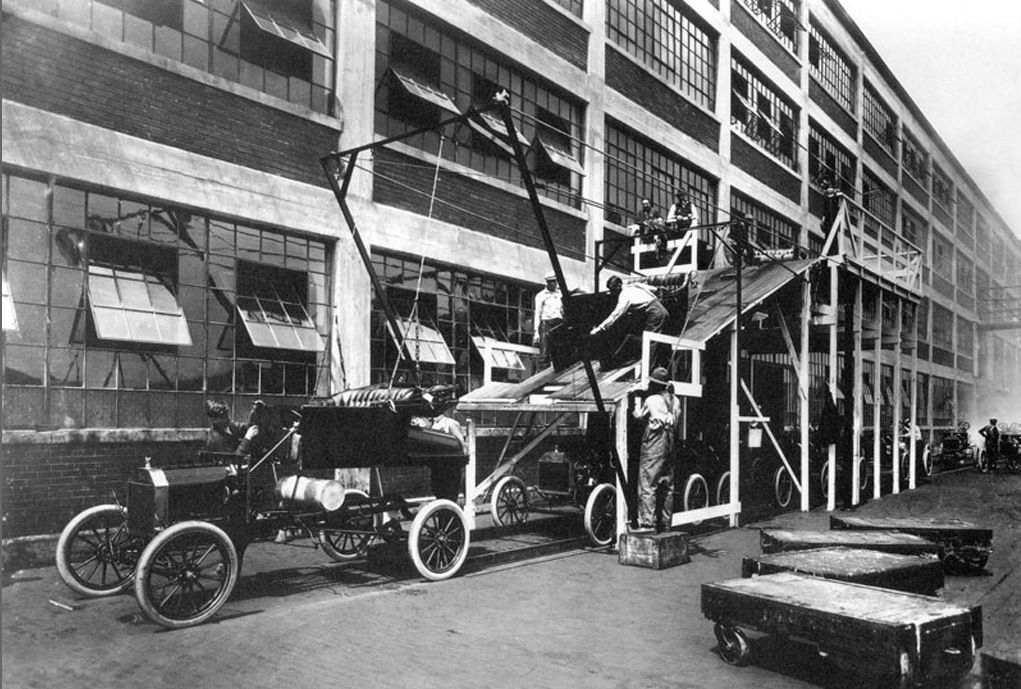
Ford assembly line, 1913. Ford company, Public domain, via Wikimedia Commons
The Line That Moved the World
On this day in 1913 — Ford set the assembly line in motion, rebuilding manufacturing around the movement of the work rather than the worker.
3 min read
On October 7, 1913, at Ford's Highland Park plant in Michigan, workers assembled the first automobile on a moving assembly line. A rope pulled Model T chassis past stationary workers, each performing a single, repeatable task. The time to assemble a car dropped from 12 hours to 93 minutes. Manufacturing would never be the same.
Ford did not invent the assembly line. Ransom Olds had used a similar method years earlier. Slaughterhouses in Chicago had perfected the moving disassembly line, breaking down animal carcasses with brutal efficiency. But Ford applied the concept with a precision and scale that transformed it from technique into philosophy. He studied every motion, timed every step, and eliminated anything that slowed the flow. Production became a science.
The insight was simple but radical. Instead of workers moving to the product, the product moved to the workers. Each person specialized in one task, repeated endlessly, minute after minute, hour after hour. A worker might install a single bolt, all day, every day. Skill was no longer required. Training could be measured in hours, not years. The line turned complex manufacturing into a series of simple, repeatable actions that anyone could learn.
The human cost was immediate. Assembly line work was monotonous, exhausting, and alienating. Workers quit at staggering rates, sometimes over 300% annual turnover. Ford's solution was not to improve conditions but to raise wages. In 1914, he introduced the $5 workday, more than double the prevailing rate. The move was both generous and calculating. Higher wages reduced turnover, created a stable workforce, and turned workers into consumers who could afford to buy the cars they built.
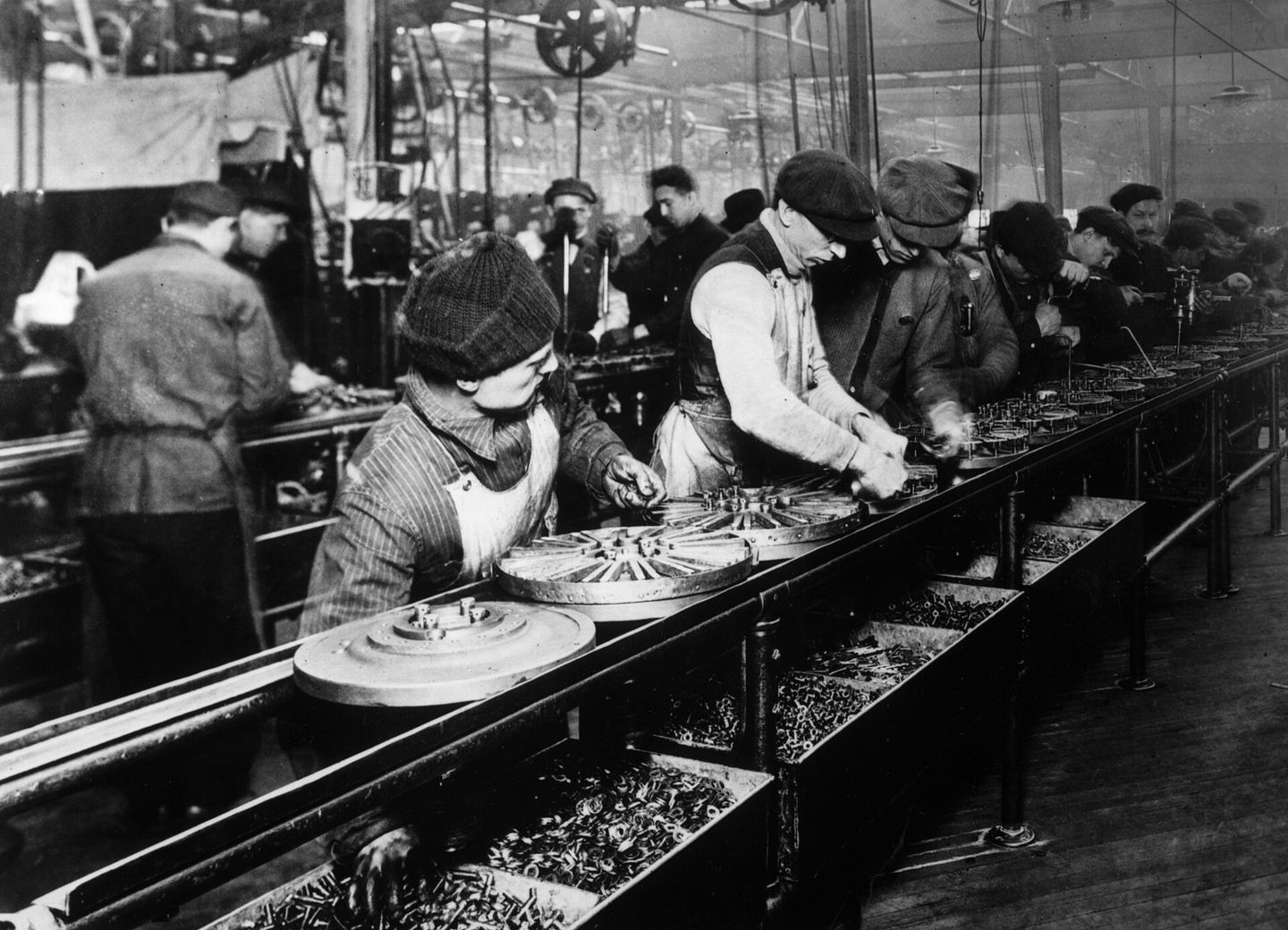
Workers on the Ford assembly line. Public domain, via Wikimedia Commons
The assembly line did more than increase productivity. It redefined the relationship between labor and capital. Workers became interchangeable components in a larger machine. The knowledge required to build a car was no longer held by individual craftspeople but encoded in the process itself. This made labor easier to control and harder to resist. Unions would spend decades fighting to reclaim some measure of autonomy in a system designed to eliminate it.
Ford's system spread rapidly. By the 1920s, assembly line production had been adopted across industries, from automobiles to appliances to electronics. The method proved so effective that it became synonymous with modern manufacturing. Even the Model T itself, the car the line was designed to build, became a symbol of industrial efficiency and mass accessibility.
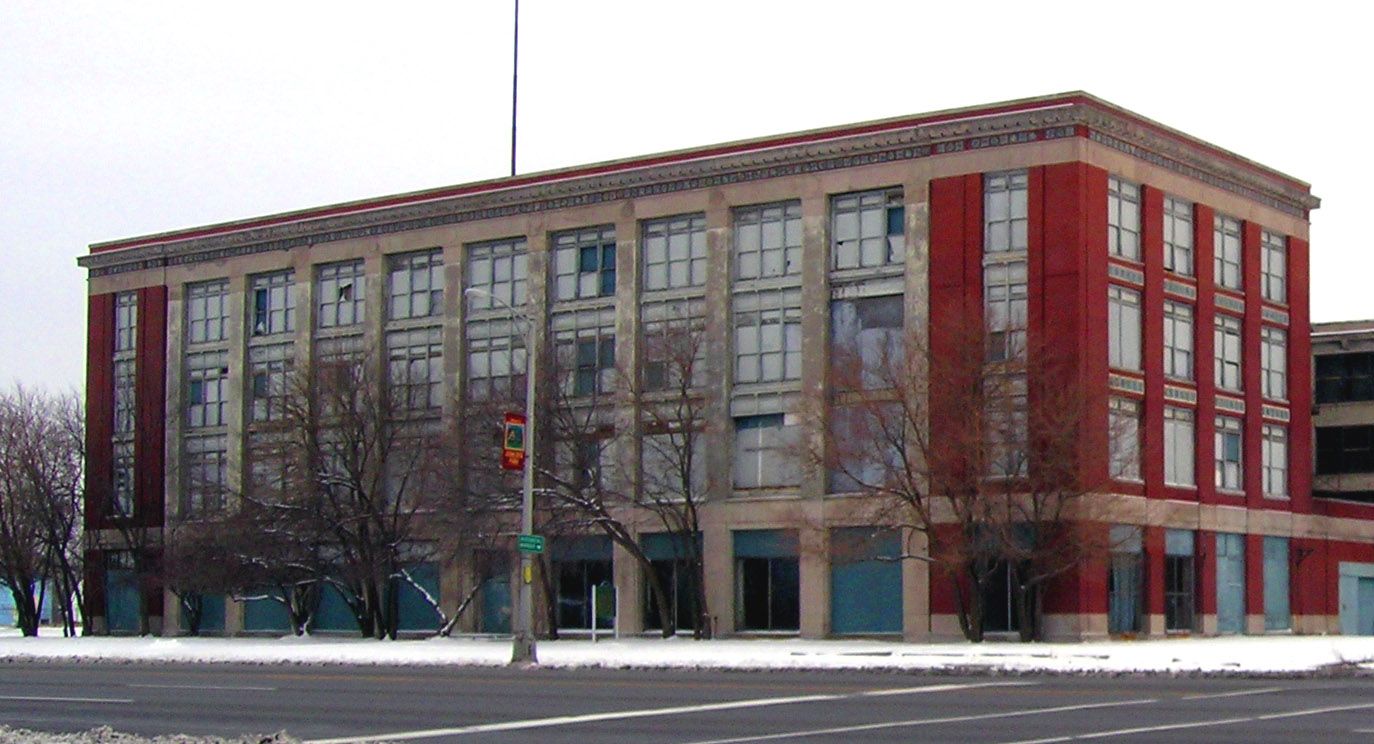
The Highland Park plant, where the moving line began. Andrew Jameson (talk) at en.wikipedia, CC BY-SA 3.0, via Wikimedia Commons
The assembly line also shaped the physical landscape. Factories became longer, flatter, and more linear to accommodate the flow of materials. Cities reorganized around industrial production. Workers' lives synchronized with the rhythm of the line. The workday became standardized. Breaks were timed. Efficiency metrics governed every aspect of labor. Time itself became a resource to be optimized.
There is a darker reading of the assembly line, one that sees it not as progress but as the mechanization of human beings. Charlie Chaplin satirized it in Modern Times, depicting a worker literally consumed by the machinery of production. The assembly line turned people into cogs, their movements predetermined, their autonomy surrendered to the demands of the process. Efficiency came at the cost of meaning.
Yet the assembly line also delivered unprecedented prosperity. It made goods affordable that had once been luxuries. It created jobs, built industries, and powered economic growth that lifted millions into the middle class. The question is not whether the assembly line was good or bad. It was both. It gave us abundance and alienation, prosperity and dehumanization, all at once.
October 7, 1913, is the day manufacturing became a flow rather than a craft. Ford proved that production could be designed, optimized, and scaled to meet almost unlimited demand. The cost was borne by the workers on the line, who traded autonomy for wages and skill for repetition. The benefits accrued to everyone who could afford the products the line made possible. The assembly line is still with us, its logic embedded in every factory, every process, every system designed to maximize output and minimize variation. We are all living in the world it built.
studio / on-this-day / Oct 7