studio / on-this-day / Apr 16
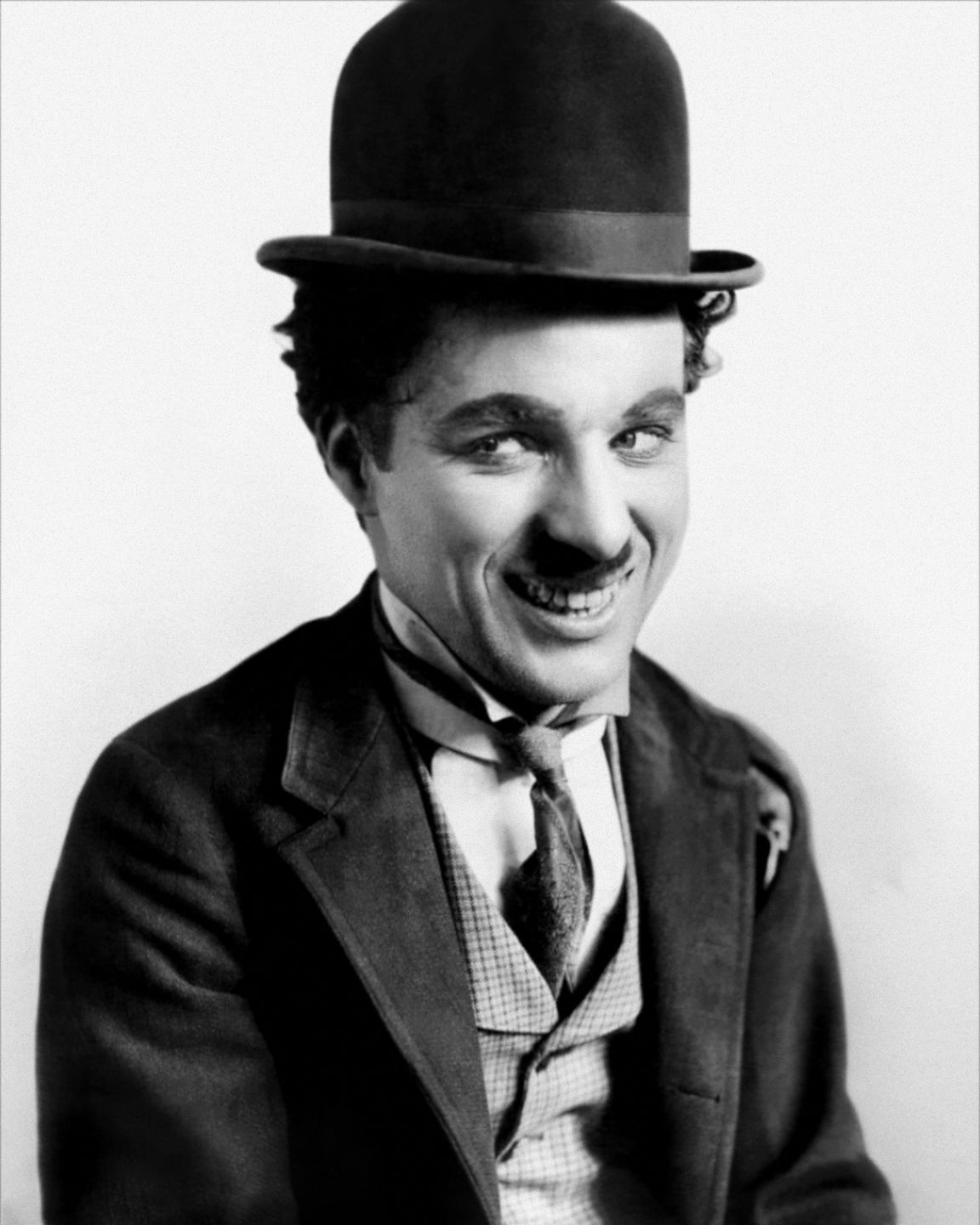
Charlie Chaplin as the Little Tramp — bowler hat, tight jacket, oversized pants, and a cane. The character was designed to be instantly readable: aristocratic aspirations expressed through contradictory costume. P.D Jankens, Public domain, via Wikimedia Commons
The Grammar of Silence
On this day in 1889 — Charlie Chaplin was born, and would turn silence itself into the most expressive language the movies ever had.
3 min read
Charles Spencer Chaplin was born on April 16, 1889, in London, into a world of music halls and poverty. His mother was a singer whose voice failed her. His father was an alcoholic. By the time Chaplin was seven, he was performing on stage, learning to hold an audience without words. That constraint, learned young, would become the foundation of an entirely new visual language.
Silent film was not a choice. It was a technological limitation. Early cameras could not record synchronized sound. What Chaplin understood, and what set him apart, was that silence was not an absence. It was an opportunity. Without dialogue, every gesture had to carry meaning. A twitch of a mustache. The angle of a cane. The way a body moved through space. These became syntax.
The Little Tramp, Chaplin's most famous creation, first appeared in 1914. The character was an exercise in contradiction. The costume was a bundle of signals: too-tight jacket, too-large pants, bowler hat worn at a jaunty angle, a cane suggesting aristocracy wielded by a man with nothing. The outfit was absurd, but it was also instantly readable. In a single frame, you knew who this person was. That is information design.
Chaplin's films were not just stories told without sound. They were meditations on what humans can communicate when stripped of language. In The Kid, he conveyed grief, tenderness, and defiance with nothing but body language and the camera's framing. In City Lights, the climactic scene is a woman touching a man's hands and recognizing him not by sight but by feel. Connection without words, without even vision. Just the interface of touch.
By the time synchronized sound arrived in the late 1920s, Chaplin resisted it. He made City Lights as a silent film in 1931, years after talkies had become standard. He understood something the rest of Hollywood did not. Sound was not an upgrade. It was a different medium entirely. Adding words would not make his films better. It would make them something else.
When he finally embraced dialogue in The Great Dictator in 1940, he used it deliberately. The film ends with a six-minute speech, delivered directly to camera, in which Chaplin the person, not the Tramp, speaks plainly about fascism and humanity. The silence that had defined his career made the moment of speaking devastatingly powerful. He had spent decades proving that you did not need words to say something. When he finally chose to use them, they landed with force.
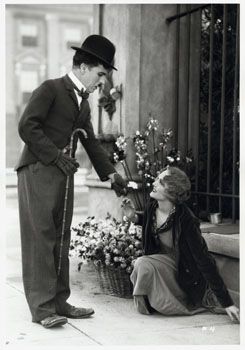
A still from City Lights (1931), Chaplin's silent film made years after Hollywood had switched to sound. He understood that adding words would not improve the film — it would make it something else entirely. United Artists, Public domain, via Wikimedia Commons
What Chaplin designed was a system for emotional communication that relied entirely on visuals and timing. Every frame, every gesture, every cut was deliberate. Modern user interface designers work under similar constraints. You have limited space, limited time, and a user who may not speak your language. The solution is the same: clarity, universality, and an understanding that what you leave out is as important as what you include. Chaplin's films are studies in reduction. Nothing wasted. Every movement purposeful.
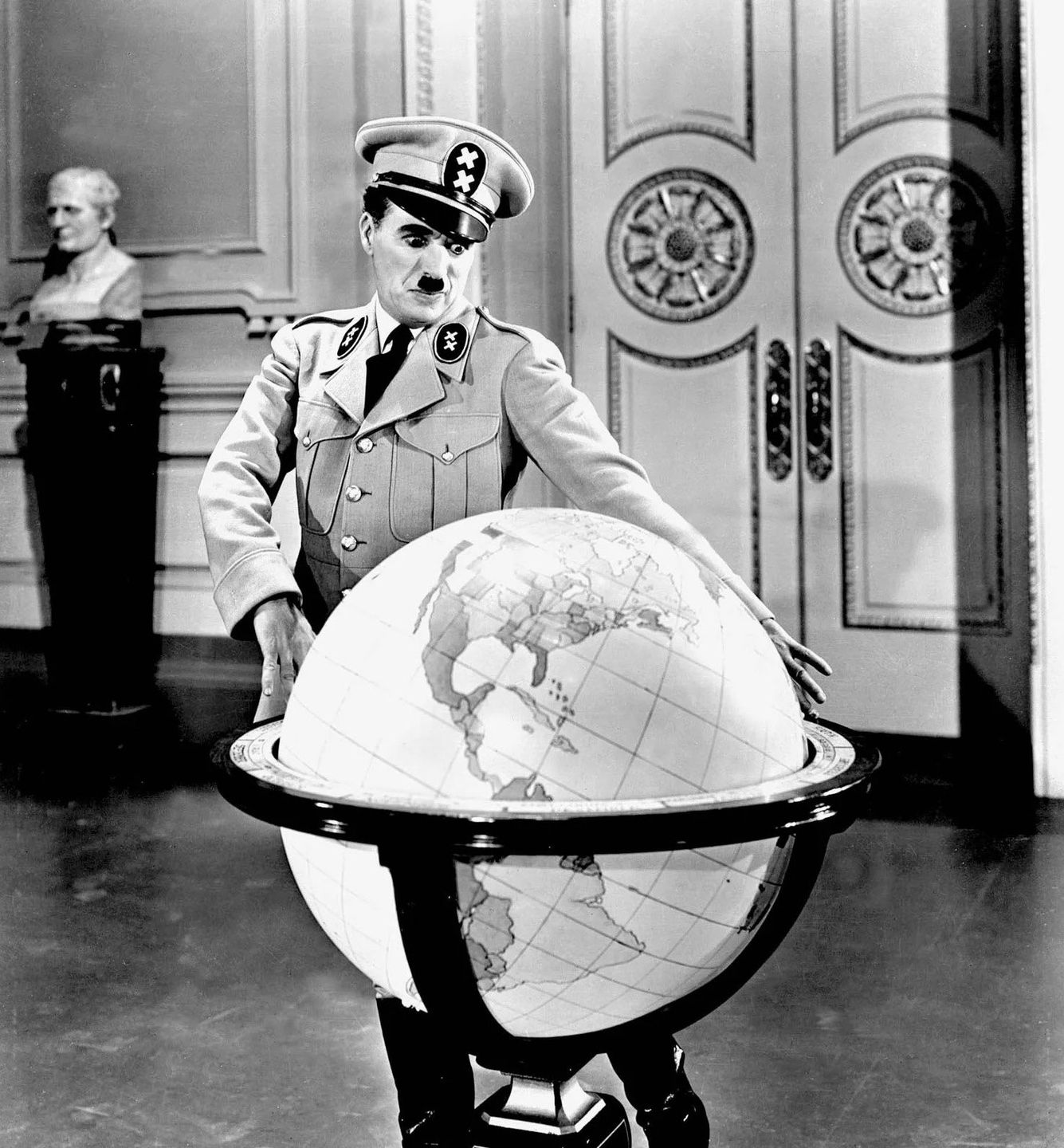
Chaplin in the Great Dictator (1940), the first film in which he spoke. The film ends with a six-minute speech delivered straight to camera — decades of silence made the words land with force. United Artists, Public domain, via Wikimedia Commons
The twentieth century gave us many new languages. Code. Television. Hypertext. But before any of those, there was silent cinema, and Chaplin was its most fluent speaker. He proved that constraint is not limitation. It is focus. When you remove the ability to rely on words, you are forced to think harder about everything else. The result, if done well, is a language so clear it needs no translation. A century later, the Little Tramp still walks. You do not need to hear him to understand exactly what he means.
studio / on-this-day / Apr 16