studio / on-this-day / Dec 23
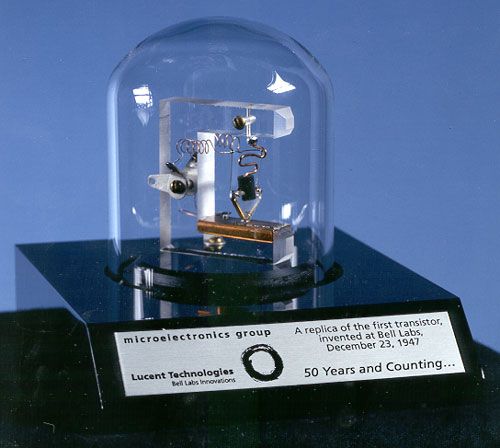
Replica of the first transistor, demonstrated December 23, 1947. Federal employee, Public domain, via Wikimedia Commons
The Switch That Changed Everything
On this day in 1947 — the transistor was first demonstrated at Bell Labs, the tiny switch that everything digital is built on top of.
3 min read
On December 23, 1947, three scientists at Bell Laboratories demonstrated a device that would change the world. It was small, made of germanium and gold, mounted on a plastic wedge. It could amplify electrical signals and act as a switch. They called it a transistor, short for transfer resistor. It was the first solid-state electronic device, requiring no vacuum tubes, no moving parts, no heated filaments. It worked at room temperature and used very little power. Within two decades, it would replace vacuum tubes in nearly every electronic device. Within five, it would enable the microprocessor.
The team was led by William Shockley, with crucial work by John Bardeen and Walter Brattain. Bardeen was a theoretical physicist, Brattain an experimentalist. Shockley was brilliant and difficult, a complicated figure who would later pursue pseudoscientific theories and damage his own legacy. But in 1947, the three of them solved a problem that had stumped engineers for years: how to amplify a signal without a vacuum tube.
Vacuum tubes worked, but they were large, fragile, and hot. They consumed a lot of power and burned out frequently. Computers built with vacuum tubes, like ENIAC, filled entire rooms and required constant maintenance. The search for a solid-state alternative had been underway since the 1920s. Researchers knew that certain materials, called semiconductors, could conduct electricity under specific conditions. The challenge was controlling that flow with precision.
Bardeen and Brattain built the first working transistor by pressing two gold contacts onto a sliver of germanium. When they applied a small voltage to one contact, it controlled a much larger current flowing through the other. It was amplification through quantum mechanics, electrons hopping between energy states in a crystal lattice. Shockley, working separately, developed a more practical design called the junction transistor, which could be manufactured more easily. All three shared the 1956 Nobel Prize in Physics.
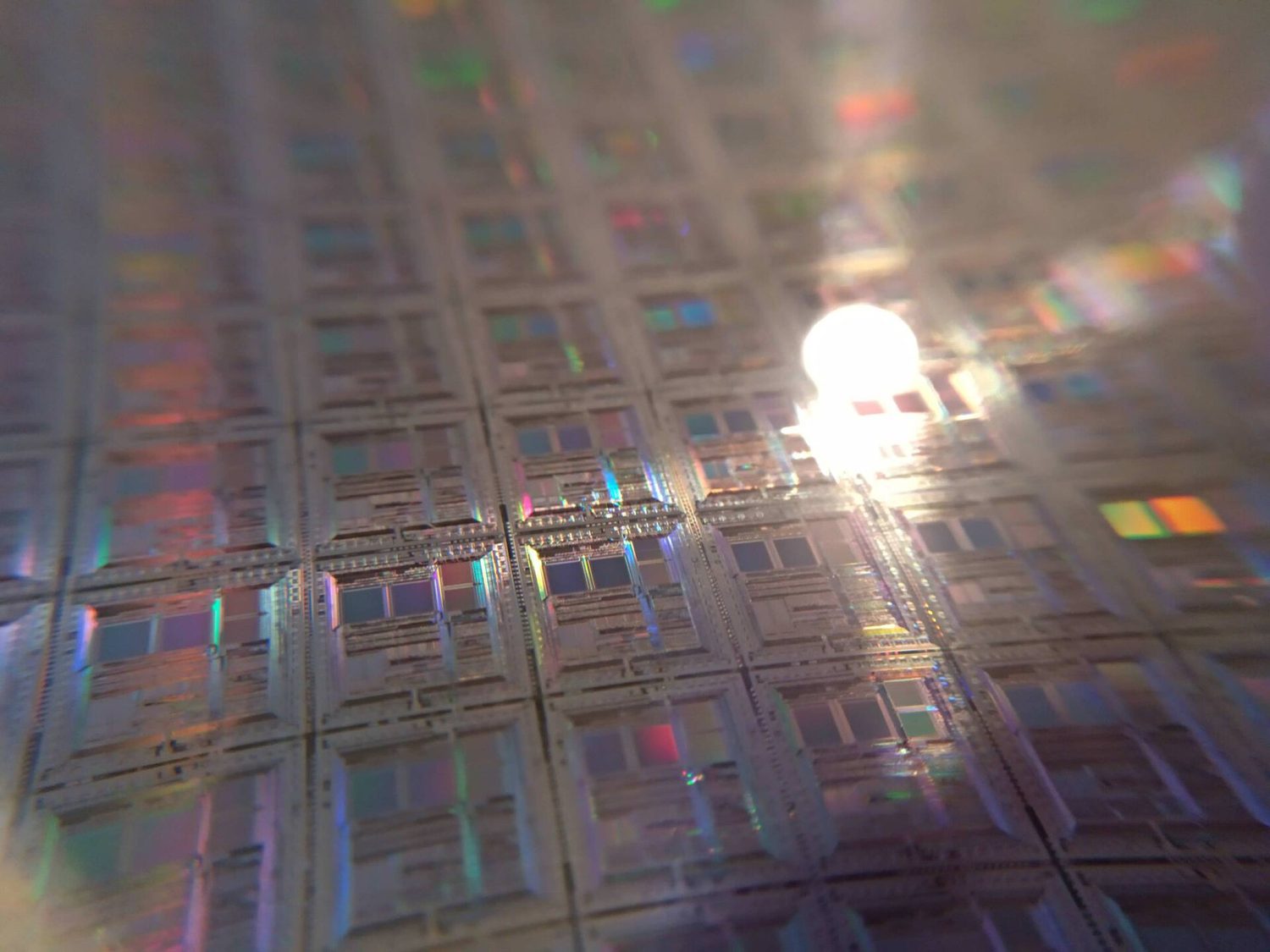
A modern chip carries billions of transistors, all descended from the 1947 original. Le hollandais volant, CC BY 4.0, via Wikimedia Commons
The first commercial use of transistors was in hearing aids, where small size and low power mattered most. Then came radios. The first transistor radio, released in 1954, was a sensation. It was portable, battery-powered, and cheap. Teenagers carried them everywhere. Music became mobile. By the 1960s, transistors had replaced tubes in televisions, computers, and telephone systems. Bell Labs made the patents widely available, licensing the technology to other companies for minimal fees. They wanted the ecosystem to grow.
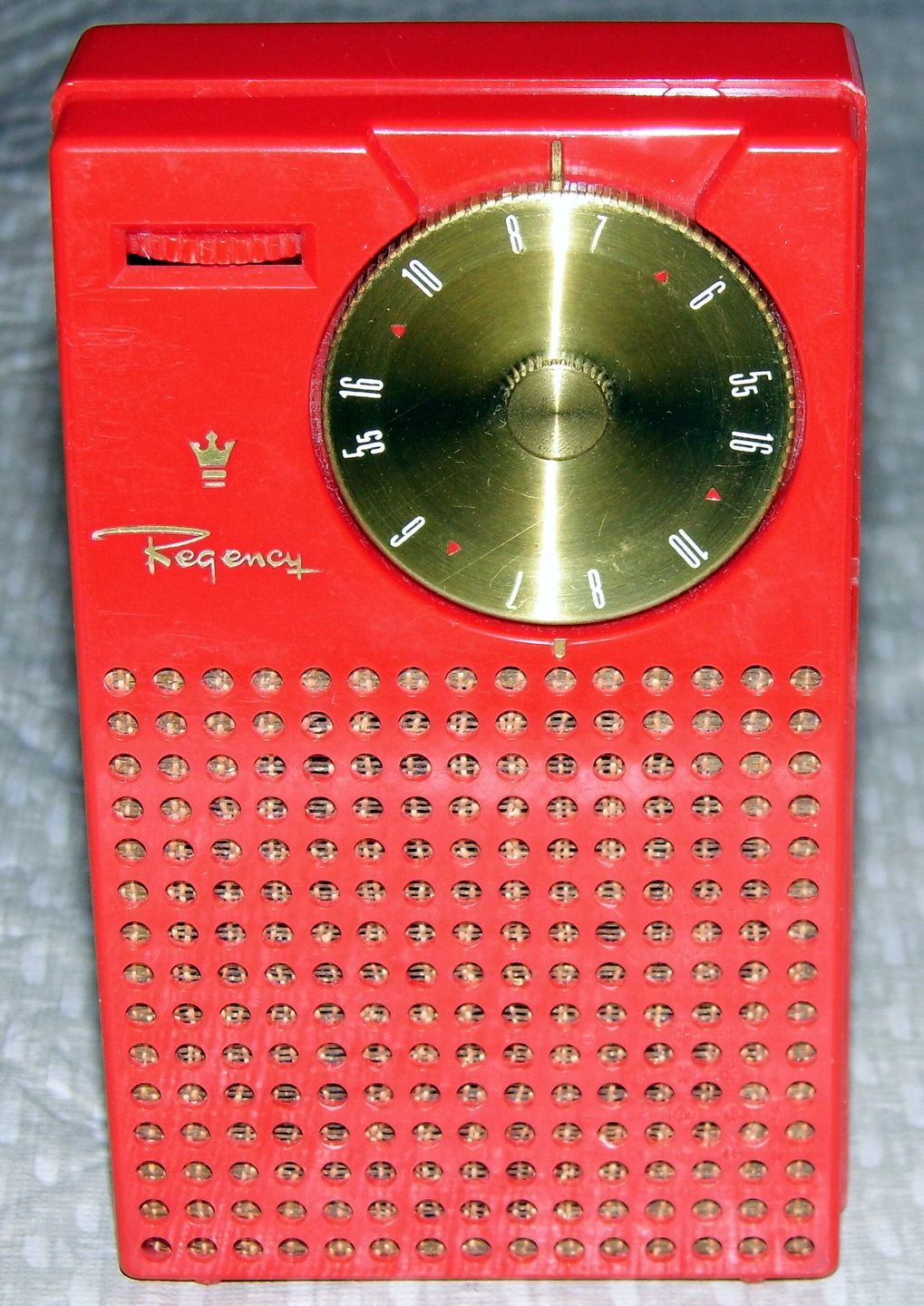
The regency TR-1, the first commercially produced transistor radio, 1954. Joe Haupt from USA, CC BY-SA 2.0, via Wikimedia Commons
What made the transistor revolutionary was not just what it did, but what it enabled. Transistors could be made smaller. They could be combined. In 1958, Jack Kilby at Texas Instruments and Robert Noyce at Fairchild Semiconductor independently invented the integrated circuit, putting multiple transistors on a single chip. By the 1970s, thousands of transistors fit on a chip the size of a fingernail. By the 2020s, that number reached billions. Every smartphone, laptop, and server runs on transistors, tiny switches flipping on and off billions of times per second.
The transistor is to the digital age what the steam engine was to the industrial revolution. It is the foundational technology, the thing that makes everything else possible. Without it, there are no computers, no internet, no GPS, no digital cameras. The entire infrastructure of modern life depends on the ability to control the flow of electrons through silicon. As the Altair 8800 would later demonstrate, personal computing became possible only because transistors made machines small and affordable enough for individuals to own.
The three inventors took different paths. Bardeen left Bell Labs and won a second Nobel Prize for his work on superconductivity, the only person to win the physics prize twice. Brattain stayed at Bell Labs and continued research on semiconductor surfaces. Shockley founded his own company, Shockley Semiconductor, in California, but his abrasive management style drove away key employees. Eight of them left to form Fairchild Semiconductor, which later spawned Intel and dozens of other companies. That exodus helped create Silicon Valley. The transistor did not just change electronics. It changed geography, economics, and culture. A small switch, made of sand and metal, rewired the world.
studio / on-this-day / Dec 23