studio / on-this-day / Dec 24
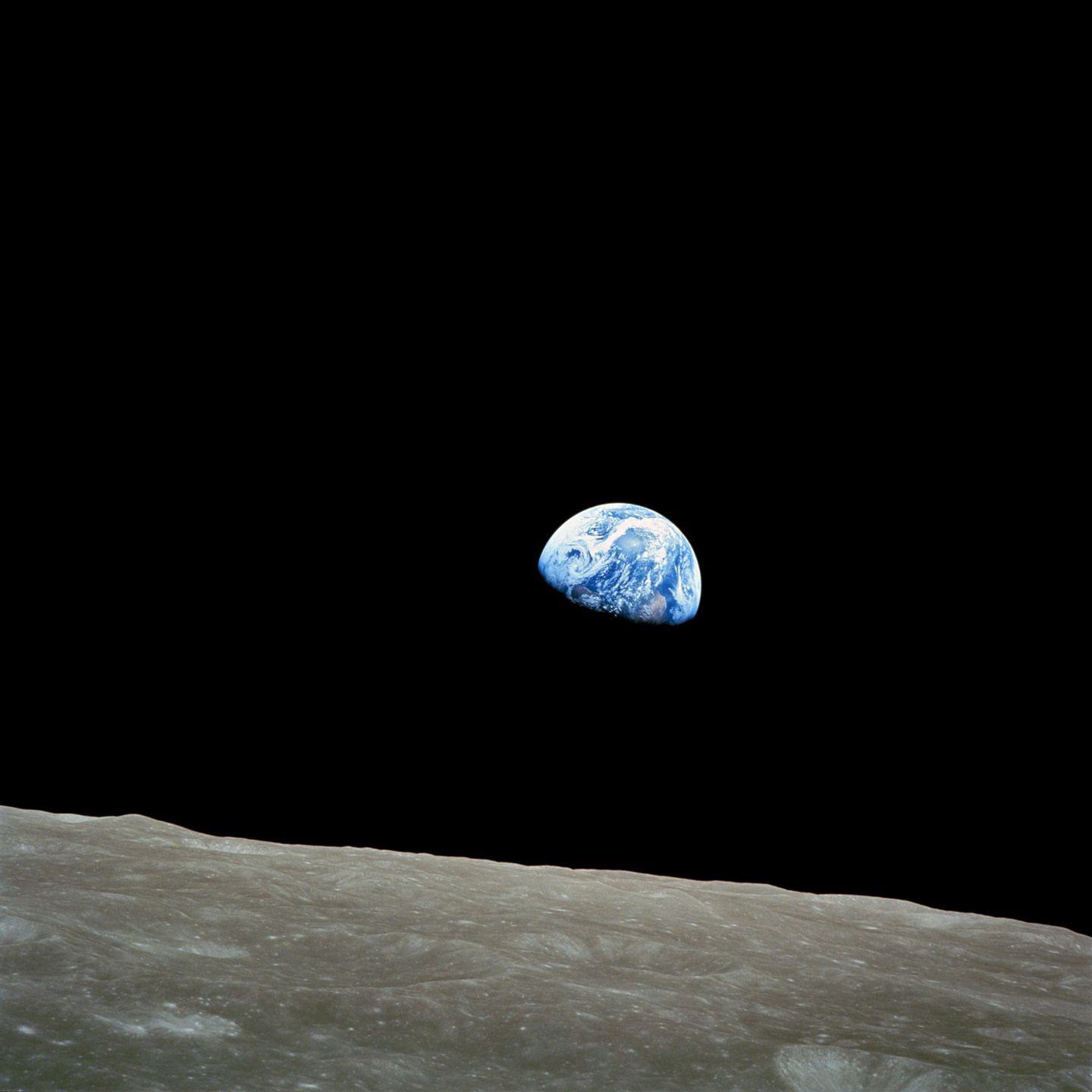
Earthrise, photographed by Apollo 8 astronauts on December 24, 1968. NASA/Bill Anders, Public domain, via Wikimedia Commons
Earthrise
On this day in 1968 — the crew of Apollo 8 watched the Earth rise over the Moon, the first time anyone saw the whole planet at once.
3 min read
On December 24, 1968, three astronauts orbiting the moon saw Earth rise above the lunar horizon. It was the fourth orbit. William Anders grabbed a camera loaded with color film and took the photograph. Frank Borman and Jim Lovell watched. The image showed a small, blue and white sphere floating in the blackness of space, half in shadow, glowing against the gray desolation of the moon. It was the first time human eyes had seen Earth from another world. It was also the first time a camera had captured it.
Apollo 8 was not supposed to happen. The original plan called for testing the lunar module in Earth orbit. But the module was behind schedule, and NASA worried the Soviets would reach the moon first. So they changed the mission. They would send a crew to the moon without landing. Ten orbits around the lunar surface, then home. It was risky. If the engine failed to restart, the crew would be stranded in lunar orbit. There was no rescue plan.
The launch happened on December 21. It took three days to reach the moon. On Christmas Eve, Apollo 8 fired its engine and slipped into lunar orbit. The crew spent the next 20 hours circling the moon, taking photographs, mapping the surface, testing systems. They saw the far side of the moon, the part that never faces Earth, a landscape of craters with no human names. They were the first people in history to see it with their own eyes.
But it was the view of Earth that changed everything. The mission was about the moon. What mattered most was the view looking back. Earth looked small. It looked fragile. It looked like the only home we had. Anders later said he thought they had come to explore the moon, but what they really discovered was Earth. The photograph he took, later called Earthrise, became one of the most influential images of the 20th century.
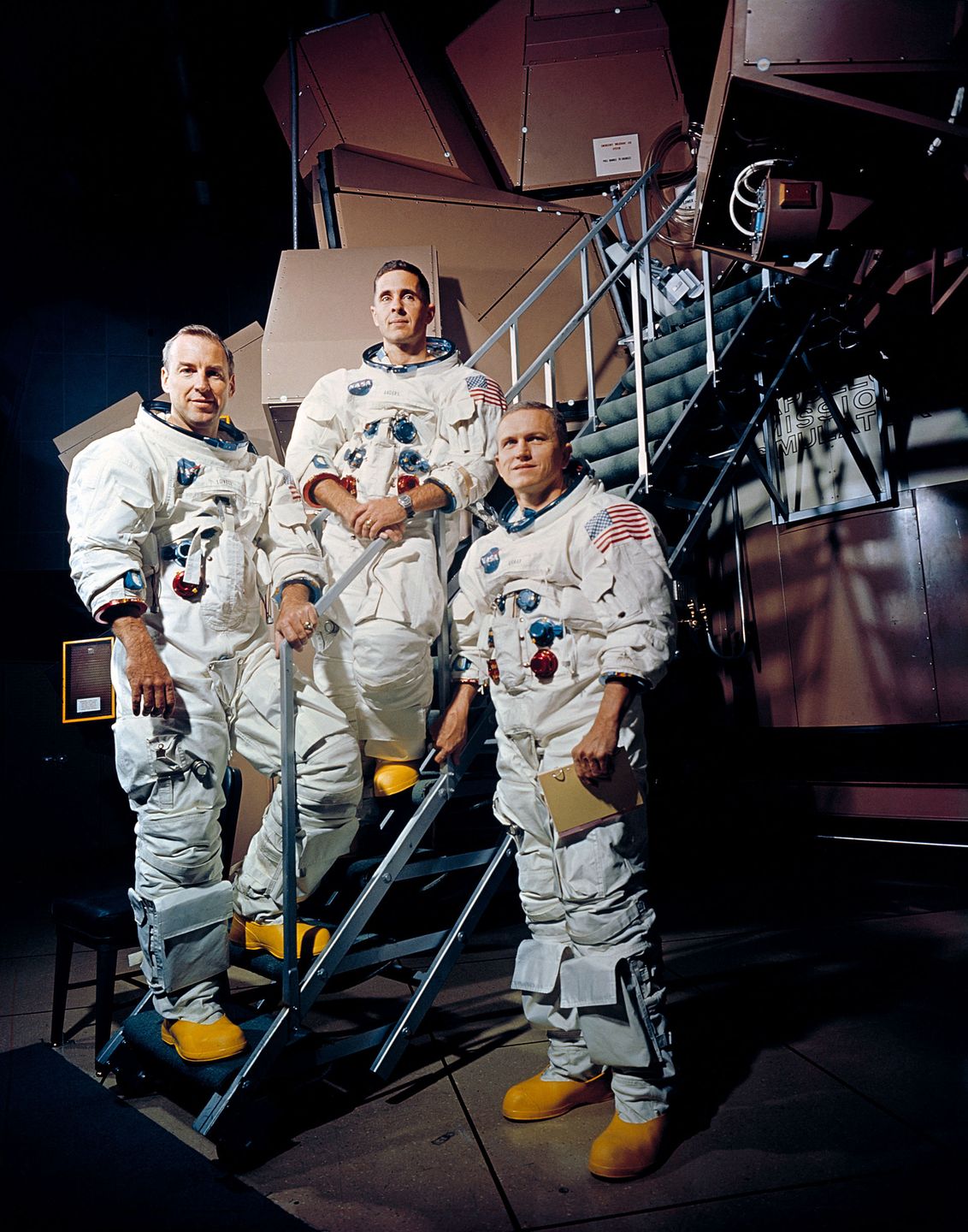
Apollo 8 crew: frank Borman, james Lovell, william Anders. NASA, Public domain, via Wikimedia Commons
That evening, the crew broadcast a live television message from lunar orbit. Nearly a billion people tuned in, the largest audience in television history at the time. The astronauts took turns reading from the Book of Genesis. "In the beginning, God created the heaven and the earth." It was Christmas Eve. They were 240,000 miles from home, orbiting a barren rock, looking back at the only world that had ever held life. The broadcast ended with Lovell saying, "Good night, good luck, a Merry Christmas, and God bless all of you, all of you on the good Earth."
Earthrise became a symbol of the environmental movement. It appeared on the first Earth Day posters in 1970. It illustrated the idea that the planet is a single, interconnected system, finite and vulnerable. Seeing Earth from space removed borders. There were no countries visible, no divisions. Just water, land, clouds, and atmosphere. The image gave people a new way to think about where they lived. Not as citizens of a nation, but as inhabitants of a planet.
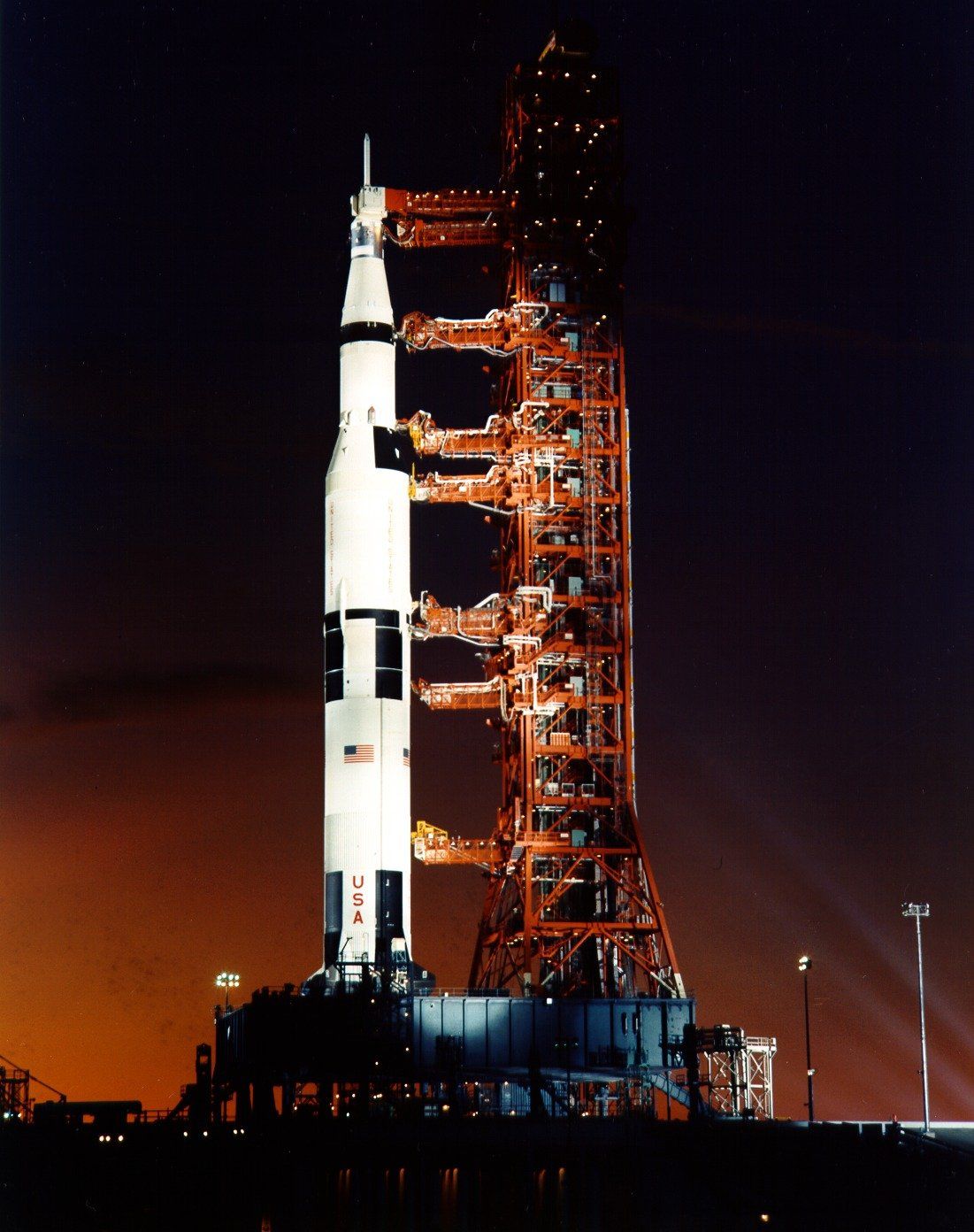
The Apollo 8 Saturn v on launch pad 39a, lit at twilight before the December 21, 1968 launch. NASA, Public domain, via Wikimedia Commons
Apollo 8 returned safely on December 27, splashing down in the Pacific. The mission had been a success. It paved the way for Apollo 11, which would land on the moon seven months later. But the legacy of Apollo 8 was not just what it accomplished. It was what it revealed. As the Blue Marble photograph would later confirm, the most important discovery of the space age was not what we found out there. It was what we saw when we looked back. A small, precious world, alone in the darkness, the only place we know that can sustain us. The astronauts went to the moon, but the image they brought back was of home.
The Earthrise photograph is now part of our collective memory. It hangs in museums, appears in textbooks, circulates on the internet. It reminds us that perspective matters, that distance can reveal what proximity obscures. From the surface, Earth feels infinite. From the moon, it looks like what it is: a single, fragile ecosystem, worth protecting. Three men traveled further than any human had ever gone, not to conquer or claim, but to look back and see where they came from. And in that moment, the world got a little smaller, and the need to care for it became a little clearer.
studio / on-this-day / Dec 24