studio / on-this-day / Oct 1
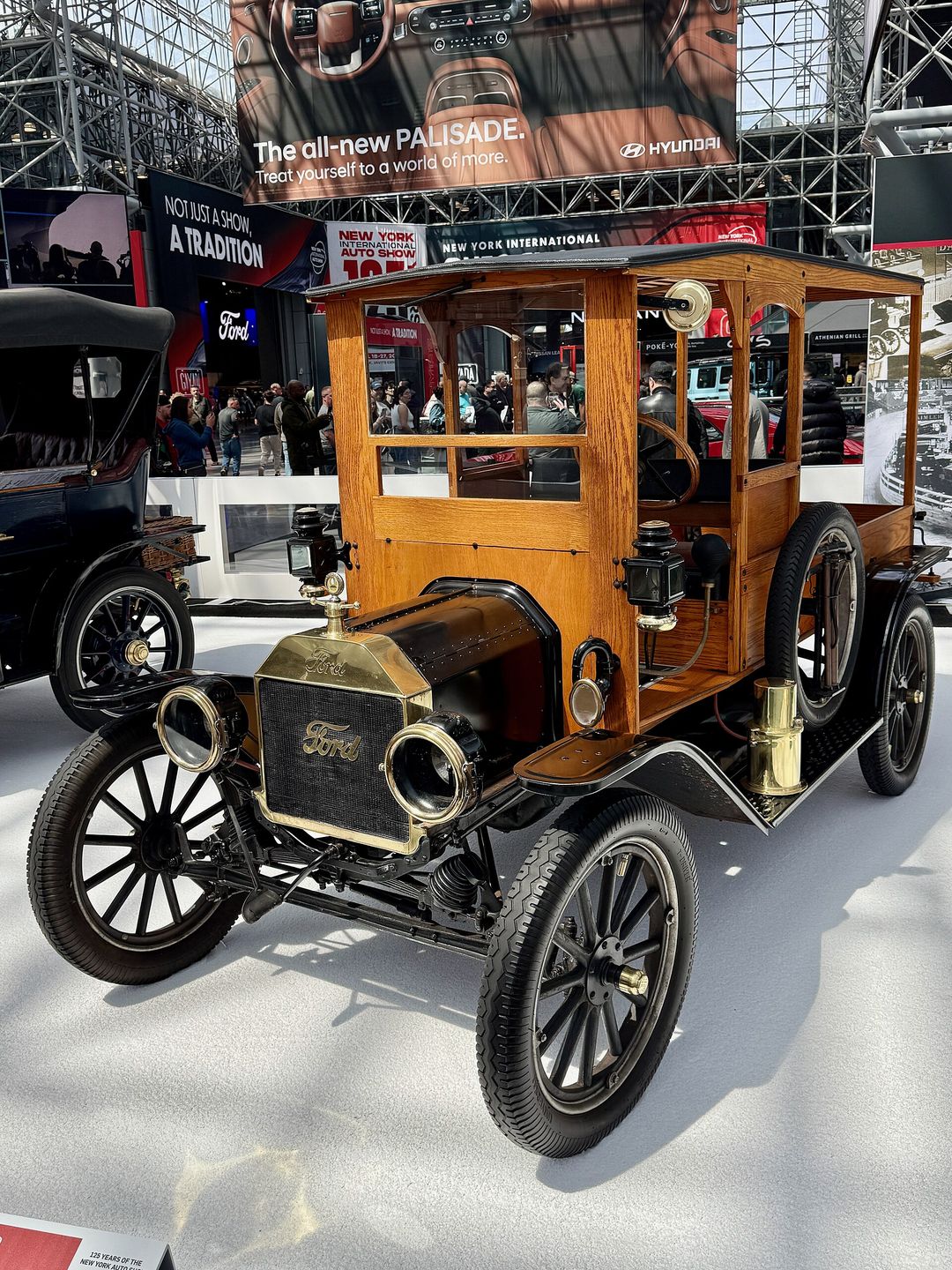
Ford Model t. CC BY-SA 4.0, via Wikimedia Commons
The Car for the Great Multitude
On this day in 1908 — Ford introduced the Model T, priced so ordinary people could actually own one, making accessibility the whole design.
3 min read
On October 1, 1908, the Ford Motor Company introduced the Model T to the public. It was not the first automobile. It was not even Ford's first automobile. But it was the first car designed from the ground up to be accessible, affordable, and repairable by the people who drove it. In an era when automobiles were luxury goods for the wealthy, Henry Ford set out to build what he called "a car for the great multitude."
The Model T was priced at $850, roughly half the cost of comparable vehicles. That still represented eight months of wages for the average American worker, but Ford's vision extended beyond the sticker price. He designed the car to be simple, sturdy, and maintainable. The engine was easy to access. Parts were standardized and interchangeable. Farmers could repair their Model T with basic tools in their own barns. This was accessibility as a design philosophy, not just a price point.
Ford's approach was radical in its restraint. The Model T came in one color (black), with minimal options. This was not limitation for limitation's sake. It was strategic simplification. By reducing variables, Ford could focus on perfecting the manufacturing process. Every decision served the larger goal of making automobiles available to ordinary people.
The car itself was an exercise in thoughtful engineering. High ground clearance for rough rural roads. A lightweight but durable vanadium steel frame. A planetary transmission that was easier to operate than the sliding gear systems common at the time. The design accounted for the real conditions in which people would actually use the vehicle, not the idealized scenarios imagined by luxury automakers.

1913 Ford Model t Speedster. Damian B Oh, CC BY-SA 4.0, via Wikimedia Commons
What made the Model T revolutionary was not any single innovation but the integration of design decisions into a coherent system. Ford understood that accessibility required more than low prices. It required a vehicle that people could maintain, repair, and rely on. It required a distribution network that could reach beyond urban centers. It required manufacturing processes that could scale production without sacrificing quality.

A Ford Model T, built to be affordable to the many. Berthold Werner, CC BY-SA 3.0, via Wikimedia Commons
Between 1908 and 1927, Ford produced over 15 million Model T automobiles. The price dropped steadily as manufacturing efficiency improved, eventually reaching $260 in 1925. The car became so ubiquitous that jokes circulated about how every American family would soon own one. By 1918, half of all cars in America were Model Ts.
The Model T changed more than transportation. It altered the landscape, spurring demand for better roads and highways. It reshaped residential patterns, enabling people to live farther from their workplaces. It transformed rural life, connecting isolated communities to larger markets and social networks. The automobile had existed before the Model T, but Ford made it a tool that reshaped society.
There is a tendency to romanticize the Model T, to see it only as democratization without acknowledging the environmental and social costs that automobile culture would later impose. But on October 1, 1908, the significance was simpler and more immediate. Ford had proven that good design could make powerful technology accessible. The question of whether that technology should be accessible, and at what cost, would take decades to answer. The Model T showed that it could be done. The rest was up to us.
studio / on-this-day / Oct 1