studio / on-this-day / Oct 2
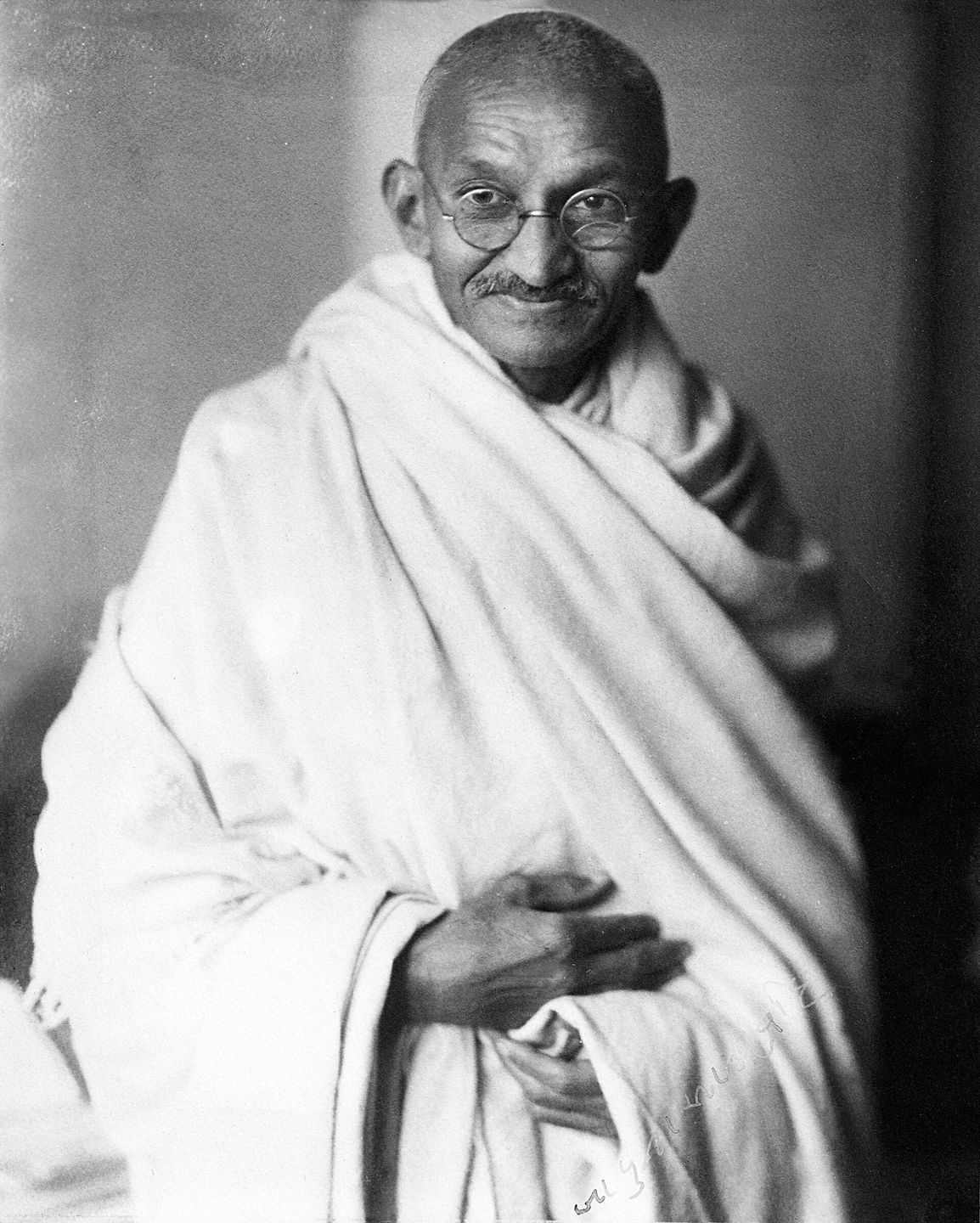
Mahatma Gandhi, 1931. Elliott & Fry, Public domain, via Wikimedia Commons
The Most Elegant Resistance
On this day in 1869 — Mahatma Gandhi was born, and would turn nonviolence into the most elegant lever ever used against an empire.
3 min read
Mohandas Karamchand Gandhi was born on October 2, 1869, in Porbandar, a coastal town in what is now Gujarat, India. Nothing about his early life suggested he would become the architect of one of history's most effective forms of political resistance. He was a mediocre student, painfully shy, and struggled with public speaking. Yet he would develop a method of social change that proved more durable than empires.
Nonviolent resistance, as Gandhi practiced it, was not passive. It was strategic, deliberate, and required more discipline than armed conflict. The idea was to identify the pressure points in a system of power and apply force without violence. Refuse to cooperate. Make the machine grind to a halt. Force the opponent to either reform or reveal the brutality underlying their authority.
Gandhi's approach treated power as a designed system rather than a natural force. Empires depend on compliance. Economies depend on labor. Social hierarchies depend on people accepting their assigned roles. By withdrawing cooperation at scale, nonviolent movements could expose the fragility of systems that appeared permanent. The British Empire controlled India not primarily through force, but through the voluntary participation of millions of Indians in its institutions. Gandhi understood this dependency and exploited it.
The 1930 Salt March is the clearest example. British law prohibited Indians from producing or selling salt, reserving that right for the colonial monopoly. Gandhi walked 240 miles to the sea and made salt from seawater. It was a simple, symbolic act, but it invited millions to do the same. The British arrested over 60,000 people. The arrests did not stop the movement. They exposed the absurdity of the law and the violence required to enforce it.
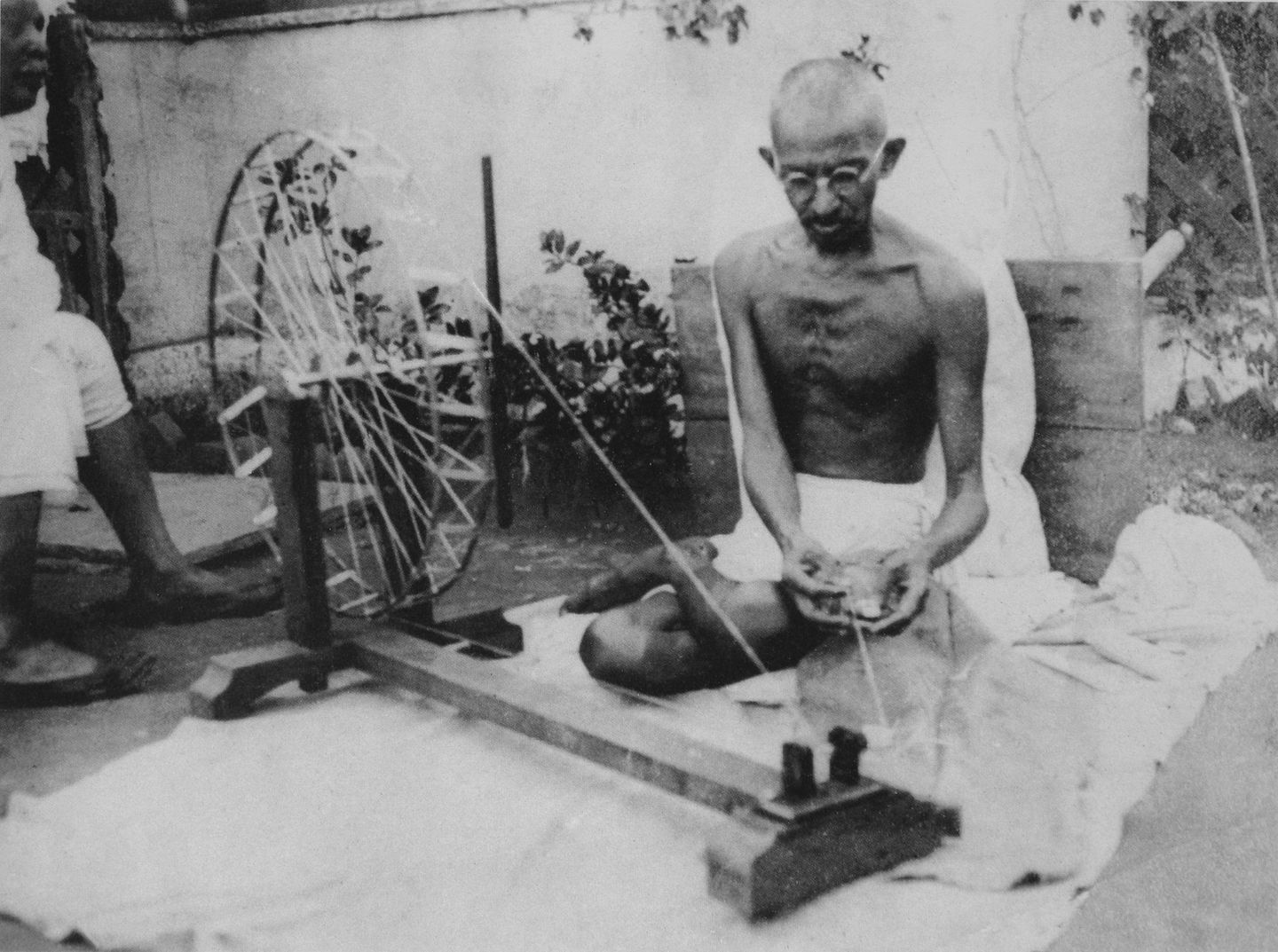
Gandhi at a spinning wheel, symbol of self-reliance. Public domain, via Wikimedia Commons
What made Gandhi's work remarkable was not the concept of nonviolence, which had roots in many traditions, but his ability to scale it. He turned abstract principles into actionable tactics. Boycotts. Peaceful marches. Fasting as public witness. Each action was designed to communicate clearly, to create spectacle, and to force a response. This was protest as design problem, with careful attention to messaging, timing, and audience.
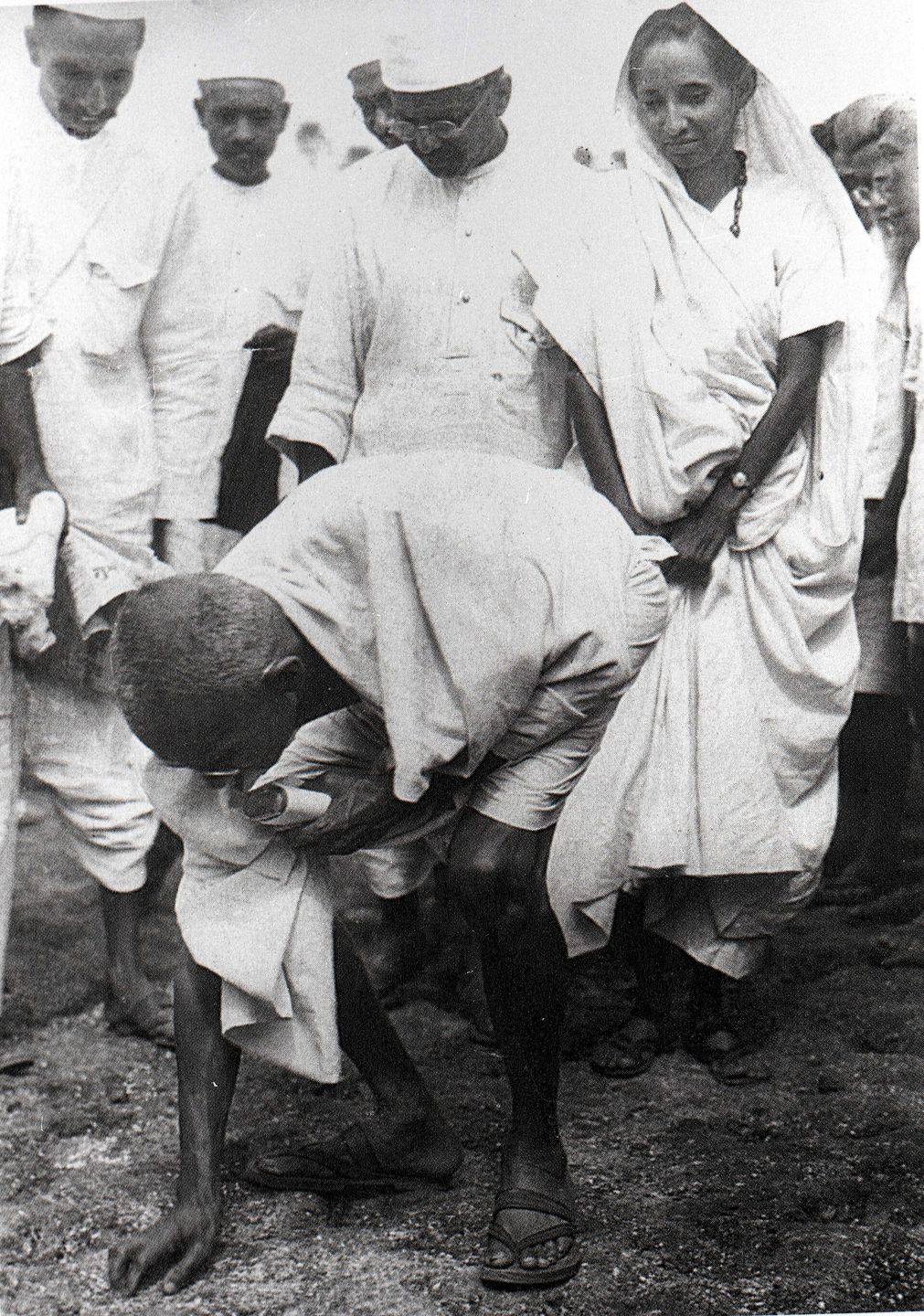
Gandhi picking up a handful of Salt at Dandi, ending the Salt March, 5 April 1930. Public domain, via Wikimedia Commons
Gandhi was not without contradictions. His views on caste, race, and gender were inconsistent and often troubling. His methods worked in part because they appealed to the moral conscience of a democratic Britain, a strategy that would not have succeeded against regimes willing to massacre protesters without political cost. Nonviolent resistance is powerful, but it is not a universal solution. It works within specific conditions and requires opponents who can be shamed or pressured by public opinion.
Still, the model proved transferable. Martin Luther King Jr. adapted Gandhi's methods to the American civil rights movement. Nelson Mandela studied them during the struggle against apartheid. The philosophy influenced movements from Poland's Solidarity to the Arab Spring. Gandhi demonstrated that you could redesign power structures without replicating the violence that created them.
Gandhi was assassinated on January 30, 1948, by a Hindu nationalist who believed he had been too accommodating to Muslims. He died at 78, having lived to see India gain independence but fracture into partition. The system he dismantled gave way to new systems, some more just, some simply different. Power abhors a vacuum, and liberation movements often discover that the hardest work begins after victory.
But October 2, 1869, marks the birth of someone who proved that moral force, strategically applied, could be more effective than armies. Gandhi showed that resistance could be designed, that systems could be changed without becoming the thing you fought against. Whether that design can survive contact with entrenched power is the test every generation faces. Gandhi left us the blueprint. The rest is up to us.
studio / on-this-day / Oct 2