studio / on-this-day / Sep 29

New Scotland Yard, Metropolitan Police headquarters, London. Stephen Richards, CC BY-SA 2.0, via Wikimedia Commons
The House That Built Detection
On this day in 1829 — Scotland Yard was established, turning the catching of criminals from improvisation into a designed institution.
3 min read
On September 29, 1829, the Metropolitan Police of London officially opened for business from its headquarters at 4 Whitehall Place, a building whose rear entrance gave onto a courtyard called Scotland Yard. The name stuck. The Metropolitan Police was itself a new kind of institution, designed from scratch by Home Secretary Robert Peel to replace the fragmented patchwork of parish constables, night watchmen, and Bow Street Runners that had previously kept such order as London possessed. Peel's innovation was to treat policing as an organizational design problem, and to solve it with professional structure.
London in 1829 was a city of more than a million people and growing fast. Crime was widespread and largely uncontrolled. The existing systems were underfunded, poorly coordinated, and often corrupt. Peel's proposal was controversial: a standing body of paid, uniformed officers with defined responsibilities and a chain of command. Critics feared a political police force, a continental gendarmerie that would suppress popular dissent. Peel designed around this fear. His officers wore blue rather than military red. They carried only batons, not swords. They were explicitly instructed to be part of the community they policed, not an occupying force within it.
The organizational principles Peel articulated for the new force have become the foundation of democratic policing theory. Among them: the police are the public and the public are the police. The police officer is a citizen in uniform who exercises authority on behalf of the community, not on behalf of the state against the community. The test of police effectiveness is the absence of crime and disorder, not the evidence of police action. These principles are easier to state than to practice, and the Metropolitan Police has violated them at various points over its history. But as a design brief, they remain remarkable.
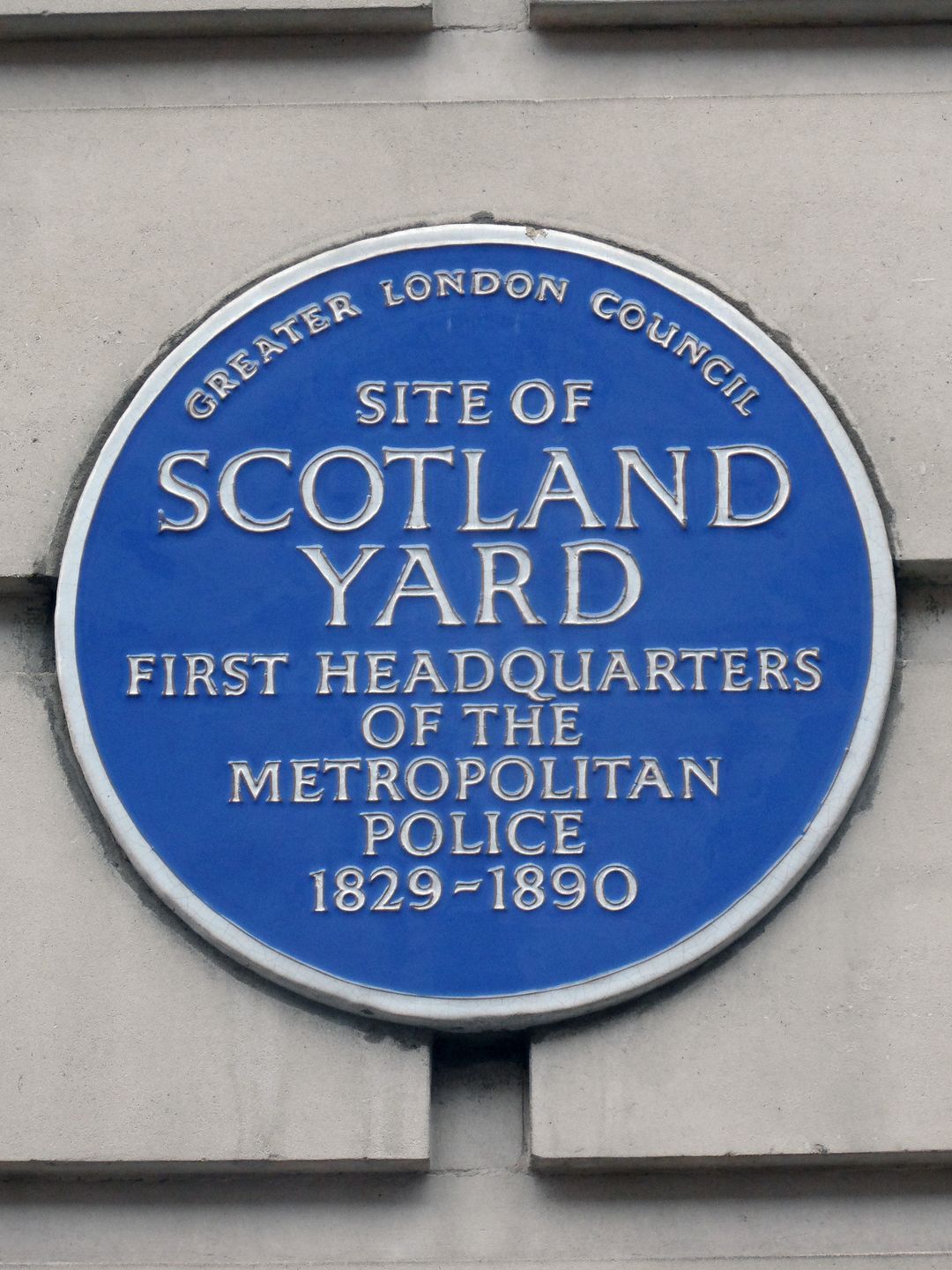
Great Scotland Yard in 1826, three years before the Metropolitan Police established its headquarters there. Spudgun67, CC BY-SA 4.0, via Wikimedia Commons
The detective function developed more slowly. The original Metropolitan Police was primarily a preventive force: officers walked beats, their visibility intended to deter crime. The Criminal Investigation Department, which is what most people mean when they think of Scotland Yard, wasn't established until 1878, nearly fifty years after the force's founding. It was created partly in response to a corruption scandal that discredited existing detective arrangements, and it formalized investigation as a distinct discipline with its own methods and standards.
This is where Scotland Yard's influence on culture becomes as interesting as its institutional history. The detective story as a literary form was born in roughly the same period, with Edgar Allan Poe's Dupin in 1841 and Arthur Conan Doyle's Sherlock Holmes beginning in 1887. Both fictional detectives operate in deliberate contrast to official police methods. They reason from evidence rather than relying on confession. They observe carefully where others overlook. The implicit critique in these stories is that official detection was insufficiently systematic, insufficiently attentive to physical evidence, insufficiently rigorous in its reasoning.
Scotland Yard absorbed that critique and built it into its practices. By the late nineteenth and early twentieth century, it was developing fingerprint identification, forensic science, and systematic records management. Fingerprints had been used for identification since 1858, but Scotland Yard was among the first police forces to build a systematic registry and use it routinely in criminal investigation. Detection became something that could be taught and institutionalized rather than left to individual genius.
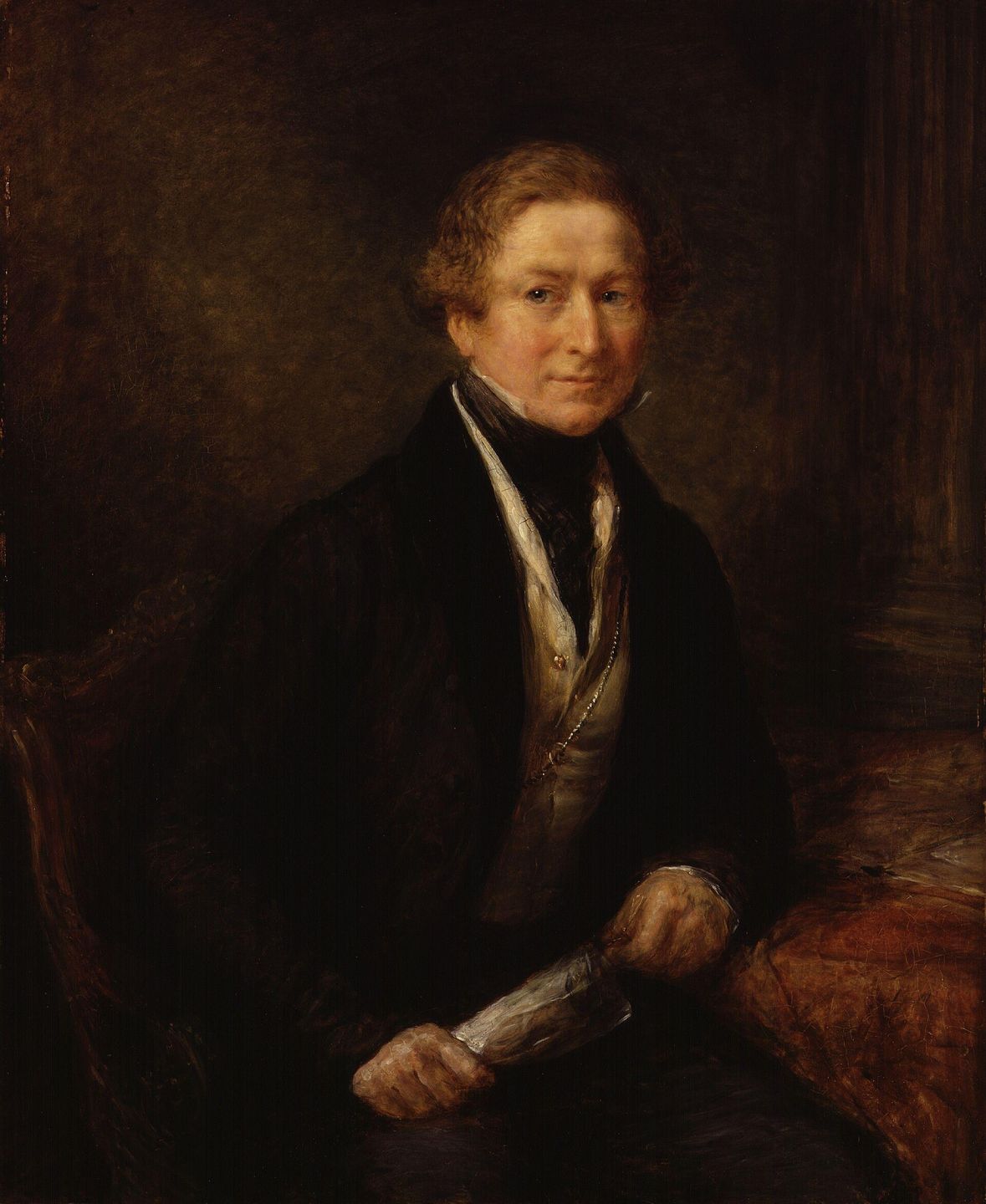
Sir Robert Peel, the Home Secretary who designed the Metropolitan Police as an organizational problem to be solved. John Linnell, Public domain, via Wikimedia Commons
What Robert Peel designed in 1829 was an institution with enough structural integrity to absorb a century of learning and remain recognizably itself. The headquarters moved, the name evolved from Metropolitan Police Office to Scotland Yard to New Scotland Yard, the methods changed beyond recognition. But the organizational idea, that public safety is a professional discipline with standards, training, and accountability, remained intact. Good institutions are designed to outlast their designers and improve in the process. Scotland Yard is complicated evidence that this is sometimes possible.
studio / on-this-day / Sep 29