studio / on-this-day / Jul 28
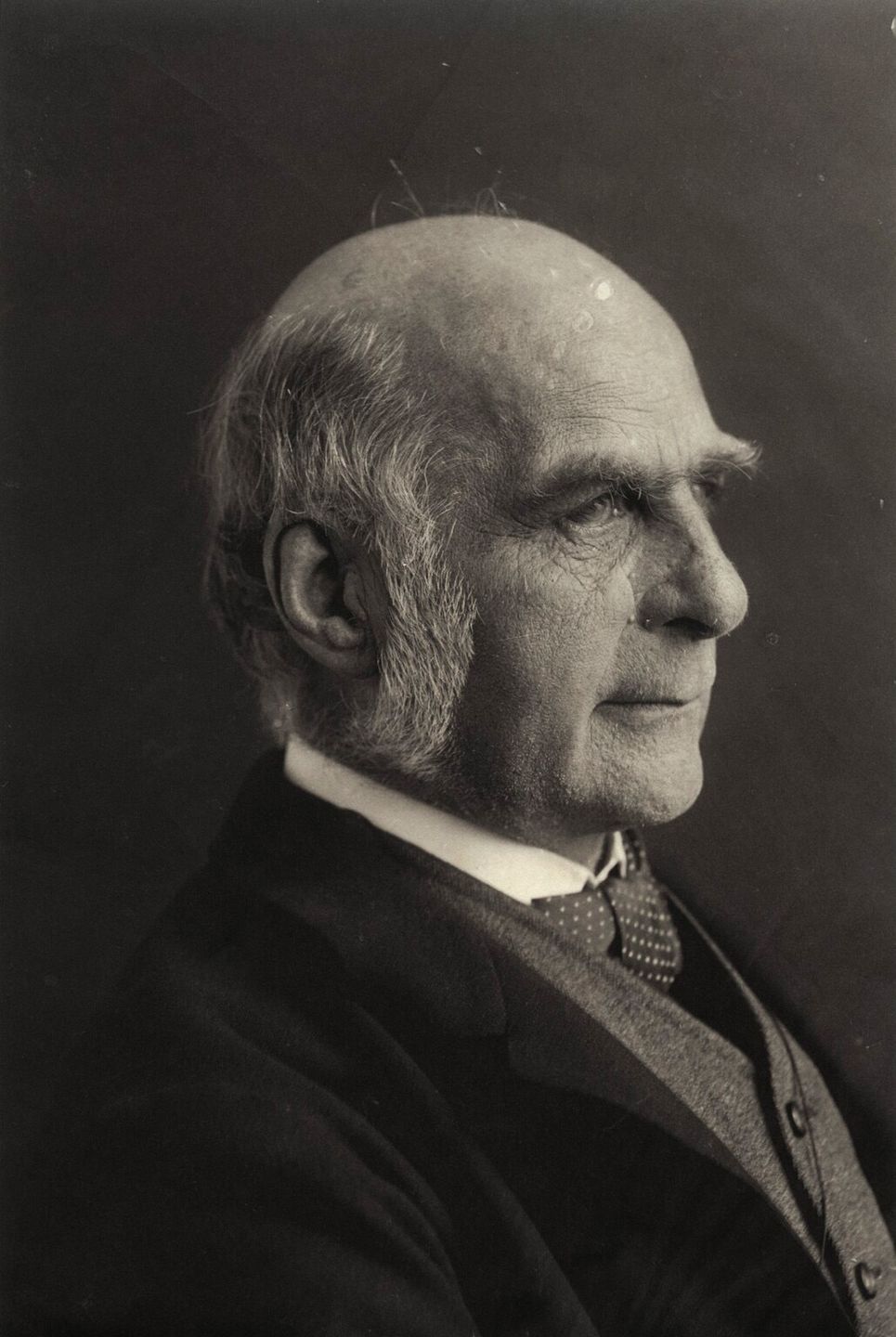
Sir francis Galton, 1890s — scientist who proved fingerprints are statistically unique. Eveleen Myers (née Tennant), Public domain, via Wikimedia Commons
Your Body as Your Password
On this day in 1858 — fingerprints were first used to identify a person, turning the body itself into a signature that could not be forged.
3 min read
On July 28, 1858, William Herschel, a British administrator working in India, asked a local business contractor named Rajyadhar Konai to place his handprint on a contract. The print was made in ink, pressed onto paper alongside the written terms. It was not legally required. Herschel wanted to see if the physical act of marking the document with a body part would make the contract feel more binding. It worked. Konai seemed to take the agreement more seriously. Herschel kept the document and began thinking about fingerprints as a tool for identity verification.
At the time, identifying people reliably was difficult. Names could be faked. Signatures could be forged. Physical descriptions were vague and subjective. There was no universal system for proving who someone was. Criminal records, land ownership, and pension disbursements all depended on trust and memory. If someone claimed to be a different person, there was little way to disprove it. Herschel suspected that the ridges on fingertips might be unique to each individual and unchanging over time. If true, they could serve as permanent identification.
He tested the idea on himself first, making periodic prints of his own fingers over years to confirm they did not change. They did not. He then began using fingerprints in administrative work, requiring people to sign documents with inked thumbprints. The practice reduced fraud. People could not claim they had never signed a contract if their print was on it. Herschel wrote to authorities suggesting the system be adopted more widely. His letters were mostly ignored. The British government was not interested in unproven methods from a colonial outpost.
Meanwhile, in Scotland, a doctor named Henry Faulds was conducting similar research. Faulds worked at a hospital in Tokyo and had noticed fingerprints left on ancient pottery. He began studying the patterns, classifying them into types. In 1880, he wrote to the journal Nature, proposing that fingerprints could be used to identify criminals. He described a case where he had helped police eliminate a suspect by comparing prints found at a crime scene to the suspect's fingers. They did not match. The suspect was cleared.
Faulds and Herschel each claimed to have discovered the utility of fingerprints first. The dispute was never fully resolved. What mattered was that both men had recognized the same thing: the human body carries permanent, unique markers that can function as identification. This was not a technological breakthrough. It was an observational one. The information had always been there, pressed into every surface we touched. It just had not been systematically recorded and compared.
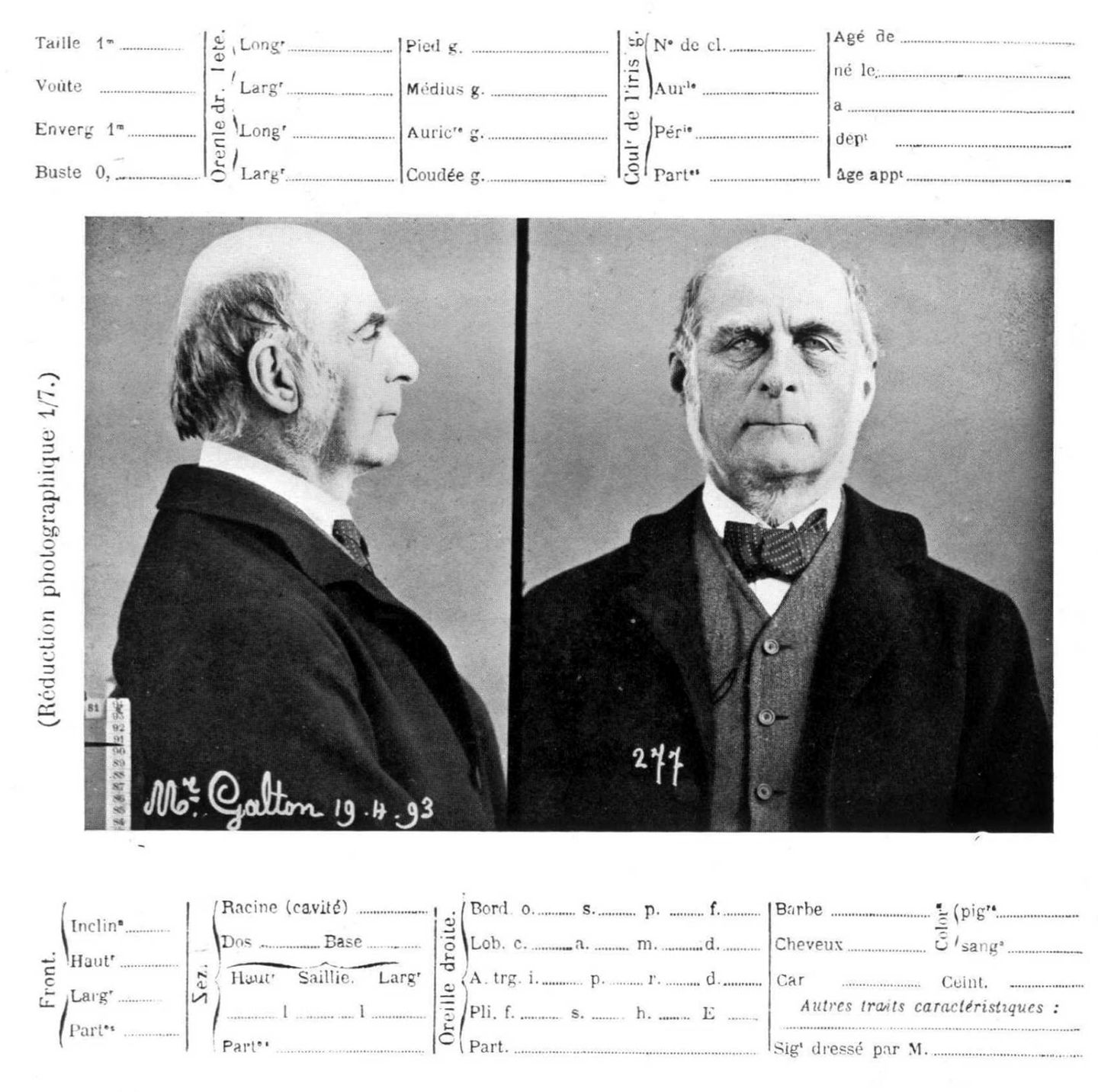
Francis Galton being measured at bertillon's identification laboratory, 1893 — an early system that treated the body as data. Karl Pearson, Public domain, via Wikimedia Commons
The practice spread slowly. Police departments began keeping fingerprint records. Francis Galton, a British scientist, published the first comprehensive study of fingerprint classification in 1892, demonstrating statistically that no two people shared the same prints. His work provided the mathematical foundation for using fingerprints as legal evidence. By the early 1900s, fingerprinting had become standard in law enforcement across Europe and the United States.
The system worked because it was simple. You did not need specialized equipment, just ink and paper. The prints could be stored in files and compared visually. Patterns could be categorized into arches, loops, and whorls, making searches faster. As databases grew, the method became more powerful. A print left at a crime scene could be matched to one in a file containing thousands of records. Identity became searchable.
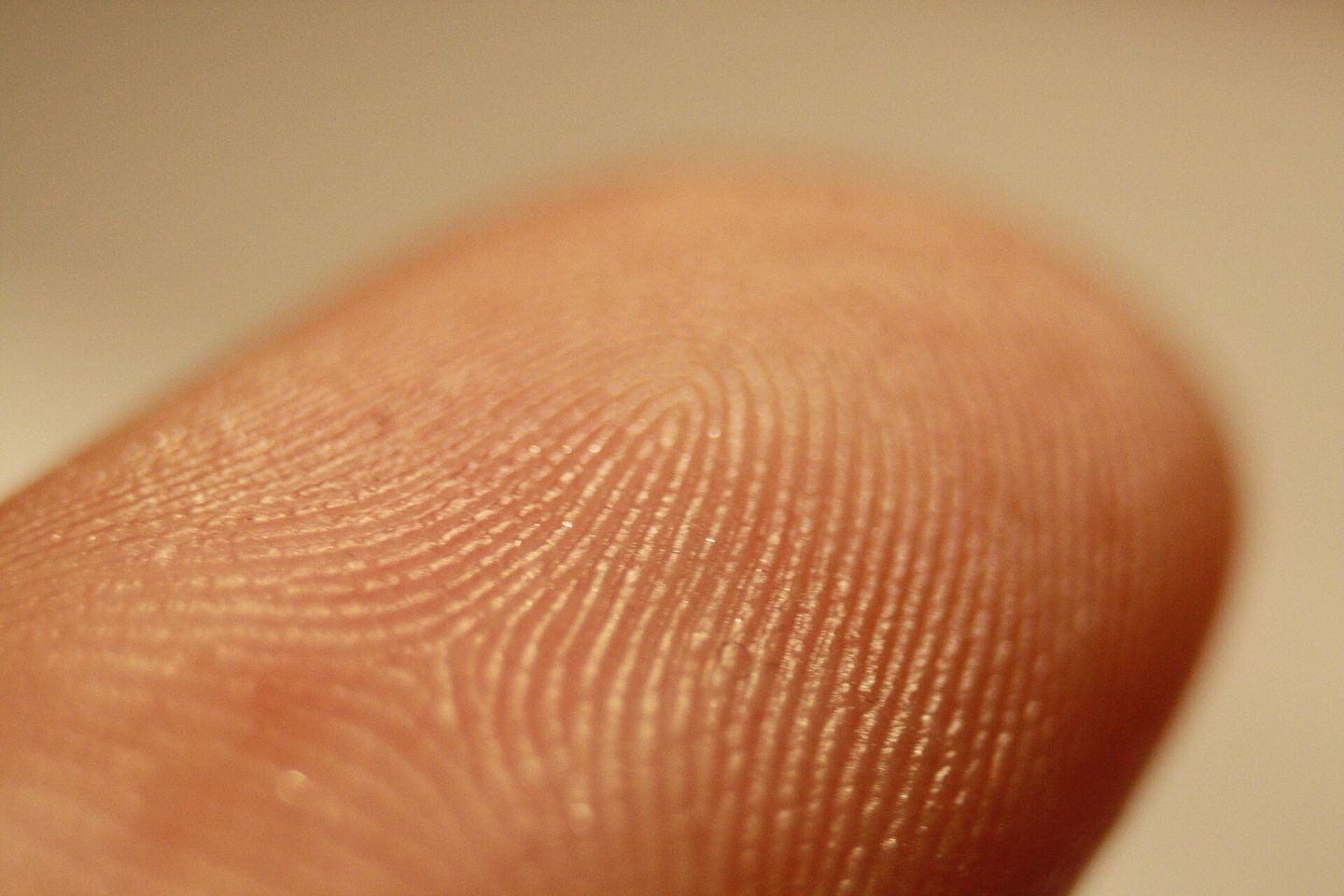
Fingerprint detail showing the unique ridge patterns used for identification. Frettie, CC BY 3.0, via Wikimedia Commons
Fingerprinting also raised questions that persist today. If your body can be used to identify you, who controls that information? Fingerprints taken for one purpose, like employment verification, can be used for others, like criminal investigation. The data is permanent. You cannot change your fingerprints the way you change a password. Once they are recorded, they exist in a system you do not control.
Modern biometric systems extend the same principle. Facial recognition, iris scans, and DNA profiles all treat the body as data. The technology has improved, but the concept remains unchanged: your physical form is a unique identifier, readable and recordable. This is useful for security and convenience. It is also surveillance. The same system that unlocks your phone can track your movements, link your identity to your behavior, and store information about you indefinitely.
Herschel did not foresee this. He wanted a better way to prevent fraud in contract disputes. He saw fingerprints as a practical tool, nothing more. But tools scale. What works for a single contract in a rural district can be applied to millions of people across nations. Infrastructure built for one purpose is repurposed for others. The fingerprint became a key that unlocks systems we did not know we were building when we first pressed ink to paper and preserved the whorls of our skin.
studio / on-this-day / Jul 28