studio / on-this-day / Sep 28
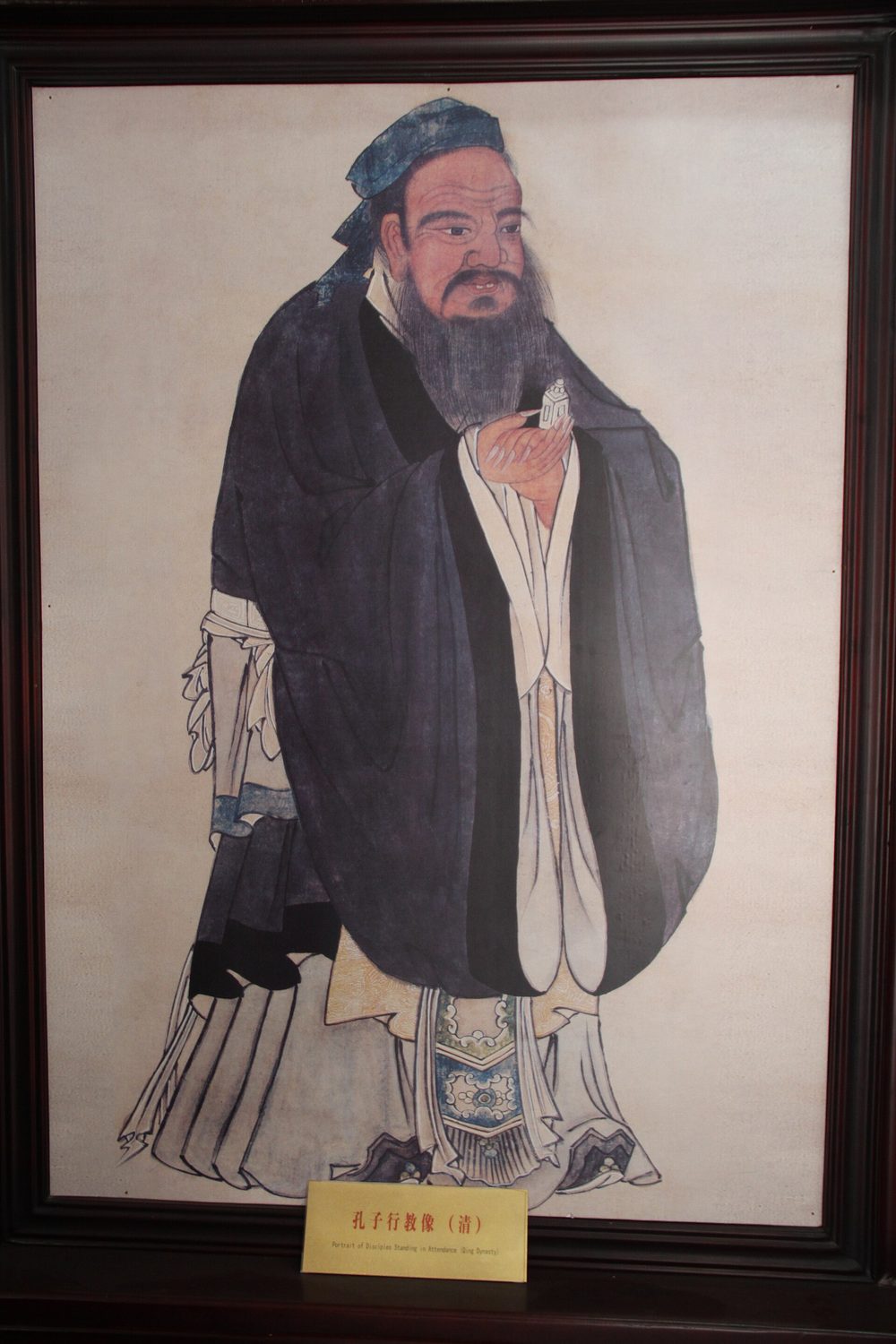
A traditional portrait of Confucius at the Kong Family Mansion in Qufu, China. Public domain, via Wikimedia Commons
The System That Outlasted Its Designer
On this day in 551 BC — Confucius was born, and would design an ethical system that ordered a civilization for two and a half thousand years.
3 min read
Kong Qiu, known to the Western world as Confucius, was born around September 28, 551 BCE, in the state of Lu in what is now Shandong province, China. He lived in a period of political fragmentation and violence, the late Zhou dynasty, when the old social order had broken down and warlords competed across what would eventually become a unified China. Into this disorder, Confucius proposed something that might sound modest: teach people to behave well toward one another, and the political problems will resolve themselves. It was not modest at all. It was one of the most ambitious design proposals in human history.
Confucius was a teacher and an administrator. He spent years attempting to find a ruler willing to implement his ideas about governance. He largely failed at that, moving from court to court with a group of disciples, unable to secure the political appointment he sought. But the conversations he had with those disciples, recorded after his death in the Analects, became the foundation for Confucian philosophy. He died in 479 BCE, believing himself to have accomplished little. He was wrong by approximately 2,500 years of subsequent history.
The core of Confucius's thinking is relational. He was less interested in the individual in isolation than in the web of relationships that constitute a social life: parent to child, ruler to subject, husband to wife, elder brother to younger, friend to friend. Each relationship has its proper form. Ren, often translated as benevolence or humaneness, is the virtue of treating others according to these proper forms, not out of calculation but from genuine care. Li, often translated as ritual propriety, describes the outward expressions of these relationships, the ceremonies and courtesies through which social bonds are maintained and renewed. Together they describe a system in which ethics is not a set of abstract rules but a practice of sustained attention to other people.
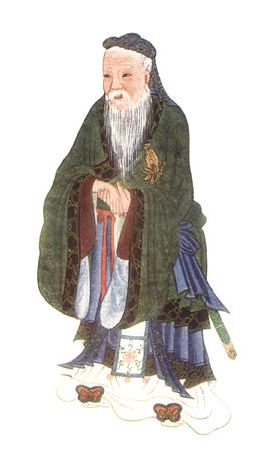
Statue of Confucius at the Confucius Temple in Nanjing, China. By Chinese Artists, Public domain, via Wikimedia Commons
This is, in design terms, a remarkably scalable architecture. The same principles that govern how a son should treat a father can be extended, analogically, to govern how a minister should treat a king or how a king should treat his people. Confucius described himself as a transmitter of the past, not an inventor of new things. He was drawing on what he understood to be the wisdom of the Zhou dynasty's golden age. But the systematization he imposed on that inheritance, and the ethical clarity he brought to it, made it something new.
Confucianism was not without critics even within the Chinese tradition. The Daoists found its emphasis on social form artificial and constraining. The Legalists, who eventually unified China under the Qin dynasty, rejected its reliance on virtue in favor of law and punishment as the instruments of social order. The Qin burned Confucian books and buried Confucian scholars. But the dynasty that followed the Qin, the Han, adopted Confucianism as its official state philosophy. After that, Confucian thought shaped Chinese governance, education, family structure, and social norms for more than two thousand years.
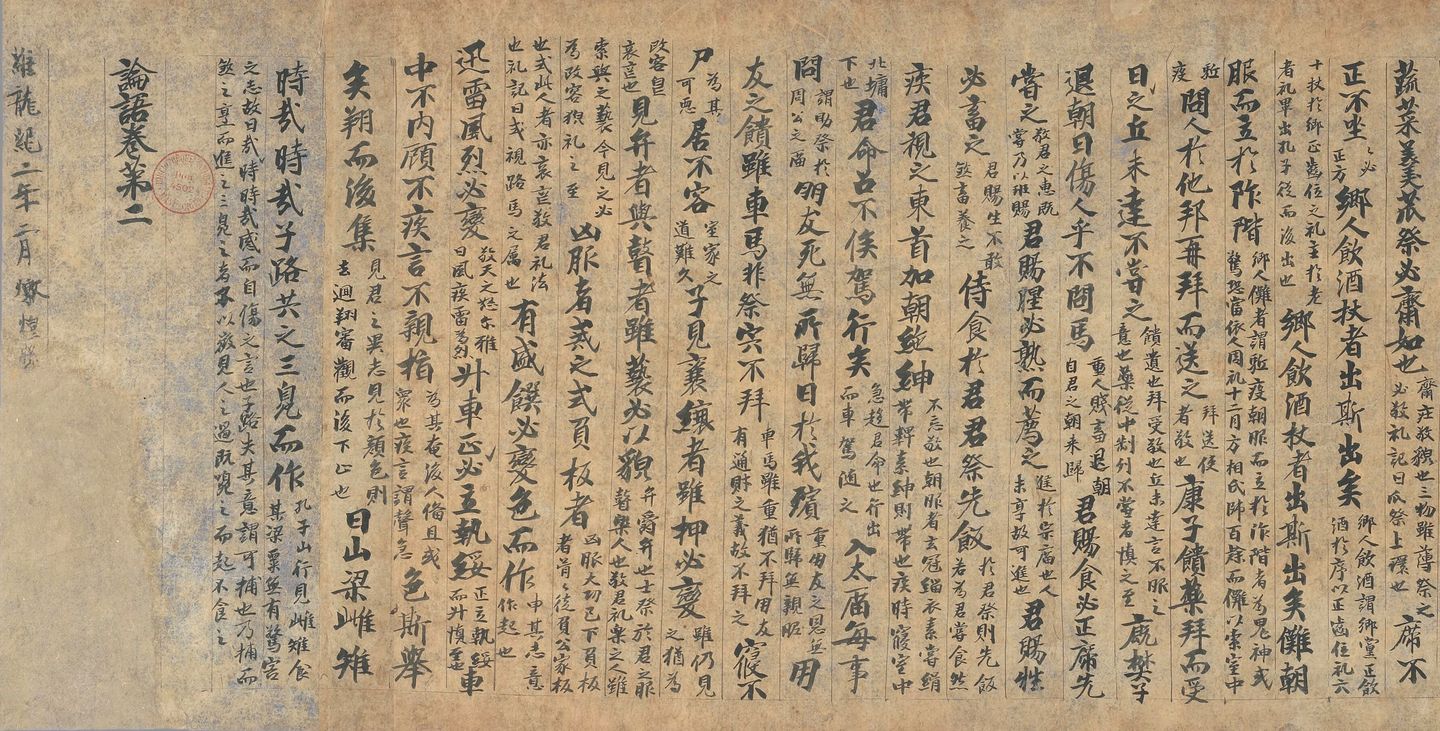
Manuscript of the Analects (lunyu), with commentary by Kong Anguo and Zheng Xuan. Public domain, via Wikimedia Commons
The examination system that governed access to the Chinese civil service for over a millennium was explicitly based on Confucian texts. To hold government office, you needed to demonstrate mastery of the classical canon. This made education the primary path to social mobility and gave intellectual cultivation a political value it has rarely possessed in other societies. The infrastructure of a civilization was built on top of one man's conversations with his students.
What Confucius designed was a feedback loop between personal virtue and social order. He argued that a ruler who behaved virtuously would attract virtuous ministers and inspire virtuous subjects, that good governance was downstream of good character. Marcus Aurelius would reach similar conclusions five centuries later in Rome, writing his Meditations as notes to himself on how to govern from the inside out. Both men understood that systems are, ultimately, made of people, and that the quality of any system depends on the quality of attention its participants bring to it. The thought still travels well.
studio / on-this-day / Sep 28