studio / on-this-day / Sep 25
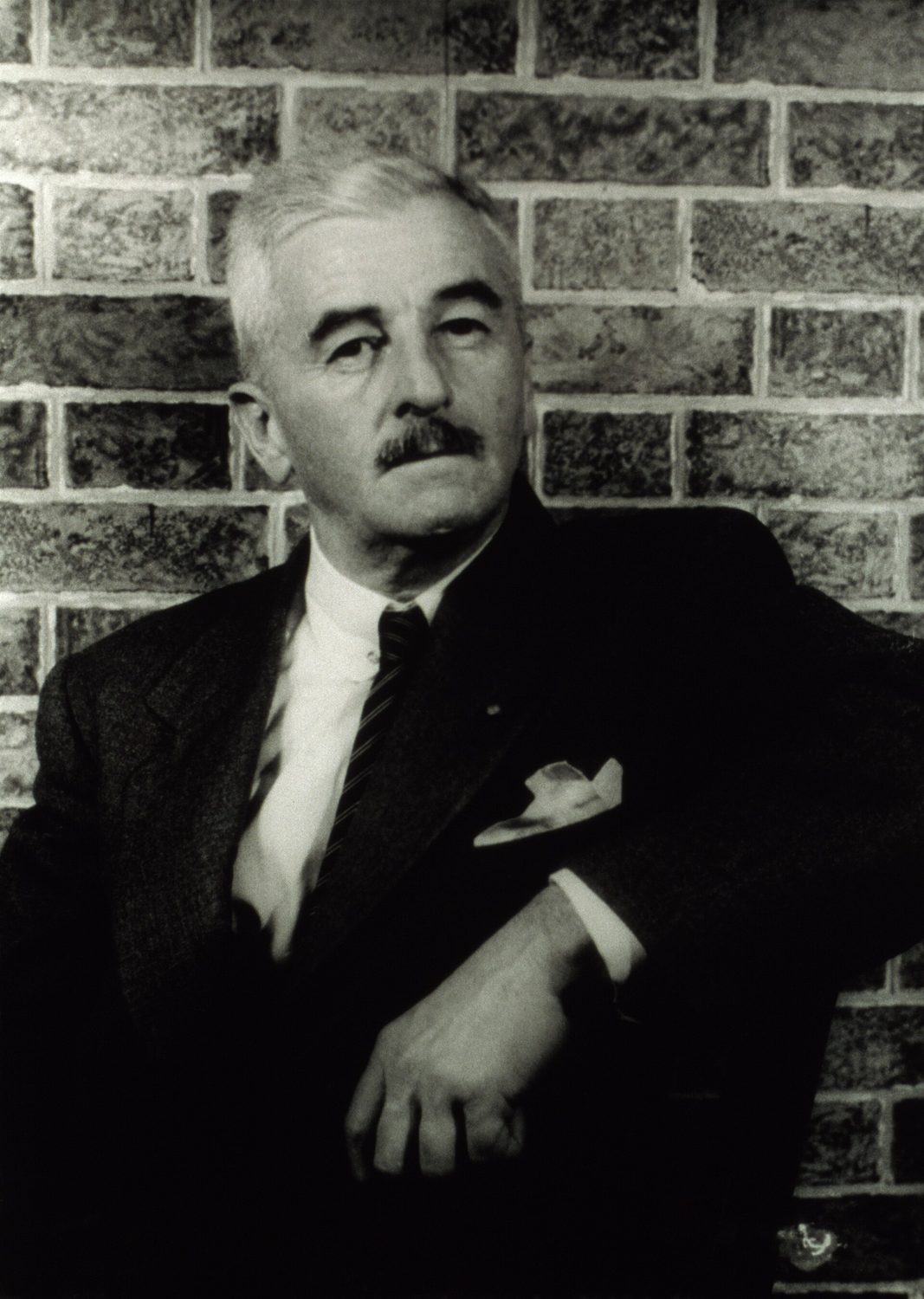
William Faulkner, photographed by Carl Van Vechten in 1954. Public domain, via Wikimedia Commons
The Architecture of the Interior
On this day in 1897 — William Faulkner was born, and would write sentences built like houses with far too many rooms.
3 min read
William Cuthbert Faulkner was born on September 25, 1897, in New Albany, Mississippi. He would spend most of his life within a few hundred miles of that spot, and from that small geography he would construct one of the most ambitious fictional worlds in the history of the novel. He called it Yoknapatawpha County, a fictional Mississippi place with its own maps, genealogies, and recurring characters. He didn't just write stories set there. He built an entire country of the mind.
Faulkner's prose has a quality that no other writer has quite managed to replicate: it feels architectural in the way it holds time. A single sentence might open in the present, spiral back through three generations of family memory, and arrive somewhere you didn't expect, having absorbed everything along the way. His books don't move forward so much as expand outward. The Sound and the Fury tells the same events from four different perspectives, three of them unreliable, one of them nonlinear to the point of vertigo. As I Lay Dying has fifteen narrators. The novels demand active participation, the way navigating a building does.
This is not accidental. Faulkner understood that consciousness doesn't work like a timeline. Memory intrudes on the present. The past refuses to stay past. His famous remark, that the past is never dead, it's not even past, isn't just a philosophical observation about the American South. It's a structural principle for how his sentences are built. He was doing in prose what stream-of-consciousness writers like Virginia Woolf and James Joyce were doing simultaneously in Europe: trying to represent thought as it actually occurs, rather than as it's tidied up for the page.
He wrote almost continuously despite a difficult relationship with alcohol and persistent financial pressure that drove him to Hollywood screenwriting for long stretches. He worked on films that included The Big Sleep and To Have and Have Not, professional work that he treated as a craft problem to be solved. The discipline of screenwriting, clear causality, economical dialogue, visible action, ran exactly counter to his novelistic instincts. He did it anyway, and the tension between those two modes seems to have sharpened him.
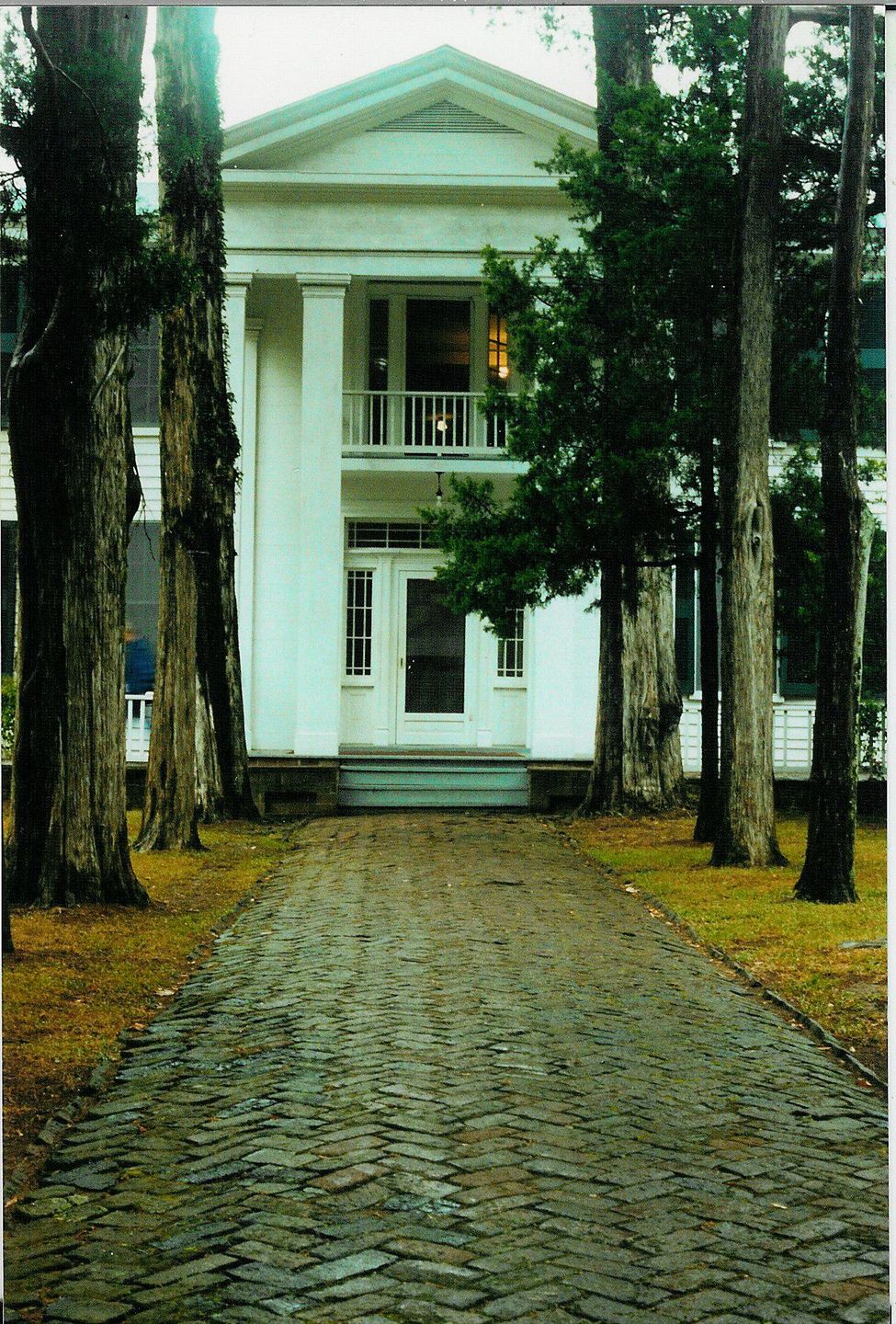
Rowan Oak, Faulkner's home in Oxford, Mississippi. Gary Bridgman, CC BY 2.5, via Wikimedia Commons
He was awarded the Nobel Prize in Literature in 1949, and his acceptance speech became one of the most quoted in the prize's history. He spoke about the duty of the writer to help humanity endure by lifting its heart. It was a statement of purpose, not just for literature but for any creative practice that takes human experience seriously. The craft, in his view, was in service of something larger than technique.
Faulkner's influence on later writers is enormous and sometimes difficult to trace because it works at the level of permission rather than imitation. He showed that difficulty is not a failure of communication. That complexity of structure can be the right form for complexity of subject. That regional particularity, the sounds and rhythms and social structures of a specific place, can be the vessel for universal concerns. Writers like Gabriel Garcia Marquez and Toni Morrison have explicitly credited him, not because they sound like him but because he expanded what the novel was allowed to do.
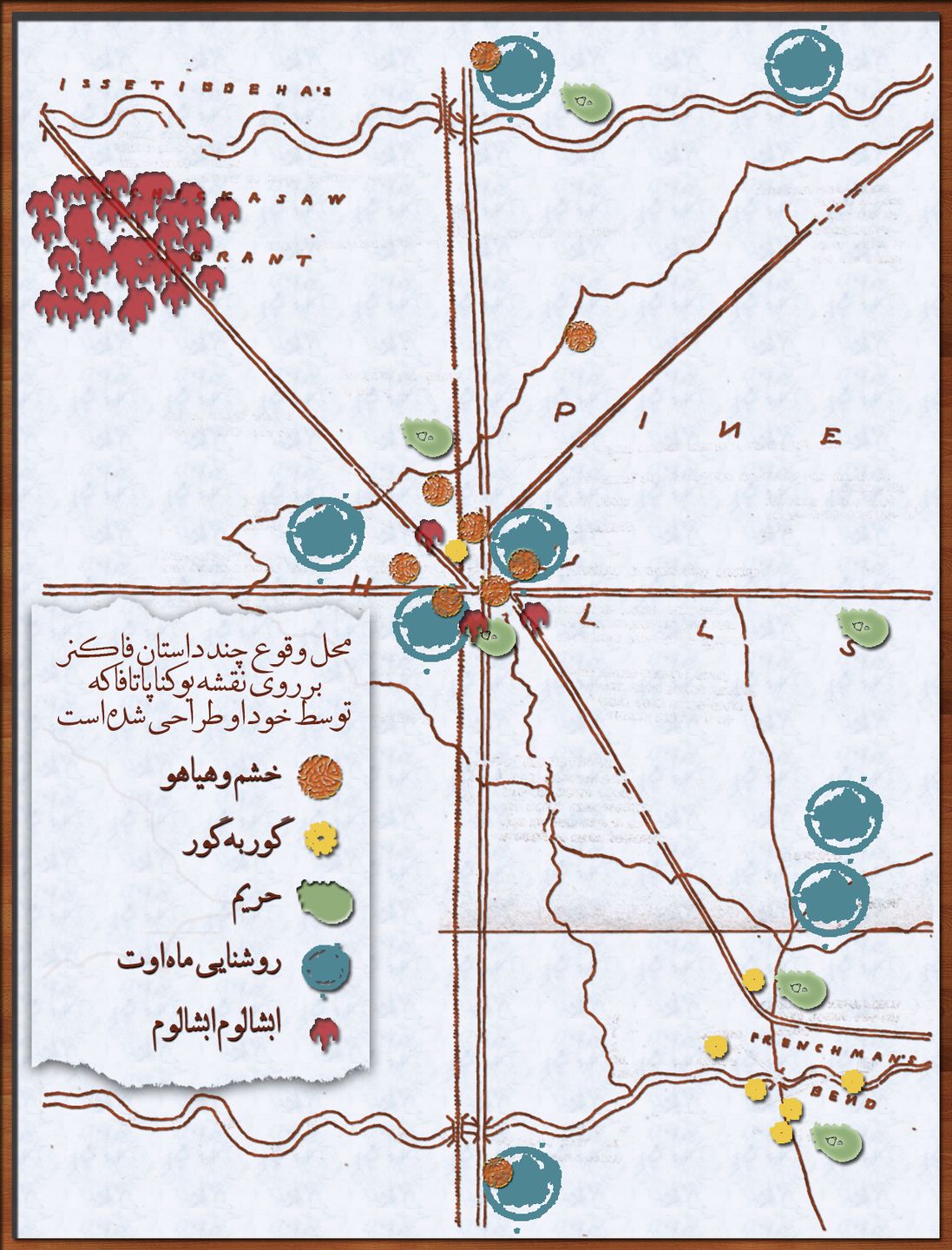
Faulkner's own map of Yoknapatawpha County, the fictional Mississippi he built across his novels. نابک, CC BY-SA 4.0, via Wikimedia Commons
What Faulkner built over his writing life is a monument to the idea that form and content cannot be separated. Van Gogh found that the surface of a painting could carry emotion directly, without representation carrying all the weight. Faulkner found the same thing in syntax. The way a sentence moves, the order in which information arrives, the gaps left for the reader to fill, all of it is meaning. The architecture of the prose is not just decoration. It is the argument. He leaves that argument permanently open, which is why his books still feel alive.
studio / on-this-day / Sep 25