studio / on-this-day / Sep 24
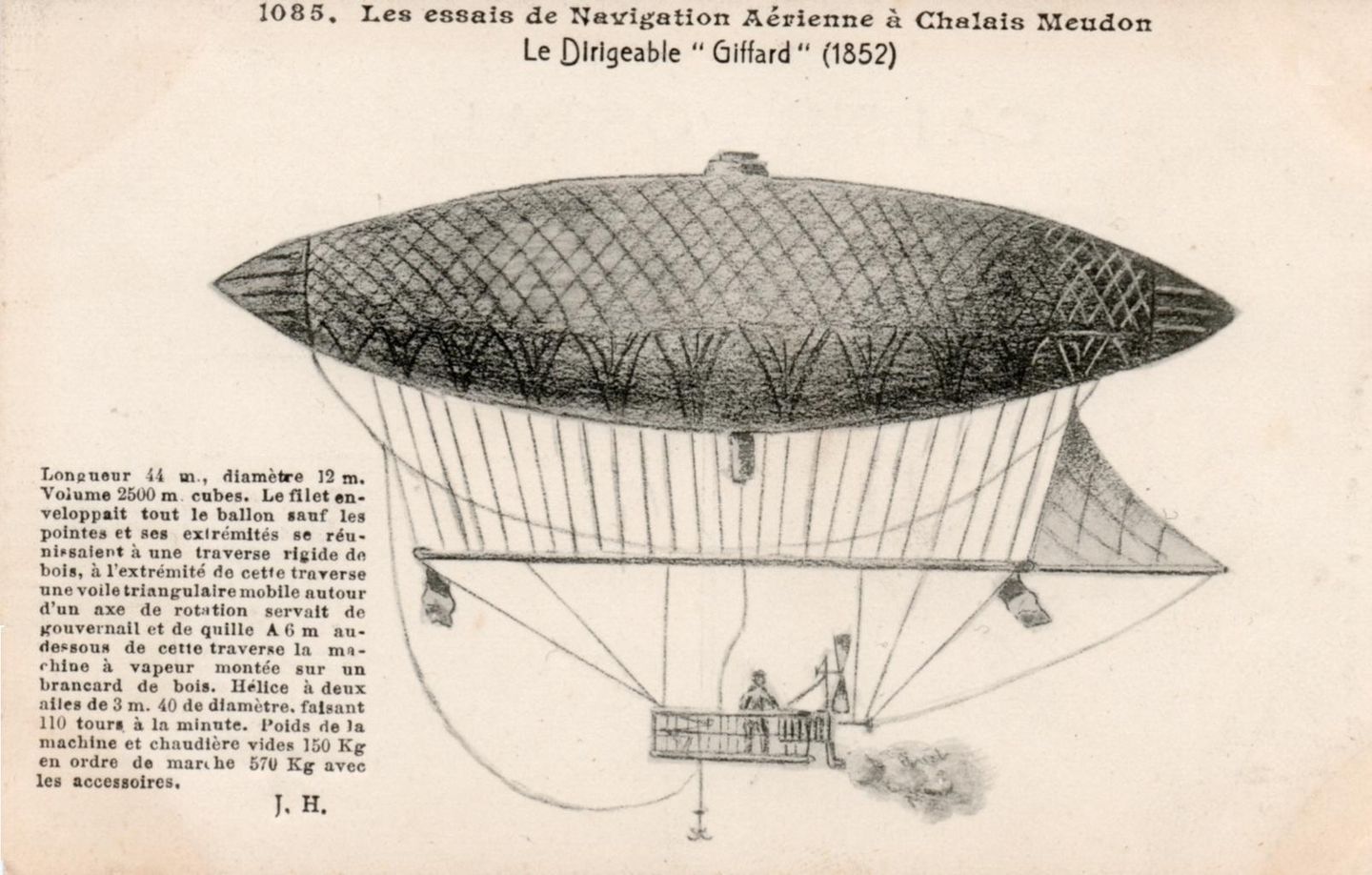
Henri Giffard's hydrogen-powered dirigible, 1852. ABACA, CC BY-SA 4.0, via Wikimedia Commons
The Simplest Element, Rising
On this day in 1852 — the first powered airship flew over France, lifted by the lightest element there is.
3 min read
On September 24, 1852, Henri Giffard climbed aboard a platform suspended beneath a 144-foot-long envelope of hydrogen and fired up a small steam engine. The airship lifted off from the Paris Hippodrome and traveled seventeen miles to Élancourt at an average speed of six miles per hour. It was the first powered, controlled flight in human history. Not the first balloon flight, those had been happening for decades. But the first time a human being could choose where to go rather than simply drift with the wind.
Giffard was 27, a railway engineer with a particular interest in injectors and steam propulsion. He understood that balloons had a fundamental limitation: they could only go where the air took them. What flight needed was thrust and steering. So he built an elongated envelope, filled it with hydrogen, and hung a three-horsepower steam engine beneath it driving a propeller. At the rear, a triangular sail-like rudder gave him directional control. It was elegant, minimal, and functional.
Hydrogen was the obvious choice. The lightest element in the periodic table, it provides maximum lift per cubic foot. Giffard knew the risks. Hydrogen is violently flammable, and he was suspending an open-flame steam engine directly beneath a massive bag of it. The engineering solution was simple: keep the engine far enough below the envelope that rising heat would dissipate before reaching the hydrogen. It worked. The flight was uneventful, controlled, and changed the conversation about what was possible in the air.
The design was limited by the technology of the time. Steam engines are heavy, and the three-horsepower unit Giffard used was barely enough to overcome headwinds. He could steer in calm air, but any significant breeze would overwhelm the propeller. Still, the principle was proven. Flight could be directed. The sky wasn't just a place you visited. It could be navigated.
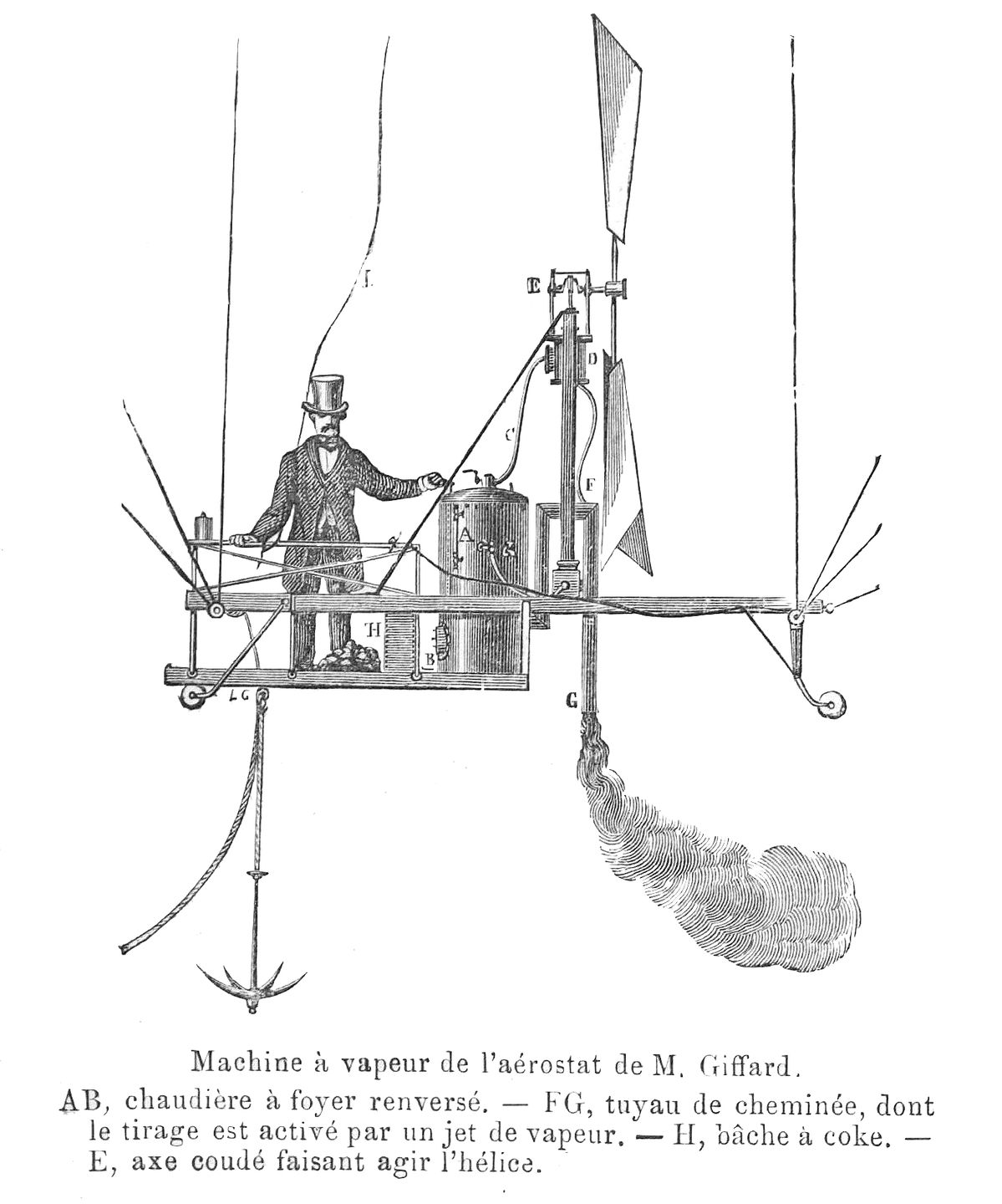
The steam engine that powered Giffard's airship — a three-horsepower unit driving a propeller, hung well below the hydrogen envelope. CC0, via Wikimedia Commons
Giffard's work anticipated the great rigid airships of the early twentieth century, the Zeppelins that would carry passengers across oceans. Those ships used the same principle: hydrogen for lift, engines for thrust, control surfaces for steering. The physics didn't change. The engineering just got more sophisticated. Larger envelopes. More powerful engines. Aluminum frames instead of rope and fabric. But Giffard had already solved the core problem in 1852.
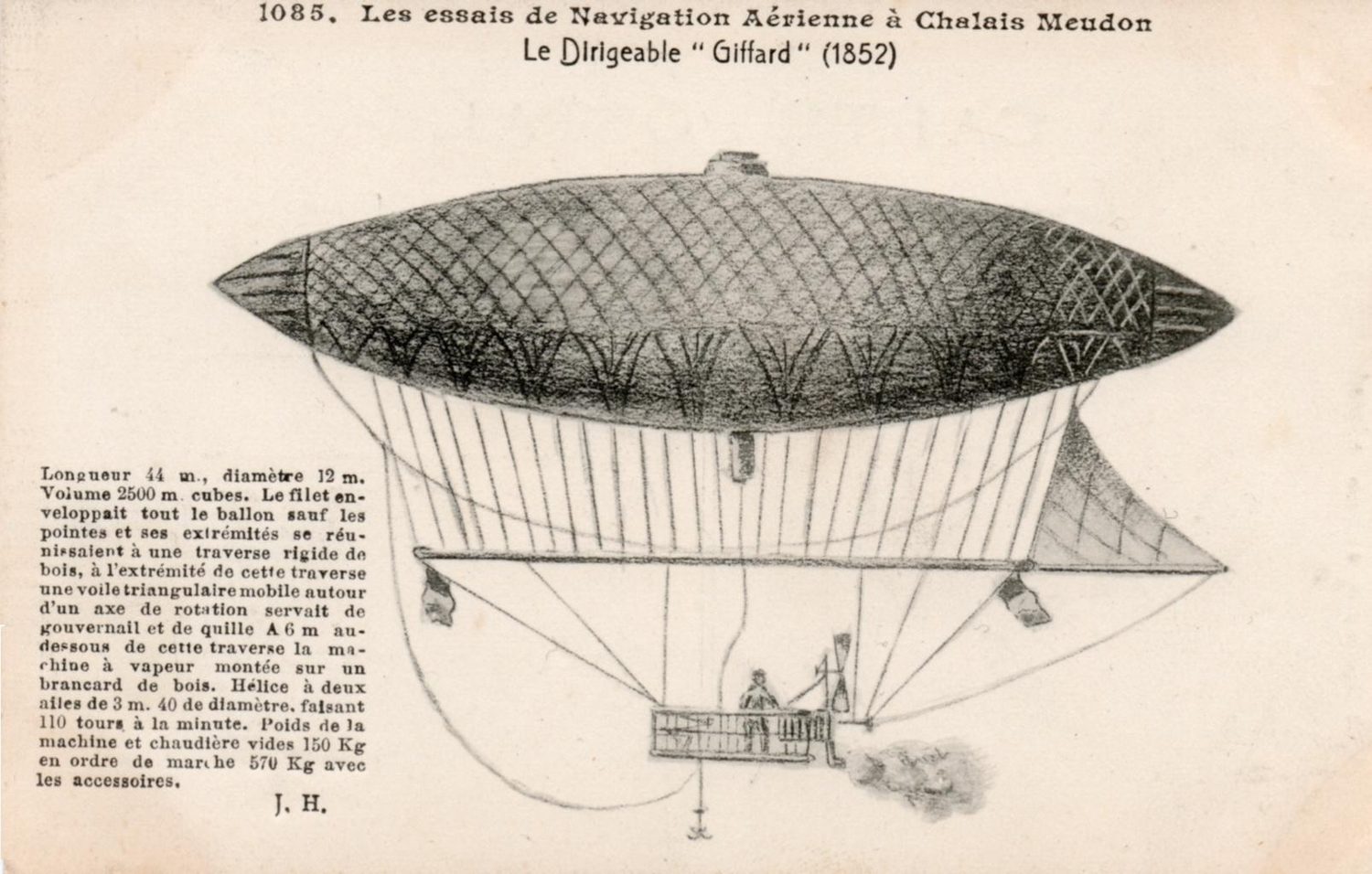
Henri Giffard's steam-powered airship of 1852. ABACA, CC BY-SA 4.0, via Wikimedia Commons
By the 1930s, hydrogen airships were the fastest way to cross the Atlantic. Then the Hindenburg burned in 1937, and the age of the airship ended almost overnight. Hydrogen, the element that made it all possible, also made it catastrophically dangerous. Helium would have been safer, but it was rare and expensive. The economics and the physics never quite aligned again. The airplane, heavier than air but faster and more efficient, won the design competition.
Giffard never saw commercial airship travel. He continued working on steam injectors and other thermodynamic problems. He went blind later in life and took his own life in 1882 at age 57. But on that September day in 1852, for seventeen miles between Paris and Élancourt, he proved that humans could choose their path through the air. The simplest element in the universe carried him there.
studio / on-this-day / Sep 24