studio / on-this-day / Mar 30
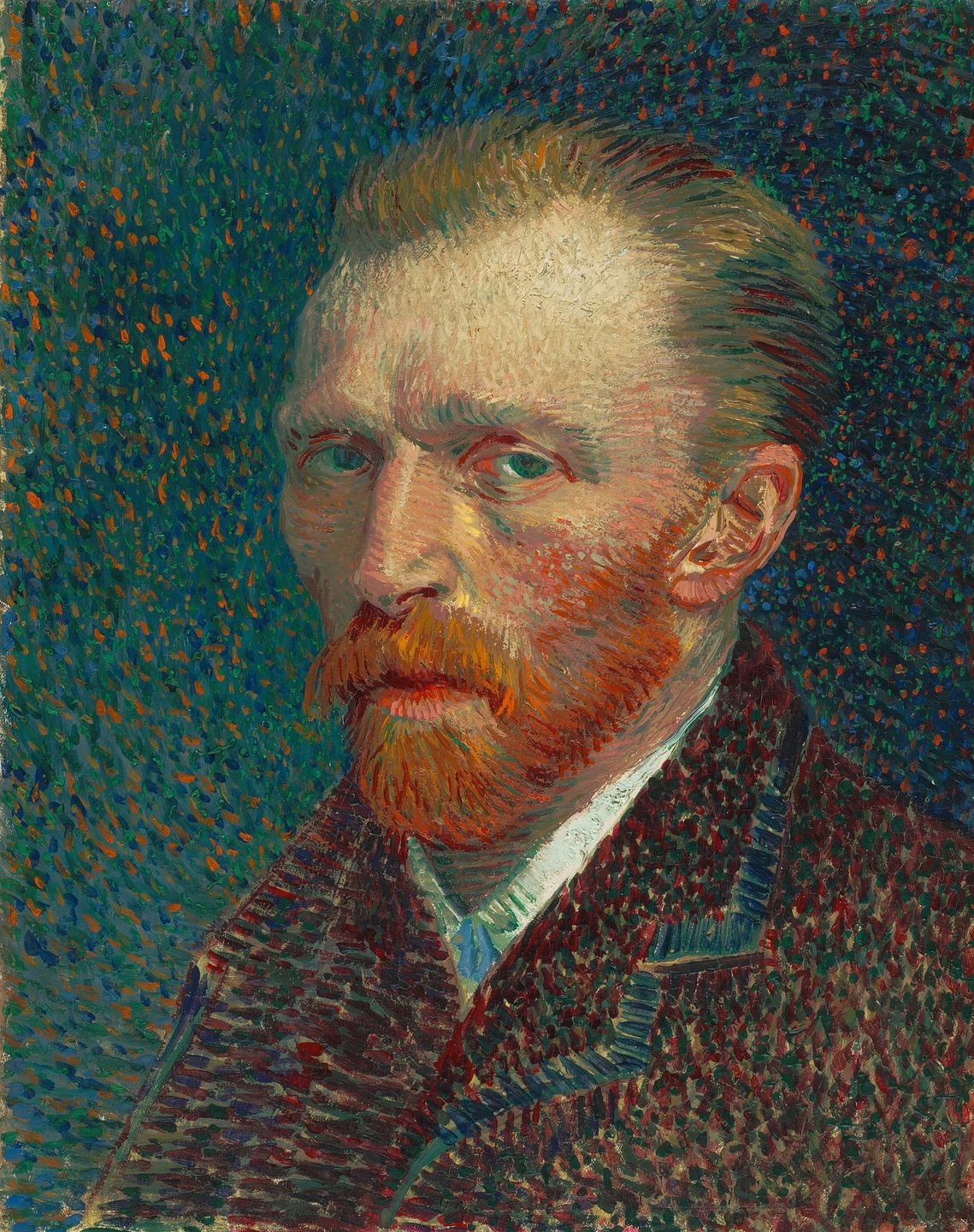
Vincent Van Gogh, self-portrait, Paris, 1887. Vincent Van Gogh, Public domain, via Wikimedia Commons
The Thousand Paintings
On this day in 1853 — Vincent van Gogh was born, and would make some nine hundred paintings in a decade, sell almost none, and remake art anyway.
3 min read
Vincent Willem van Gogh was born on March 30, 1853, in Groot-Zundert, Netherlands. He was the son of a pastor and the eldest of six children. He tried many careers before becoming a painter: art dealer, teacher, bookseller, preacher. None of them worked. At 27, he decided to become an artist. He had no formal training and little natural talent. What he had was obsession, work ethic, and a willingness to endure poverty and rejection. Over the next ten years, he produced approximately 900 paintings and 1,100 drawings. During his lifetime, he sold one painting.
Van Gogh's early work is dark, depicting peasants, laborers, and rural life in muted earth tones. "The Potato Eaters," painted in 1885, shows a family gathered around a table eating potatoes by lamplight. The figures are rough, almost grotesque. The palette is brown and gray. It is not beautiful in the conventional sense, but it is honest. Van Gogh was trying to capture the weight of manual labor, the dignity of poverty, the reality of lives that were hard and short. He wanted his work to matter, not just aesthetically, but morally.
In 1886, he moved to Paris and encountered Impressionism. The encounter transformed his palette. He abandoned browns and grays for yellows, blues, and greens. He began painting outdoors, capturing light and movement. He met other artists: Toulouse-Lautrec, Gauguin, Pissarro. He absorbed their techniques but developed his own style, characterized by thick, swirling brushstrokes and intense, almost violent color. His paintings from this period are energetic, unstable, as if the paint itself is vibrating.
In 1888, van Gogh moved to Arles in southern France, seeking brighter light and cheaper living. He rented a yellow house and invited Paul Gauguin to join him. He envisioned a community of artists working together, supporting each other. It did not work. Gauguin and van Gogh argued constantly. Their personalities clashed. In December 1888, during a psychotic episode, van Gogh cut off part of his own ear. Gauguin left. Van Gogh was hospitalized. The community of artists remained a dream.
Despite his deteriorating mental health, van Gogh continued to paint. He produced some of his most famous works during this period: "The Starry Night," "Irises," "Sunflowers." The brushwork is aggressive, the colors intense. The paintings feel urgent, as if he was trying to capture something that could not wait. He wrote hundreds of letters to his brother Theo, describing his ideas, his struggles, his visions. The letters are articulate, thoughtful, and deeply aware of the emotional cost of his work. He knew he was suffering. He also knew the work mattered.
On July 27, 1890, van Gogh shot himself in the chest while walking in a field near Auvers-sur-Oise. He returned to his room and died two days later, with Theo at his bedside. He was 37 years old. He had been painting seriously for ten years. His last words were reportedly "The sadness will last forever." Theo died six months later, devastated by grief. They are buried side by side in Auvers.
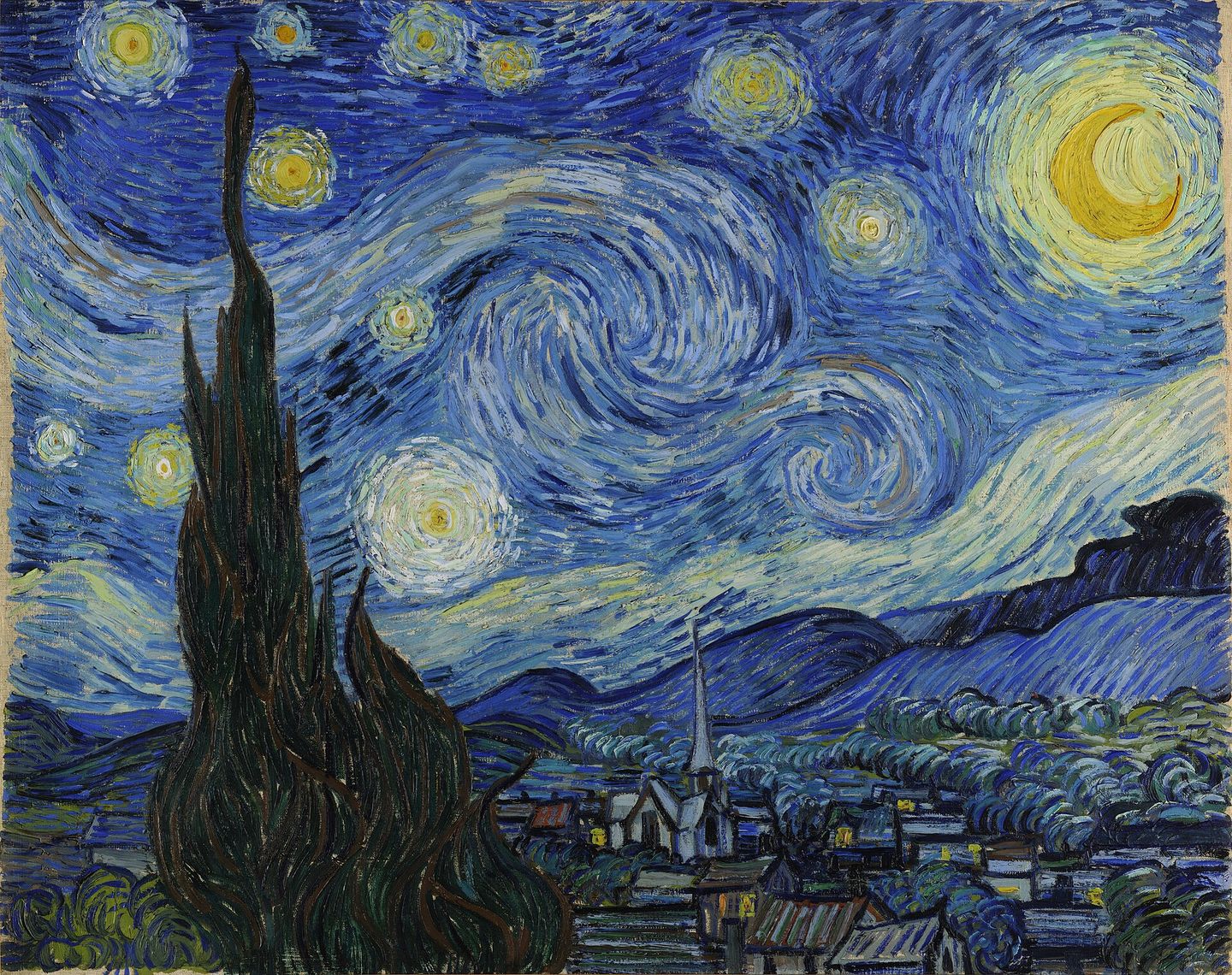
The Starry Night, vincent Van Gogh, June 1889, painted while at the saint-Paul-de-mausole asylum. Vincent Van Gogh, Public domain, via Wikimedia Commons
Van Gogh's posthumous fame is almost absurd in its magnitude. His paintings, which he could not sell, now fetch tens of millions of dollars. His letters are studied for their insights into creativity and mental illness. His image, the tortured artist, has become a cultural archetype. But what matters is not the mythology. What matters is the work. The paintings are direct, emotional, and structurally bold. They do not depict reality. They depict the feeling of reality, the sensation of seeing a field or a night sky or a vase of flowers.
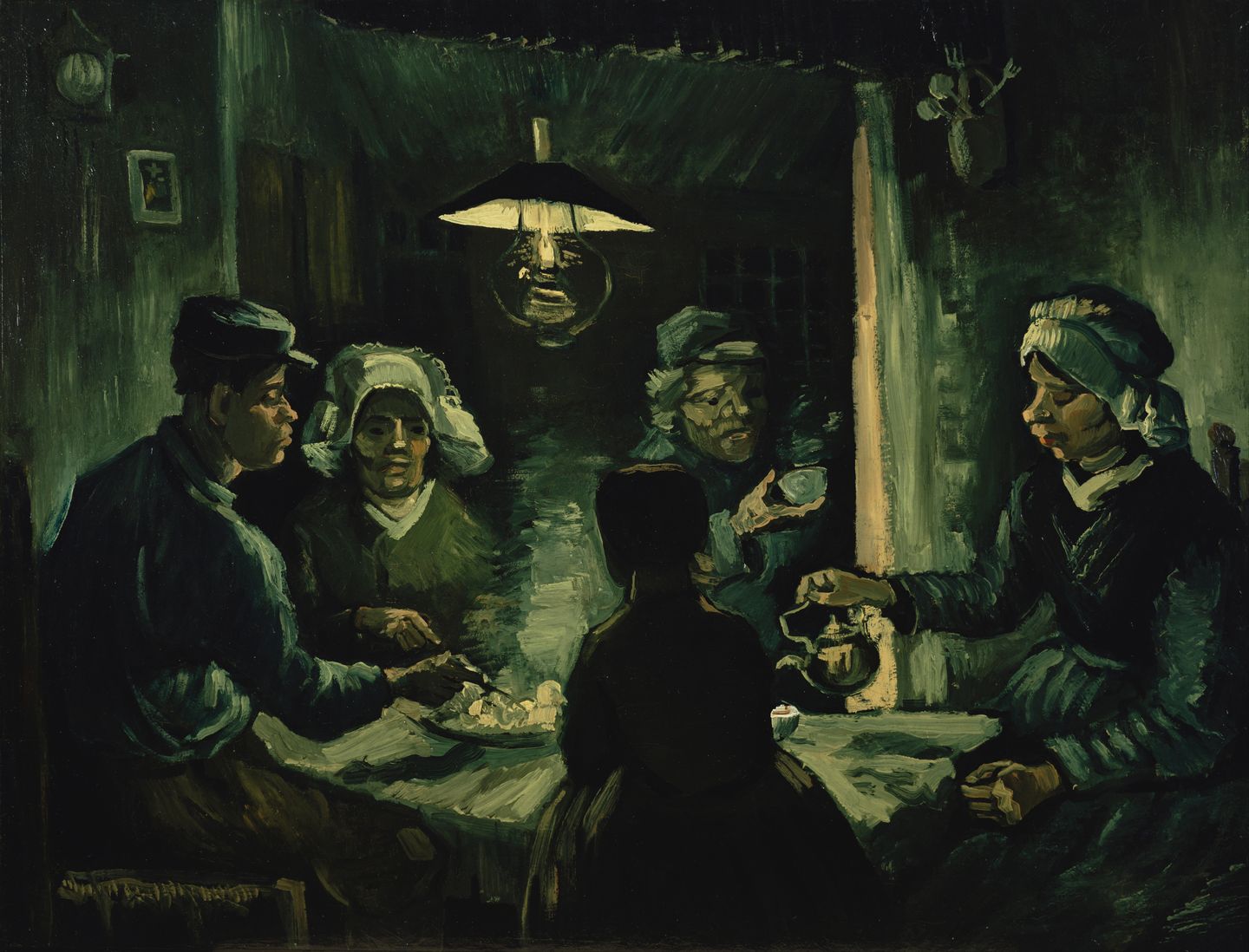
The Potato Eaters, vincent Van Gogh, 1885 — the dark early work that preceded his turn to color. Vincent Van Gogh, Public domain, via Wikimedia Commons
Van Gogh's method was relentless iteration. He painted the same subjects over and over: sunflowers, cypress trees, wheat fields, self-portraits. Each version was an attempt to get closer to some internal vision. He was not satisfied with representation. He wanted expression. The color, the brushwork, the composition were all tools for conveying emotional states. This approach influenced Expressionism, Fauvism, and much of 20th-century art. He proved that technique could serve feeling, that structure could amplify intensity. The thousand paintings are not just art. They are a sustained investigation into what paint can do.
studio / on-this-day / Mar 30