studio / on-this-day / Sep 26
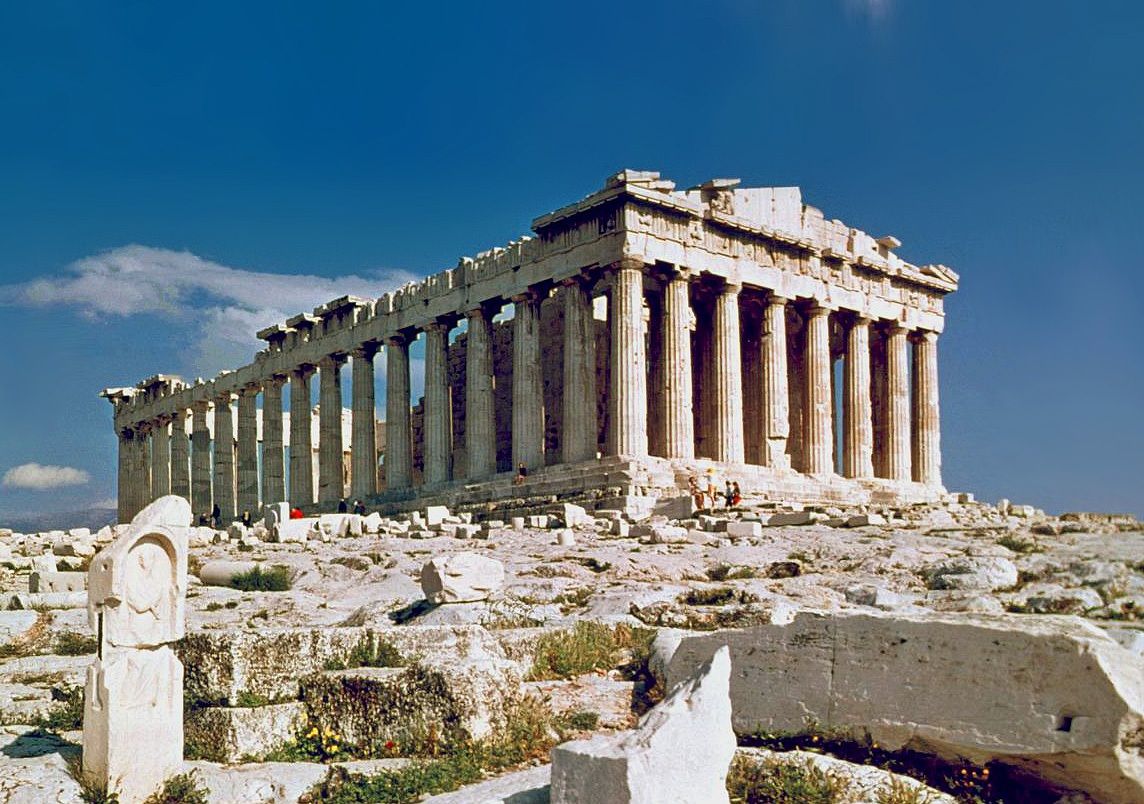
The Parthenon on the Acropolis of Athens, damaged by the 1687 explosion. Steve Swayne, CC BY 2.0, via Wikimedia Commons
When the Monument Became the Magazine
On this day in 1687 — a Venetian shell hit the Parthenon, which the Ottomans had packed with gunpowder, and a temple became a ruin in an instant.
3 min read
On the evening of September 26, 1687, a Venetian mortar round arced across the sky above Athens and struck the roof of the Parthenon. What followed was not simply a building catching fire. The Ottomans had converted the ancient Greek temple into a gunpowder magazine, storing several tons of powder inside its thick marble walls. The resulting explosion killed around three hundred people, blew out the entire central section of the structure, collapsed most of the interior columns, and sent sculptures that had survived two thousand years tumbling from the frieze. The damage done in those few seconds took more from the Parthenon than all the preceding centuries combined.
The Parthenon had been standing on the Acropolis since 438 BCE. It was originally a temple to Athena, the goddess who gave Athens its name and its identity. Phidias designed it at the direction of Pericles as the centerpiece of a building program intended to express the glory of classical Athens after the Persian Wars. The proportions were obsessively refined. The columns aren't perfectly vertical but lean slightly inward; the horizontal surfaces aren't perfectly flat but curve gently upward at the center. These optical corrections, called entasis, were designed to counter the eye's tendency to see perfectly regular forms as irregular. The building was an argument made in marble.
It survived, in varying states of use and misuse, for more than two millennia. It became a Christian church in the fifth century CE, then a Catholic church briefly after the Fourth Crusade, then a mosque under Ottoman rule beginning in the fifteenth century. Each conversion brought modifications: a minaret here, a nave there. But the structure itself remained largely intact. The marble held. The columns stood. The proportions endured.
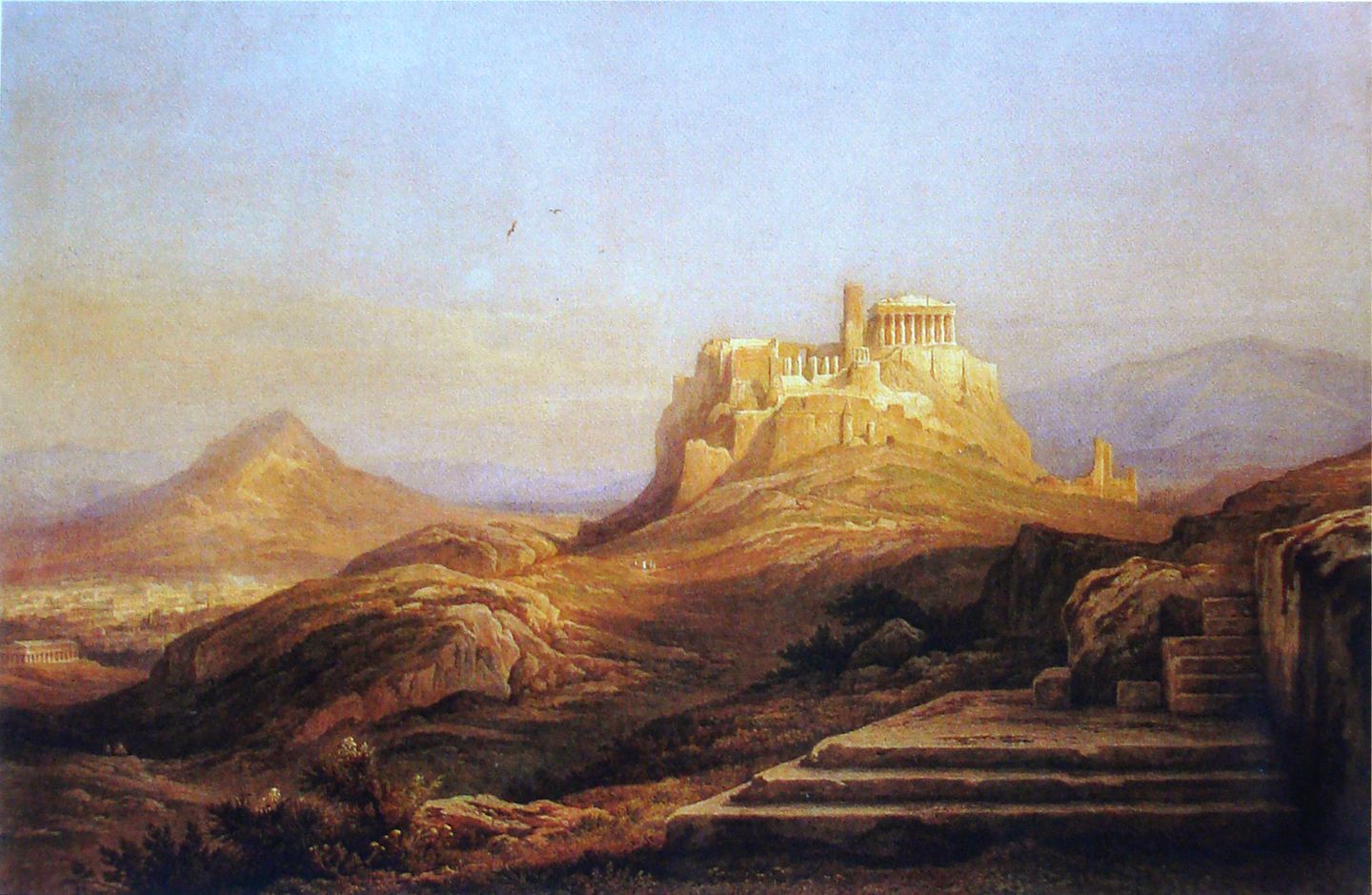
The ruins of Athens after the 1687 siege. Rudolf Müller, Public domain, via Wikimedia Commons
The Ottomans chose the Parthenon as a powder magazine precisely because its walls were so thick and durable. It was logical, militarily speaking. The building that had been designed to endure the gaze of eternity was now being relied upon for its physical strength in a military conflict. The Venetians under Francesco Morosini were besieging Athens as part of the long war between Venice and the Ottoman Empire for control of the Aegean. Someone on the Venetian side knew the Parthenon held gunpowder. Whether they deliberately targeted it or whether it was a calculated military strike against a fortified position remains a historical question without a clean answer.
What is certain is that the Parthenon was destroyed not by neglect or time but by a single, catastrophic decision about what to store inside a building never designed for that purpose. The mismatch between the structure's original function and its wartime use created conditions for irreversible loss. This is one of the more pointed lessons in the history of built environments: the context in which a structure exists can be more dangerous to it than the passage of centuries.
The aftermath was complex. Morosini attempted to remove some of the surviving sculptures as war trophies and succeeded only in dropping them and shattering them on the ground. In the following century, the British diplomat Lord Elgin removed substantial portions of the remaining sculptures and shipped them to London. Those "Elgin Marbles" remain in the British Museum, the subject of ongoing negotiations for return. The explosion scattered what war couldn't carry away.
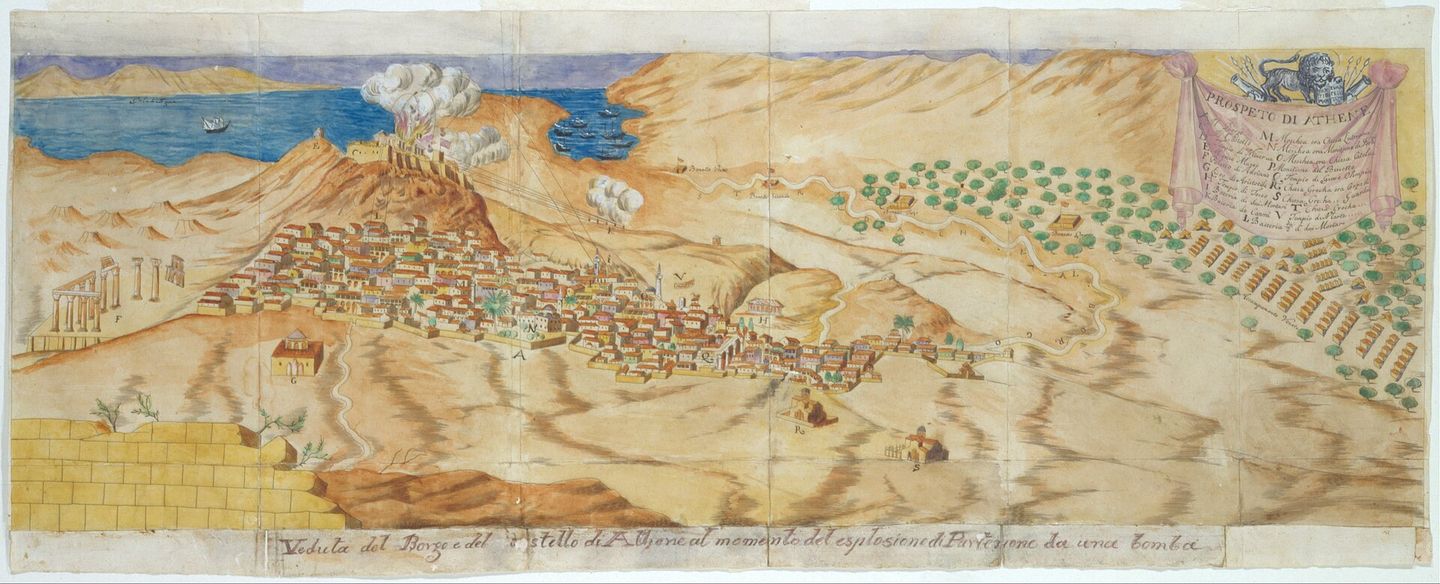
A contemporary depiction of the Venetian bombardment of the Parthenon on 26 September 1687. Verneda Giacomo Milheau Details on Google Art Project, Public domain, via Wikimedia Commons
The Parthenon now stands as it has since 1687: a magnificent ruin. Current restoration efforts are attempting to reassemble fragments and stabilize the structure, using reversible methods and laser-cut replacement marble where needed. The building teaches something about design under conditions of time: even the most carefully considered proportions, the most exquisitely refined forms, exist within historical circumstances that can overwhelm any architecture. The Parthenon endured two thousand years. What ended it was a few tons of gunpowder stored in the wrong place at the wrong moment.
studio / on-this-day / Sep 26