studio / on-this-day / Mar 28
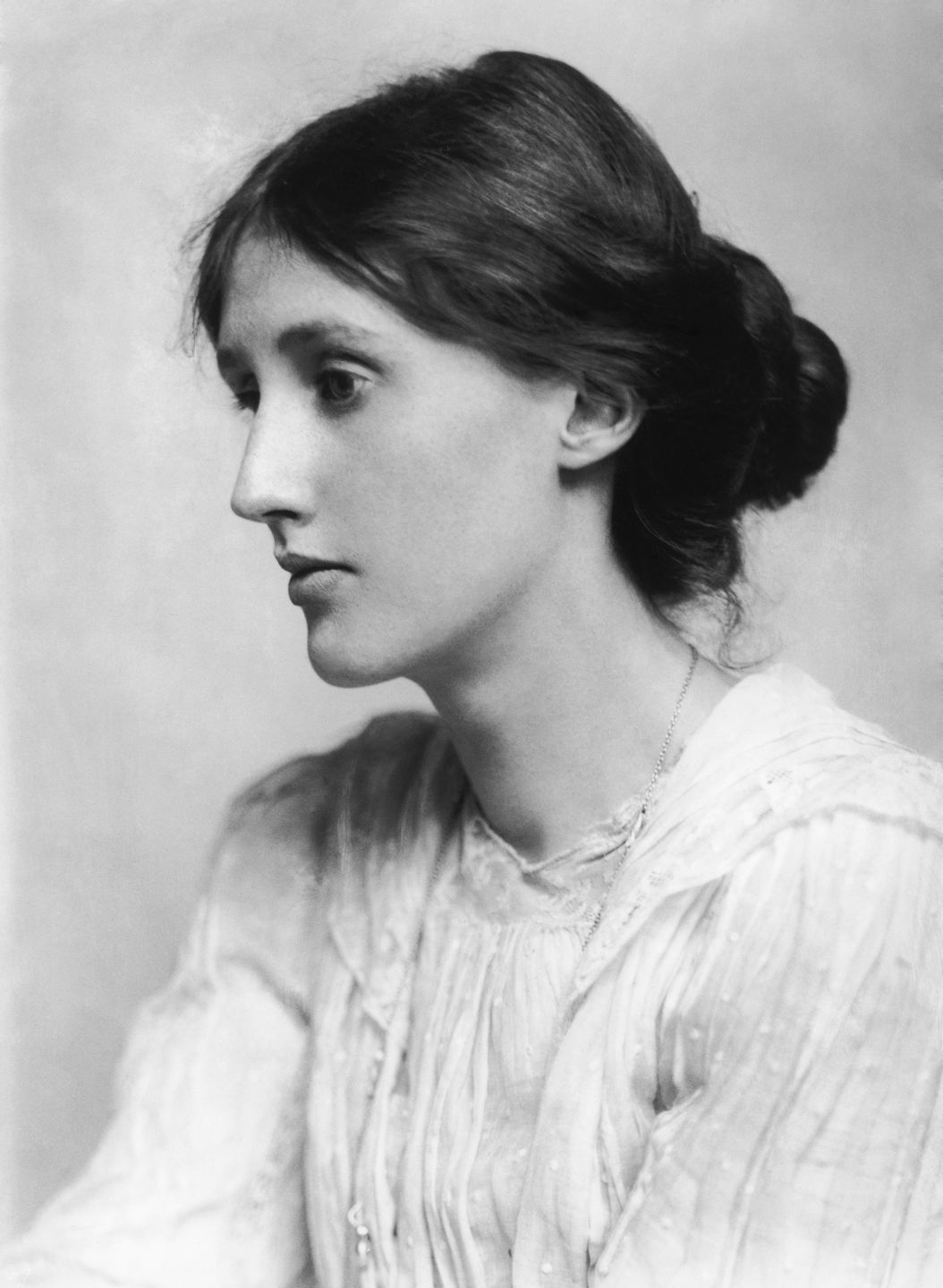
Virginia Woolf in 1902, photographed by george charles beresford. George Charles Beresford / Adam Cuerden, Public domain, via Wikimedia Commons
The Stream Within
On this day in 1941 — Virginia Woolf died, having found a way to put the unbroken stream of human consciousness down on the page.
3 min read
On March 28, 1941, Virginia Woolf filled her coat pockets with stones, walked into the River Ouse near her home in Sussex, and drowned. She was 59 years old. She left two suicide notes, one for her husband Leonard and one for her sister Vanessa. Both expressed the same fear: another descent into madness was coming, and she could not face it again. She had struggled with mental illness her entire adult life, cycling through periods of intense creativity and debilitating depression. This time, she chose not to cycle back.
Woolf was born Adeline Virginia Stephen in 1882 into an intellectually prominent family. Her father was Leslie Stephen, a historian and critic. Her mother, Julia Stephen, was a model and philanthropist. The house was full of books, visitors, and conversation. But it was also marked by loss. Her mother died when Virginia was thirteen. Her half-sister Stella died two years later. Her father died when she was twenty-two. Grief was a recurring structure in her life, and it shaped the way she thought about time, memory, and selfhood.
Woolf is best known for her novels, particularly "Mrs. Dalloway," "To the Lighthouse," and "The Waves." These books are not plot-driven. They are explorations of consciousness, tracking the thoughts and perceptions of characters as they move through ordinary moments. The narrative voice shifts between people, slipping from one mind to another without clear demarcation. Time dilates and contracts. A single day can occupy an entire novel. A decade can pass in a sentence. The structure mirrors how thought actually works: associative, fragmented, layered.
This technique is called stream of consciousness, though Woolf did not invent it. James Joyce used it in "Ulysses." Marcel Proust explored it in "In Search of Lost Time." But Woolf refined it, making it both introspective and social. Her characters think about themselves and about each other, constructing identities through observation and reflection. The self, in Woolf's novels, is not a fixed entity. It is a process, a series of moments experienced and remembered, constantly reinterpreted in light of new information.
Woolf was also a critic, essayist, and publisher. She and Leonard founded the Hogarth Press in 1917, which published her own work, T.S. Eliot's poetry, and translations of Freud. She wrote essays on reading, writing, and gender, most famously "A Room of One's Own," which argued that economic independence and physical space are prerequisites for creative work. Her writing on literature was sharp and unsentimental. She valued experimentation over tradition, and she was unafraid to critique the canonical male writers of her time.

Hogarth Press house, richmond, surrey — where Virginia and Leonard Woolf founded their publishing house in 1917. Photo taken by Mark Barker., CC BY-SA 3.0, via Wikimedia Commons
Woolf's mental health shaped her work and her life. She experienced what we would now call bipolar disorder, with manic episodes of euphoric productivity followed by severe depressions. During manic phases, she wrote prolifically, sometimes completing entire novels in a few months. During depressive phases, she could not write at all. She was hospitalized multiple times. She tried various treatments, most of which were ineffective or harmful. What sustained her was routine, support from Leonard, and the discipline of writing itself.
The connection between Woolf's illness and her creativity is debated. Some argue that her mental instability gave her access to psychological depths that more stable minds could not reach. Others argue that she succeeded despite her illness, not because of it. What is clear is that her work is deeply concerned with the fragility of the self, the difficulty of communication, and the ways people construct meaning in the face of chaos. These are not abstract concerns. They were lived realities for her.
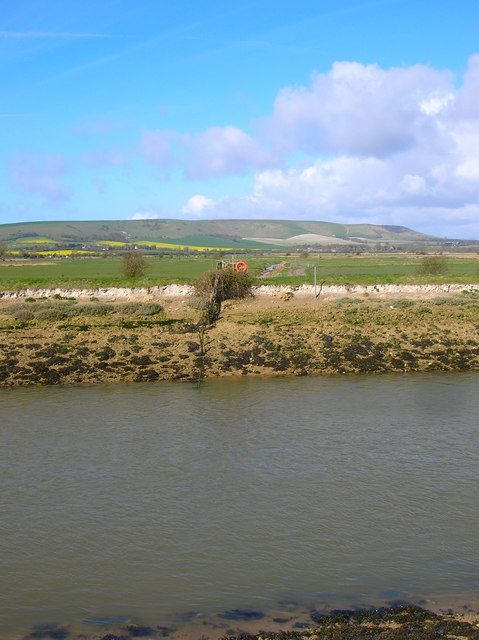
The River Ouse below the Sussex downs near rodmell, the River Woolf walked into in March 1941. Simon Carey, CC BY-SA 2.0, via Wikimedia Commons
Woolf's novels are difficult. They demand attention, patience, and a willingness to abandon conventional narrative expectations. But they reward that effort by offering something rare: a sustained attempt to represent consciousness as it actually feels, not as a sequence of actions, but as a flow of sensation, memory, and thought. This is design at the level of prose. The sentence becomes the unit of experience. The rhythm, the syntax, the placement of commas all contribute to the effect. Reading Woolf is like watching someone build a mind on the page, one word at a time.
studio / on-this-day / Mar 28