studio / on-this-day / Sep 17
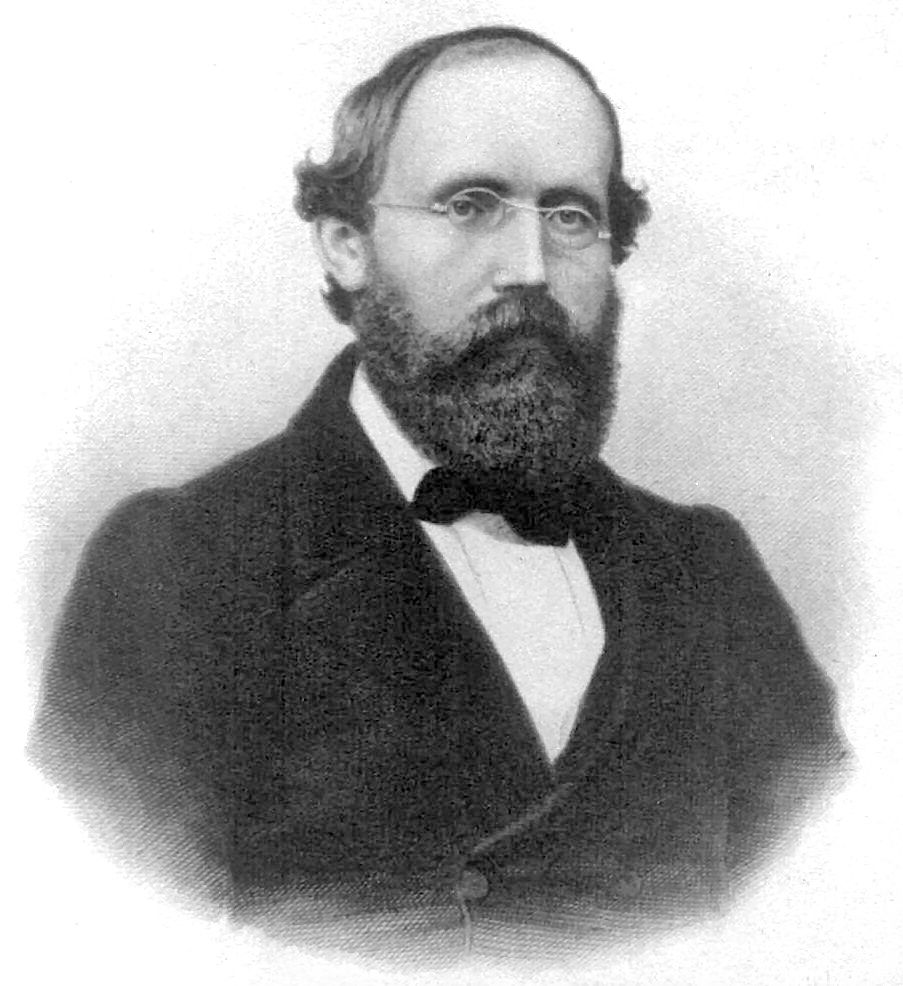
Bernhard Riemann, mathematician. Public domain, via Wikimedia Commons
The Mathematician Who Curved Space
On this day in 1826 — Bernhard Riemann was born, and would bend geometry into curved space, handing Einstein the language he needed.
3 min read
Georg Friedrich Bernhard Riemann was born on September 17, 1826, in a small village in the Kingdom of Hanover. His father was a Lutheran minister. The family was poor. Riemann was shy, suffered from chronic health problems, and spoke so softly that colleagues sometimes had to lean in just to hear him. He was also one of the most original mathematical minds in history, the kind of thinker who looked at geometry, the oldest branch of mathematics, and quietly rebuilt it from the ground up.
For more than two thousand years, geometry had meant Euclidean geometry. The rules were simple and fixed: parallel lines never meet, the angles in a triangle add up to 180 degrees, space is flat. It was the geometry of construction, navigation, and classical physics. It worked perfectly well for building temples and calculating orbits, so there was no obvious reason to question it. But Riemann asked a different question: what if space itself is not flat?
In 1854, at the age of 27, Riemann delivered a lecture at the University of Göttingen that would change the way mathematicians and physicists think about the structure of reality. The lecture was titled "On the Hypotheses Which Lie at the Foundations of Geometry." It was dense, technical, and went largely unnoticed outside a small circle of mathematicians. But in that lecture, Riemann introduced the concept of curved space. He showed that Euclidean geometry was just one possible geometry among infinitely many. A surface could have intrinsic curvature. Space could bend.
Riemann's insight was that the properties of a space could be described entirely by the way distances are measured within it, without reference to any external frame. He developed what is now called Riemannian geometry, a system for describing spaces of any number of dimensions, with curvature that varies from point to point. He invented the mathematical language for surfaces that curve in ways Euclid never imagined. A sphere, a saddle, a hyperbolic surface: each has its own internal geometry, its own rules.
For decades, this work seemed purely abstract, a beautiful exercise in mathematical imagination with no practical application. But in 1915, Albert Einstein needed a way to describe how mass and energy warp the fabric of spacetime in his general theory of relativity. He found it in Riemann's geometry. The mathematics Riemann had invented sixty years earlier became the foundation of Einstein's theory. Gravity was not a force pulling objects together, Einstein realized. It was the curvature of spacetime itself, and that curvature could be described using Riemannian geometry.
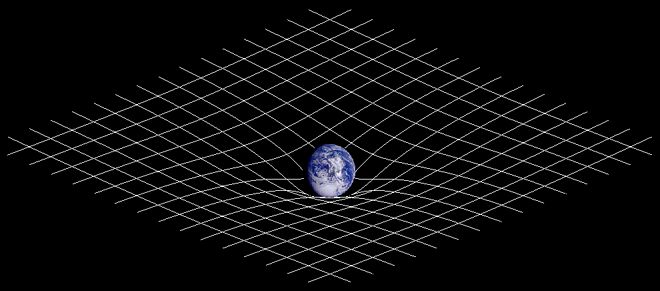
Spacetime curvature — the Geometry Riemann invented in 1854 became the language Einstein used to describe gravity in 1915. CC BY-SA 3.0, via Wikimedia Commons
Riemann did not live to see any of this. He died of tuberculosis in 1866, at the age of 39, in the small Italian village of Selasca. His health had been fragile his entire life. He had traveled to Italy hoping the warmer climate would help. It did not. His career as a mathematician lasted less than two decades. But in that time, he transformed the field. Beyond geometry, he made foundational contributions to number theory, including the Riemann Hypothesis, one of the most important unsolved problems in mathematics. He also worked on complex analysis, differential equations, and the mathematics of heat and sound.
What makes Riemann remarkable is not just the depth of his work but the way he thought. He did not solve existing problems so much as redefine the questions. He asked what geometry would look like if you removed the assumption that space is flat. He asked how you would define distance in a space that curves. These were not practical questions in his time. There was no telescope powerful enough to detect the curvature of spacetime, no technology that required non-Euclidean geometry to function. Riemann was building tools for problems that did not yet exist.
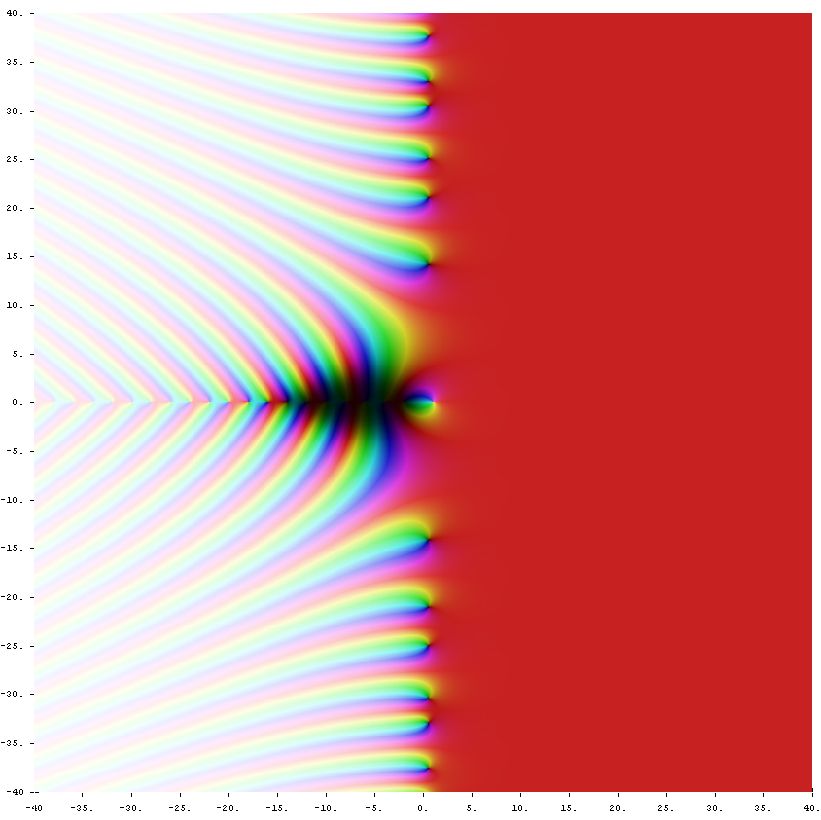
The Riemann zeta function in the complex plane — its zeros are the subject of the Riemann Hypothesis, still unsolved more than 160 years on. Jan Homann, Public domain, via Wikimedia Commons
That is the work of a systems thinker. He saw geometry not as a fixed set of rules but as a flexible framework that could be redesigned depending on the properties of the space you were describing. His contribution was structural. He gave future generations the language to describe reality at scales and in contexts he could never have imagined. Every GPS satellite, every gravitational wave detector, every physicist modeling the shape of the universe relies on the geometry Riemann invented in a lecture hall in 1854. He curved space with a pencil and some very careful reasoning. Decades later, the universe turned out to be curved too.
studio / on-this-day / Sep 17