studio / on-this-day / Sep 16
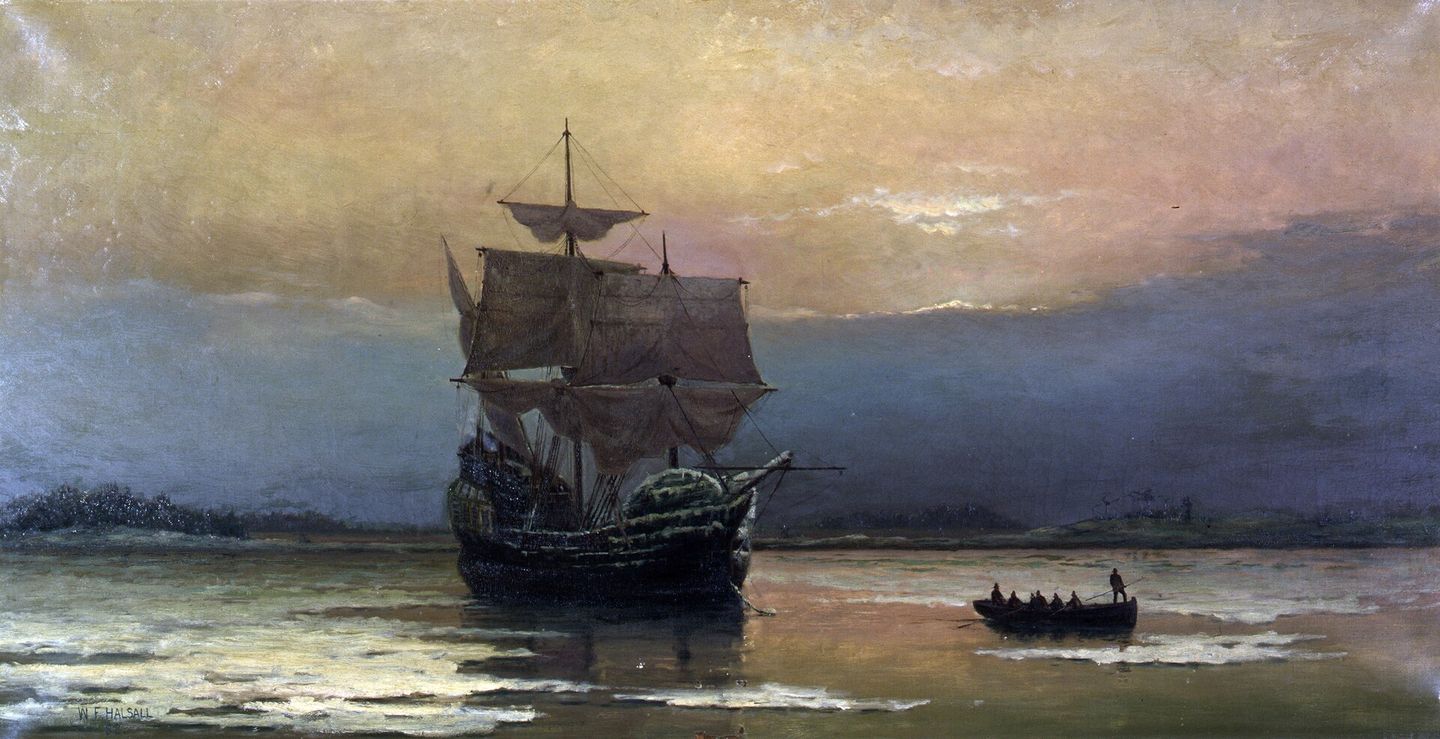
The Mayflower on her arrival in Plymouth Harbor, painting by William formby halsall. William Halsall, Public domain, via Wikimedia Commons
A Small Vessel Carrying a Prototype Civilization
On this day in 1620 — the Mayflower left Plymouth, a small crowded ship carrying the seed of an entire prototype society.
3 min read
On September 16, 1620, a merchant ship named the Mayflower slipped away from Plymouth, England, carrying 102 passengers and a crew of about 30. The vessel was 110 feet long and 25 feet at its widest point. It was built for wine, not pilgrims. For most of its working life, the Mayflower had shuttled barrels of French wine across the English Channel, which meant its timbers had soaked up enough alcohol residue that the smell permeated the lower decks where passengers lived in near darkness for 66 days.
The passengers were not the romanticized adventurers of later mythology. They were religious separatists, escaping persecution for beliefs the English Crown considered dangerously radical. They had already tried exile once, living in Leiden in the Netherlands for more than a decade. But they worried their children were becoming too Dutch, too secular, too detached from the strict religious framework they considered essential. So they planned something riskier: building a settlement from scratch in a place none of them had ever seen.
This was not the original plan. The Mayflower had set out once before, in the company of a second ship called the Speedwell. Twice the fleet turned back after the Speedwell started leaking. Eventually the Speedwell was abandoned, and the Mayflower departed alone, overloaded with the passengers and cargo from both vessels. The ship was now dangerously crowded. Families slept in spaces smaller than parking spots. There were no portholes. Air circulation was minimal. The smell of sickness, salt, and sweat was constant.
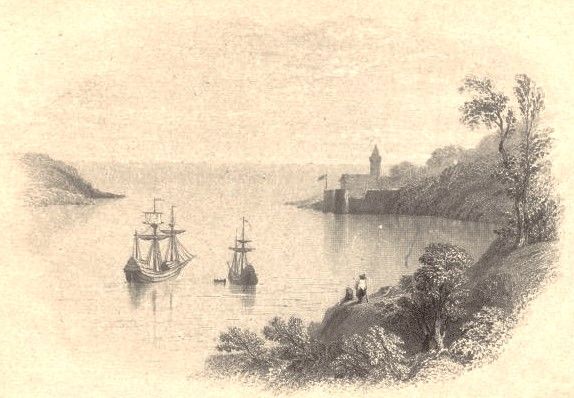
The Mayflower and the Speedwell in dartmouth harbour — the leaking companion ship that twice forced the fleet back before being abandoned. Bartlett, William Henry (artist) and Cousen, Charles (engraver), Public domain, via Wikimedia Commons
The voyage was brutal. Storms battered the ship so severely that a main beam cracked mid-ocean. The crew considered turning back. Instead, they used a large iron screw, possibly brought along for a printing press, to brace the beam long enough to continue. One passenger was swept overboard during a storm and managed to grab a trailing rope, surviving long enough to be pulled back on deck. Another passenger died during the crossing. A child was born mid-voyage and named Oceanus.
When the Mayflower finally sighted land on November 21, it was nowhere near its intended destination. The ship had been granted a patent to settle near the mouth of the Hudson River, in the territory controlled by the Virginia Company. But storms and navigational error pushed them much farther north, to the tip of Cape Cod. They attempted to sail south but hit dangerous shoals and turned back. By the time they anchored in what is now Provincetown Harbor, they were outside the bounds of any colonial jurisdiction.
This created a legal problem. With no governing authority to appeal to, the passengers faced the real possibility of fracturing into factions before they even stepped onto land. So 41 of the adult male passengers drafted and signed a document, written aboard the ship, establishing a rudimentary form of self-governance. The Mayflower Compact, as it came to be known, was not a declaration of independence or a constitution. It was a practical agreement to form a "civil body politic" and abide by laws created for the common good. It was design thinking applied to statecraft, written out of necessity in the cramped quarters of a wine-soaked merchant vessel.
The compact mattered because it created a system where none existed. It was a prototype for self-governance, built collaboratively under duress. The document was procedural, not philosophical. It addressed an immediate systems failure: how do you organize a group of people with no external authority to enforce order? The answer was mutual consent. It was not democracy in the modern sense, but it was a distributed decision-making structure, written in plain English rather than legal Latin, on a ship anchored in the cold waters of an unfamiliar coast.
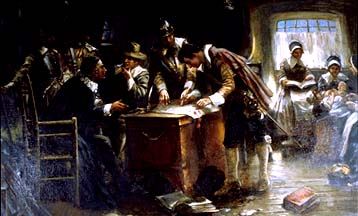
The signing of the Mayflower Compact — the document that created self-governance from necessity. Public domain, via Wikimedia Commons
Eventually, the passengers moved on from Cape Cod and established their settlement at Plymouth. Roughly half of them died during the first winter. The Mayflower stayed through the winter, offering some shelter, then returned to England in April 1621. The ship continued carrying wine. It was never famous in its own time. What mattered was not the vessel itself but the fragile social architecture its passengers built while still aboard. A civilization is just a set of agreements about how to organize collective survival. Sometimes those agreements are drafted in a hall. Sometimes they are scrawled on a ship that smells like old wine, with winter approaching and no guarantee of survival.
studio / on-this-day / Sep 16