studio / on-this-day / Apr 13
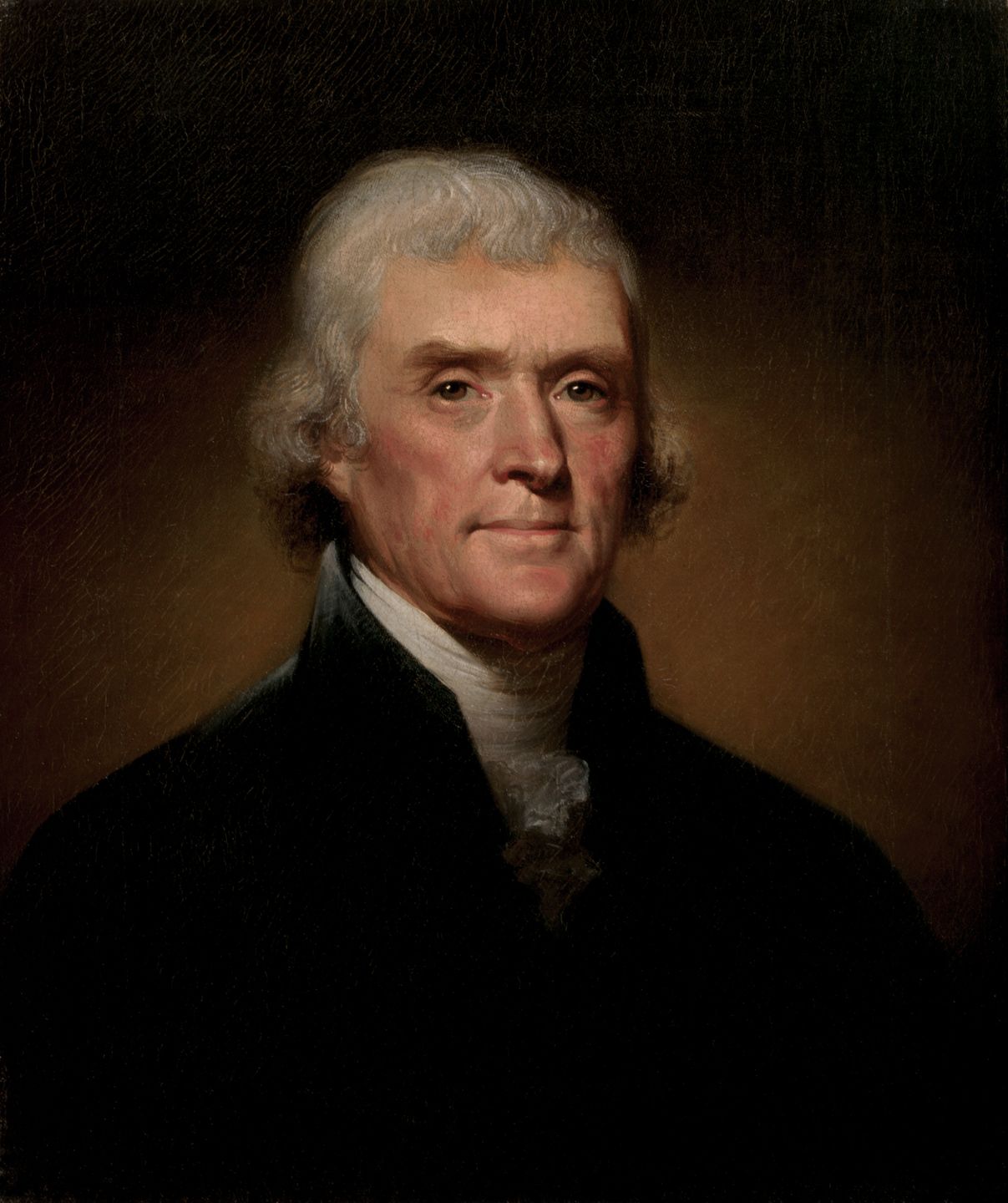
Thomas Jefferson, third president of the United States, in his official presidential portrait painted by rembrandt peale in 1800. Rembrandt Peale, Public domain, via Wikimedia Commons
Designed on Paper First
On this day in 1743 — Thomas Jefferson was born, a writer and tinkerer who liked to design things, a country among them, on paper first.
3 min read
Thomas Jefferson was born on April 13, 1743, in Virginia, into a family with land, books, and expectations. He became a lawyer, a plantation owner, a governor, a diplomat, and the third president of the United States. But before all of that, he was a designer. He designed buildings, furniture, tools, and systems of government. He approached problems with a draftsman's precision, sketching solutions on paper before implementing them in the world. The Declaration of Independence was a design document. So was Monticello, his house. Both were iterations on existing ideas, refined through drafts and revisions until they worked.
Jefferson believed design could improve everything. He invented a swivel chair, a folding ladder, a polygraph machine that copied letters as he wrote them, and a cipher wheel for encoding messages. He redesigned the moldboard plow to reduce friction. He sketched floor plans obsessively, trying to optimize the flow of space. His library at Monticello was organized by subject, anticipating modern classification systems. He saw inefficiency as a design problem, and he spent his life trying to solve it.
Monticello itself was a 40-year project. Jefferson designed it in the neoclassical style, inspired by Andrea Palladio's villas and Roman temples. He incorporated skylights, alcove beds, dumbwaiters, and revolving serving doors. The house was a machine for living, full of clever mechanisms designed to reduce labor. Except most of that labor was performed by enslaved people, a contradiction Jefferson never resolved. He wrote that all men are created equal while owning over 600 people during his lifetime. He designed a nation around liberty while perpetuating slavery. The gap between his ideals and his actions is one of the defining tensions in American history.
The Declaration of Independence, drafted primarily by Jefferson in June 1776, is a masterpiece of political design. It's structured like a legal brief: a preamble stating principles, a list of grievances, and a conclusion declaring independence. The language is precise, the arguments logical. Jefferson borrowed ideas from John Locke, English common law, and Enlightenment philosophy, synthesizing them into a single document that justified revolution. The most famous sentence, "We hold these truths to be self-evident, that all men are created equal," was not original. But Jefferson's phrasing made it universal. It became a framework others could build on, a design pattern for democracy.
Jefferson was not a great public speaker. He preferred writing to oratory. His presidency was marked by paradoxes: he doubled the size of the country with the Louisiana Purchase, expanding federal power in ways he had previously opposed. He founded the University of Virginia, designing its campus around a central lawn flanked by academic pavilions, a physical representation of his belief in education as the foundation of democracy. He died on July 4, 1826, exactly 50 years after the Declaration was signed, a coincidence so improbable it felt designed.
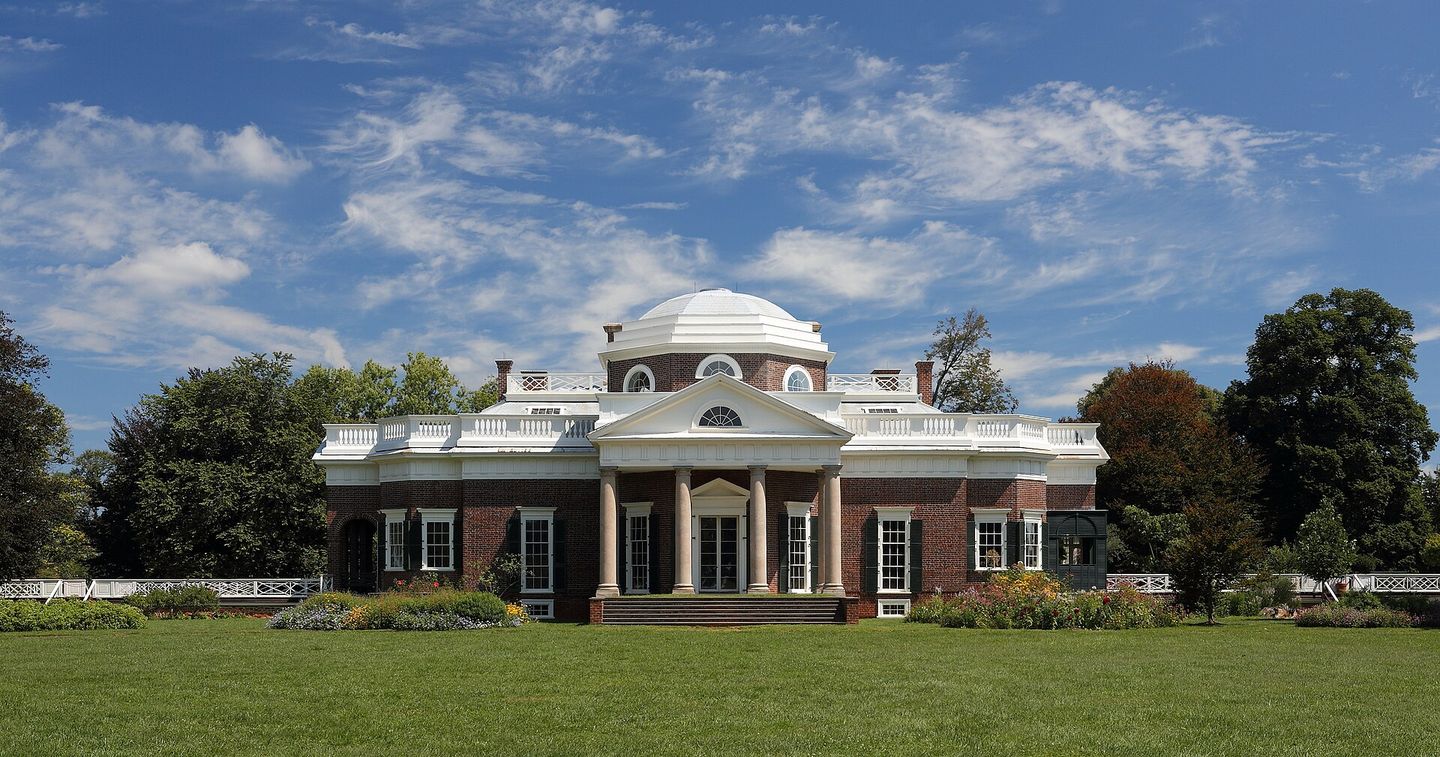
Monticello, Jefferson's home in charlottesville, Virginia — a 40-year design project drawing on Andrea Palladio's architecture and Roman temples. Jefferson incorporated skylights, dumbwaiters, and revolving serving doors. Martin Falbisoner, CC BY-SA 3.0, via Wikimedia Commons
What made Jefferson a designer rather than just a thinker was his insistence on implementation. He didn't just theorize about democracy. He wrote the manual. He didn't just admire architecture. He learned to draw and built his own house. He didn't invent most of the gadgets he's credited with, but he prototyped them, tested them, and iterated on them. He kept notebooks full of observations, sketches, and ideas. He measured everything: the temperature, crop yields, the dimensions of buildings he visited. He believed that knowledge was useless unless it could be applied.
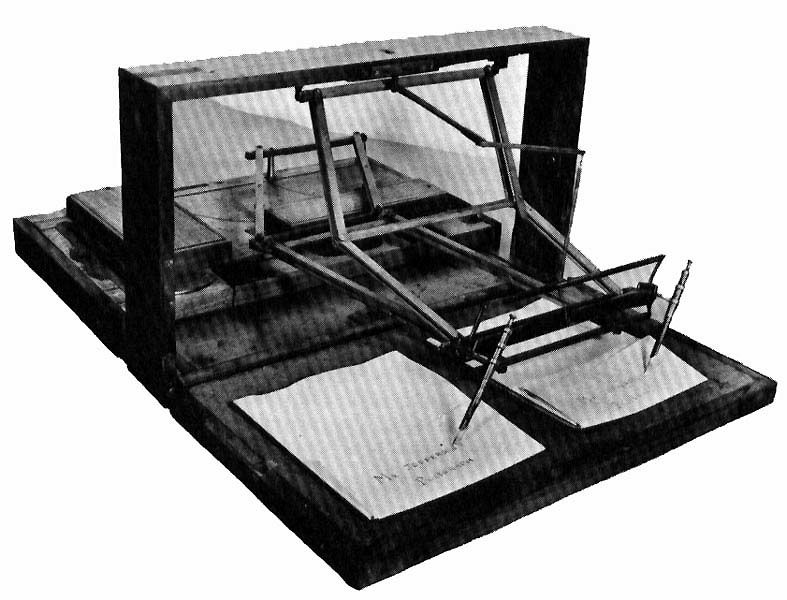
Jefferson's polygraph machine at Monticello — a device that copied letters automatically as he wrote, one of the many tools he prototyped, tested, and iterated on. Public domain, via Wikimedia Commons
Jefferson's contradictions are hard to reconcile. He championed liberty while denying it to others. He promoted reason while participating in systemic cruelty. He designed systems for human flourishing that excluded most humans. His vision was incomplete, flawed by the blind spots of his time and his own moral failures. But the structures he designed, both architectural and political, outlasted him. The Declaration of Independence is still a working document. The University of Virginia still teaches students. Monticello still stands, a monument to both his genius and his hypocrisy.
What Jefferson understood is that design is not just about objects. It's about systems. He designed a government that could evolve, a document that could be reinterpreted, buildings that could be adapted. He created frameworks, not finished products. The contradictions he embodied became part of the system too, problems for later generations to solve. Jefferson didn't design a perfect nation. He designed one that could, theoretically, redesign itself. That might be the most American thing about him.
studio / on-this-day / Apr 13