studio / on-this-day / Sep 15
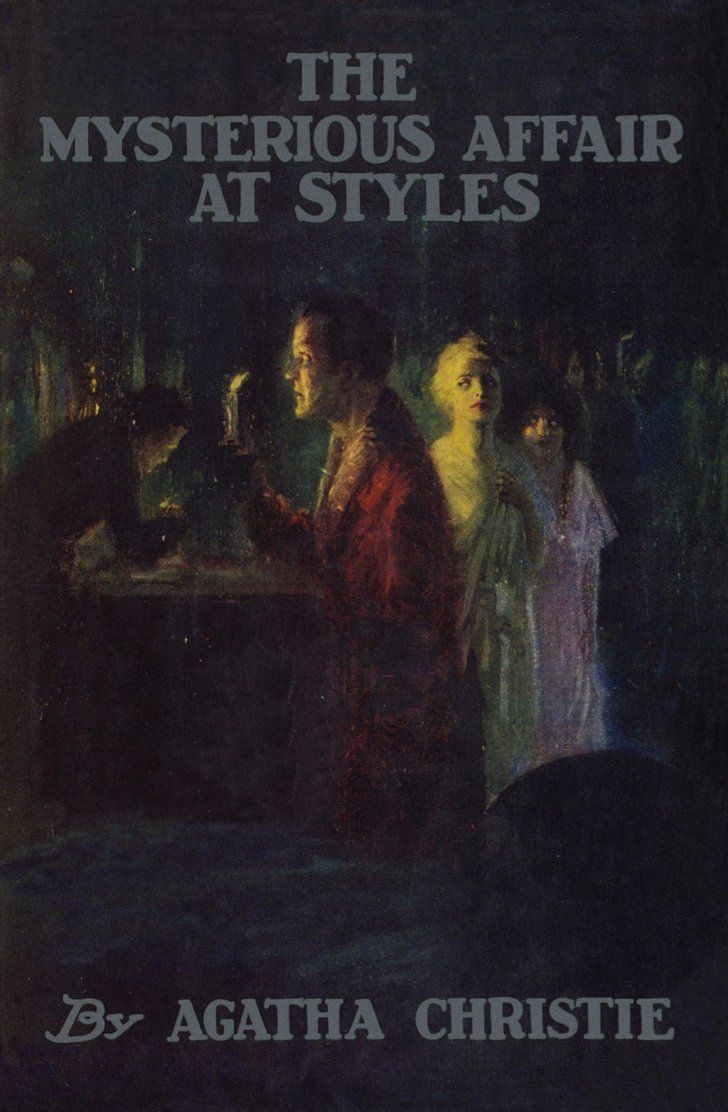
The American cover of Christie's 1920 debut, "the Mysterious Affair at Styles," which introduced Hercule Poirot. Public domain, via Wikimedia Commons
The Best-Selling Novelist Who Ever Lived
On this day in 1890 — Agatha Christie was born. She engineered murder mysteries with the precision of a machinist, and became, by most counts, the best-selling novelist in history.
4 min read
Agatha Christie was born on September 15, 1890, in Devon, England, and largely educated at home. She wrote her first detective novel partly on a dare from her sister, published it in 1920, and introduced a fussy little Belgian detective named Hercule Poirot. Over the next fifty-odd years she produced sixty-six detective novels and became, by most reckonings, the best-selling novelist of all time, outsold only by the Bible and Shakespeare.
The scale is almost hard to process, roughly two billion copies, in more than a hundred languages, plus the longest-running play in history. But the more interesting thing is how she did it, because Christie was, underneath the cozy village settings, a ruthless engineer of plot. A Christie mystery is a machine, built backward from its solution, every part placed with intent.
The form she mastered is unusually strict. A proper detective story is a kind of contract with the reader: all the clues must be present, in plain sight, so the solution is fair, and yet the reader must not see it coming. Those two demands are almost contradictory, and satisfying both at once, hiding the answer in full view, is a genuine feat of construction. Christie did it again and again, and occasionally broke the form so cleverly that the breaking itself became famous.
Her method was closer to design than to inspiration. She would work out the mechanism first, the trick, the misdirection, the exact chain of who knew what and when, and then build the human story around it so the machinery never showed. The apparent effortlessness of the reading experience is the product of a great deal of invisible structural work, which is true of most things that feel effortless.
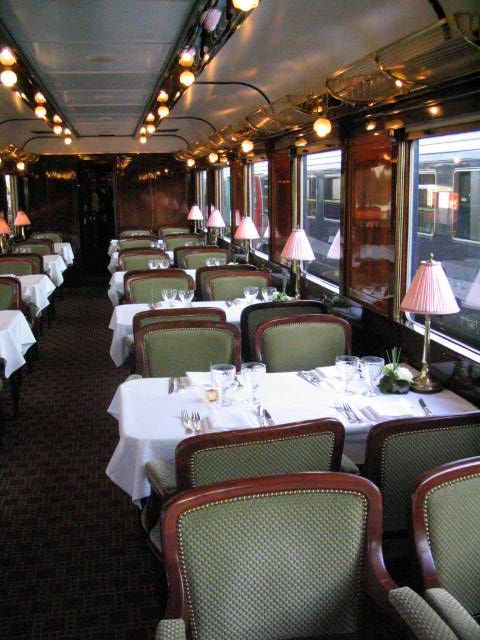
A Pullman car of the Orient Express, setting of Christie's "murder on the Orient Express." Simon Pielow, CC BY-SA 2.0, via Wikimedia Commons
She was underestimated in her own time and sometimes still is, dismissed as a producer of light entertainment, puzzles rather than literature. But the formula was hers, refined to a degree no one has matched, and building a reliable machine that delights hundreds of millions of people is not the lesser act it sounds like. Consistency at that scale is its own kind of genius.
She also understood her audience with a clarity many self-consciously serious writers lack. She knew exactly what she was making and for whom, and she respected the reader's intelligence enough to play fair with the clues while still winning the game. That combination, generosity and cunning, is why the books still work a century on, long after the fashions they were written in have faded.
She kept writing nearly to the end, dying in 1976 as the most translated individual author in the world. On September 15, 1890, a woman was born who would take a rigid, demanding form and build inside it with such precision that she out-sold essentially every other novelist who has ever lived, by treating the mystery not as a mood but as a mechanism.
studio / on-this-day / Sep 15