studio / on-this-day / Jul 2
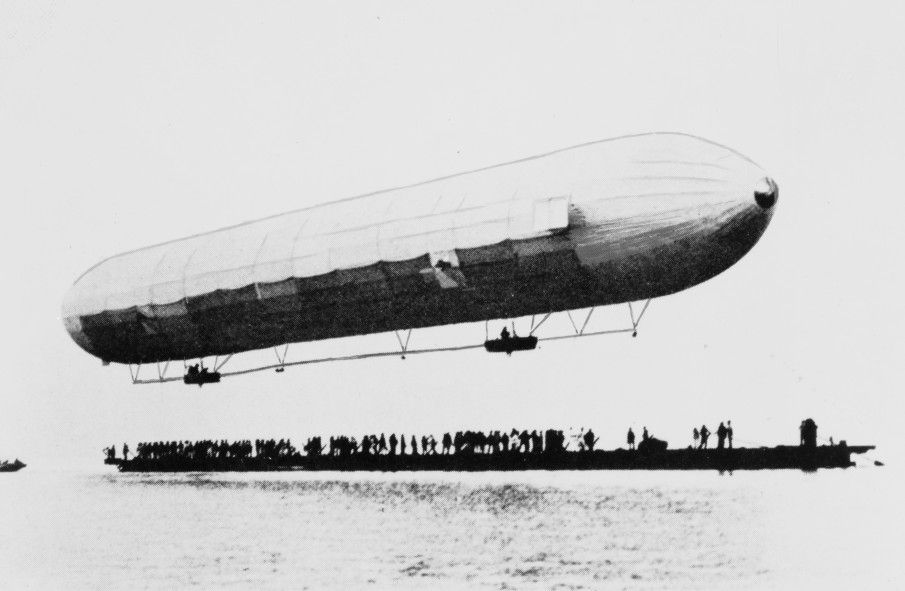
First Zeppelin lz 1 ascending over Lake Constance, 1900. Peter Scherer, Public domain, via Wikimedia Commons
Architecture in the Air
On this day in 1900 — the first Zeppelin rose over Lake Constance, a rigid airship that treated the sky as something you could build in.
3 min read
Count Ferdinand von Zeppelin believed the sky needed buildings. On July 2, 1900, over Lake Constance on the German-Swiss border, his first airship lifted off the water and drifted upward. It was 420 feet long, nearly as large as an ocean liner, held aloft by hydrogen gas trapped in seventeen separate cells inside an aluminum frame covered with cotton fabric. It flew for eighteen minutes, traveled about four miles, and then landed gently back on the lake. The age of rigid airships had begun.
Zeppelin was 62 years old, a retired army general who had spent years trying to convince anyone with money that giant flying machines were the future of transportation. He had seen observation balloons used during the American Civil War and became convinced that steerable, controllable airships could revolutionize warfare and commerce. But balloons were at the mercy of wind. What he envisioned was something else entirely: a rigid internal skeleton that could maintain its shape, engines for propulsion, and enough lift capacity to carry passengers and cargo across continents. It was engineering on a scale no one had attempted in the air before.
The technical challenges were immense. The frame had to be light enough to fly but strong enough to withstand wind stress. The gas cells had to be perfectly sealed or the ship would lose altitude. The engines, primitive by modern standards, had to be powerful enough to move the massive structure against headwinds. Zeppelin used aluminum, a relatively new metal at the time, to build a lattice framework of rings and longitudinal girders. The result looked more like a floating cathedral than a vehicle.
What made the zeppelin distinct from earlier airships was its rigidity. Previous designs, like the French dirigibles, used gas pressure alone to maintain their shape. They were essentially inflated balloons with engines attached. The zeppelin's internal frame meant it could be far larger and carry much more weight. This was architecture applied to flight, structure in three dimensions with air as the foundation. It shared more conceptually with the Empire State Building's steel skeleton than with any aircraft that came before it.
That first flight was wobbly and short, but it proved the concept worked. Over the next decade, Zeppelin refined the design. By 1910, his company was operating the first commercial airline in history, DELAG, which carried passengers on scheduled flights across Germany. The experience of flying in a zeppelin was unlike anything else. Passengers walked through spacious cabins with large windows, ate meals at tables, and slept in berths. It was luxury travel at 80 miles per hour, a kilometer above the ground. The ride was smooth, almost silent except for the hum of the engines. People called them "sky hotels."
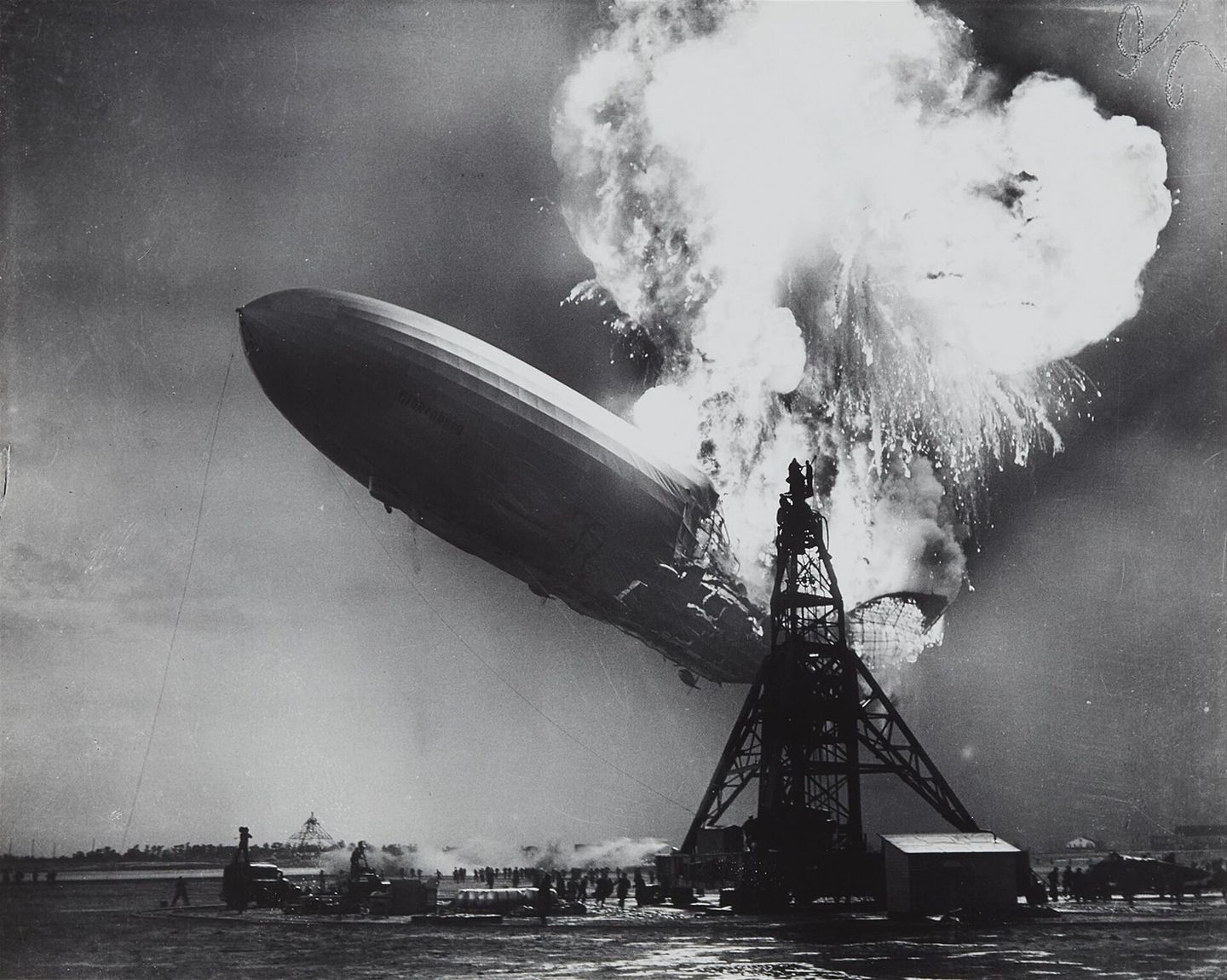
The Hindenburg ablaze during its landing at lakehurst, New Jersey, May 1937. Sam Shere, Public domain, via Wikimedia Commons
During World War I, zeppelins became weapons. Germany used them for long-range bombing raids over London and Paris. They were slow, vulnerable to weather and antiaircraft fire, but psychologically terrifying. Silent shapes appearing out of the night sky, dropping explosives. After the war, they returned to passenger service. The Graf Zeppelin, launched in 1928, completed a round-the-world flight and carried over 13,000 passengers without a single injury. The Hindenburg, even larger, crossed the Atlantic dozens of times in the 1930s, making the trip in less than three days.
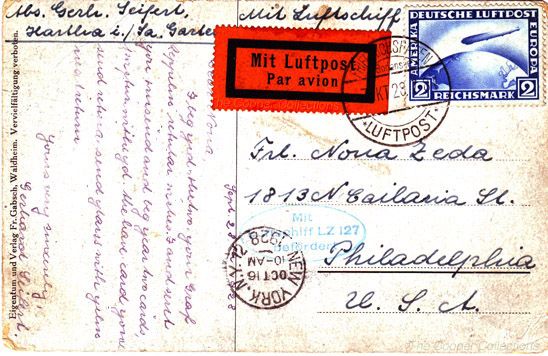
The Graf Zeppelin during its first north American flight, 1928. The original uploader was Centpacrr at English Wikipedia., Public domain, via Wikimedia Commons
The era ended abruptly on May 6, 1937, when the Hindenburg caught fire while landing in New Jersey. The footage of the disaster, the fireball consuming the airship in seconds, effectively killed public confidence in hydrogen-filled aircraft. But the design principles Zeppelin pioneered did not disappear. The idea of building lightweight structures at massive scale, of using distributed load-bearing frameworks, of designing for environments where every ounce matters, those principles migrated into other fields. Aerospace engineering, tensile architecture, even the design of communication towers and suspension bridges all owe something to the question Zeppelin asked: how do you build when the ground is not an option?
studio / on-this-day / Jul 2