studio / on-this-day / May 1
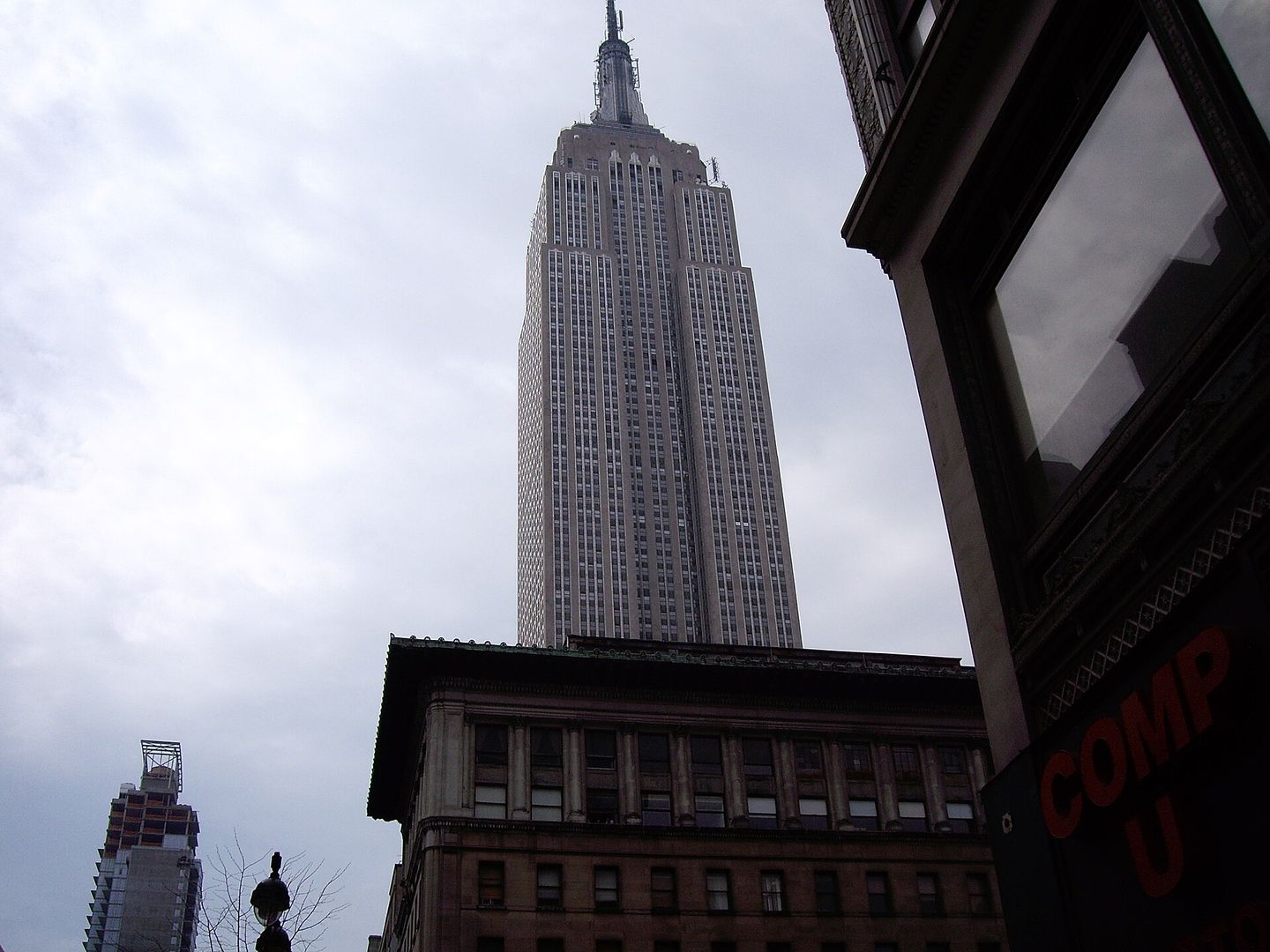
The Empire State Building, new York city. Public domain, via Wikimedia Commons
102 Floors in 410 Days
On this day in 1931 — the Empire State Building opened, a hundred and two floors raised in just over a year, with speed itself the ruling constraint.
3 min read
On May 1, 1931, President Herbert Hoover pressed a button in Washington, D.C., and the lights of the Empire State Building blazed to life in Manhattan. The building had taken thirteen and a half months to construct, from groundbreaking to ribbon cutting. This was not just fast for its time. It remains one of the fastest major construction projects in history relative to scale. Four and a half floors per week, on average, for over a year. Speed was not a side effect. It was the entire design philosophy.
The project was born from a collision of ambition and timing. John Jakob Raskob, a General Motors executive, wanted to build the tallest building in the world. The site was prime Manhattan real estate at Fifth Avenue and 34th Street, previously home to the original Waldorf-Astoria Hotel. Architects Shreve, Lamb & Harmon designed a structure that was fundamentally modular. Standardized components. Repetitive floor plans. Every decision optimized for assembly speed.
Construction began on March 17, 1930, in the teeth of the Great Depression. At peak, more than 3,400 workers were on site. Many were immigrants, Irish and Italian, along with Mohawk ironworkers who had earned a reputation for fearlessness at height. They moved with startling efficiency. Steel arrived pre-cut and numbered. Rivets were heated on site and tossed red-hot to catchers who secured them before they cooled. The building rose at a pace of about a floor every three days.
The speed was enabled by logistics as much as labor. Materials arrived just in time, staged by railcar and truck on a strict schedule. Elevators were installed as the building rose, moving supplies vertically within the structure itself. This was construction as choreography, thousands of moving parts synchronized to a rhythm dictated by the calendar. Missing a deadline meant losing money in a collapsing economy. The incentive structure was brutal and clear.
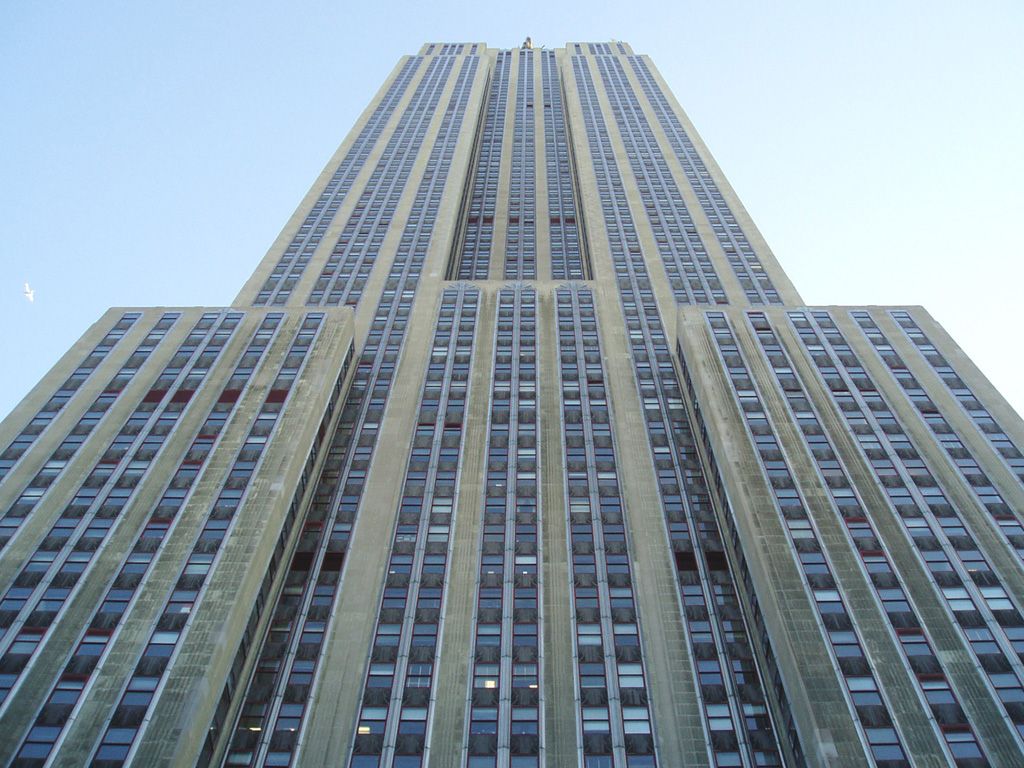
Looking up at the Empire State Building from the Street below. BigMac, CC BY-SA 3.0, via Wikimedia Commons
When the building opened, it was the tallest in the world at 1,250 feet, surpassing the Chrysler Building by 200 feet. It held that title for 41 years until the World Trade Center rose in 1973. But the Empire State Building was not just tall. It was a demonstration of what industrial coordination could achieve when constraints became drivers. Limited time. Limited budget. Maximum ambition. The building became a symbol not of luxury, but of sheer organizational capacity.
In its first years, the Empire State Building was a commercial failure. The Depression meant office space sat empty. Locals called it the Empty State Building. But the structure itself never failed. It stood as proof that a city could build upward at industrial speed, that verticality was not just architecturally possible but logistically feasible. Every skyscraper since has borrowed from its model: modular design, just-in-time materials, relentless scheduling.
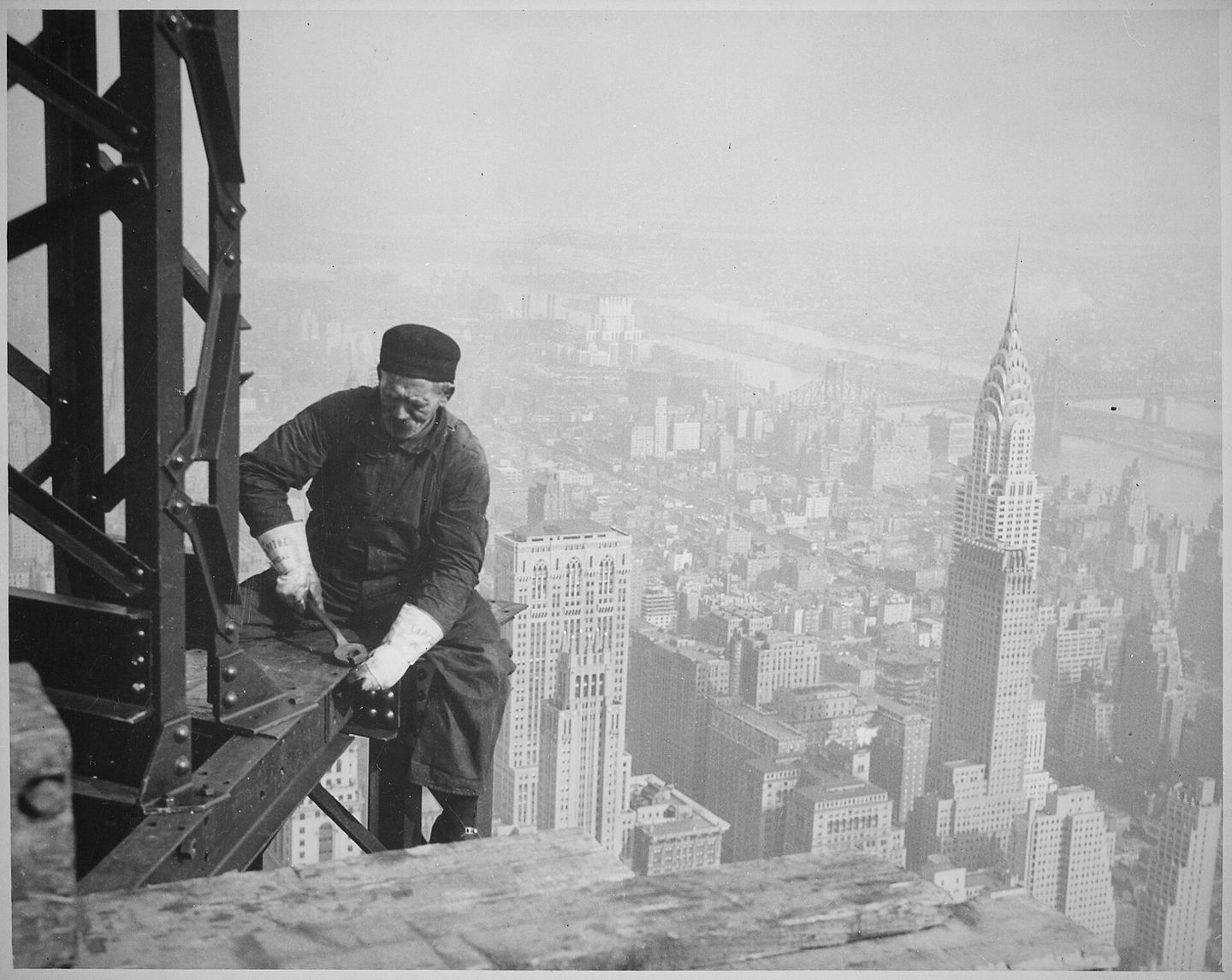
A workman on the steel framework during construction, 1930. Lewis Hine, Public domain, via Wikimedia Commons
The Empire State Building turned construction into a performance. Newspapers covered the progress weekly. Photographers documented workers perched on beams hundreds of feet above the street, eating lunch with the city spread below them. These images became as iconic as the building itself. They showed what humans could do when deadlines were non-negotiable and the margin for error was measured in seconds, not days.
Today, the building still stands, renovated and modernized but structurally unchanged. What was radical in 1931 is now standard practice: fast construction, modular components, tightly sequenced logistics. The Empire State Building proved that architecture is as much about time as it is about space. Speed, it turned out, could be a design material as fundamental as steel.
studio / on-this-day / May 1