studio / on-this-day / Jun 18
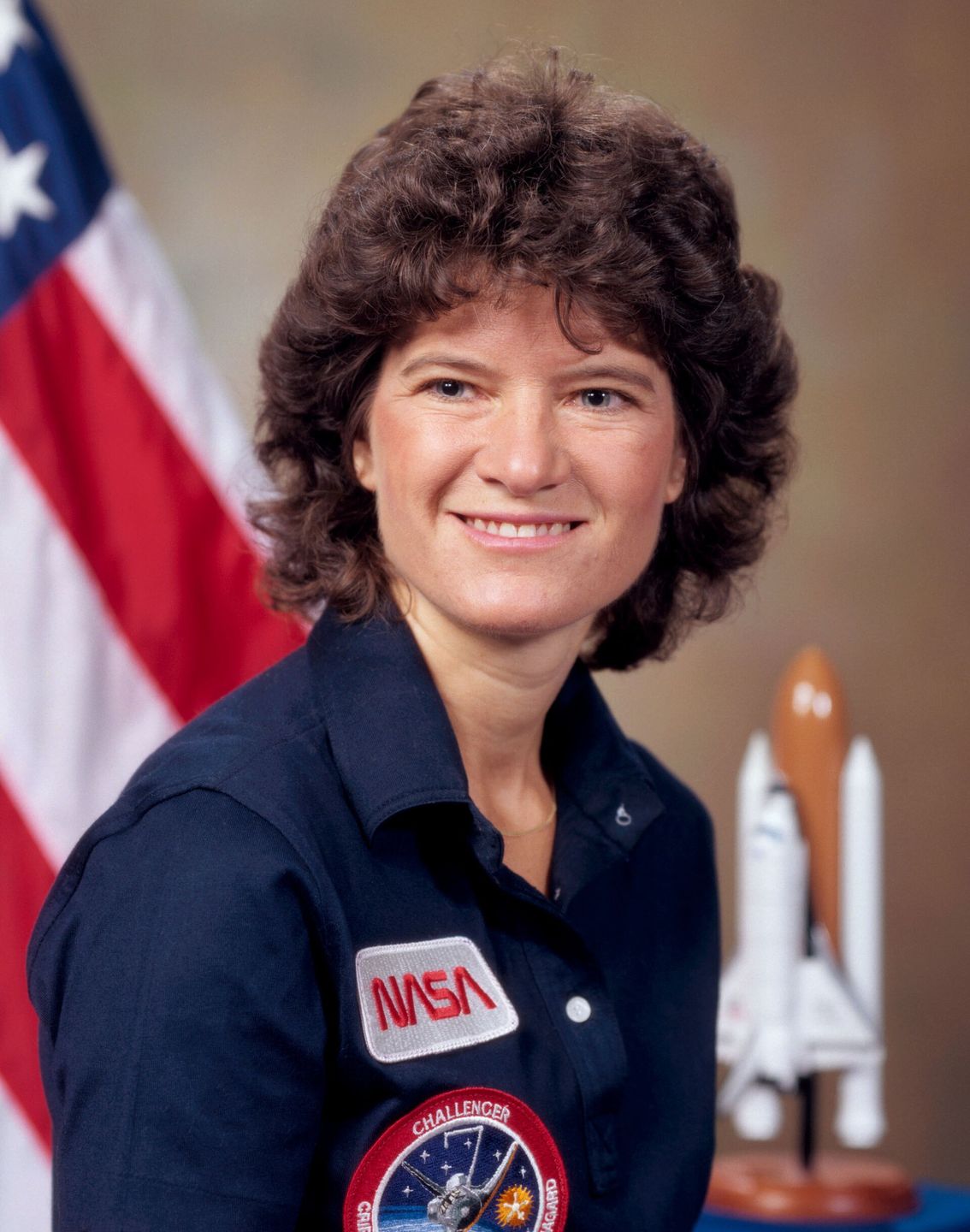
Sally Ride, NASA astronaut and physicist, 1984. NASA; retouched by Adam Cuerden (edited to remove dust and scratches), Public domain, via Wikimedia Commons
The Physicist Who Flew
On this day in 1983 — Sally Ride flew aboard Challenger and became the first American woman in space.
3 min read
On June 18, 1983, at 7:33 AM Eastern Time, the Space Shuttle Challenger lifted off from Kennedy Space Center carrying a crew of five, including Sally Ride, a 32-year-old physicist from Los Angeles. She became the first American woman in space. Twenty years after Valentina Tereshkova flew solo for the Soviet Union, the United States finally put a woman in orbit. The delay was not technical. It was cultural.
Ride did not set out to be a symbol. She earned a PhD in physics from Stanford in 1978, specializing in astrophysics and free electron laser physics. That same year, NASA issued a call for astronaut candidates for the new Space Shuttle program. For the first time, the agency dropped the requirement that astronauts be military test pilots, a role effectively closed to women. The shuttle needed mission specialists: scientists and engineers who could operate experiments, deploy satellites, and manage complex systems in orbit. Ride applied along with 8,000 others. She was one of six women selected out of 35 new astronauts.
The media attention was immediate and relentless. Journalists asked her questions no male astronaut had ever faced. Would spaceflight affect her reproductive system? Did she cry on the job? How would she handle her period in zero gravity? The press wanted to know if she wore makeup in space. Ride answered the questions with the same precision she brought to physics. She focused on the work. She trained for five years, learning orbital mechanics, shuttle systems, and the operation of the Remote Manipulator System, the shuttle's 50-foot robotic arm. She became an expert at deploying and retrieving satellites. When mission commander Robert Crippen selected her for STS-7, it was because she was the best person for the job.
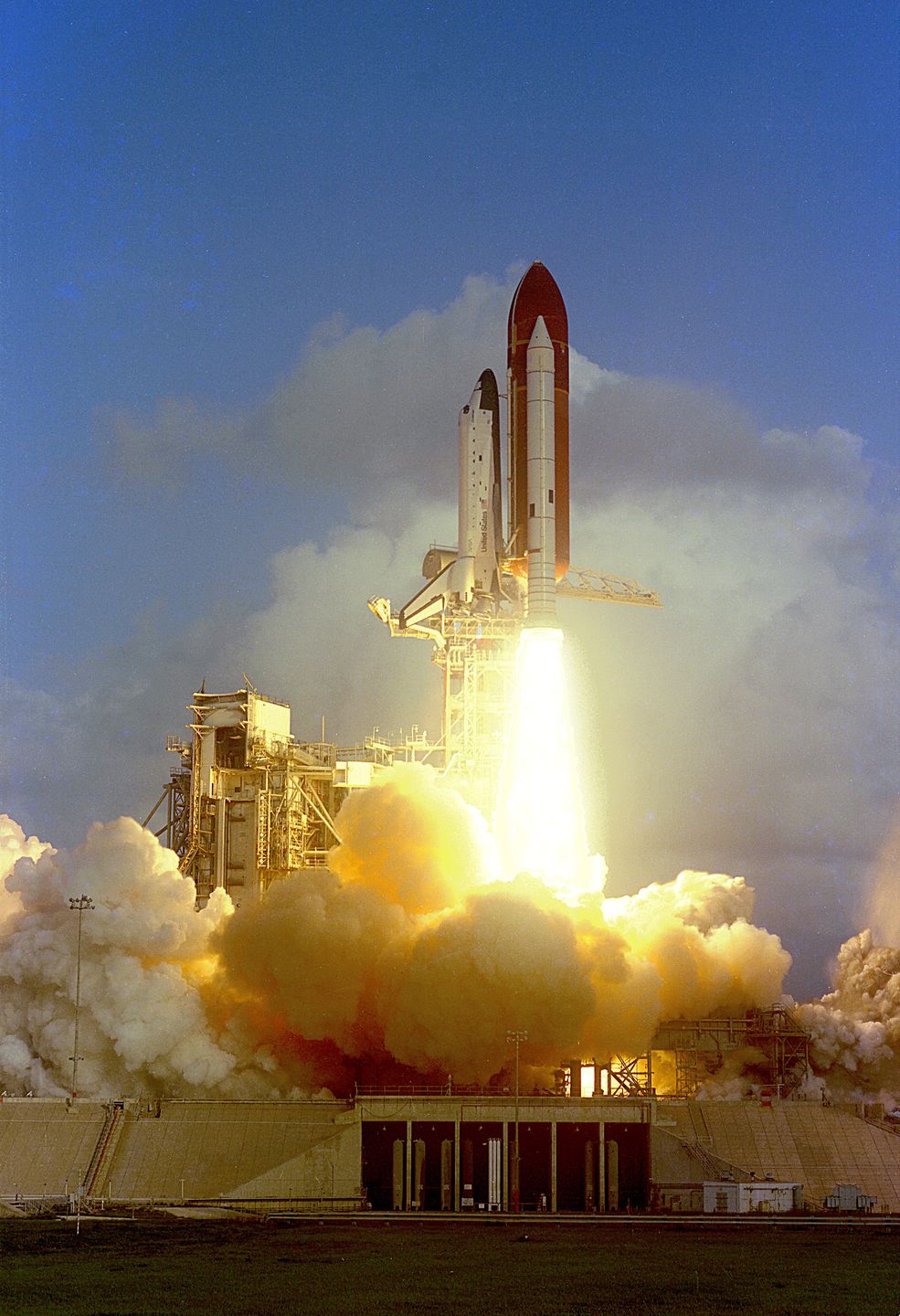
Space Shuttle Challenger lifts off on STS-7, June 18, 1983, carrying Sally Ride as the first American woman in Space. NASA image, Public domain, via Wikimedia Commons
The mission lasted six days. Challenger deployed two commercial satellites, conducted experiments on materials science and crystal growth, and tested the robotic arm under operational conditions. Ride operated the arm to release and then recapture a satellite in what was then the first retrieval of an object in space. The maneuver worked flawlessly. She performed her tasks with the efficiency of someone who understood that every action was being scrutinized for evidence of competence or failure. She succeeded because failure was not an option she allowed herself.
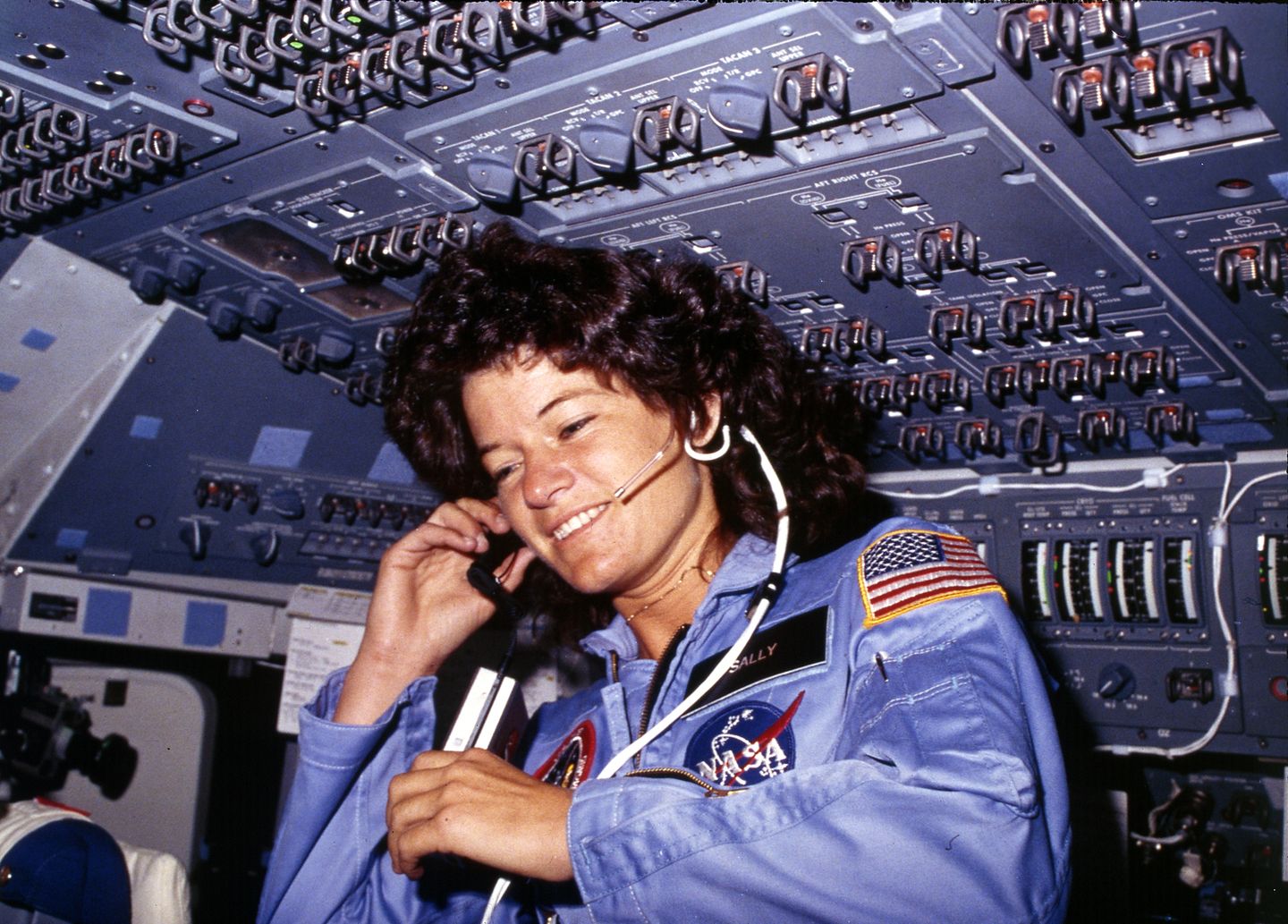
Sally Ride at work on the aft flight deck of Challenger, communicating with ground controllers during STS-7. Public domain, via Wikimedia Commons
When Challenger returned to Earth on June 24, Ride became a celebrity whether she wanted to be or not. She flew one more mission in 1984 and was scheduled for a third when the Challenger disaster in 1986 grounded the shuttle fleet. She served on the Rogers Commission investigating the explosion, where she asked the critical questions that exposed the failure of NASA's decision-making process. After leaving NASA, she became a professor of physics at UC San Diego, wrote children's books about science, and founded Sally Ride Science, a company dedicated to encouraging young people, especially girls, to pursue STEM careers.
Ride was intensely private. She never publicly discussed her personal life. When she died of pancreatic cancer in 2012 at age 61, her obituary revealed that she had been in a relationship with Tam O'Shaughnessy, a professor and former tennis partner, for 27 years. The revelation was both unremarkable and profound. She had been the first American woman in space and the first known LGBTQ astronaut, though she had never spoken about it publicly. The silence was a form of protection in an era when such things could end careers.
What Ride left behind was a record of competence so clear it became its own argument. She proved that gender was irrelevant to the demands of spaceflight. She did not ask for attention. She asked for the work. When she got it, she did it better than almost anyone. That example, more than any statement, shifted what was possible. The path she cleared has been traveled by dozens of women since. The next time a woman walks on the Moon, she will be walking in a line that traces back to June 18, 1983, when a physicist from California floated in orbit and focused on the robotic arm in front of her, making sure it worked exactly as designed.
studio / on-this-day / Jun 18