studio / on-this-day / Jun 17
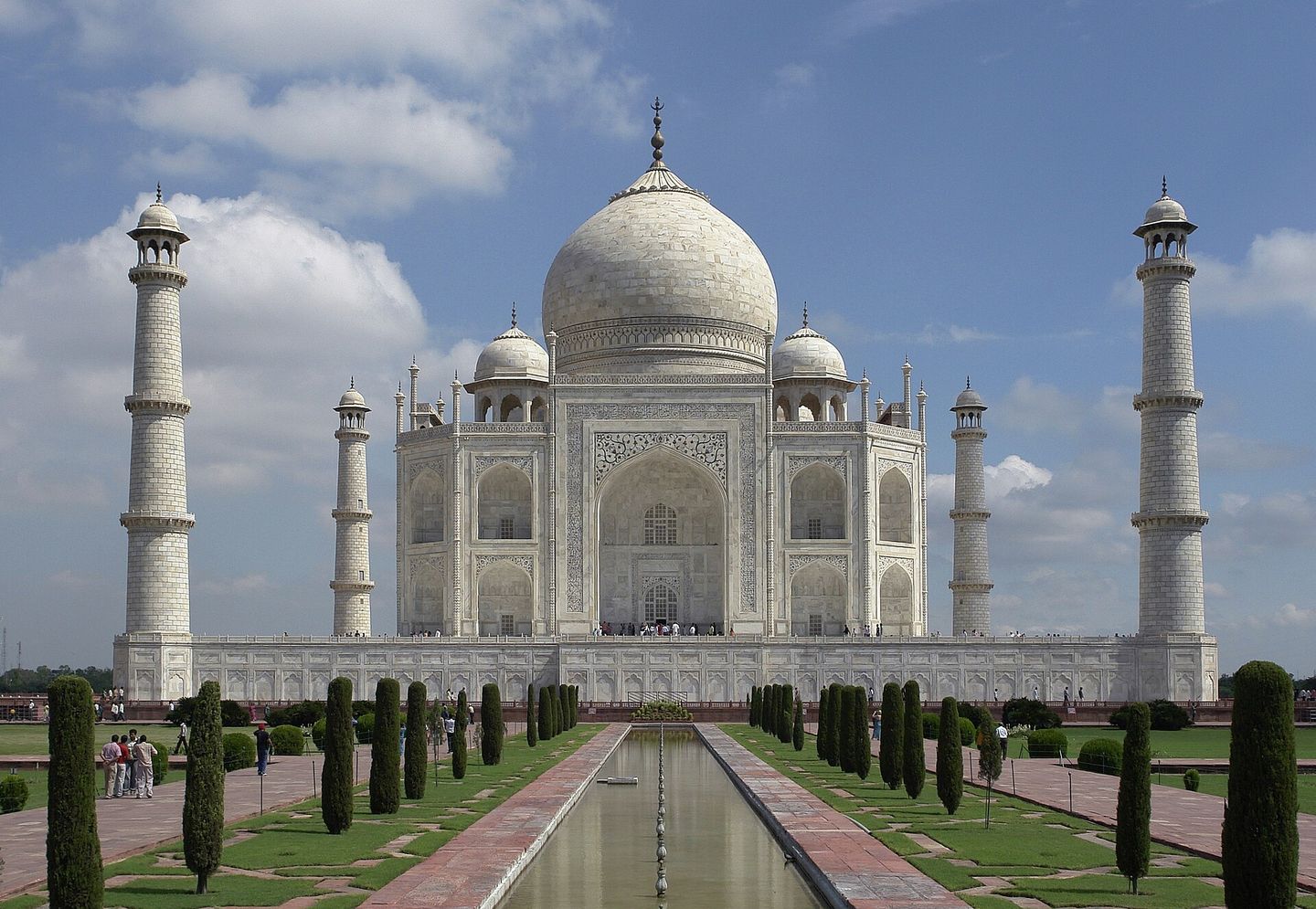
The Taj Mahal, Agra, India. CC BY-SA 3.0, via Wikimedia Commons
Monument to an Absence
On this day in 1631 — Mumtaz Mahal died, and her grieving husband answered by building the Taj Mahal, grief turned into architecture.
3 min read
Arjumand Banu Begum died giving birth to her fourteenth child on June 17, 1631, in Burhanpur, a military outpost in central India. She was 38 years old. Her husband, Shah Jahan, emperor of the Mughal Empire, was reportedly inconsolable. History remembers her by the title he gave her: Mumtaz Mahal, the Chosen One of the Palace. What he built for her became the most recognized building on Earth.
The Taj Mahal took 22 years to complete. Construction began in 1632, one year after her death. Shah Jahan assembled a workforce of more than 20,000 artisans, masons, and laborers. The chief architect was likely Ustad Ahmad Lahori, though the design drew on Persian, Ottoman, and Indian traditions. The site was chosen on the southern bank of the Yamuna River in Agra, visible from Shah Jahan's palace across the water. Every dimension, every proportion, every surface was calculated to express permanence and perfection.
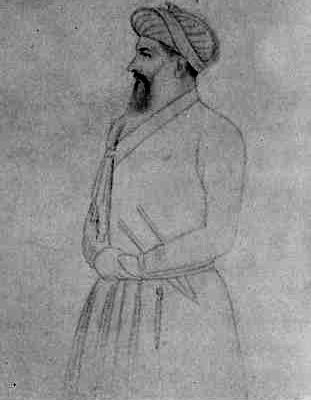
Portrait of Shah Jahan, Mughal Emperor and patron of the Taj Mahal. Edward Singleton Holden (book author), Public domain, via Wikimedia Commons
The structure is symmetrical on every axis except one. The main building is a square with chamfered corners, crowned by a central dome flanked by four smaller domes. Four minarets frame the mausoleum, each tilted slightly outward so that in the event of an earthquake, they would fall away from the tomb rather than into it. The entire complex sits on a raised marble platform, approached through gardens divided into quadrants by water channels, a layout derived from Persian descriptions of paradise.
The materials came from across Asia. White marble was quarried from Makrana in Rajasthan and transported by elephant. Jade and crystal came from China. Turquoise from Tibet. Lapis lazuli from Afghanistan. Sapphires from Sri Lanka. Carnelian from Arabia. In total, 28 types of precious and semi-precious stones were inlaid into the marble in intricate floral patterns using a technique called pietra dura, adapted from Italian craftsmen. The inlay work is so precise that individual stones fit together without gaps visible to the naked eye.
Shah Jahan's grief was not metaphorical. Court chronicles describe him as shutting himself away for eight days after Mumtaz Mahal's death. When he emerged, his beard had turned white. The Taj Mahal was not just a tomb but a designed expression of loss, constructed with the same rigor and resources an emperor might devote to a military campaign. The building's proportions follow geometric principles that make it appear to shift in scale depending on the viewer's position. The dome seems to float. The minarets lean without appearing to lean. The marble changes color with the light, white in the morning, pink at sunset, golden under the moon.
After its completion in 1653, Shah Jahan reportedly planned a second mausoleum for himself on the opposite bank of the Yamuna, to be built in black marble and connected to the Taj Mahal by a bridge. The plan was never realized. In 1658, his son Aurangzeb seized power and imprisoned him in Agra Fort, where he spent the last eight years of his life in a cell with a window overlooking the Taj Mahal. When he died in 1666, he was buried beside Mumtaz Mahal inside the mausoleum, breaking the perfect symmetry he had designed.
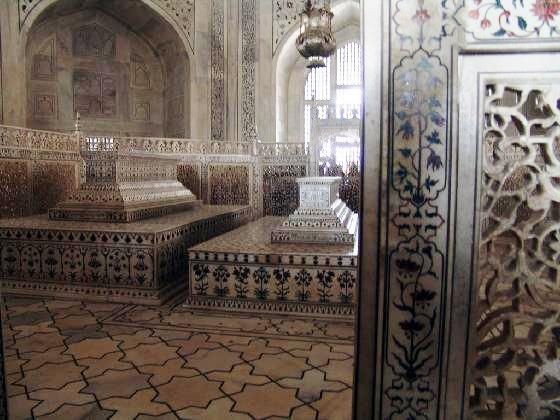
The cenotaphs of Mumtaz Mahal and Shah Jahan inside the mausoleum; his off-center tomb broke the building's perfect symmetry. Public domain, via Wikimedia Commons
The Taj Mahal endures as one of the few buildings that lives up to its reputation. Photographs cannot prepare you for the scale or the detail. It was designated a UNESCO World Heritage Site in 1983 and receives between 7 and 8 million visitors per year. Pollution from nearby factories and traffic has yellowed portions of the marble, requiring periodic cleaning. In recent years, the monument has been closed to protect it from the weight of too many feet. Love built it. Time and attention sustain it. What began as one person's grief became a benchmark for what design can achieve when resources, skill, and intention converge. The building says nothing. It doesn't need to. It simply stands, perfectly, as a reminder that absence can be given form.
studio / on-this-day / Jun 17