studio / on-this-day / Jun 16
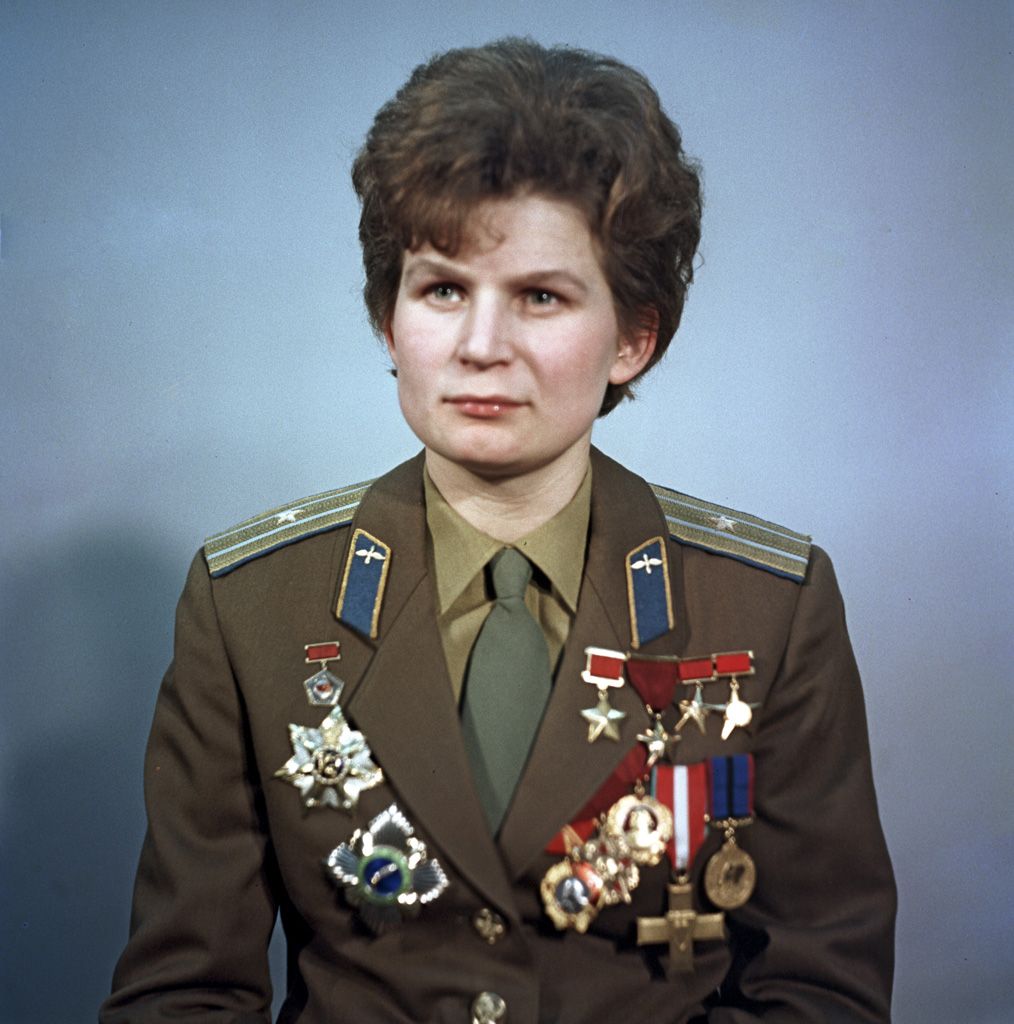
Valentina Tereshkova, pilot-cosmonaut of the Soviet Union. Alexander Mokletsov / Александр Моклецов, CC BY-SA 3.0, via Wikimedia Commons
The First Woman Beyond the Atmosphere
On this day in 1963 — Valentina Tereshkova became the first woman in space, orbiting the Earth forty-eight times in just under three days.
3 min read
On June 16, 1963, at 12:29 PM Moscow time, a modified R-7 rocket lifted off from Baikonur Cosmodrome carrying Vostok 6 and its sole occupant, 26-year-old Valentina Tereshkova. Radio call sign: Chaika, or Seagull. Three days later, after completing 48 orbits of Earth, she became the first woman to fly in space. It would be 19 years before another woman followed.
Tereshkova was not a pilot. She was a textile factory worker from Yaroslavl who had taken up parachuting as a hobby. She made her first jump at age 22 and logged 126 jumps before the Soviet space program noticed her. When Yuri Gagarin became the first human in orbit in 1961, the propaganda value was instant and enormous. The Soviets wanted another first. They wanted a woman in space before the Americans, and they needed someone who could handle an ejection seat landing, the Vostok capsule's only reentry method.
Out of more than 400 applicants, five women were selected for cosmonaut training in 1962. Tereshkova was one of them. The training was brutal. Zero-gravity flights. Centrifuge runs. Isolation tests. Parachute drills. She endured it without complaint and emerged at the top of her group. Mission planners originally intended to fly two women in space simultaneously, Vostok 5 and Vostok 6 in orbit together, but the plan was scaled back. Vostok 5 launched with male cosmonaut Valery Bykovsky on June 14. Two days later, Tereshkova followed.
The flight was harder than expected. She experienced nausea, physical discomfort, and at one point discovered an error in the spacecraft's orientation program that would have sent her deeper into space rather than back to Earth. She reported it, and ground control uploaded a corrected program. She kept a detailed log, took photographs, and conducted experiments on her body's response to spaceflight. After nearly three days in orbit, longer than all the American Mercury missions combined, Vostok 6 reentered the atmosphere.
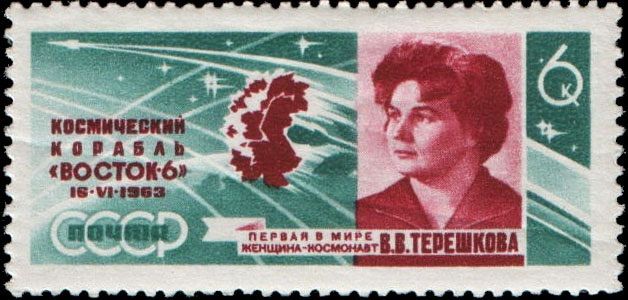
A 1963 Soviet postage stamp commemorating Tereshkova's flight aboard Vostok 6. Post of the Soviet Union (I. L. Levin)., Public domain, via Wikimedia Commons
At 7,000 meters, Tereshkova ejected from the capsule as planned and parachuted separately to the ground. She landed in a field in the Altai region, far from her intended target. Local farmers found her first. She shared her rations with them while waiting for the recovery team. She was bruised from the ejection, disoriented from the reentry, and exhausted. She was also the most famous woman on the planet.
The Soviet Union celebrated her as a hero of socialist labor and proof that women could achieve anything men could. The reality was more complicated. The Vostok program ended with her flight, and no Soviet woman would fly in space again until Svetlana Savitskaya in 1982. Tereshkova's flight was as much a political gesture as a technical milestone, but the milestone was real. She had spent more time in space than any American astronaut to that point, male or female. When Sally Ride became the first American woman in space 20 years later, she followed a path Tereshkova had already cleared.
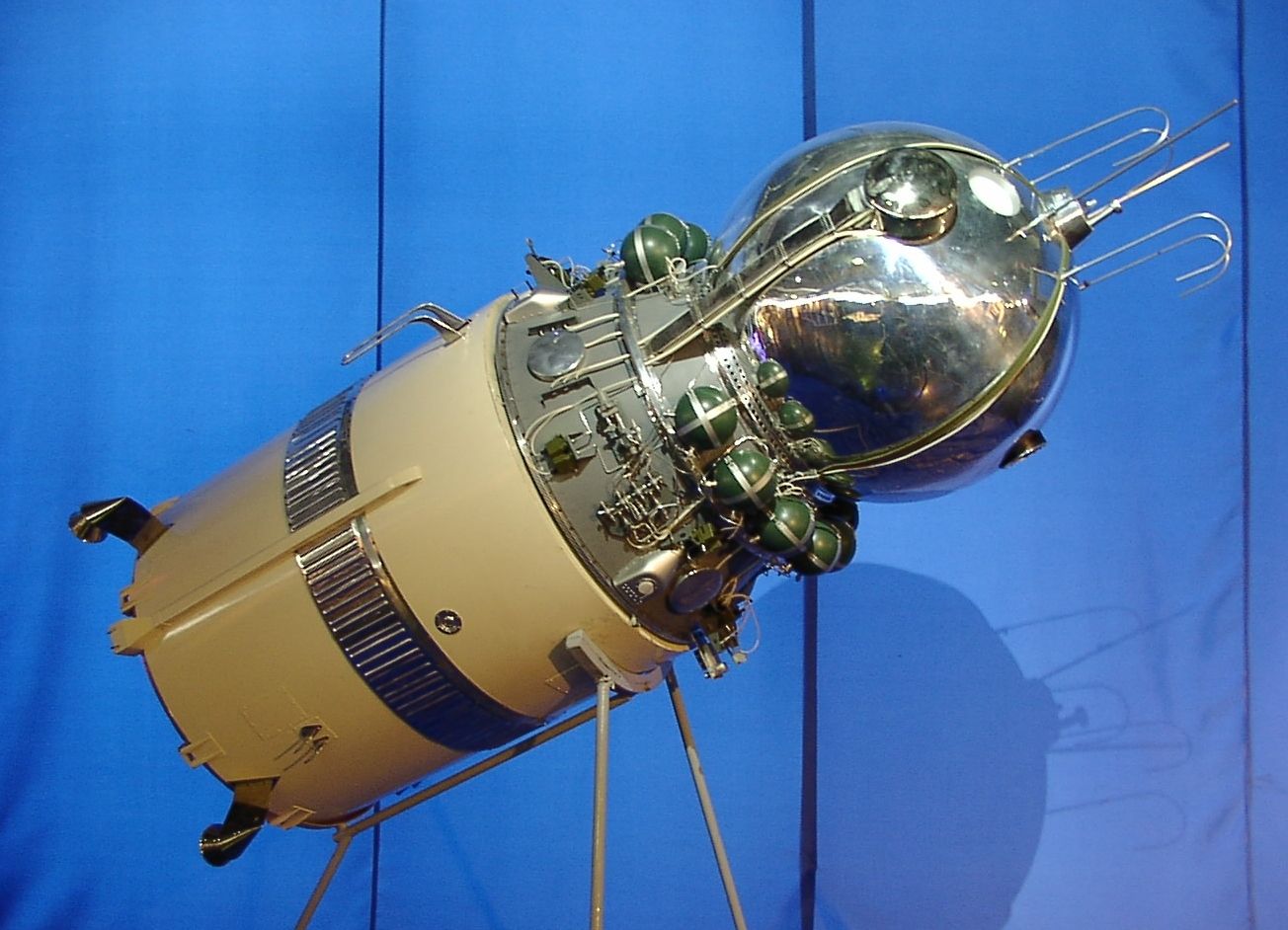
A Vostok spacecraft capsule, identical in type to the one that carried Tereshkova into orbit in 1963. The original uploader was HPH at German Wikipedia., CC BY-SA 3.0, via Wikimedia Commons
Tereshkova later became a prominent figure in Soviet and Russian politics, serving in the State Duma and advocating for space exploration and women's rights. She married fellow cosmonaut Andriyan Nikolayev in a wedding attended by Nikita Khrushchev. Their daughter, born in 1964, was the first child born to parents who had both been in space. The marriage ended in divorce, but the public image endured. She remains, at 87, the only woman to have completed a solo space mission. Every other woman in space has flown as part of a crew. She flew alone, in a capsule barely larger than a telephone booth, for 70 hours and 50 minutes. The sky was never the same.
studio / on-this-day / Jun 16