studio / on-this-day / Apr 19
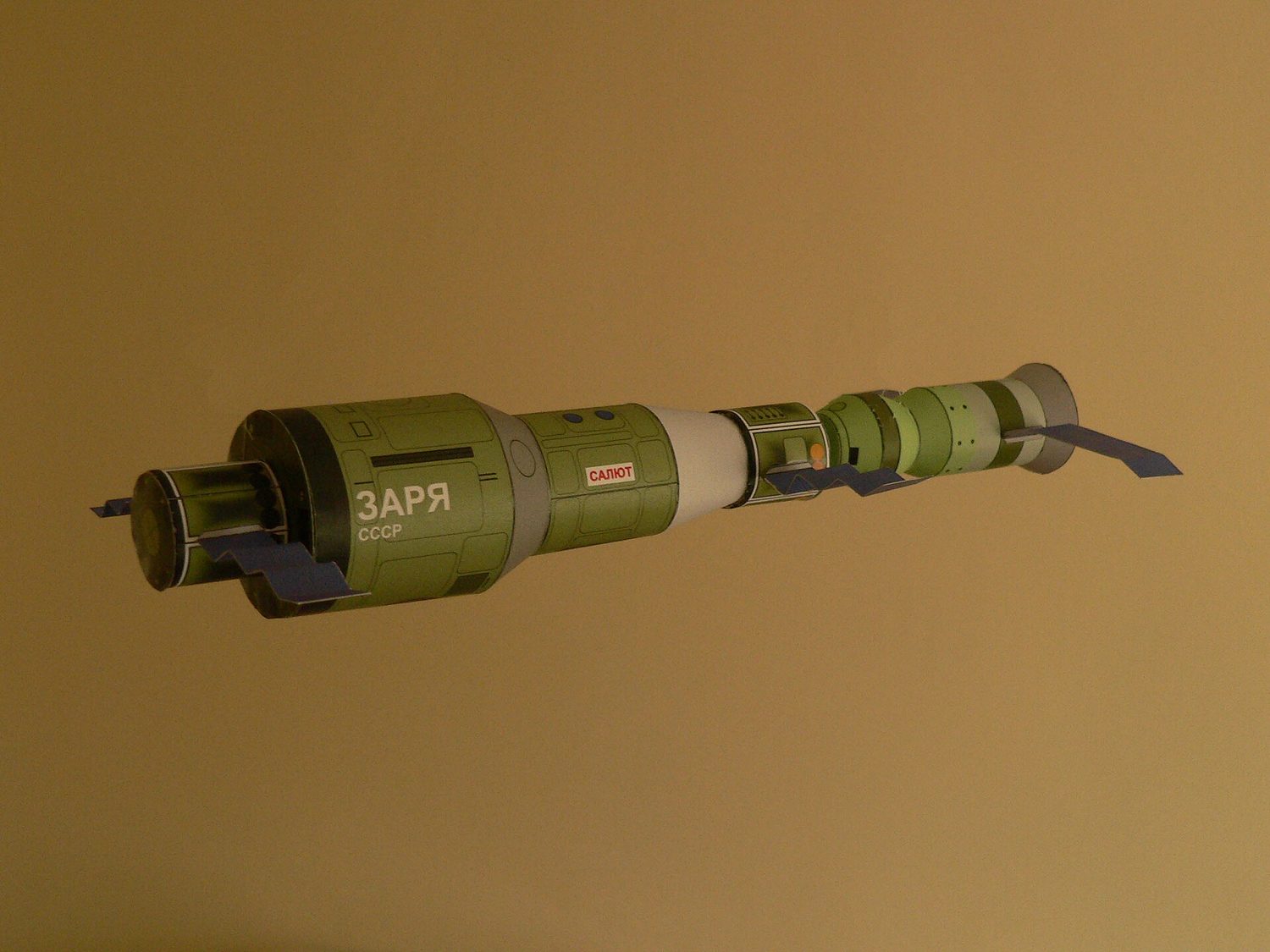
A scale model of Salyut 1, the first space station, launched by the Soviet Union in 1971. Godai, CC BY-SA 3.0, via Wikimedia Commons
Architecture in Orbit
On this day in 1971 — the Soviet Union launched Salyut 1, the first space station, the start of humans keeping a permanent address in orbit.
3 min read
On April 19, 1971, the Soviet Union launched Salyut 1, the first space station, into low Earth orbit. It was not a capsule designed to land somewhere else. It was a structure meant to stay in space, to be lived in, worked in, and returned to. For the first time, humans had built permanent architecture beyond the planet. A house in the sky.
Space stations solve a different problem than spacecraft. A capsule is transport. It gets you from here to there. A station is infrastructure. It creates a place where there was only void. Salyut 1 was 65 feet long and weighed nearly 19 tons. It had living quarters, a workspace, and systems for life support. It orbited Earth every 90 minutes, completing sixteen sunrises and sunsets each day. Inside, cosmonauts floated through rooms with no up or down, no gravity to anchor their bodies or their assumptions about how buildings should work.
Designing for zero gravity is design by subtraction. On Earth, architecture assumes a floor. Walls rise perpendicular. Ceilings cover from above. Every building is oriented by the pull of the planet. In orbit, those assumptions collapse. There is no floor because there is no down. Every surface is potentially a workspace. A cosmonaut can stand on what looks like a wall, push off the ceiling, sleep strapped to what would be a door. The station is not a building. It is a volume, and humans move through it in three dimensions.
Salyut 1's first crew, Georgy Dobrovolsky, Vladislav Volkov, and Viktor Patsayev, docked on June 7, 1971. They lived aboard for 22 days, conducting experiments, taking photographs, and learning how to inhabit a structure that had no precedent. They watered plants in microgravity. They exercised on equipment bolted to the walls. They ate from tubes and slept in bags. Every task required rethinking. You cannot pour water. You cannot set something down. Every object must be tethered, or it drifts. The station was not just a place to live. It was a continuous design problem.
The mission ended in tragedy. On June 30, 1971, the crew undocked from Salyut 1 and began their descent. A valve in the Soyuz capsule opened prematurely during reentry, venting the cabin's atmosphere into the vacuum of space. The cosmonauts died within seconds. The capsule landed automatically, and when the recovery team opened it, they found three men still strapped into their seats, eyes closed, as if asleep. The station itself remained in orbit, empty, a monument in motion.
Salyut 1 reentered Earth's atmosphere on October 11, 1971, burning up over the Pacific. It had been occupied for only 22 days of its 175-day mission. But those 22 days proved that humans could live and work in space for extended periods. The lessons learned, the systems tested, the mistakes made, all fed into the next generation of stations. Salyut 2 through 7. Skylab. Mir. The International Space Station. Each one a refinement, an iteration on the same fundamental challenge: how do you build a home where nothing stays still?
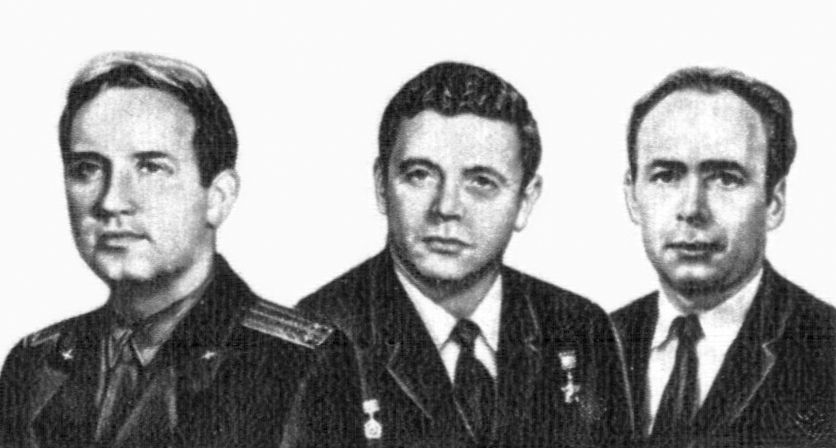
Georgy Dobrovolsky, Vladislav Volkov, and Viktor Patsayev — the Soyuz 11 crew who became the only people to live aboard Salyut 1, and who died during reentry on June 30, 1971. USSR Post, Public domain, via Wikimedia Commons
What space stations reveal is that architecture is not about buildings. It is about creating environments that support human activity. On Earth, gravity does most of the work. Things stay where you put them. Blood circulates without effort. Waste falls away. In orbit, every one of those systems must be designed intentionally. Air must be circulated, or it forms pockets of carbon dioxide around sleeping cosmonauts. Water must be reclaimed from humidity, urine, and sweat. Trash must be stored or jettisoned. The station is a closed loop, a life support system wrapped in aluminum and Kevlar.
Modern software systems face similar constraints. They operate in environments with no natural equilibrium. Data does not organize itself. Errors do not resolve on their own. Every function, every failsafe, every feedback loop must be designed and tested. A space station is just a very expensive, very high-stakes version of the same problem: keeping a complex system stable in an environment that wants it to fail. Salyut 1 was the first proof of concept. It worked, and then it killed three people, and then it burned. But it worked. That was enough to keep building.
studio / on-this-day / Apr 19