studio / on-this-day / Jun 1
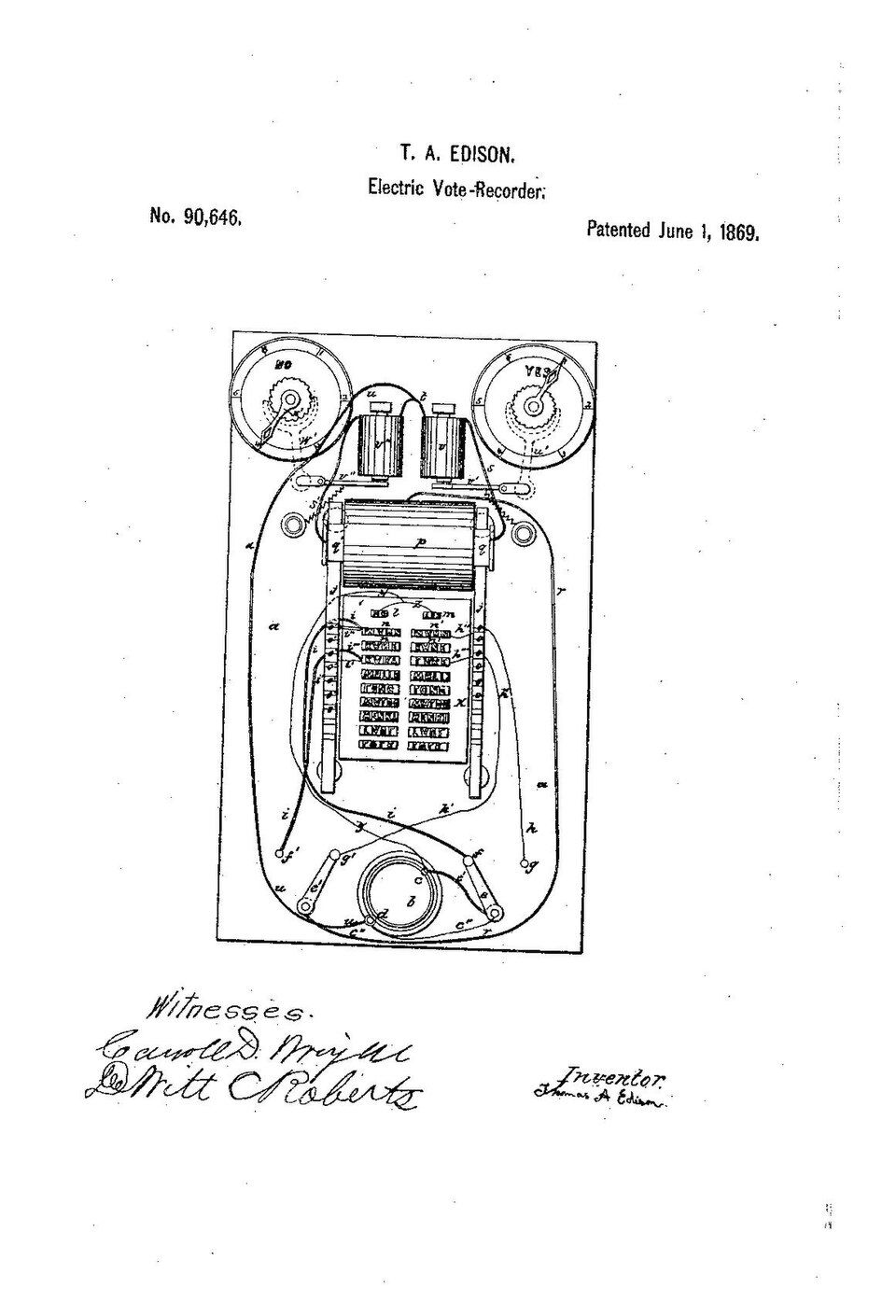
Edison's first patent, the electrographic vote recorder, granted June 1, 1869. public domain, via Wikimedia Commons
The Invention Nobody Wanted
On this day in 1869 — Thomas Edison received his first patent, a machine that counted votes perfectly, and learned that solving the wrong problem is worthless.
4 min read
On June 1, 1869, a 22-year-old telegraph operator named Thomas Edison received U.S. Patent 90,646, the first of the 1,093 he would eventually hold. It was for an electric vote recorder, a device that let a legislator vote by flipping a switch at their desk while the machine tallied the yeas and nays instantly and printed the result. It worked flawlessly. It was also a complete commercial failure, and that failure may have been the most useful thing he ever built.
The problem was not the machine. The problem was that Edison had solved something nobody actually wanted solved. Legislatures did not want instant voting. The slow, droning roll-call was not an inefficiency to be fixed; it was the point. The minutes it took to call the roll were minutes for arm-twisting, deal-making, delay, and changing minds. A committee chairman reportedly told the young inventor that if there was one machine on Earth they did not want, it was a faster way to vote.
Edison took the lesson to heart with unusual force. He is said to have resolved, then and there, never again to invent anything without first making sure there was a real demand for it, to start from what people needed rather than from what was merely clever or possible. For a man who would become the most prolific inventor in American history, it may have been the most important decision he ever made, and he made it because his very first success had technically worked and commercially died.
Everything after it bears the mark. The phonograph, the practical incandescent light, the motion picture, each was aimed at a need people could actually feel. And the light bulb was never really about the bulb; Edison understood that a lamp is useless without the whole system around it, the generators, the wiring, the meters, the grid, and so he built that too. He thought in markets and systems rather than gadgets, and the habit traces straight back to the vote recorder that no one would buy.
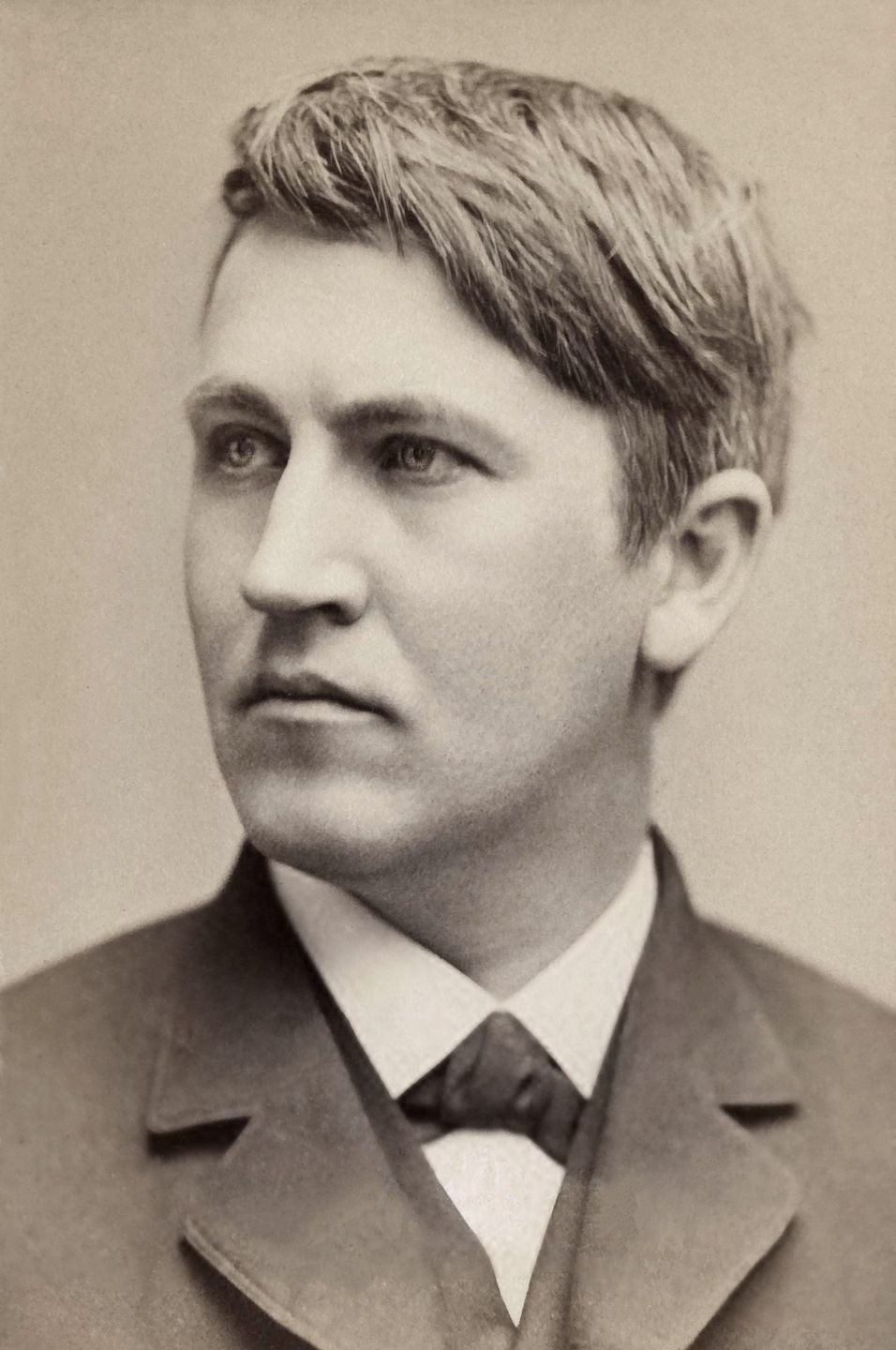
Thomas Edison in 1878, around the time of the phonograph. Public domain, via Wikimedia Commons
He also industrialized invention itself. At his laboratory in Menlo Park he assembled a team and a method, turning the lone flash of genius into something closer to a factory that produced inventions on a schedule, aimed deliberately at problems worth solving. The romantic image of Edison the wizard hides the more interesting truth: he made discovery into a repeatable process.
The vote recorder was right in every respect but the only one that mattered. It was elegant, accurate, fast, and completely unwanted. It stands as a permanent warning in the design of almost anything: technical excellence is necessary and nowhere near sufficient. You have to be answering a question that someone is actually asking.
So Edison's first patent was a flop, and it was worth more than most successes, because it taught him, at twenty-two, that the hard part of invention is not making the thing work. The hard part is choosing the right thing to build. Nearly everything he is remembered for came from getting that one question right, after getting it wrong the very first time.
studio / on-this-day / Jun 1