studio / on-this-day / Apr 17
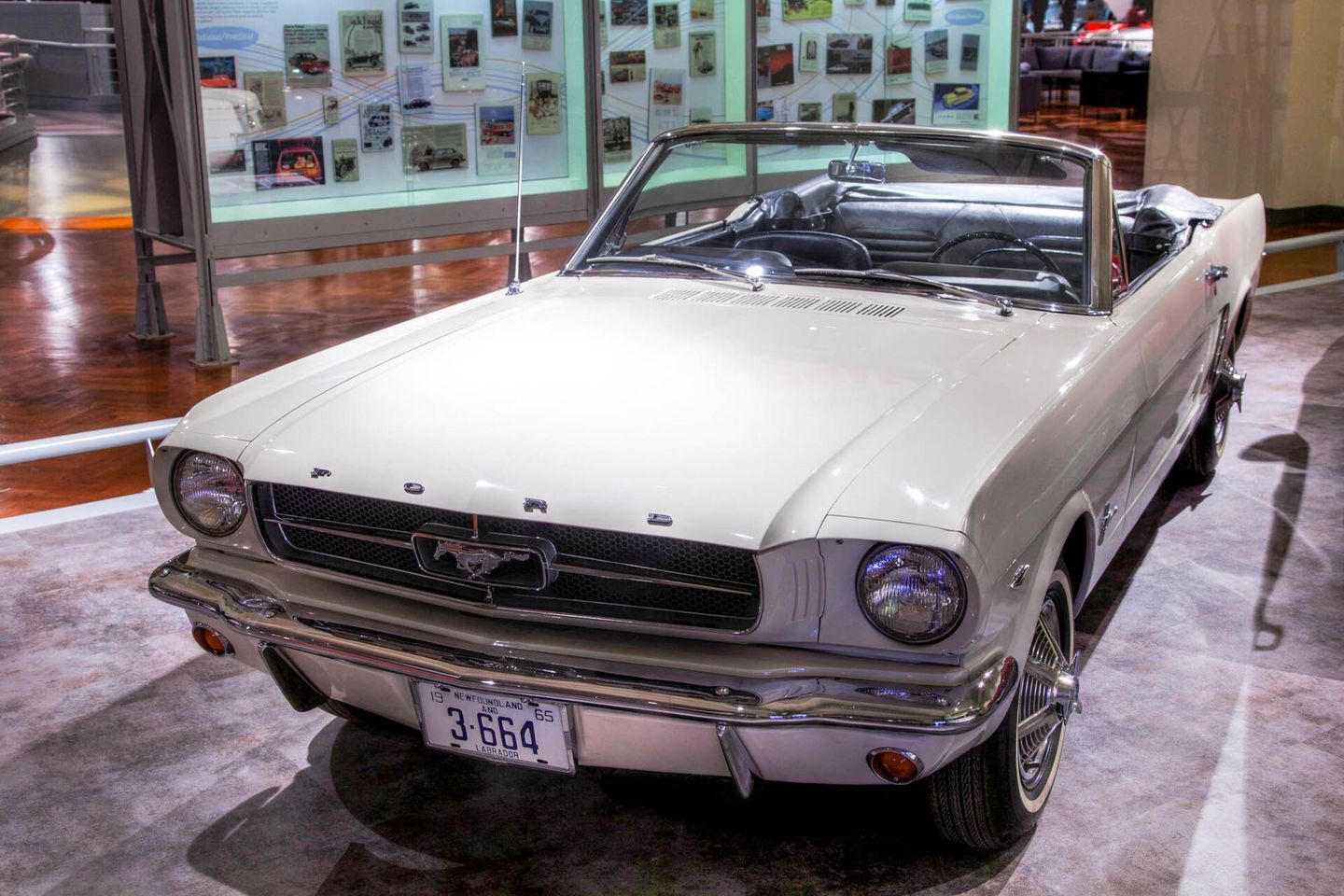
Ford Mustang serial number one — the very first production Mustang, which sold for $2,368 at the New York World's Fair on April 17, 1964. within 24 hours, Ford had 22,000 orders. Alvintrusty, CC BY-SA 3.0, via Wikimedia Commons
Designing a Category
On this day in 1964 — Ford revealed the Mustang, a car whose design conjured an entire market segment into being almost overnight.
3 min read
On April 17, 1964, at the New York World's Fair, Ford Motor Company introduced the Mustang. Within twenty-four hours, 22,000 people had bought one. By the end of the first year, Ford had sold over 400,000 units. The car did not just succeed. It invented a new kind of product, one that did not exist the day before: the pony car, a vehicle designed not for utility or status, but for aspiration.
The Mustang was a calculated answer to a specific problem. In the early 1960s, the American auto market was split between practical economy cars and expensive luxury models. There was nothing in between, nothing for the young professional who wanted style without a second mortgage. Lee Iacocca, Ford's general manager, saw the gap and designed a product to fill it. The Mustang was affordable but did not look cheap. It was small but felt powerful. It was mass-produced but promised individuality. That contradiction, engineered deliberately, was the entire strategy.
What made the Mustang work was not the car itself, but the system around it. Ford offered the base model at a starting price of $2,368, low enough to pull buyers out of economy cars. But the Mustang was designed for customization. Buyers could choose from dozens of options: engines, transmissions, interiors, colors, trim packages. You could buy a Mustang as a modest coupe or as a high-performance machine with a V8 engine and racing suspension. The product was modular. The customer assembled the final configuration. This was not just automotive design. It was interface design, applied to sheet metal.
The styling, handled by a team led by designer Gale Halderman, was deliberate in its restraint. The long hood and short rear deck suggested power without aggression. The grille, a simple horizontal bar with the iconic galloping horse emblem, communicated heritage and speed at once. The car looked fast sitting still. That is design as storytelling. Every line communicated a feeling, and the feeling was freedom. It did not matter if you were driving to the grocery store. In a Mustang, you looked like you were going somewhere important.
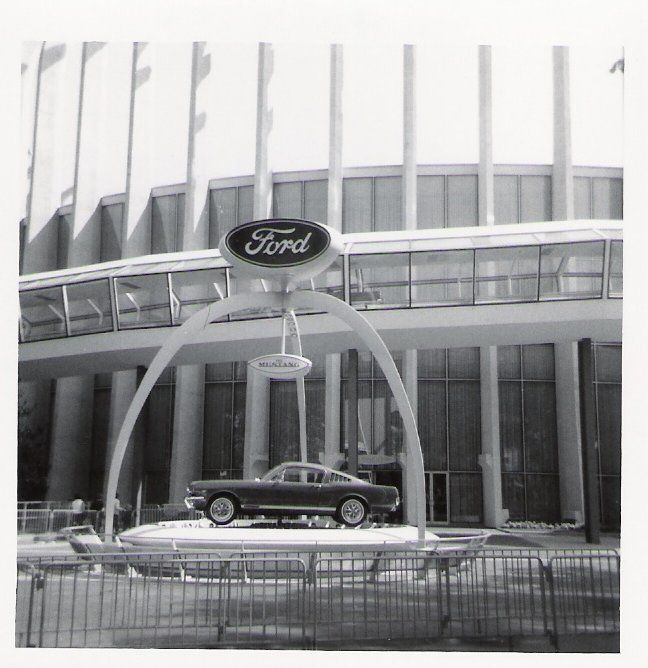
The Ford pavilion at the 1964 New York World's Fair — the stage Ford built for the Mustang's April 17 debut, where 22,000 orders arrived within a day. Doug Coldwell, CC BY-SA 3.0, via Wikimedia Commons
Marketing amplified what the design started. Ford placed Mustangs on the observation decks of the Empire State Building and promoted them in print ads that sold a lifestyle, not a vehicle. The message was clear: this car was for people who wanted more than transportation. They wanted transformation. The Mustang became a prop in a larger fantasy, one where anyone, regardless of income, could feel like they were racing across open roads. That narrative sold more than the engine specs ever could.
The success of the Mustang triggered a wave of imitators. Chevrolet launched the Camaro in 1966. Pontiac introduced the Firebird in 1967. Dodge released the Challenger in 1970. The pony car became an established category, a market segment that had not existed before Ford drew the blueprint. That is what defining a category means. It is not about being first. It is about being clear enough that everyone else copies your homework.
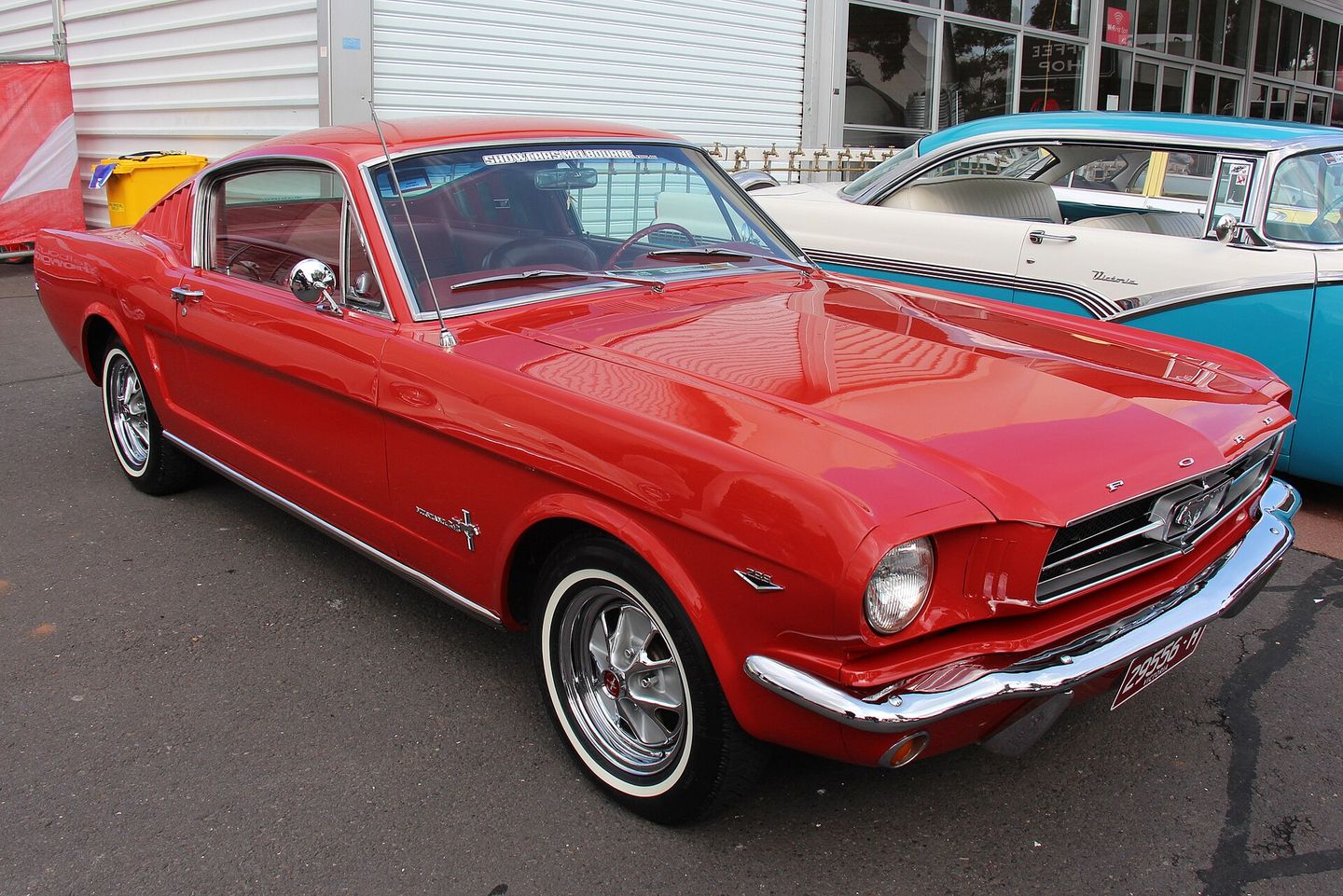
A 1965 Ford Mustang fastback — the long hood and short rear deck that communicated power and speed before the engine ever turned over. The styling sold a feeling: freedom. Sicnag, CC BY 2.0, via Wikimedia Commons
What the Mustang demonstrated, and what designers in every field continue to learn, is that categories are designed, not discovered. A product does not have to be revolutionary to succeed. It has to solve a problem people did not know they had in a way that feels obvious once they see it. The Mustang was not faster than a sports car or cheaper than an economy sedan. It was something in between, and that in-between space became its own destination. Sixty years later, the Mustang is still in production, still modular, still selling the same promise it sold in 1964. Not a car. A version of yourself you might want to be.
studio / on-this-day / Apr 17