studio / on-this-day / Apr 18
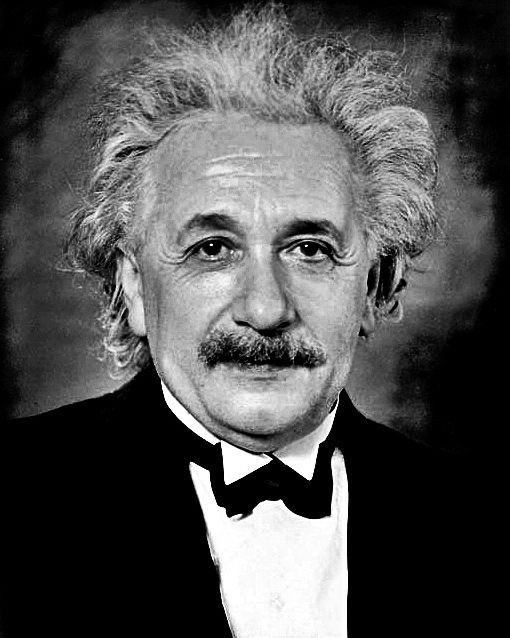
Albert Einstein in a formal portrait, circa 1935. he died on April 18, 1955 at age 76, after refusing surgery on a ruptured aortic aneurysm. Public domain, via Wikimedia Commons
The Mind as Artifact
On this day in 1955 — Albert Einstein died, and a pathologist quietly kept his brain, as if genius were something you could locate by looking.
3 min read
Albert Einstein died at 1:15 a.m. on April 18, 1955, at Princeton Hospital. He was 76. An abdominal aortic aneurysm had ruptured. He had refused surgery, saying that he wanted to go when he wanted to go, and that prolonging life artificially was tasteless. Within hours of his death, a pathologist named Thomas Harvey removed Einstein's brain without the family's permission, preserved it in formaldehyde, and took it home. He kept it for over forty years.
Harvey was not a grave robber. He was a scientist who believed, as many did, that genius must be physical. If Einstein could see through space and time with nothing but thought, then surely there was something different about the organ doing the thinking. The assumption was architectural. Genius was not simply practice or luck. It was structure. A brain that could conceive of relativity, quantum mechanics, and the photoelectric effect must be built differently than other brains. Harvey wanted to find the blueprint.
He sliced the brain into 240 pieces, embedded them in celloidin, and distributed samples to researchers around the world. For decades, nothing significant was found. No enlarged regions. No unusual neuron density. The brain appeared, by most measures, ordinary. Only in the 1990s did researchers begin to identify subtle differences. The inferior parietal lobes, areas associated with mathematical reasoning and spatial cognition, were slightly larger than average. The lateral sulcus, a fissure that typically runs from front to back, was shorter. These were not dramatic deviations. They were hints, variations within the range of normal human anatomy. If this was a blueprint, it was written in pencil.
The story of Einstein's brain is a story about what we want genius to be. We want it to be legible, something we can measure and replicate. If we could isolate the physical difference, we could engineer it. We could optimize for it. This is the same logic behind every educational testing system, every cognitive enhancement drug, every startup promising to unlock human potential through better design. The belief is that intelligence is a system, and systems can be reverse-engineered.
But Einstein's actual work suggests something else. His breakthroughs did not come from raw computational power. They came from the ability to hold two contradictory ideas in his mind at once and to ask what it would look like if both were true. Light behaves like a wave and a particle. Time is relative to the observer. Mass and energy are interchangeable. These were not calculations. They were imaginative leaps, the kind of thinking that happens when you stop trusting your tools and start trusting your intuition. That is not something you can find in a brain slice.
Einstein himself was skeptical of the cult around his intelligence. He once said that he had no special talents, only a passionate curiosity. He described his thought process not as logical deduction but as a kind of play, rearranging concepts until they fit together in new ways. His famous thought experiments, like imagining riding alongside a beam of light, were not rigorous proofs. They were creative provocations. He built mental models and tested them against reality. When the models failed, he rebuilt them. That iterative process, more than any anatomical feature, is what defined his work.
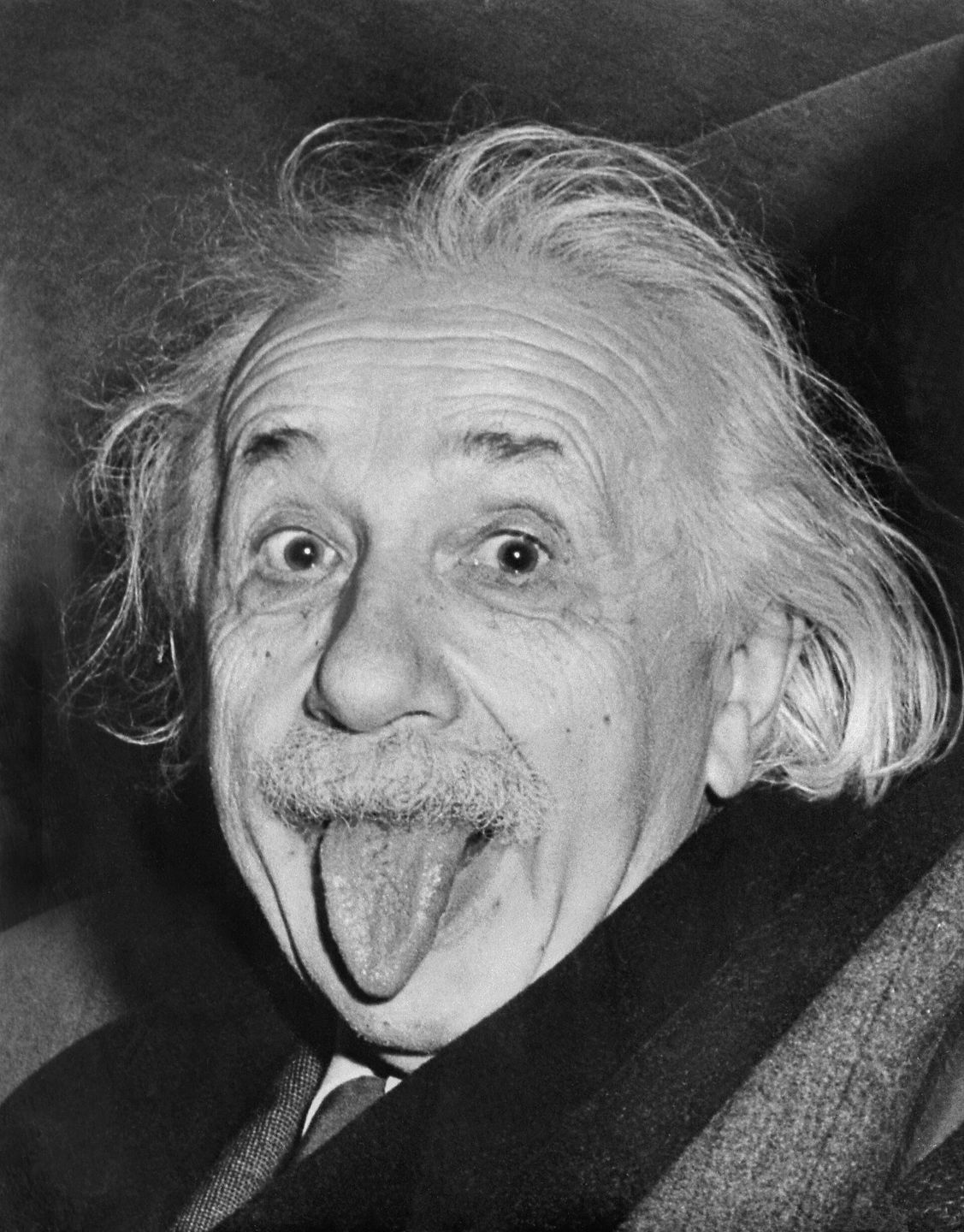
Albert Einstein on his 72nd birthday in 1951, photographed by arthur sasse. Einstein, who once said he had "no special talents, only passionate curiosity," was skeptical of the cult around his own intelligence. International News Service, Public domain, via Wikimedia Commons
The question Harvey was trying to answer was the wrong one. Genius is not a feature you can point to. It is a practice. It is the willingness to be wrong in public, to propose absurd ideas and defend them until they stop being absurd. It is the discipline to think clearly about difficult problems over long periods of time. It is the humility to know when your model is incomplete and the courage to throw it out and start over. None of that is visible under a microscope.
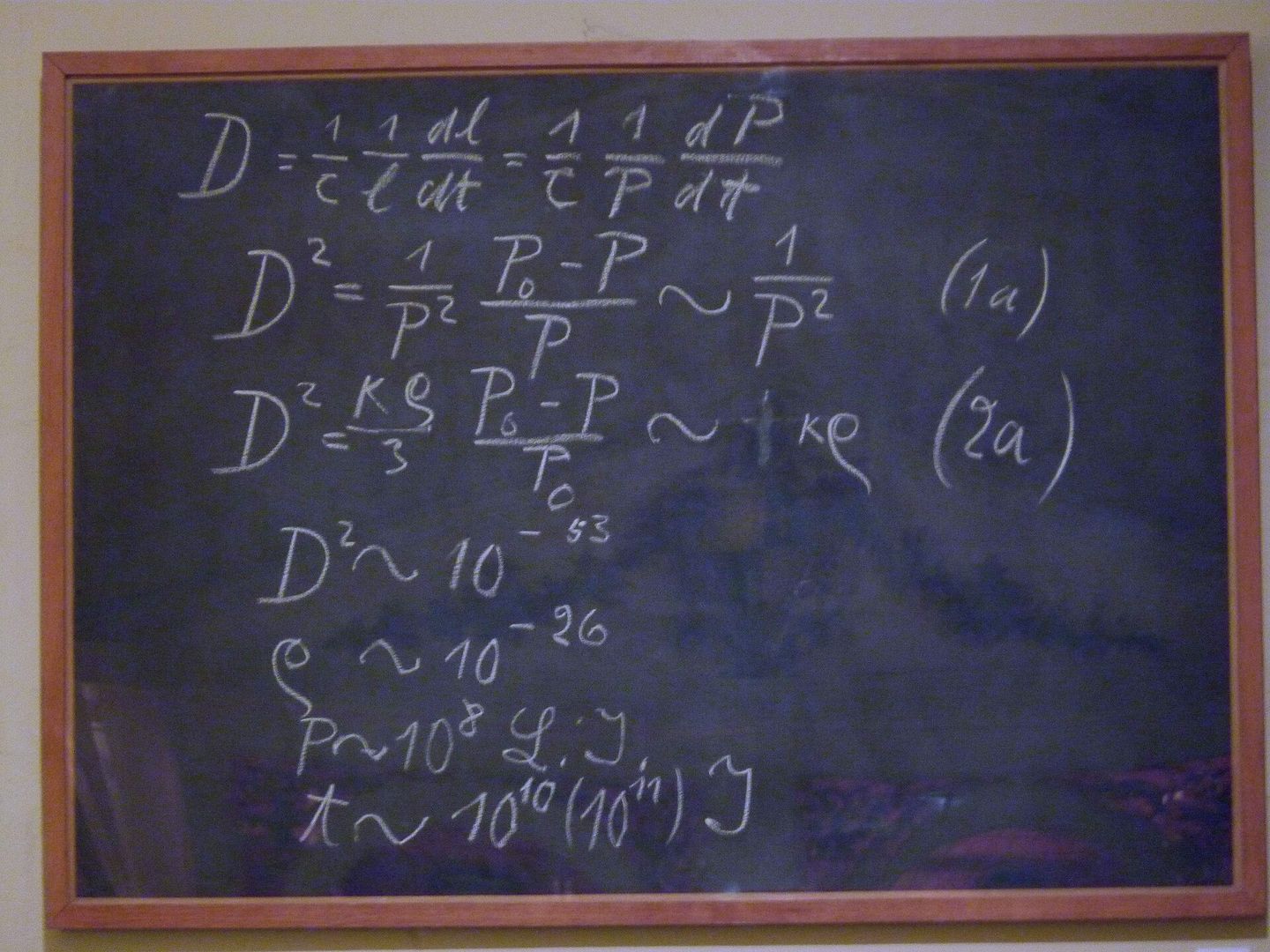
A blackboard Einstein wrote on during a 1931 lecture at oxford, preserved unerased and kept at the history of science museum. Like his brain, it is an artifact people held onto, hoping the marks would explain the mind that made them. Decltype, CC BY-SA 3.0, via Wikimedia Commons
What remains of Einstein's brain today is a cautionary tale about the limits of reductionism. We want to believe that greatness can be dissected, that if we look closely enough at the hardware, we will understand the software. But the relationship between structure and thought is not that simple. A brain is not a static object. It is a process, shaped by experience, environment, and choice. You cannot preserve a process in formaldehyde. You can only preserve the artifact, and artifacts do not explain themselves. They just sit there, sliced into pieces, waiting for someone to ask a better question.
studio / on-this-day / Apr 18