studio / on-this-day / Mar 7
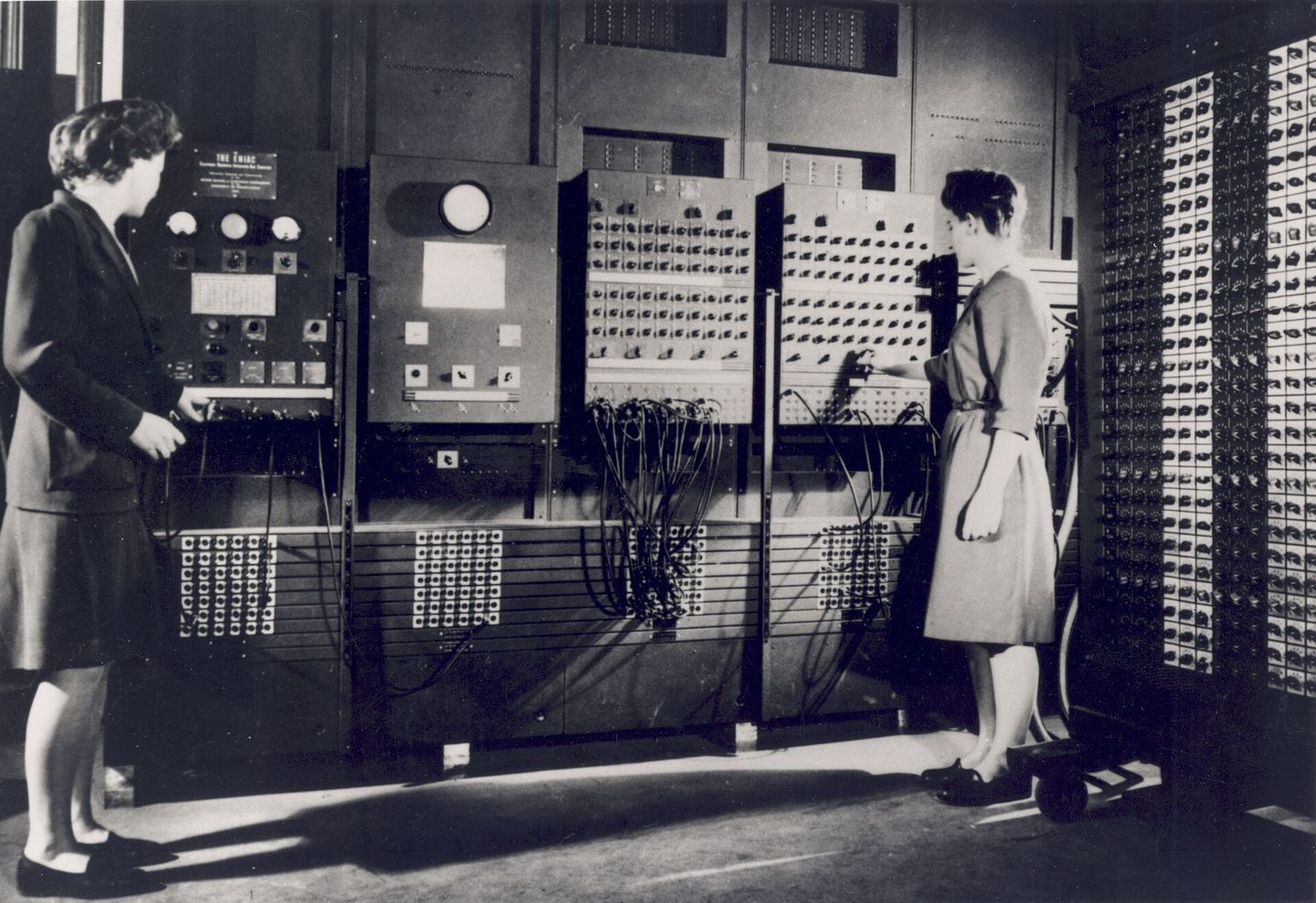
Two of the ENIAC's programmers operating the machine in the 1940s. public domain, via Wikimedia Commons
She Invented the Breakpoint
On this day in 1917 — Betty Holberton was born. She was one of six women who programmed the first electronic computer, then invented tools we still use to write software, and was left out of the photographs.
4 min read
Betty Holberton was born Frances Elizabeth Snyder on March 7, 1917, in Philadelphia. As a young woman she was told, by a college professor, that she should go home and raise children rather than study mathematics. She instead became one of the six women who programmed the ENIAC, the first general-purpose electronic computer, and in doing so helped invent the job of programming from scratch.
When the ENIAC was built in the mid-1940s, "programming" was not yet a concept anyone fully understood. The machine was a room-sized tangle of cables and switches, and making it solve a problem meant physically rewiring it, by hand, according to a plan that existed nowhere but in the programmers' heads. There were no languages, no manuals, no prior examples. Holberton and her five colleagues, Jean Jennings, Kay McNulty, Marlyn Wescoff, Ruth Lichterman, and Frances Bilas, worked out how to do it by studying the machine's wiring diagrams and reasoning it through.
That is a more foundational act than it sounds. They were not using a tool someone else had designed; they were discovering, in real time, what it even means to instruct a computer, inventing the practices that everyone who has written code since has inherited. The work was hard, abstract, and genuinely new, and it was done, at the dawn of the field, largely by women, because programming was then dismissed as clerical labor, beneath the male engineers who built the hardware.
Holberton kept going long after ENIAC. She devised the breakpoint, the ability to stop a running program at a chosen point to inspect what it is doing, which remains one of the basic tools of debugging to this day; every programmer who has ever set a breakpoint is using her idea. She wrote early sorting routines, helped shape the languages FORTRAN and COBOL, and worked on programming standards for decades. She was building the discipline, not just working in it.
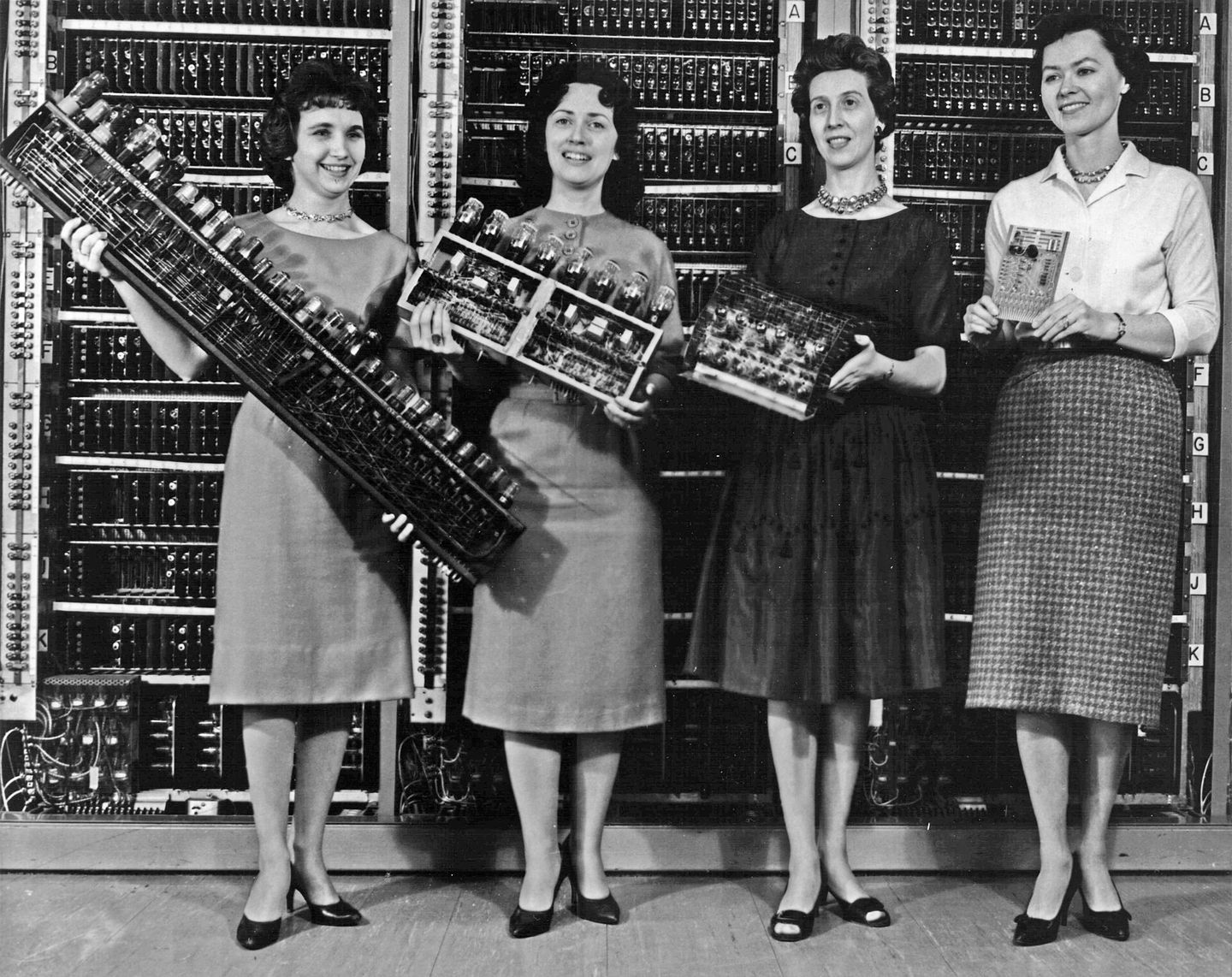
Women who programmed early U.S. Army computers, holding components of the machines. Public domain, via Wikimedia Commons
And she was, for a long time, nearly erased from it. When the ENIAC was unveiled to the press in 1946, the women who had programmed it were not introduced, not named, not credited; some appear in the famous photographs and were later assumed to be models posed beside the machine. The men who built the hardware became the story. The women who made it compute became a footnote, and only decades later were properly recognized.
The pattern is depressingly familiar, and worth naming precisely: the glamorous, legible part of a system, the physical machine, drew the credit, while the invisible part that actually made it work, the software, was treated as menial and its creators overlooked, in part because they were women. The field's very first programmers were written out of the field's origin story.
Holberton worked in computing for most of her life and lived long enough to be honored, at last, for what she had done. On March 7, 1917, a woman was born who would help invent programming itself, hand later generations tools they use every single day without knowing her name, and stand as a reminder that the people who build the working parts are not always the ones the photograph remembers.
studio / on-this-day / Mar 7