studio / on-this-day / Mar 6
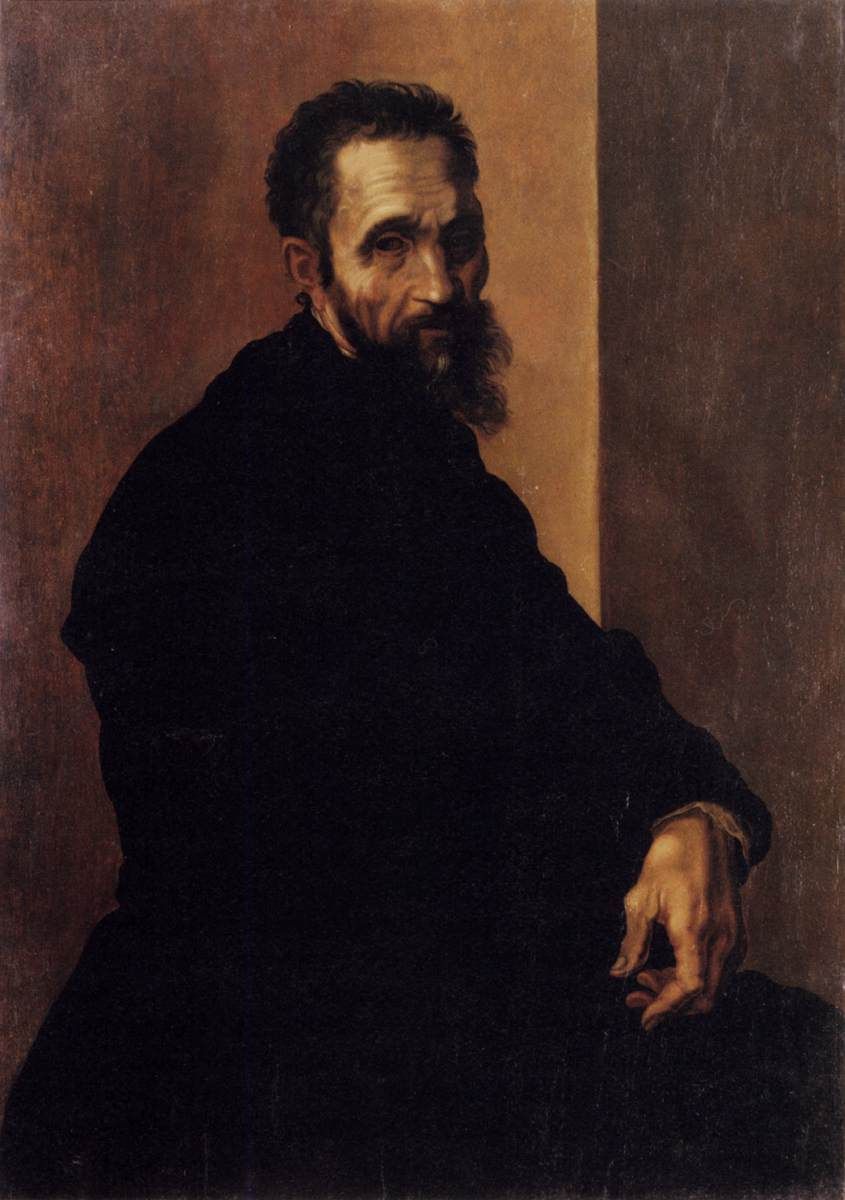
Portrait of Michelangelo Buonarroti by Jacopino del Conte, circa 1535, casa Buonarroti, Florence. Attributed to Jacopino del Conte, Public domain, via Wikimedia Commons
The Ceiling Was Just One Project
On this day in 1475 — Michelangelo was born, and would work as sculptor, painter, and architect, to whom the Sistine ceiling was merely one job.
3 min read
Michelangelo di Lodovico Buonarroti Simoni was born on March 6, 1475, in Caprese, Italy. He became one of the most influential artists in history, though he always insisted he was primarily a sculptor. Everything else, painting, architecture, poetry, was secondary. He considered carving marble the highest form of art because it revealed something already present in the stone. A statue was not built. It was discovered. The sculptor's job was to remove everything that was not the figure.
He completed the Pietà at 24 and David at 29. Both were exercises in impossible grace. The Pietà showed Mary holding the dead Christ, her face impossibly young, her grief frozen in stone. David was a warrior caught in the moment before action, muscles taut, gaze fixed on an unseen opponent. Michelangelo carved both from single blocks of marble. No joints. No additions. Just reduction. The technique demanded absolute foresight. One wrong strike and the whole piece was ruined. He worked without detailed models, trusting his ability to see the finished form inside the raw material.
Pope Julius II commissioned the Sistine Chapel ceiling in 1508. Michelangelo did not want the job. He was a sculptor, not a fresco painter, and the project required techniques he had barely used. He argued. He tried to recommend other artists. The Pope insisted. Michelangelo spent the next four years lying on scaffolding, paint dripping into his eyes, painting over 5,000 square feet of biblical scenes. He worked mostly alone, dismissing the assistants who were supposed to help. The result redefined what painting could be. Figures twisted in impossible poses. Bodies became architecture. Space became sculptural.
The Creation of Adam, the most famous panel, shows God reaching toward Adam, their fingers almost touching. The gap between them is the entire point. It is the moment before connection, the instant when potential becomes actual. The composition is so familiar now that it is hard to see how radical it was. Before Michelangelo, God was distant, hierarchical, formal. Here, God is in motion, wrapped in a cloak that suggests a human brain. The symbolism may be accidental, but it fits. This is a God who thinks, who designs, who creates with intention.
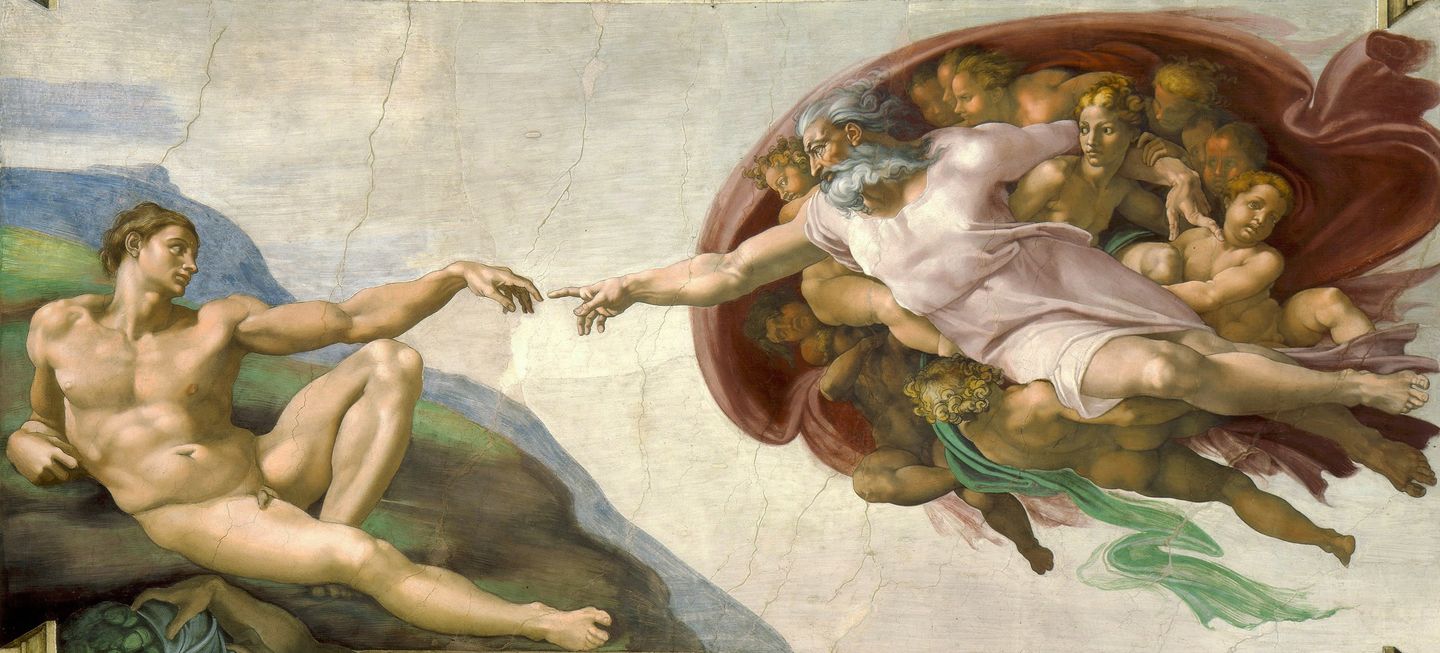
The Creation of Adam, detail from the Sistine Chapel ceiling by Michelangelo, 1508–1512 — the gap between God's and Adam's fingers is the most famous negative space in western art. Michelangelo, Public domain, via Wikimedia Commons
Michelangelo also designed buildings. He took over the construction of St. Peter's Basilica in 1546, inheriting a project that had been stalled for decades. He simplified the plan, focusing on the central dome, which became the defining feature of the Rome skyline. He refused payment, saying the work was an offering to God. Whether that was genuine piety or savvy public relations is unclear. What is certain is that he understood architecture as sculpture at city scale, mass and void arranged to create emotional impact.
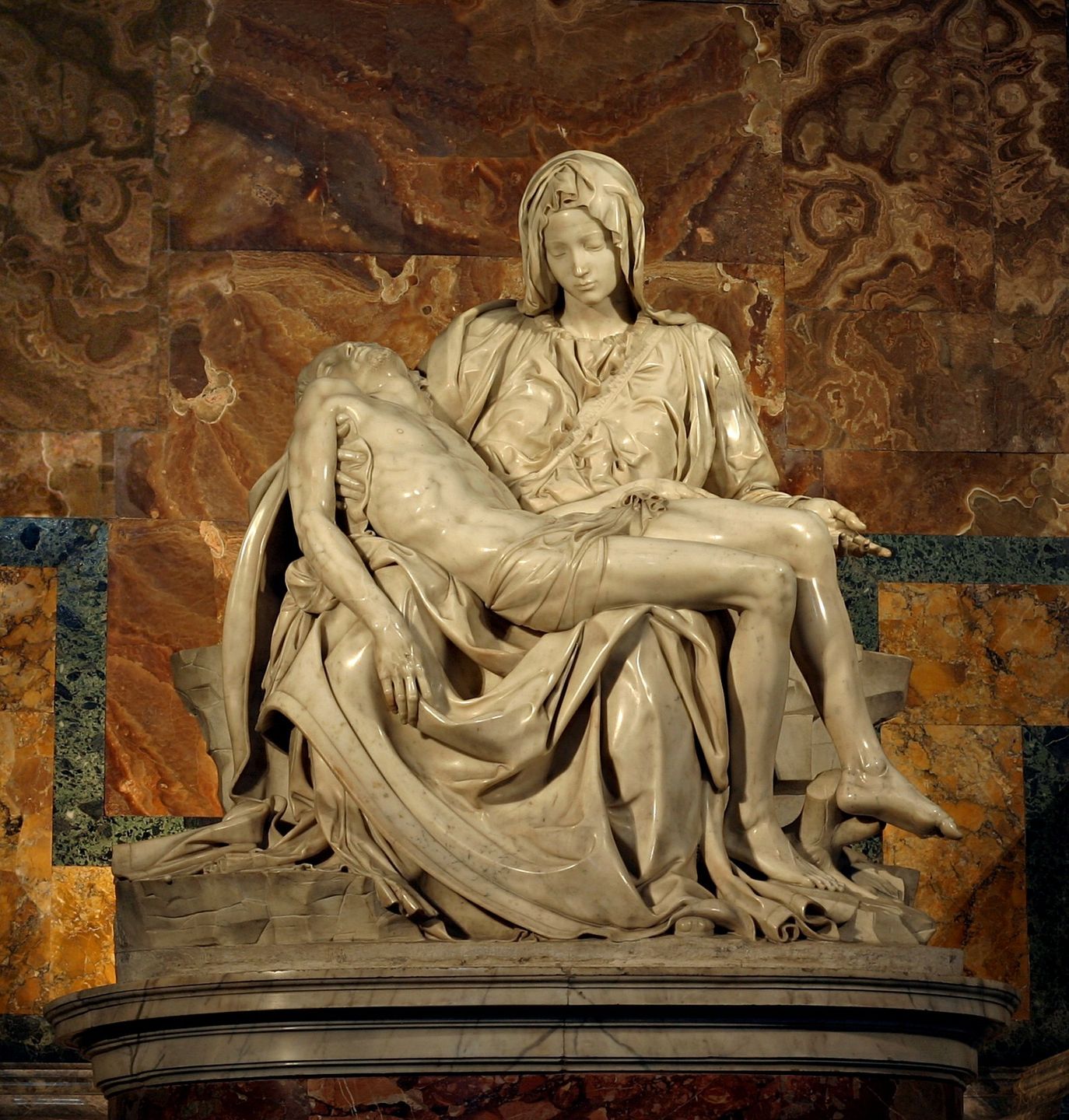
The Pietà by Michelangelo, completed 1499, St. Peter's Basilica, vatican — carved from a single block of marble when he was twenty-four. Stanislav Traykov, CC BY 2.5, via Wikimedia Commons
His poetry was less celebrated but no less serious. He wrote hundreds of sonnets, many exploring themes of beauty, mortality, and divine love. The verses are dense, layered, technically accomplished. They reveal an inner life more conflicted than his public image suggested. He wrestled with faith, sexuality, and the limits of human achievement. The poems were not decorative. They were another medium for the same obsessions that drove his visual work.
Michelangelo lived to 88, an extraordinary age for the 16th century. He worked until the end, still carving the Rondanini Pietà six days before his death. That final sculpture is rougher, more abstracted than his early work. The figures merge into one another, barely distinct from the stone. It suggests either failing skill or evolving vision. Maybe both. The work was never finished, which seems appropriate. Michelangelo rarely felt his projects were complete. There was always more stone to remove, more space to fill, more potential locked inside the material.
What separates Michelangelo from competent artists is not just skill but a refusal to work within existing categories. He treated every commission as an excuse to invent new approaches. The Sistine ceiling was not just large-scale painting; it was a new grammar for bodies in space. David was not just a statue; it was a political statement about Florentine identity. St. Peter's dome was not just architecture; it was an argument about what a building could mean. He worked across disciplines because he saw them all as variations of the same problem: how to give form to the invisible.
studio / on-this-day / Mar 6