studio / on-this-day / Feb 11
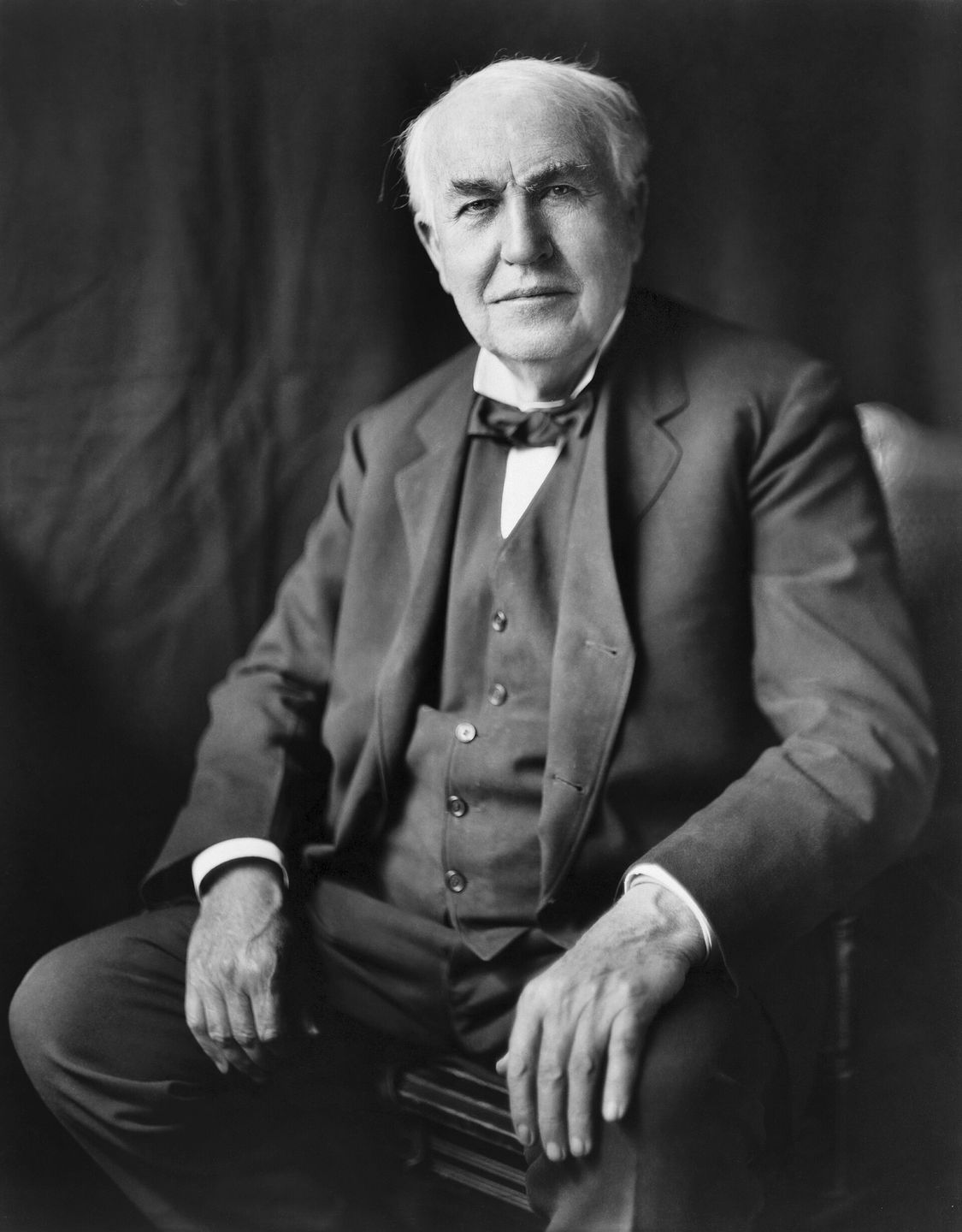
Portrait of Thomas Edison, the inventor who held 1,093 U.S. patents and industrialized the process of invention itself. Photograph by Bachrach Studios. Louis Bachrach, Bachrach Studios, restored by Michel Vuijlsteke, Public domain, via Wikimedia Commons
The Factory of Ideas
On this day in 1847 — Thomas Edison was born, and would industrialize invention itself, turning the lone flash of genius into a factory.
3 min read
Thomas Alva Edison was born on February 11, 1847, in Milan, Ohio, the youngest of seven children. He had three months of formal education before his mother pulled him out and taught him at home. He was partially deaf from childhood, likely due to scarlet fever or an untreated ear infection. He read constantly, conducted chemistry experiments in his basement, and started his first business at age 12, selling newspapers and candy on trains. By 16, he was a telegraph operator. By 22, he was a full-time inventor.
Edison didn't invent the lightbulb. Dozens of people had created incandescent lamps before him. What Edison did was make it practical. He tested thousands of materials for filaments, eventually settling on carbonized bamboo, which could glow for over 1,200 hours. More importantly, he designed the entire system: generators, wiring, sockets, switches, and meters. He built the first central power station in Lower Manhattan in 1882, lighting 85 buildings. The lightbulb was just one component. The real invention was the electric grid.
The phonograph was different. Edison invented that one entirely, in 1877, almost by accident while working on improvements to the telephone and telegraph. He sketched a design for a machine that could record sound onto tinfoil wrapped around a rotating cylinder. His machinists built it, and Edison shouted "Mary had a little lamb" into the horn. The machine played it back. Everyone in the room was stunned, including Edison. He called it his favorite invention.
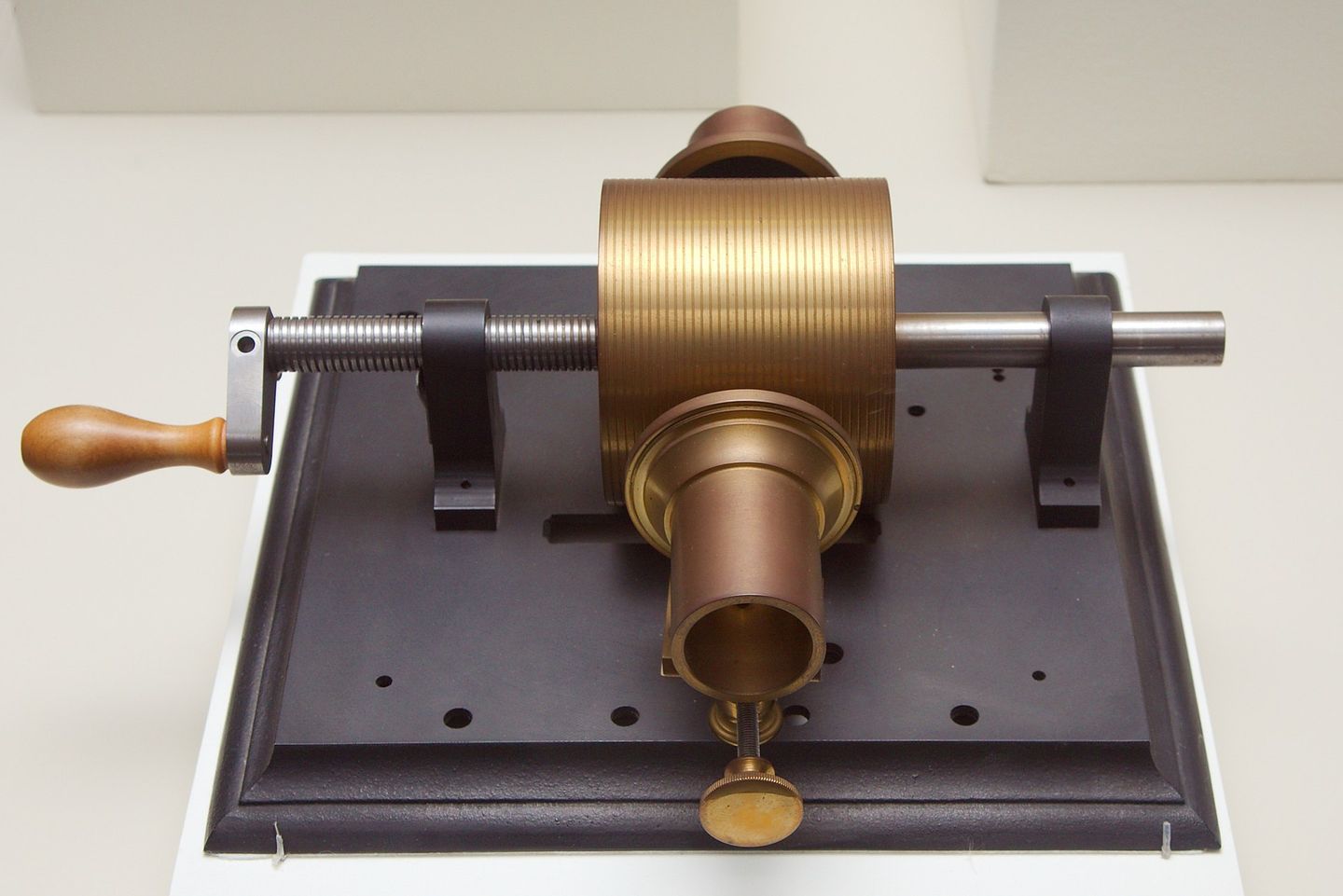
A replica of Edison's 1877 tinfoil phonograph, the machine he called his favorite invention, which recorded sound onto foil wrapped around a rotating cylinder. Gregory F. Maxwell <gmaxwell@gmail.com> PGP:0xB0413BFA, GFDL 1.2, via Wikimedia Commons
Edison held 1,093 U.S. patents, more than any other individual in American history. He patented the motion picture camera, the alkaline storage battery, the electric pen, and improvements to the telegraph, telephone, and typewriter. But his most important invention wasn't a device. It was Menlo Park, the first industrial research laboratory. Before Edison, inventors worked alone. Edison hired teams: machinists, chemists, mathematicians, glassblowers. He set quotas. He demanded results. He turned invention into a repeatable, scalable process.
He was ruthless in business. He waged a public relations war against Nikola Tesla and George Westinghouse over alternating current, which he opposed because it competed with his direct current systems. He electrocuted animals in public demonstrations to prove AC was dangerous, including an elephant named Topsy. He lost. AC became the standard. But Edison's companies evolved into General Electric, which still exists today.
Edison's work ethic was legendary and probably exaggerated. He claimed to sleep only four hours a night and said that genius was one percent inspiration and ninety-nine percent perspiration. His employees described a different reality: long hours, yes, but also naps on workbenches, spontaneous breaks for midnight snacks, and a chaotic but collaborative environment. Edison didn't work alone in a vacuum. He orchestrated teams, tested ideas rapidly, and iterated relentlessly.
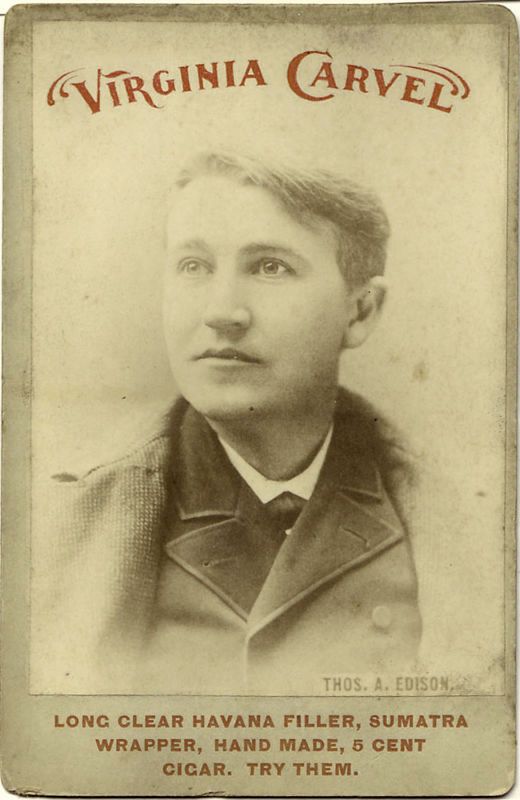
Thomas Edison as a young man, depicted on a cigar card from the 1870s, around the time he was establishing his Menlo Park research laboratory. Unattributed, Public domain, via Wikimedia Commons
He died in 1931 at age 84. President Hoover asked Americans to dim their lights for one minute in tribute. The request was largely symbolic, because shutting down the electrical grid for even a minute would have been catastrophic. That's the measure of what Edison built: a system so essential that turning it off, even briefly, was unthinkable.
Edison's legacy is complicated. He took credit for work done by his teams. He fought dirty against competitors. He resisted new ideas that threatened his business models. But he also demonstrated that invention could be industrialized, that R&D could be a process, and that technology development could be managed like any other manufacturing operation. Modern tech companies with their labs, their sprints, and their obsession with rapid prototyping are all descendants of Menlo Park. Edison didn't just invent devices. He invented a method for inventing.
studio / on-this-day / Feb 11