studio / on-this-day / Feb 3
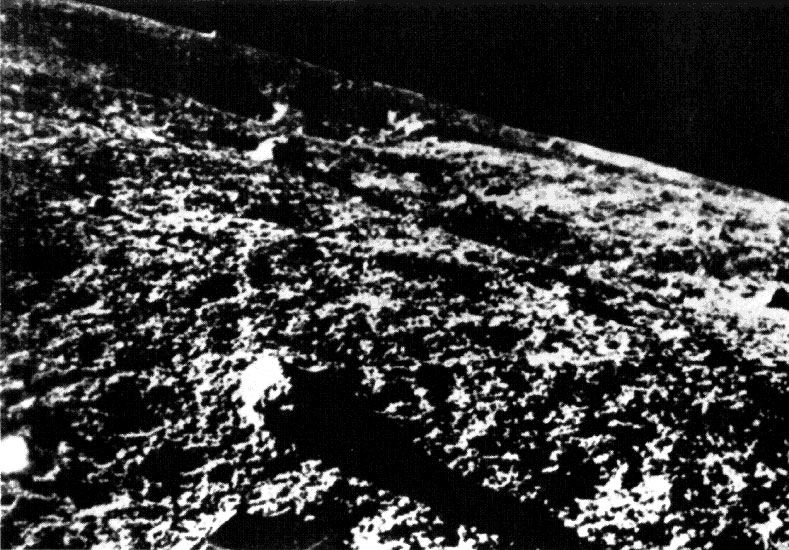
The first photograph ever taken from the surface of the Moon, transmitted by the Soviet Luna 9 spacecraft on February 3, 1966. Public domain, via Wikimedia Commons
Softly, On Another World
On this day in 1966 — the Soviet Luna 9 set itself down gently on the Moon, the first craft to reach another world without wrecking on arrival.
3 min read
Every previous attempt to land on the Moon had ended in a crater. The Soviet Union had tried eight times. The United States had tried six. Spacecraft either missed entirely, crashed at terminal velocity, or lost contact during descent. The surface of the Moon was still theoretical. No one knew if it was solid rock, thick dust, or something else that would swallow a lander whole. Then, on February 3, 1966, at 18:45 UTC, Luna 9 touched down in the Ocean of Storms at a velocity slow enough to survive.
The landing system was brilliant in its simplicity. Luna 9 didn't use rockets to hover and settle. Instead, it fell the last few meters and relied on an airbag system to absorb the impact. The probe bounced, rolled to a stop, and then did something no machine had done before: it opened four metallic petals like a flower, stabilized itself, and began transmitting photographs of the lunar surface back to Earth.
The first image arrived seven hours after landing. It showed a close-up view of rocks and regolith, proving the Moon's surface could support weight. The dust wasn't deep. The ground was solid enough to walk on. This single data point removed one of the largest unknowns in planning human missions. Within three years, Neil Armstrong would step onto that same kind of surface.
Luna 9 weighed just 99 kilograms. It carried a camera, a radiation detector, and enough battery power for three days of operation. The design was constrained by launch mass limits, communication delays, and the need to survive temperatures ranging from 250 degrees Fahrenheit in sunlight to minus 280 in shadow. Every gram mattered. Every system had to work autonomously, because the 2.5-second round-trip light delay made real-time control impossible.
The British radio observatory at Jodrell Bank intercepted Luna 9's transmissions before the Soviets officially released them. They recognized the signal format as the same one used by wirephoto machines in newsrooms. They fed the signal into a standard facsimile receiver and printed the images. The first photographs from the surface of another world appeared in British newspapers before Soviet media had a chance to edit or censor them. The Moon belonged to everyone, even if the achievement belonged to one nation.
Luna 9 operated for three days before its batteries died. In that time it transmitted nine panoramic images and confirmed that the lunar regolith had a density similar to wet sand. The mission answered a question that had worried engineers since the beginning of the space race: could a machine land softly enough to survive, and could it transmit useful data before failing?
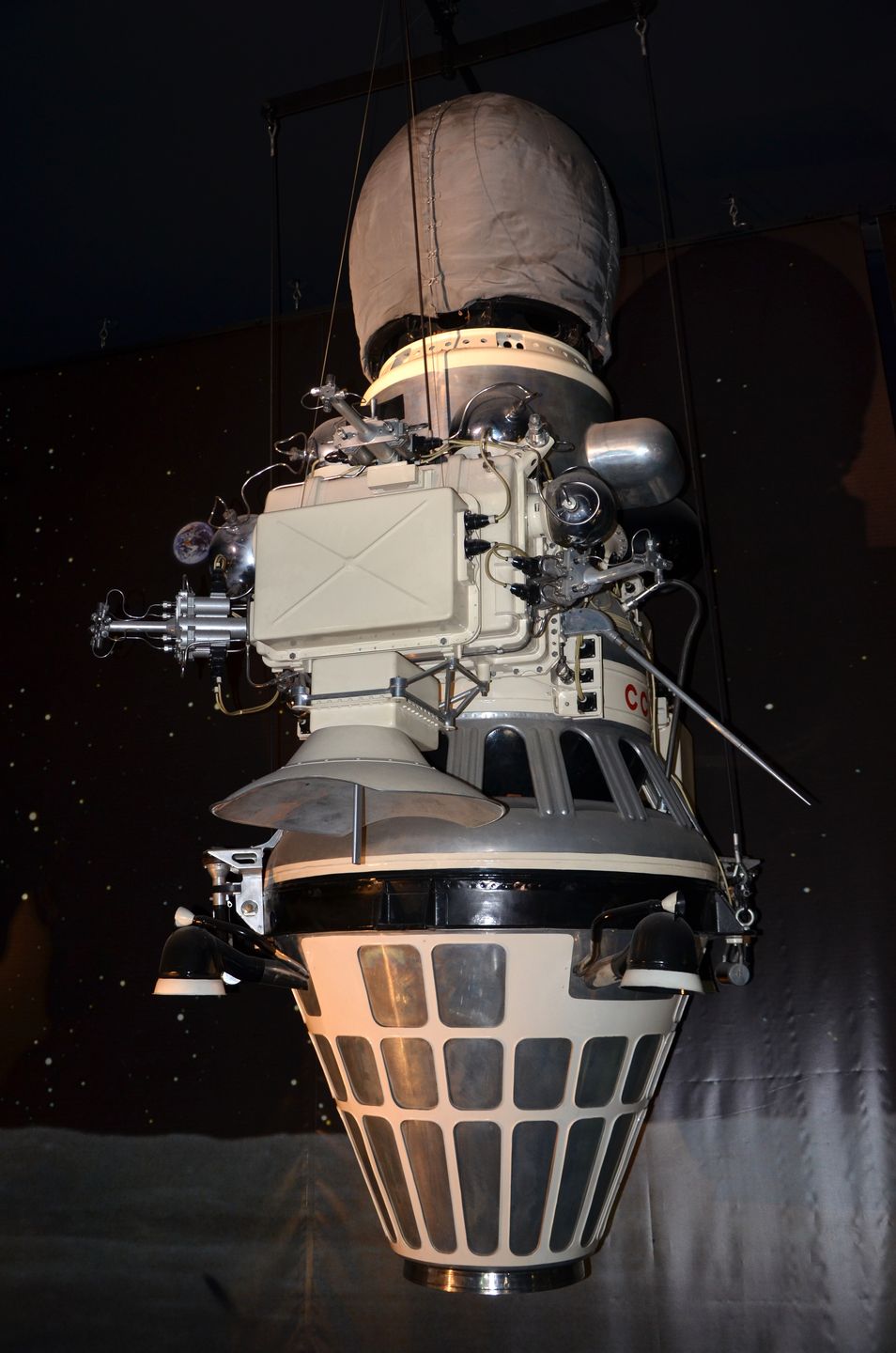
Luna 9 spacecraft model on display at the Musée de l'Air et de l'Espace in Le Bourget, France, showing the design that made the first soft landing on the Moon. Pline, CC BY-SA 3.0, via Wikimedia Commons
Four months later, the United States landed Surveyor 1 in the Ocean of Storms, only 25 miles from Luna 9's resting place. Surveyor used a different approach, with three throttleable rocket engines that allowed it to hover and descend under control. Both methods worked. Both informed the design of the Apollo Lunar Module, which combined elements of each: airbags were considered too risky for humans, so Apollo used descent rockets, but the data about surface density came from Luna 9's bouncing impact.

A 1966 Soviet postage stamp triptych issued to commemorate Luna 9 and its first soft landing on the Moon. USSR Post, Public domain, via Wikimedia Commons
What Luna 9 represents is the transition from exploration through impact to exploration through contact. Every probe before it was destroyed on arrival. Luna 9 arrived intact, opened up, looked around, and sent back what it saw. That shift, from destructive inquiry to gentle investigation, is the difference between smashing a microscope slide and actually looking through it. The Moon stopped being an abstract target and became a place where machines could sit, observe, and send postcards home.
studio / on-this-day / Feb 3