studio / on-this-day / Feb 2
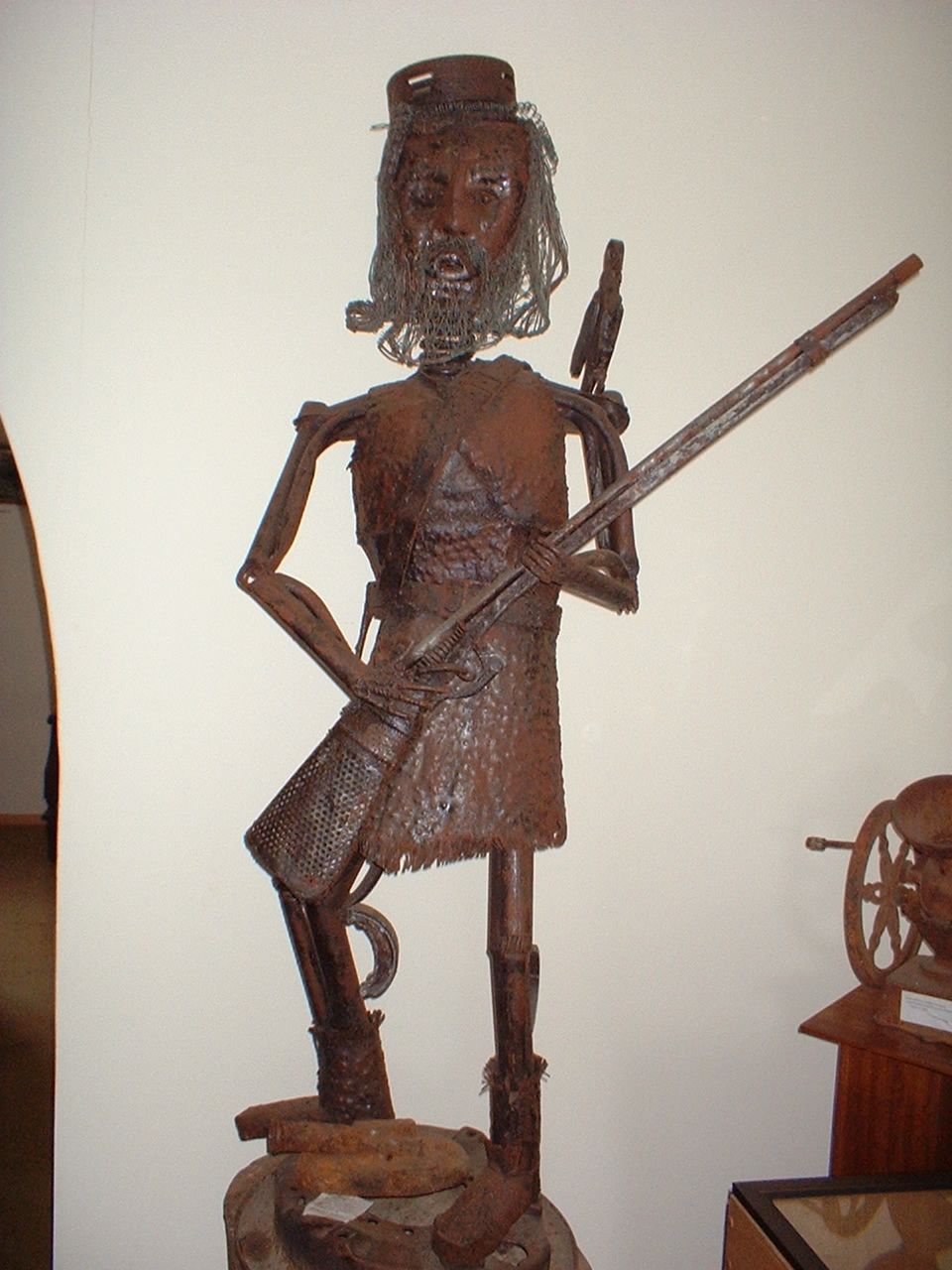
Alexander Selkirk, the Scottish sailor who spent four years marooned on más a Tierra Island before his rescue in 1709. Gmagno, CC BY-SA 3.0, via Wikimedia Commons
The Loneliest Algorithm
On this day in 1709 — Alexander Selkirk was taken off the island where he had survived four years alone, and became the model for Robinson Crusoe.
3 min read
When Captain Woodes Rogers spotted smoke rising from Más a Tierra island on February 2, 1709, he assumed it was a Spanish garrison. Instead, he found a single Scotsman dressed in goatskins, barely able to speak English after four years and four months without human conversation. Alexander Selkirk had been marooned at his own request in September 1704, after a dispute with his captain over the seaworthiness of their ship. The ship sank shortly after leaving him. Selkirk survived.
He was 28 years old when he was left on the island with a musket, gunpowder, a knife, a Bible, and navigation tools. The first eight months were, by his account, the hardest. He built two huts from pimento trees, lined them with goat hair for warmth, and created a routine that kept him sane. He read scripture aloud to preserve his voice. He chased wild goats for exercise and food. He danced. He sang psalms. When his shoes wore out, his feet hardened so much he could run barefoot across sharp volcanic rock.
Solitude is a design problem. The human mind requires inputs: conversation, variation, social feedback. Remove those, and the system begins to malfunction. Selkirk had to engineer new inputs. He domesticated cats to control the rat population. He tamed goats to ensure a food supply. He notched marks on trees to track time. Every action became a small piece of infrastructure to maintain his own coherence.
When Rogers finally took him aboard, Selkirk had become something between human and feral. His reflexes were sharper than anyone on the crew. His senses were tuned to subtleties the sailors couldn't perceive. He could navigate by the stars better than the ship's officers. Rogers made him a mate on the voyage home. Selkirk helped capture a Spanish treasure galleon worth millions. He returned to Scotland wealthy, but the wealth didn't last. He went back to sea within a few years and died of fever off the coast of West Africa in 1721.
Daniel Defoe met Selkirk in Bristol, or read accounts of his rescue, or possibly never encountered him at all. The exact connection is unclear. What's certain is that in 1719, ten years after Selkirk's rescue, Defoe published The Life and Strange Surprizing Adventures of Robinson Crusoe. The novel became one of the most influential books in the English language, establishing patterns that shaped everything from adventure fiction to survival narratives. Crusoe's island became a template for how we think about isolation, self-reliance, and the construction of civilization from raw materials.
Selkirk's experience wasn't the first or last time someone survived prolonged isolation by creating systems. Every solo expedition, every long-duration space mission, every remote research station requires the same kind of mental architecture. Humans in isolation must build routines, invent purposes, and maintain structures that substitute for the social scaffolding we evolved to depend on. It's the same challenge facing anyone designing for extreme environments, whether that's a lunar habitat or a solo software project that stretches for months.
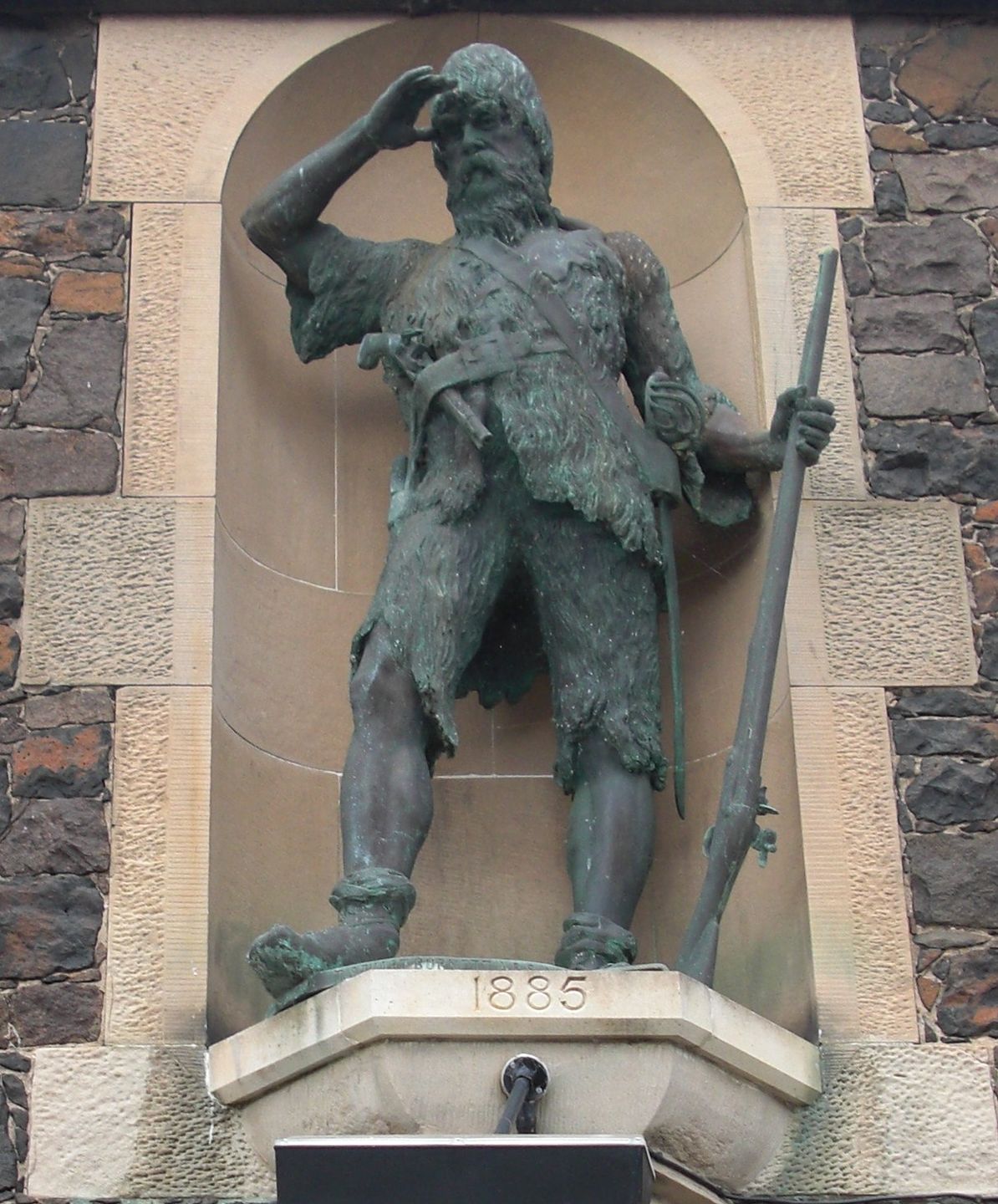
Statue of Alexander Selkirk in Lower Largo, Fife, Scotland, the village where he was born in 1676. SylviaStanley, CC BY-SA 3.0, via Wikimedia Commons
The island Selkirk inhabited is now called Robinson Crusoe Island. His name appears on maps as a footnote. Defoe's fictional character became more real than the man who inspired it. That's the strange recursion of storytelling: a real experience becomes a novel, and the novel becomes the template through which we understand the experience. Selkirk built shelters and hunted goats. Crusoe built a plantation and saved Friday. The survival story became a colonial narrative, which became the framework for thinking about man versus nature.
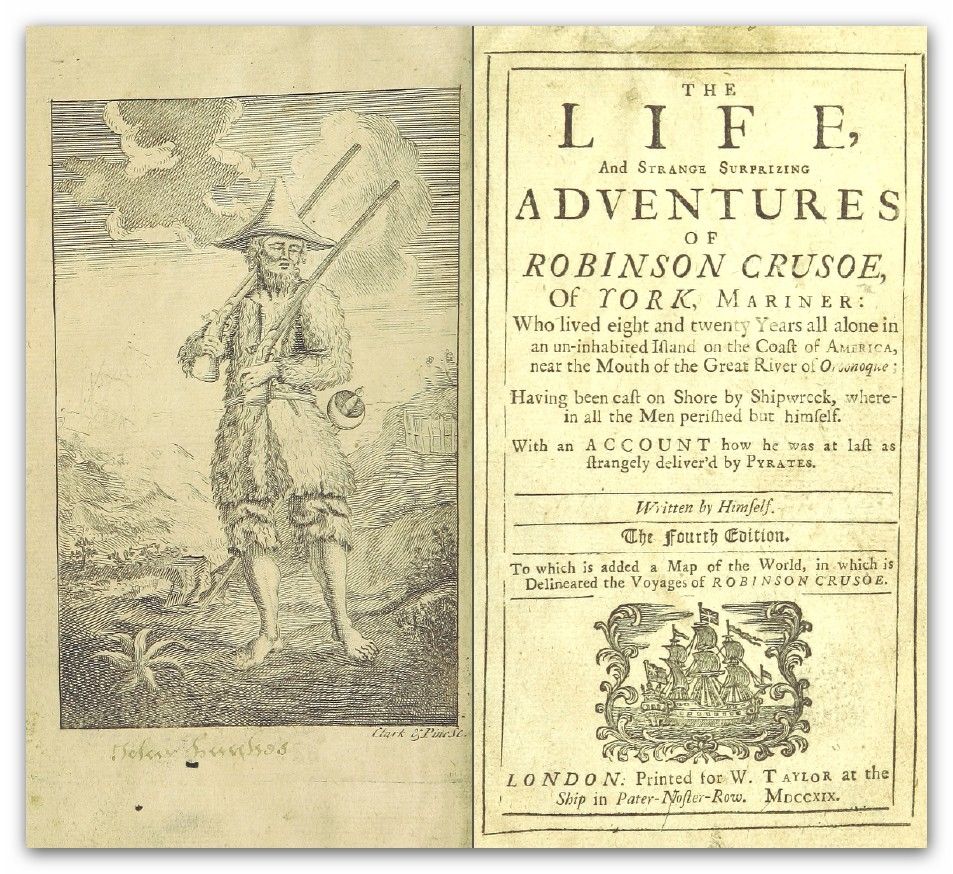
Title page of the first edition of Daniel Defoe's Robinson Crusoe, published in 1719, ten years after Selkirk's rescue. DEFOE, Daniel Scan courtesy of The British Library, Public domain, via Wikimedia Commons
What Selkirk actually did was solve a problem without a manual. He took the components available on a volcanic island in the South Pacific and assembled a life that kept him alive and sane for 1,500 days. No one had designed a solution for him. He had to iterate his way through loneliness, hunger, fear, and the creeping suspicion that he might die without ever speaking to another person again. The fact that we remember him at all is because he succeeded, and because someone turned that success into a story that outlasted the man.
studio / on-this-day / Feb 2