studio / on-this-day / Feb 19
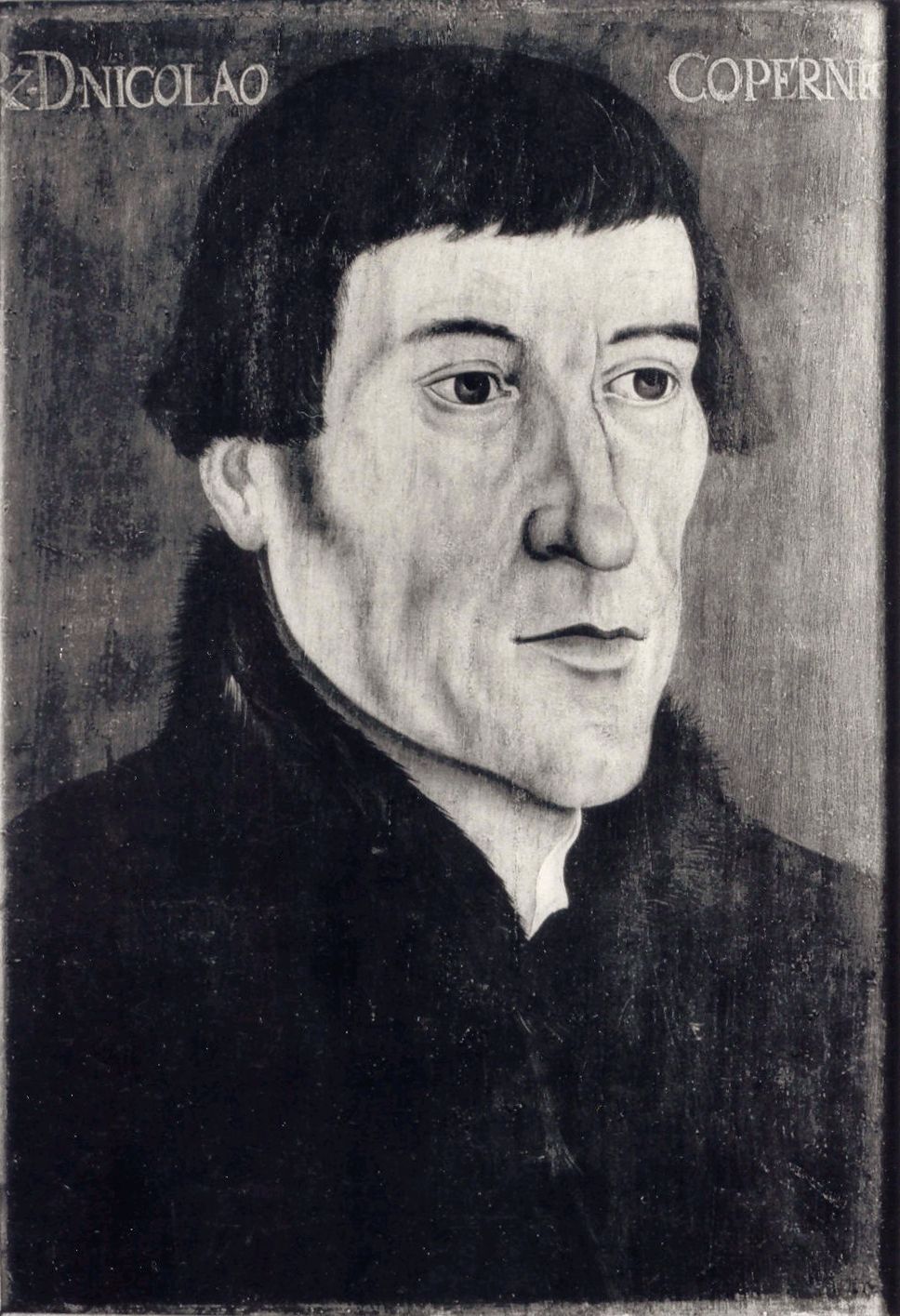
Nicolaus Copernicus (1473–1543), the Polish astronomer who proposed the heliocentric model of the solar system, placing the Sun at the center and the Earth among the planets. Public domain, via Wikimedia Commons
Moving the Sun to the Center
On this day in 1473 — Nicolaus Copernicus was born, and would quietly move the Sun to the center and demote the Earth to one planet among many.
3 min read
Nicolaus Copernicus was born on February 19, 1473, in Toruń, a merchant city in Poland. He became a canon of the Catholic Church, studied law and medicine, and spent most of his life managing church properties and treating patients. Astronomy was something he did on the side. He never built a large observatory, never traveled to exotic locations to make measurements, and published his most important work only at the end of his life. Yet what he proposed changed everything.
For more than a thousand years, the accepted model of the cosmos placed Earth at the center of the universe. This was the Ptolemaic system, named after the Greek astronomer Ptolemy. In this model, the sun, moon, planets, and stars all revolved around a stationary Earth. The system was elaborate, requiring complex mathematical constructs called epicycles to explain the observed motion of planets. It worked, after a fashion, but it was unwieldy. The mathematics required constant adjustment.
Copernicus suspected there was a simpler explanation. What if, he wondered, the sun was at the center and the Earth moved around it? The idea was not entirely new. The ancient Greek astronomer Aristarchus had proposed something similar almost two thousand years earlier. But Aristarchus had been ignored, and heliocentrism had remained a curiosity, not a serious model. Copernicus revived the idea and worked out the mathematics in detail.
The heliocentric model solved several problems at once. It explained why planets sometimes appear to move backward in the sky, a phenomenon called retrograde motion. In the Ptolemaic system, this required elaborate epicycles. In the Copernican system, it was simply the result of Earth overtaking another planet in its orbit. The model also explained why Mercury and Venus are always seen near the sun. They orbit closer to the sun than Earth does. The mathematics became simpler. The geometry became elegant.
But the model came with profound implications. If Earth was just another planet, then it was not the center of creation. Humanity's home was not the fixed point around which everything revolved. This was not just a technical adjustment to astronomy. It was a demotion. The Church, which taught that Earth was central to God's plan, did not immediately embrace the idea.
Copernicus knew his ideas would be controversial. He circulated a short manuscript among friends in 1514 but did not publish his full work, "De revolutionibus orbium coelestium" (On the Revolutions of the Celestial Spheres), until 1543. Legend says he received the first printed copy on his deathbed. He died soon after, possibly from a stroke, having spent decades refining his model in relative obscurity.
The book did not cause an immediate uproar. It was technical, dense, and aimed at astronomers. Many readers treated the heliocentric model as a useful mathematical tool rather than a literal description of reality. But over the following decades, as more astronomers and natural philosophers studied the work, its implications became impossible to ignore. Galileo Galilei's telescopic observations would later provide physical evidence that supported the Copernican model. Giordano Bruno would take the idea further, proposing an infinite universe with countless worlds, and would be burned at the stake for it.
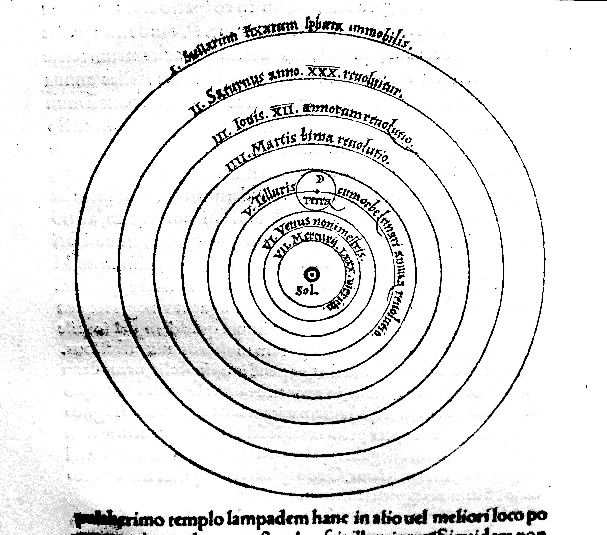
Copernicus's heliocentric diagram from "De revolutionibus orbium coelestium" (1543), showing the Sun at the center with the planets orbiting around it — the diagram that rewrote humanity's place in the cosmos. Copernicus, Public domain, via Wikimedia Commons
The shift from a geocentric to a heliocentric model is often called the Copernican Revolution. It was not just a change in astronomy. It was a change in how humans understood their place in the universe. Earth was not the center. Humanity was not the point around which everything else revolved. This was a redesign of cosmology, theology, and philosophy all at once.
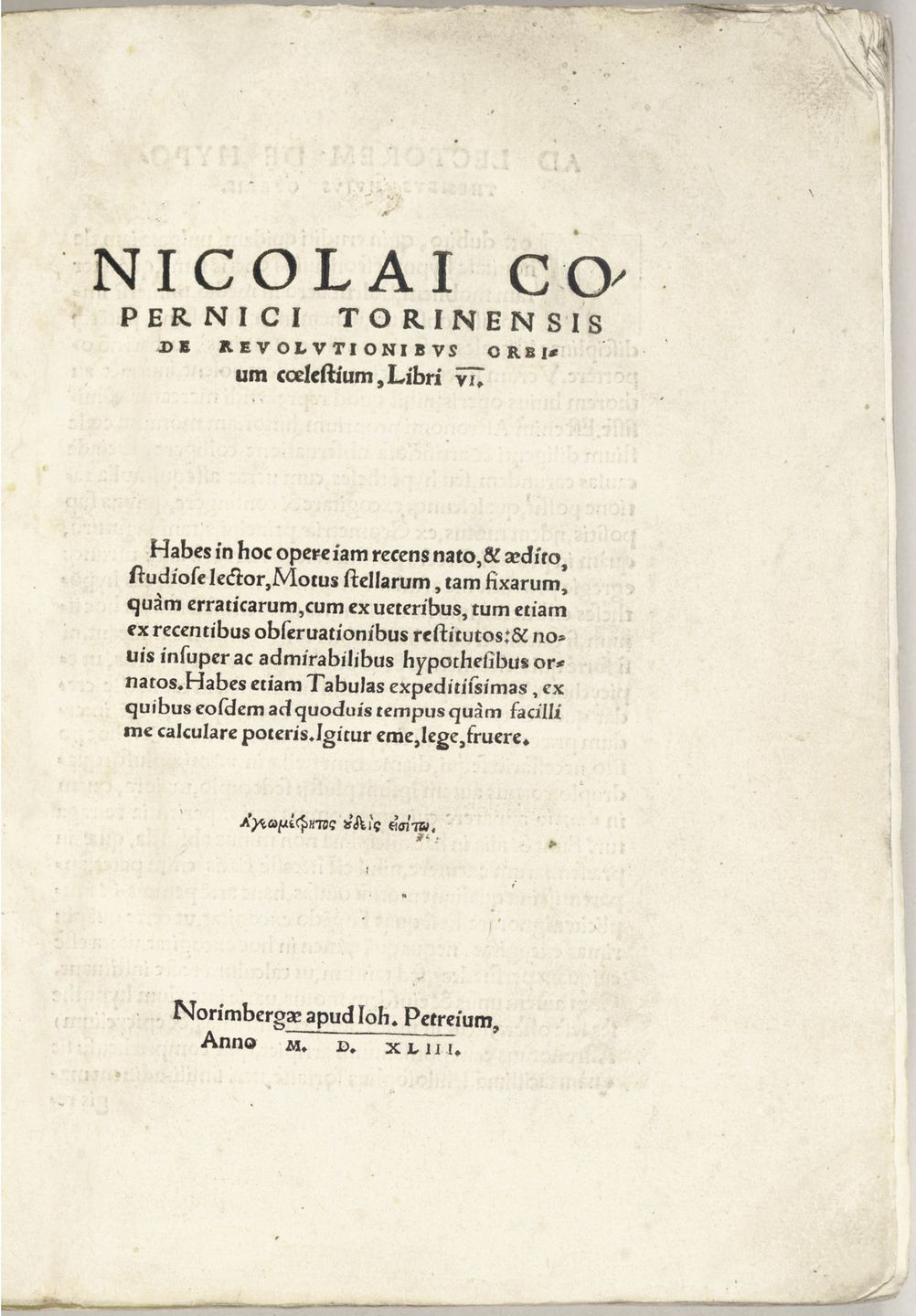
The title page of the first edition of "De revolutionibus orbium coelestium," printed by Johann Petreius in Nuremberg in 1543, the year Copernicus died. Johann Petreius, Public domain, via Wikimedia Commons
Copernicus himself was cautious, even conservative. He did not set out to overturn religious doctrine. He wanted to make the mathematics work better. But the simplicity of his model carried implications he could not contain. Once you move the sun to the center, everything else shifts. The universe becomes larger, stranger, and less centered on human concerns. The design is more elegant, but it costs us our special place. Copernicus gave us a more accurate map of the heavens. What we lost was the illusion that the map was drawn with us in mind.
studio / on-this-day / Feb 19