studio / on-this-day / Feb 20
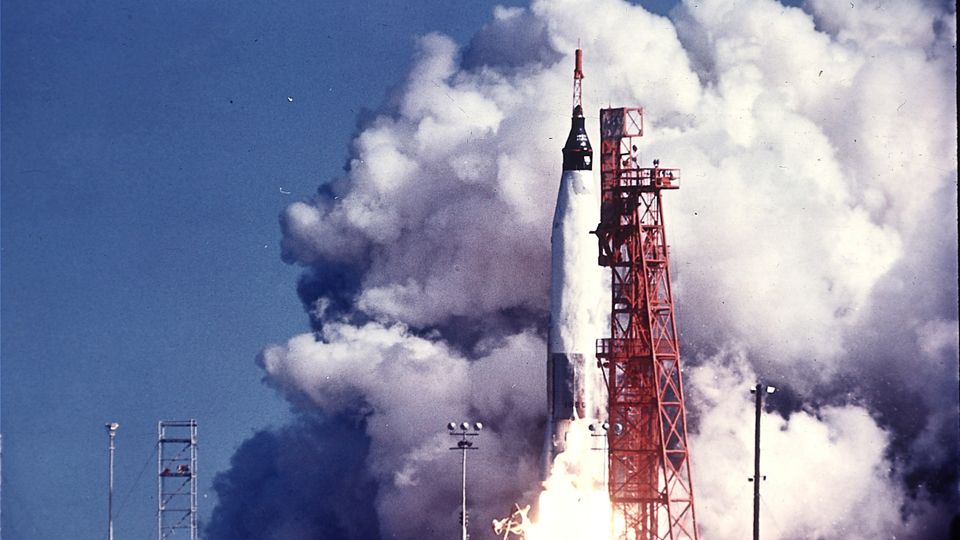
The launch of Mercury-Atlas 6, carrying John Glenn aboard Friendship 7, on February 20, 1962 — the first American orbital spaceflight. NASA, Public domain, via Wikimedia Commons
Three Orbits in Friendship 7
On this day in 1962 — John Glenn circled the Earth three times in a capsule named Friendship 7, becoming America's first man in orbit.
3 min read
On February 20, 1962, John Glenn climbed into a Mercury capsule the size of a phone booth and became the first American to orbit the Earth. The Soviet Union had already put two men in orbit. Yuri Gagarin had orbited once the previous April. Gherman Titov had completed 17 orbits in August. The United States was playing catch-up, and Glenn was the man chosen to close the gap.
The flight had been delayed ten times over two months. Weather, technical problems, and caution all contributed. On the morning of February 20, Glenn suited up for the eleventh attempt. He ate a breakfast of steak and eggs, a tradition among test pilots. He rode to the launch pad in a van, took an elevator to the top of the Atlas rocket, and squeezed himself into the tiny capsule. He had named it Friendship 7. The "7" referred to the original Mercury Seven astronauts, the first group selected by NASA.
The Atlas rocket lifted off at 9:47 a.m. Eastern Time. Millions of people watched on television. Glenn experienced five minutes of intense acceleration, followed by the sudden silence of weightlessness. The capsule separated from the booster, and Glenn began his first orbit. He reported what he saw: the curvature of the Earth, the thin blue line of the atmosphere, the darkness of space beyond. Over Western Australia, the residents of Perth turned on their lights to greet him. He called it the "city of light."
The flight was not without problems. During the first orbit, a sensor indicated that the heat shield might be loose. If the heat shield detached during reentry, Glenn would burn up in the atmosphere. Mission Control did not tell him immediately. They waited, analyzing data, trying to determine if the sensor was faulty or if the problem was real. Eventually, they decided to keep the retrorocket package attached during reentry, hoping it would hold the heat shield in place. Glenn was informed of the plan but not the full extent of the danger.
On the third orbit, Glenn prepared for reentry. He fired the retrorockets to slow the capsule down. Normally, the retrorocket package would be jettisoned, but this time it stayed attached. As the capsule descended into the atmosphere, it began to heat up. Flaming debris streaked past the window. Glenn did not know if he was watching pieces of the retrorocket package or fragments of his own heat shield. He maintained his composure, following procedures, reporting what he saw.
The heat shield held. The capsule splashed down in the Atlantic Ocean after four hours and 55 minutes in space. Glenn had traveled approximately 75,000 miles and orbited the Earth three times. Recovery ships picked him up 21 minutes later. He emerged from the capsule, smiling, calm, and composed. The nation exhaled.
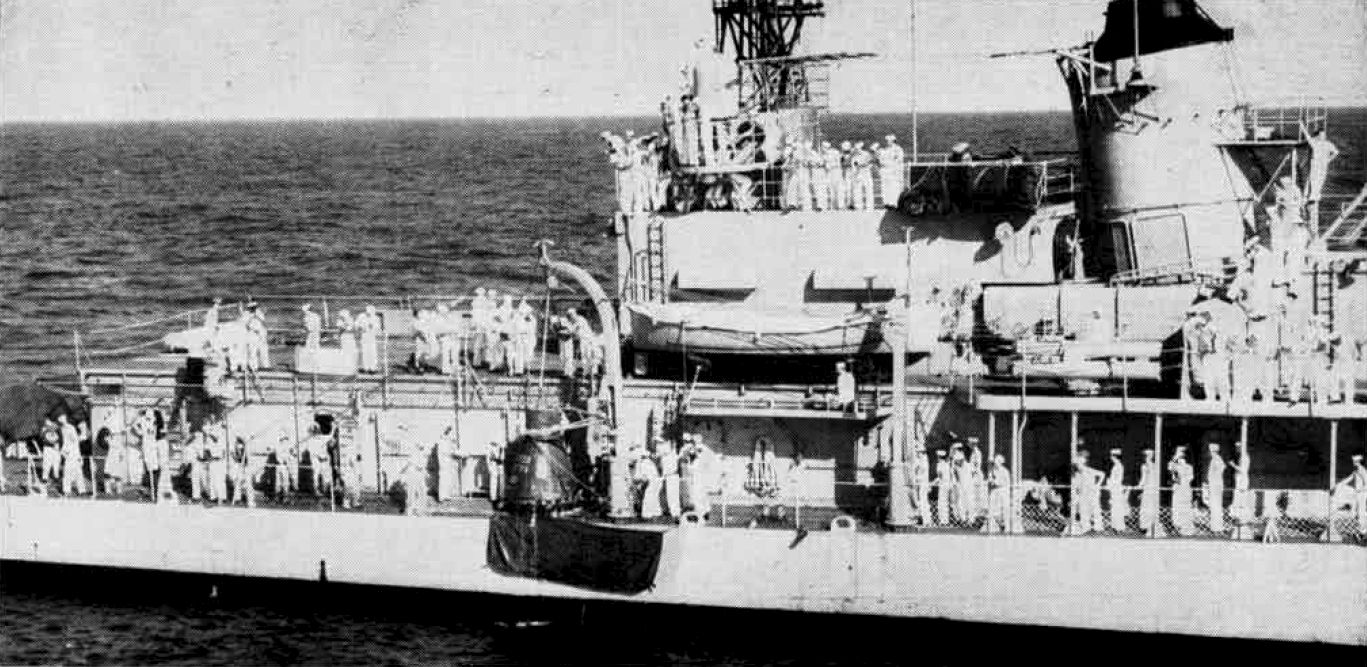
The destroyer USS Noa hoists the Friendship 7 capsule from the Atlantic after splashdown, February 20, 1962. USN, Public domain, via Wikimedia Commons
John Glenn became a hero overnight. He testified before Congress, received a ticker-tape parade in New York City, and was invited to the White House. President Kennedy, who had committed the United States to landing a man on the moon before the end of the decade, saw Glenn as proof that the goal was achievable. The flight restored American confidence in the space program and demonstrated that humans could function in orbit.
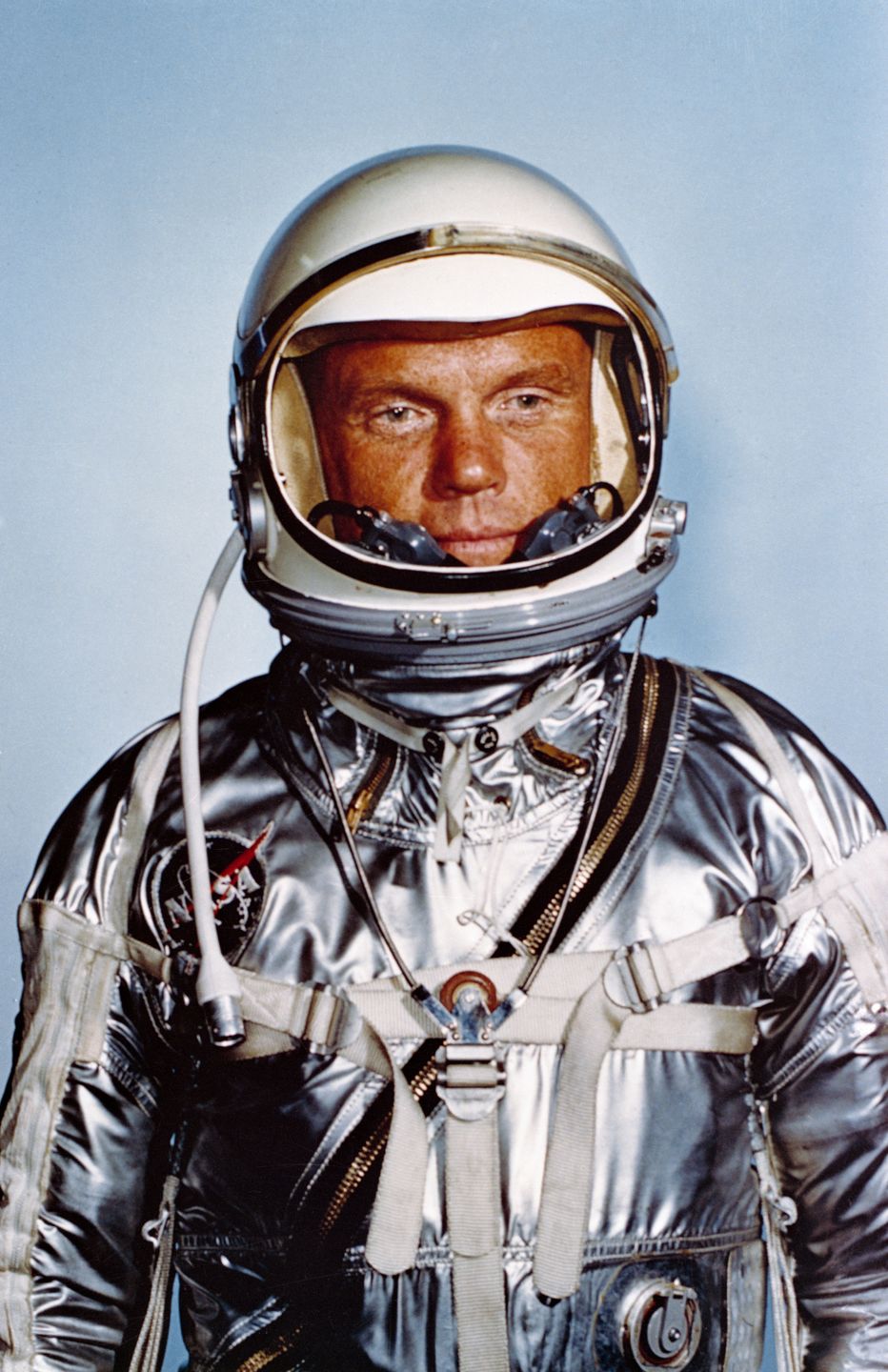
NASA official portrait of astronaut John h. Glenn Jr. in his Mercury spacesuit, taken before the Friendship 7 mission on February 20, 1962. NASA Glenn Research Center (NASA-GRC), Public domain, via Wikimedia Commons
Glenn's flight was also a triumph of engineering and design. The Mercury capsule was small, cramped, and uncomfortable, but it worked. It protected a human being through the violence of launch, the cold of space, and the heat of reentry. It was a machine built to keep someone alive in an environment where everything wants you dead. The design was conservative, focused on reliability over comfort, and it succeeded.
Glenn would later become a U.S. Senator and, in 1998, would return to space aboard the Space Shuttle Discovery at the age of 77, becoming the oldest person to fly in space. But it was the flight of Friendship 7 that defined him. Three orbits around the Earth, four hours and 55 minutes that proved a nation could compete in the race to space. It was not the first orbital flight, but it was the one that mattered most to the people watching from below.
studio / on-this-day / Feb 20