studio / on-this-day / Feb 17
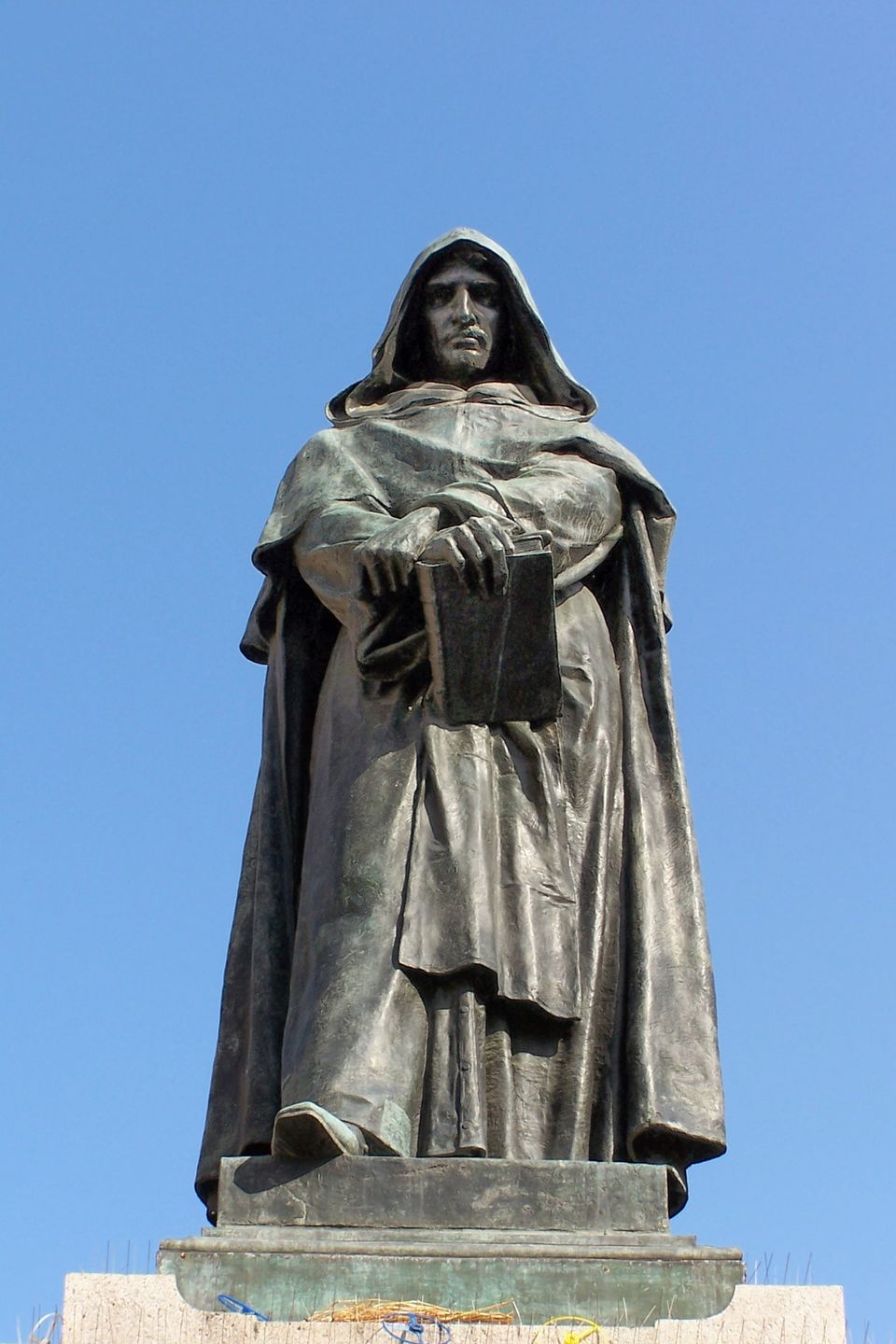
Portrait engraving of Giordano Bruno (1548–1600), the Dominican friar and philosopher who was burned alive in Rome's Campo De' Fiori on February 17, 1600. Berthold Werner, CC BY-SA 3.0, via Wikimedia Commons
The Cost of Infinite Worlds
On this day in 1600 — Giordano Bruno was burned at the stake for insisting the universe held infinite worlds, the full price of an idea.
3 min read
On February 17, 1600, in the Campo de' Fiori in Rome, Giordano Bruno was led to a wooden stake, bound, and burned alive. His crime was thinking too far beyond the boundaries of what authority permitted. He had proposed that the universe was infinite, that the stars were distant suns surrounded by their own planets, and that many of those planets might harbor life. For this vision of cosmic abundance, the Inquisition condemned him as a heretic.
Bruno was not a scientist in the modern sense. He performed no experiments, built no instruments, and derived no equations. He was a philosopher, a Dominican friar who left the order after accusations of heresy, and a wanderer who spent years moving between European courts and universities. He read Copernicus and took the idea of a sun-centered solar system to its logical extreme. If Earth was not the center of the cosmos, why should the sun be? Why should there be a center at all?
His arguments were less about observation than imagination. If God was infinite, Bruno reasoned, then creation must also be infinite. An infinite creator would not craft a single world in a small pocket of space. The stars were not lights fixed to a celestial sphere. They were suns, each surrounded by worlds of their own. The universe was a limitless expanse, teeming with possibility.
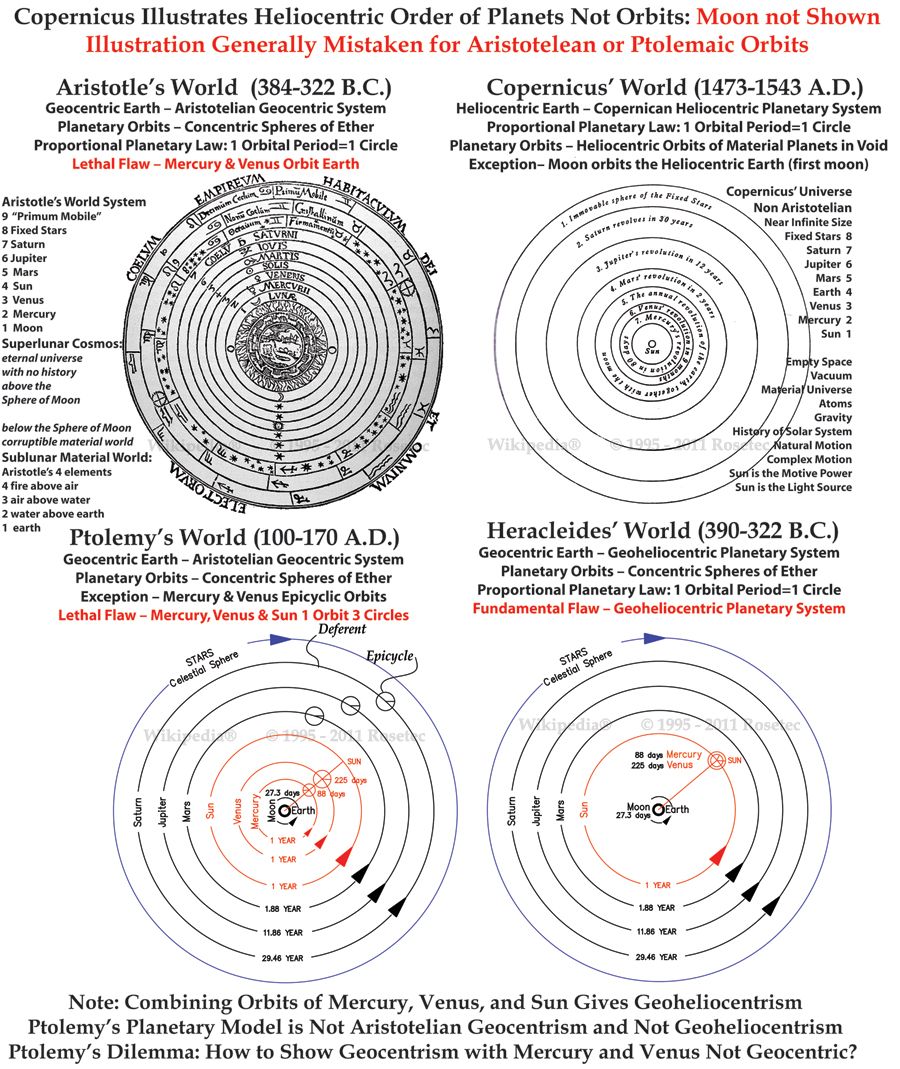
The heliocentric diagram from Copernicus's De revolutionibus orbium coelestium (1543), placing the sun at the center. Bruno read Copernicus and pushed the idea further — no center at all, and infinite suns beyond. Rosetec, CC BY-SA 3.0, via Wikimedia Commons
The Catholic Church found this intolerable. Bruno's cosmology dismantled the notion of a hierarchical universe with Earth at its moral and physical center. It suggested that humanity was not unique, that salvation might not be exclusive to one species on one world. His ideas threatened the entire architecture of theological authority. The Inquisition charged him with heresy on multiple counts, including his views on the infinity of the universe, the existence of multiple worlds, and the movement of the Earth.
Bruno spent eight years imprisoned, much of it in a Roman dungeon. His captors demanded recantation. He refused. When finally brought to trial, the Inquisition offered him a final chance to renounce his beliefs. He did not. The sentence was death by fire, the punishment reserved for heretics who would not repent.
According to witnesses, Bruno listened to the sentence in silence. When it was read, he said to his judges: "Perhaps you pronounce this sentence against me with greater fear than I receive it." They gagged him so he could not speak at the stake. They did not want his last words to reach the crowd.
The execution took place in the same square where a statue of Bruno now stands, erected in 1889. He faces the Vatican, hooded and defiant, holding a book. The monument was controversial when it was built. It remains controversial. To some, Bruno is a martyr for free thought. To others, he is a footnote, a mystic whose cosmology was more poetry than science. But the fact remains: he imagined a cosmos vastly larger and stranger than the one he was permitted to imagine, and he died for refusing to pretend otherwise.
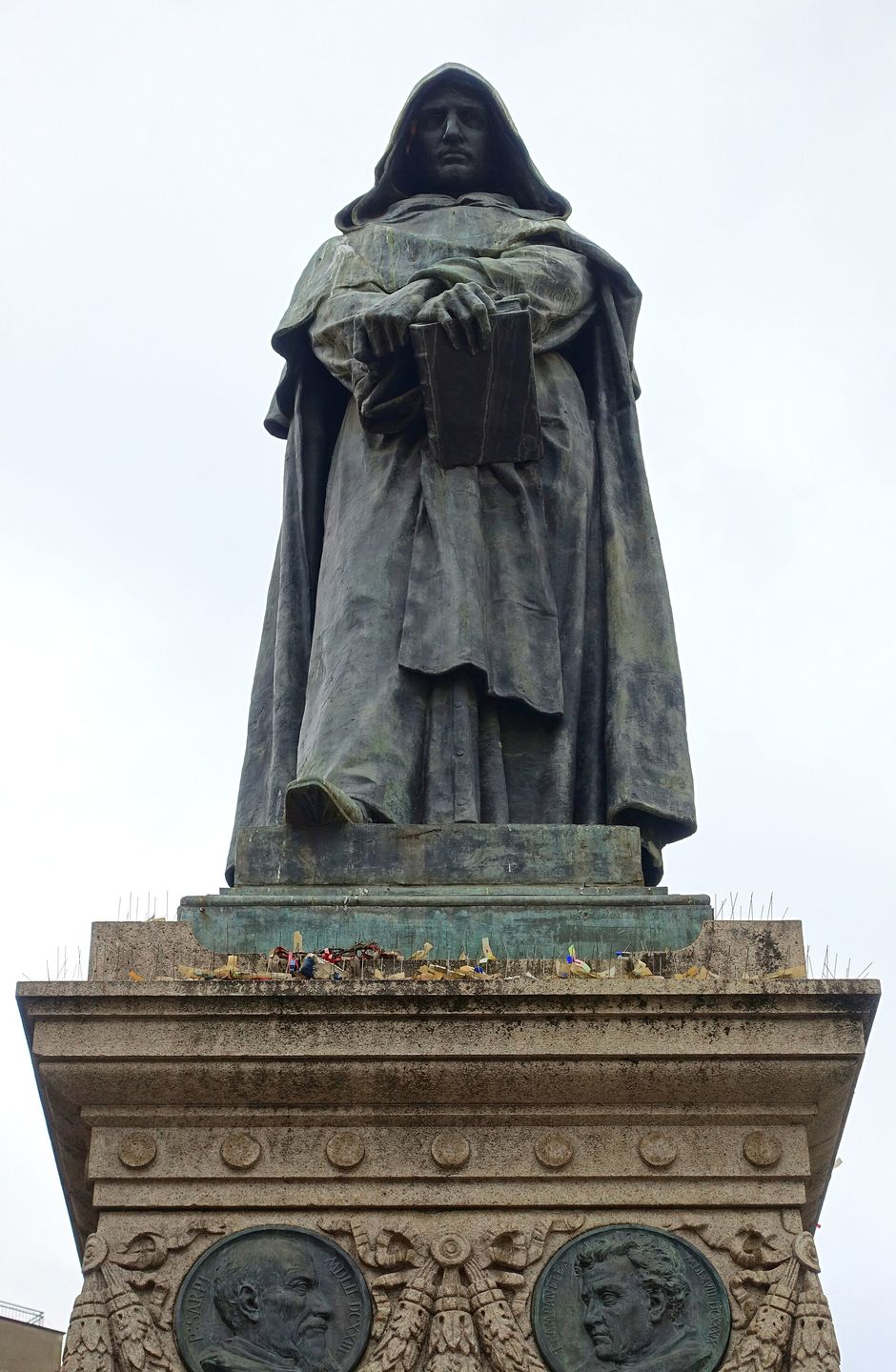
The monument to Giordano Bruno by sculptor Ettore Ferrari, unveiled in 1889 in Campo De' Fiori, Rome — on the very spot where he was burned in 1600. the statue faces the Vatican and remains controversial. Daderot, Public domain, via Wikimedia Commons
Bruno never lived to see his ideas validated. Galileo, who was eight years old when Bruno burned, would later face his own trial for heliocentrism. Galileo recanted and lived. Bruno did not. The difference was not in their science but in their willingness to compromise with power. Galileo chose survival. Bruno chose the stake.
Centuries later, astronomers would confirm what Bruno imagined. The stars are indeed distant suns. Exoplanets orbit them in extraordinary numbers. The universe is almost incomprehensibly vast, possibly infinite, perhaps one of many. Bruno did not discover these things through telescopes or mathematics, but he saw them anyway, through sheer force of imagination. He paid for that vision with his life. Philosophy, when taken seriously, can cost everything.
studio / on-this-day / Feb 17