studio / on-this-day / Dec 31
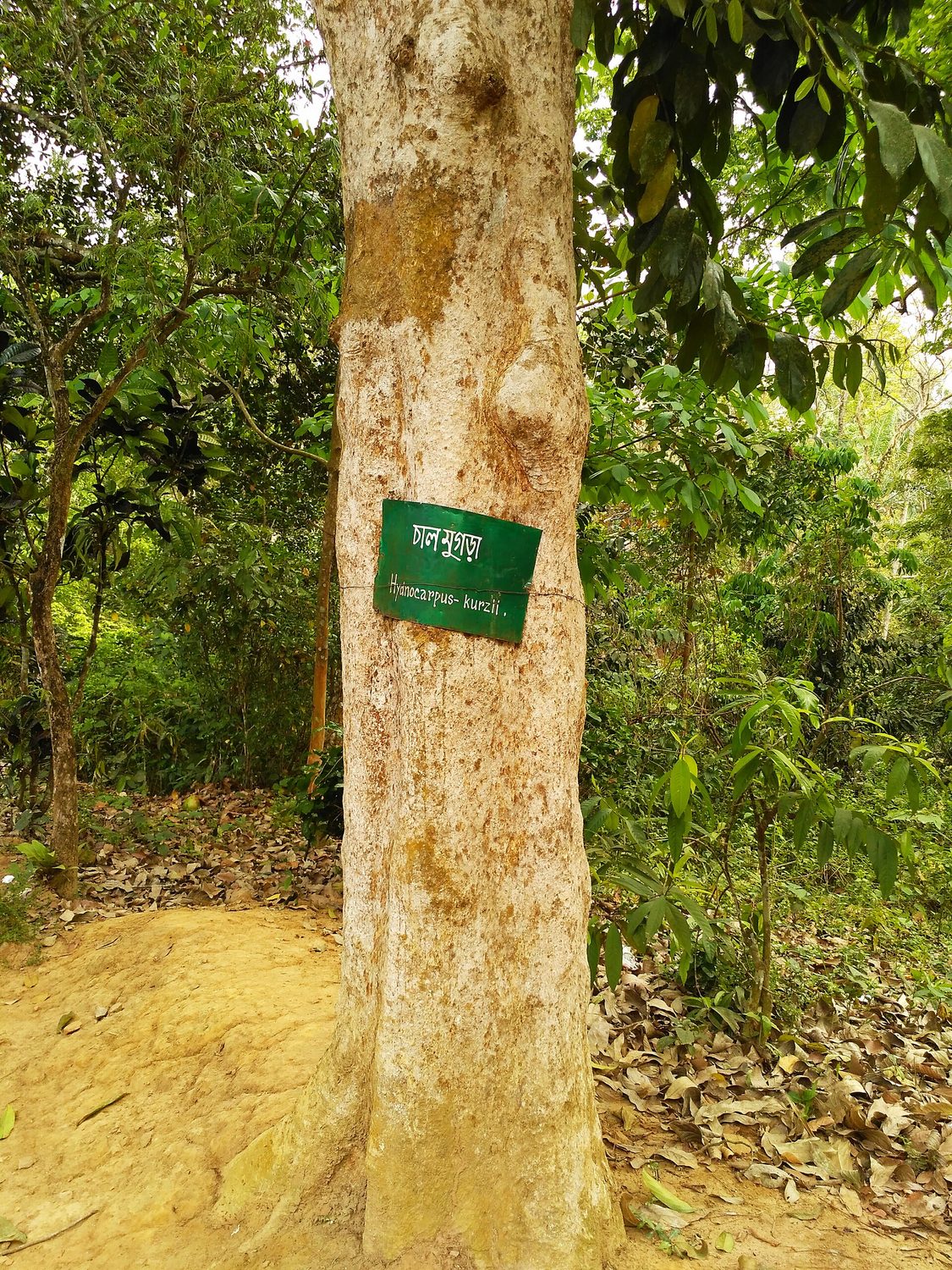
The chaulmoogra plant, whose seed oil Alice Ball transformed into an injectable leprosy treatment. Salim_Khandoker, CC BY-SA 3.0, via Wikimedia Commons
The Chemist They Erased
On this day in 1916 — Alice Ball died at twenty-four. She had just made the first effective treatment for leprosy, and a colleague spent years publishing it as his own.
4 min read
Alice Ball died on December 31, 1916, at the age of twenty-four. In her very short life she had already become the first woman and the first Black American to earn a master's degree from the University of Hawaii, joined its faculty, and solved a problem that had defeated chemists for centuries. She did not live to see the solution used, or to defend her claim to it.
The problem was leprosy, now called Hansen's disease. The one partially effective treatment, oil from the seeds of the chaulmoogra tree, was nearly useless in practice: too sticky to rub in, too irritating to inject, and vomited back up when swallowed. For generations it had been a treatment in name only. Ball, still in her early twenties, worked out how to chemically modify the oil so that it could be injected and absorbed by the body, turning a folk remedy into an actual medicine.
Her method worked. Patients treated with the "Ball Method" improved enough to be released from the isolation colonies where people with the disease were confined, sometimes for life. For roughly two decades, until sulfa drugs arrived, her injectable chaulmoogra was the best treatment in the world for a disease that had meant lifelong exile. It was a genuine, life-restoring breakthrough, produced by a chemist barely out of her degree.
Then she died, suddenly, likely from inhaling chlorine gas during a teaching demonstration, before she could publish her results. And here the story turns into something uglier than tragedy. The president of the college, a chemist named Arthur Dean, took up her work, produced the treatment in quantity, published on it, and for years called it the "Dean Method," giving Ball little or no credit. The person who solved the problem was quietly written out, and the man who inherited her notes was written in.
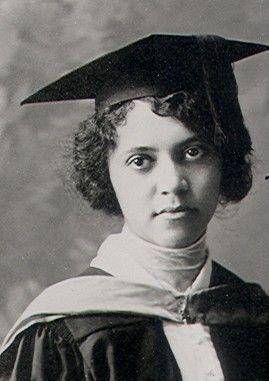
Alice Ball, the chemist who made leprosy treatable, around 1915. public domain, via Wikimedia Commons
It took decades to correct. Another colleague had objected at the time, insisting in print that the breakthrough was Ball's, but the record largely stood as Dean had left it, and Alice Ball slid into near-total obscurity. Only in recent decades did historians reconstruct what she had actually done, and the University of Hawaii, and eventually the wider world, begin to restore her name to her own discovery.
The pattern is worth stating plainly, because it is not the accident of one bad man. A young Black woman with no institutional power died before she could stake her claim, and the credit flowed, by default, to the older white man with the title. Systems of recognition tend to route reward toward whoever is already prominent, unless someone deliberately intervenes to keep the record honest.
Alice Ball had perhaps two productive years as a working chemist, and in them she freed thousands of people from a life sentence of exile. On December 31, 1916, one of the most consequential young scientists of her generation died with her greatest work unpublished and about to be taken from her, a reminder that getting the discovery right is only half the battle, and that history does not keep itself honest on its own.
studio / on-this-day / Dec 31