studio / on-this-day / Jan 1
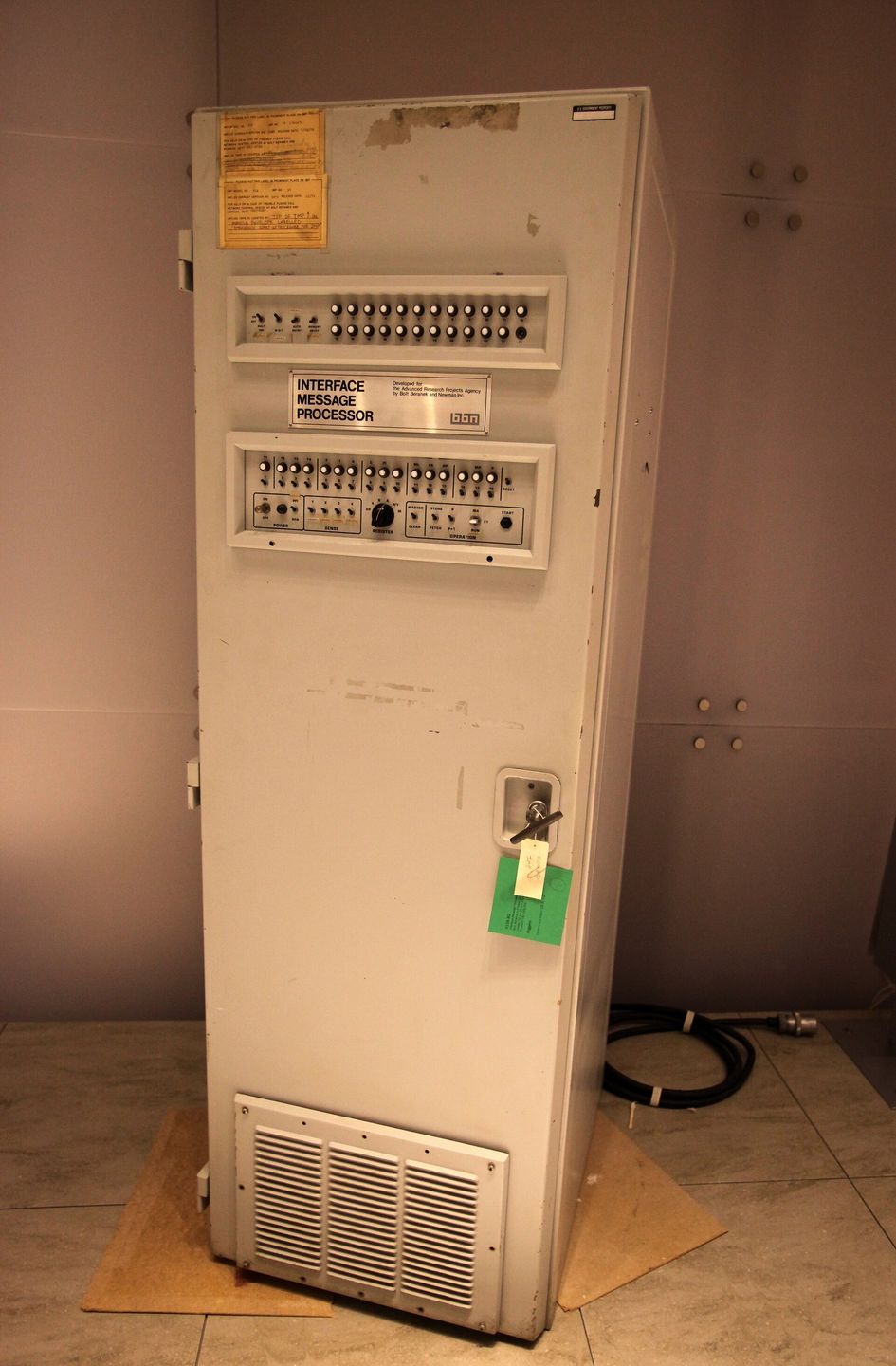
The bbn interface message processor (imp), the first ARPANET router, 1969. Steve Jurvetson from Menlo Park, USA, CC BY 2.0, via Wikimedia Commons
Flag Day
On this day in 1983 — ARPANET switched over to TCP/IP, and the network we would later just call the internet began speaking its native language.
3 min read
January 1, 1983 was supposed to be a catastrophe. Every computer on ARPANET, the network that connected military installations, research universities, and defense contractors across America, had to flip a switch at midnight. They were abandoning the Network Control Protocol that had worked perfectly well for over a decade and replacing it with something new, untested at scale, and impossibly ambitious: TCP/IP.
The Department of Defense had decreed it. The deadline was non-negotiable. No one was entirely sure what would happen when the old protocol stopped working and the new one took over. Would packets get lost? Would connections drop? Would the whole network collapse into digital silence?
It didn't. At midnight, ARPANET switched over. The network kept running. Data kept flowing. The engineers called it Flag Day, after the naval tradition of changing a ship's allegiance by raising a new flag. In this case, the flag was invisible, written in software, and it changed everything.
TCP/IP wasn't just a replacement. It was a reimagining of how machines should talk to each other. The old system, NCP, assumed a reliable network. It worked fine when you controlled every node and every wire. But Vint Cerf and Bob Kahn, the architects of TCP/IP, had a different vision. They imagined a network of networks, a system where messages could be chopped into packets, sent through any available route, and reassembled on the other end. They designed for chaos. They assumed things would break.

Vint Cerf, co-designer of TCP/IP, the protocol ARPANET adopted in 1983. Joi Ito from Inbamura, Japan, CC BY 2.0, via Wikimedia Commons
That assumption turned out to be the most important design decision in the history of the Internet. TCP/IP treated unreliability as a feature, not a bug. It didn't matter if you were connecting a mainframe in a climate-controlled data center or a laptop at a coffee shop. The protocol was agnostic. It worked on satellites, phone lines, fiber optics, and later, Wi-Fi. It worked because it was designed not to care about the medium. Just as Samuel Morse's telegraph abstracted communication into dots and dashes, TCP/IP abstracted data into packets and left the rest to infrastructure.
The elegance of the system was invisible to almost everyone. Most people didn't know ARPANET existed. The Internet wouldn't enter public consciousness for another decade. But on January 1, 1983, the foundation was set. Every email you've ever sent, every webpage you've ever loaded, every video call, every file download, every cloud backup runs on the protocol that went live that day.
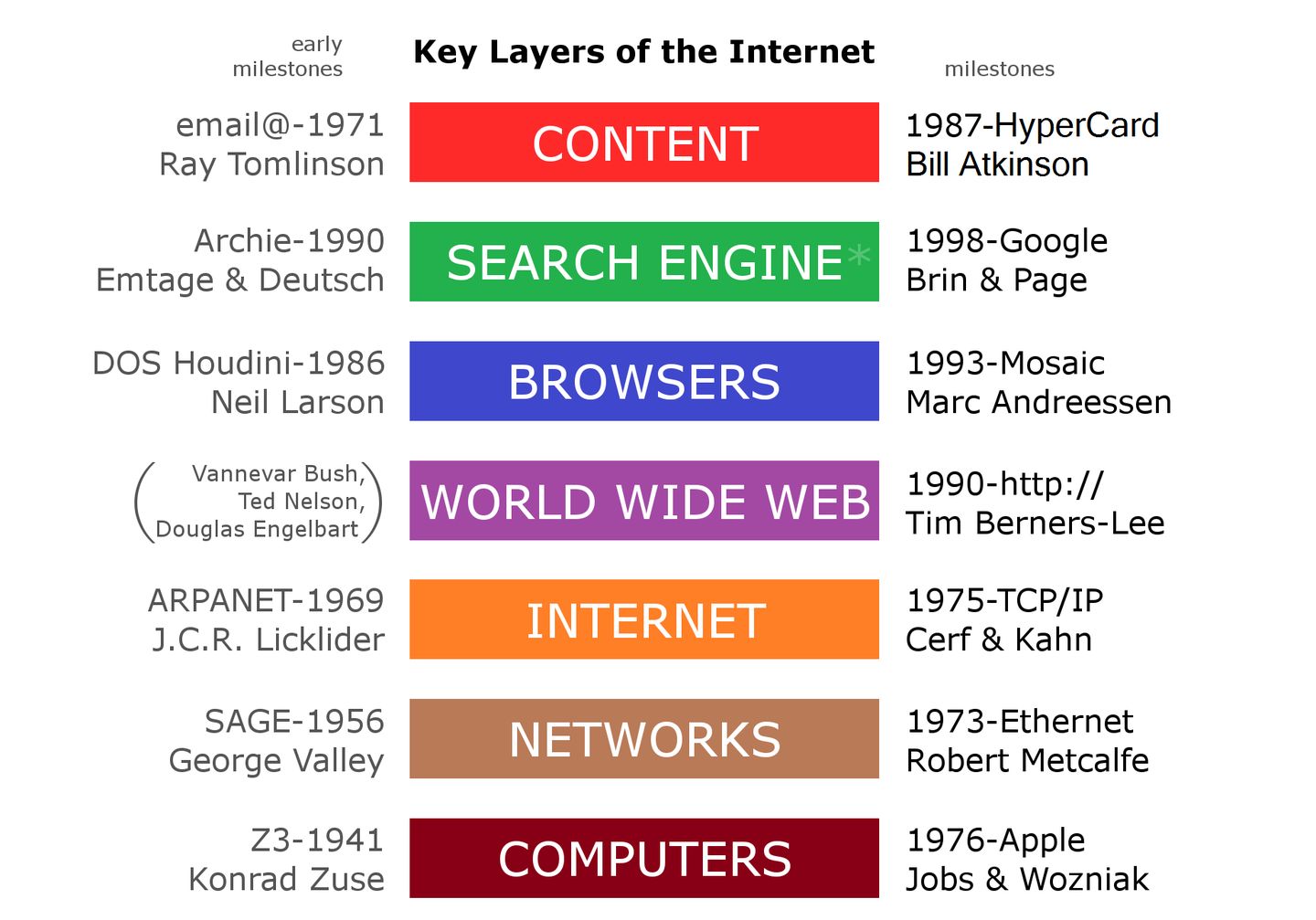
The layered model of the TCP/IP Protocol stack, the design that went live on Flag Day. Concord hioz, CC BY-SA 4.0, via Wikimedia Commons
The designers of TCP/IP didn't know they were building the substrate of modern life. They thought they were solving a military logistics problem. But they built it open. They published the specifications. They didn't patent it. They let anyone use it, modify it, build on it. That openness, as much as the technical design, is why the protocol survived. It became infrastructure because no one owned it.
Today, TCP/IP is so fundamental that it's almost invisible. It's the plumbing behind every screen, the protocol stack that turns electrical impulses into meaning. It's older than the World Wide Web, older than most of the companies that dominate the Internet, older than the smartphones that put it in everyone's pocket. And it still works exactly the way it did on Flag Day, 1983, moving packets from one place to another, indifferent to what they contain or why they matter.
studio / on-this-day / Jan 1