studio / on-this-day / Dec 29
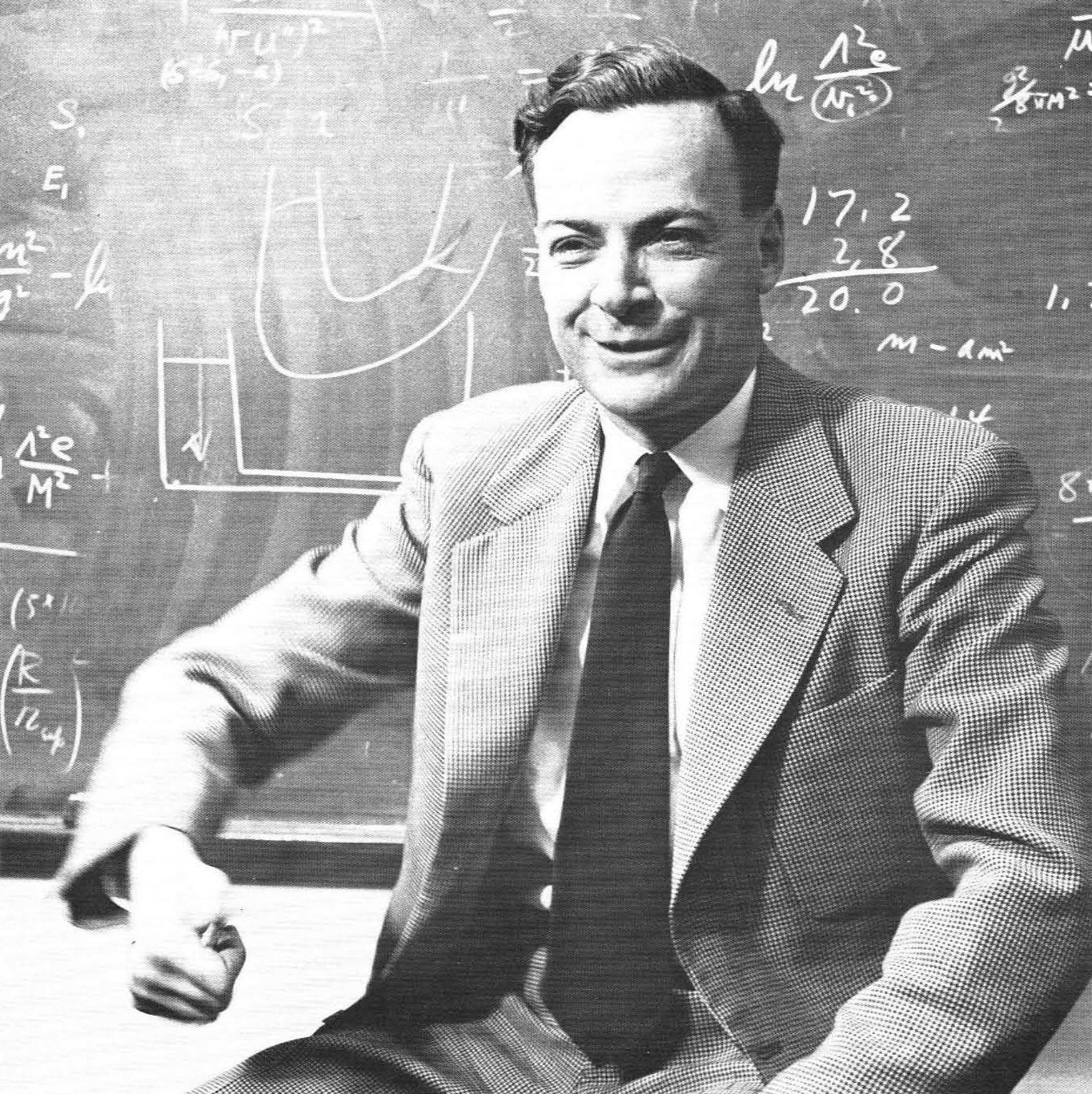
Richard Feynman, 1959. Public domain, via Wikimedia Commons
Plenty of Room at the Bottom
On this day in 1959 — Richard Feynman gave his lecture "There's Plenty of Room at the Bottom," launching nanotechnology.
3 min read
On December 29, 1959, Richard Feynman stood before the American Physical Society at Caltech and delivered a lecture titled "There's Plenty of Room at the Bottom." He was 41, already famous for his work in quantum electrodynamics, and about to propose something that sounded like science fiction. He suggested that it would one day be possible to manipulate individual atoms, to build machines on molecular scales, to write the entire Encyclopedia Britannica on the head of a pin. Most of the audience thought it was a thought experiment. Feynman was describing the future.
The lecture was playful, speculative, and precise. Feynman asked why we could not write very small. Not microscopically small, but atomically small. He calculated that if you reduced the scale of printed text by 25,000 times, you could fit all the books ever written on a pamphlet the size of a dust speck. There was no fundamental physical law preventing this. It was just a question of control. He proposed building smaller and smaller machines, each one capable of building even smaller machines, until you reached the scale of atoms.
He talked about storing information at the atomic level. A single bit could be represented by the presence or absence of a single atom. He pointed out that biological systems already operated at this scale. DNA stored genetic information in molecular structures. Cells assembled proteins atom by atom. Life was proof that nanotechnology was possible. Feynman was not inventing a new field. He was pointing out that nature had already solved the engineering problems.
At the end of the lecture, Feynman offered two prizes. One thousand dollars to the first person to build a working electric motor no bigger than 1/64th of an inch on each side. Another thousand dollars to anyone who could shrink text by a factor of 25,000 and make it readable under an electron microscope. The motor prize was claimed within a year. A meticulous engineer named William McLellan built a working motor using tweezers and a microscope. The text prize took longer, but it was eventually won in 1985.
Hypothetical Nanotechnology model. Jurvetson, CC BY 2.0, via Wikimedia Commons
Feynman's lecture went largely unnoticed for years. It was published, but it did not spark immediate action. The tools to work at the atomic scale did not exist yet. Electron microscopes could see individual atoms, but there was no way to move them. That changed in the 1980s with the invention of the scanning tunneling microscope, which could not only image atoms but manipulate them. In 1989, IBM researchers spelled out the company's logo using 35 individual xenon atoms. Feynman's vision was becoming real.
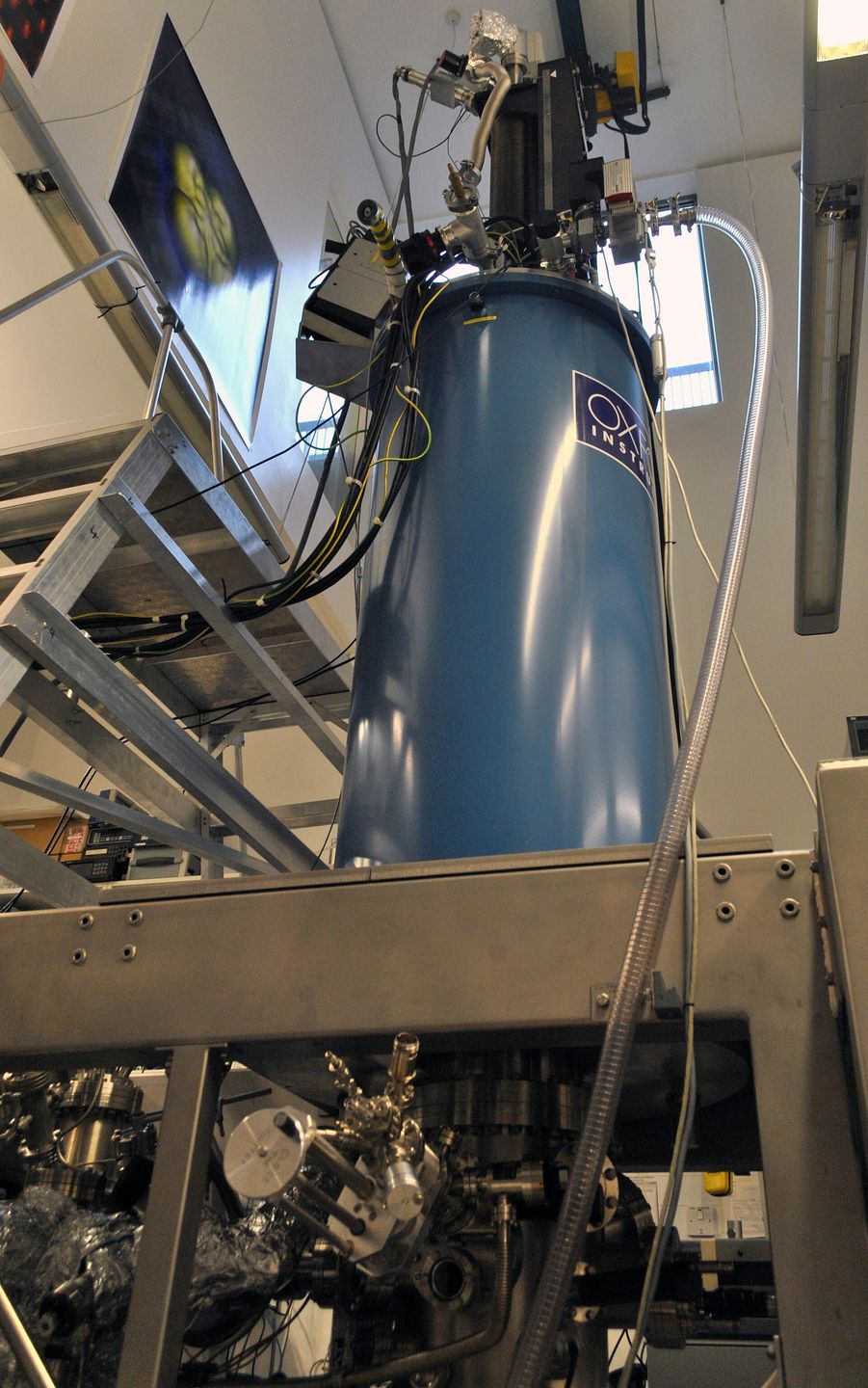
A scanning tunneling microscope, the instrument that let researchers see and move single atoms. UCL Mathematical and Physical Sciences from London, UK, CC BY 2.0, via Wikimedia Commons
Nanotechnology is now a field in its own right. Researchers build molecular machines, design drug delivery systems that target individual cells, and create materials with properties that do not exist at larger scales. Carbon nanotubes, quantum dots, and graphene all operate at the scale Feynman described. The semiconductor industry builds chips with features measured in nanometers, billions of transistors packed onto a surface smaller than a fingernail. As the transistor showed, miniaturization is the engine of progress in electronics.
Feynman did not live to see nanotechnology mature. He died in 1988 from complications related to cancer. But his lecture set the conceptual framework. He showed that the laws of physics do not prohibit working at the atomic scale. He made it seem not just possible, but obvious. There is plenty of room at the bottom. The question was never whether we could build there. It was whether we would figure out how. Feynman had a gift for seeing what was possible before the tools existed. He looked at the world and saw not limits, but open space waiting to be explored. The smallest scales were not a barrier. They were a frontier.
The lecture is still read today, not as history but as prophecy. Feynman imagined swallowing a surgeon, tiny machines repairing cells from the inside. He imagined computers the size of bacteria. Some of this has happened. Some of it has not. But the trajectory is clear. The future Feynman described is being built one atom at a time, in labs around the world, by people who read his lecture and decided to take him seriously. The bottom is where the action is now. Feynman saw it coming sixty years ago. He just had to point it out.
studio / on-this-day / Dec 29