studio / on-this-day / Dec 28
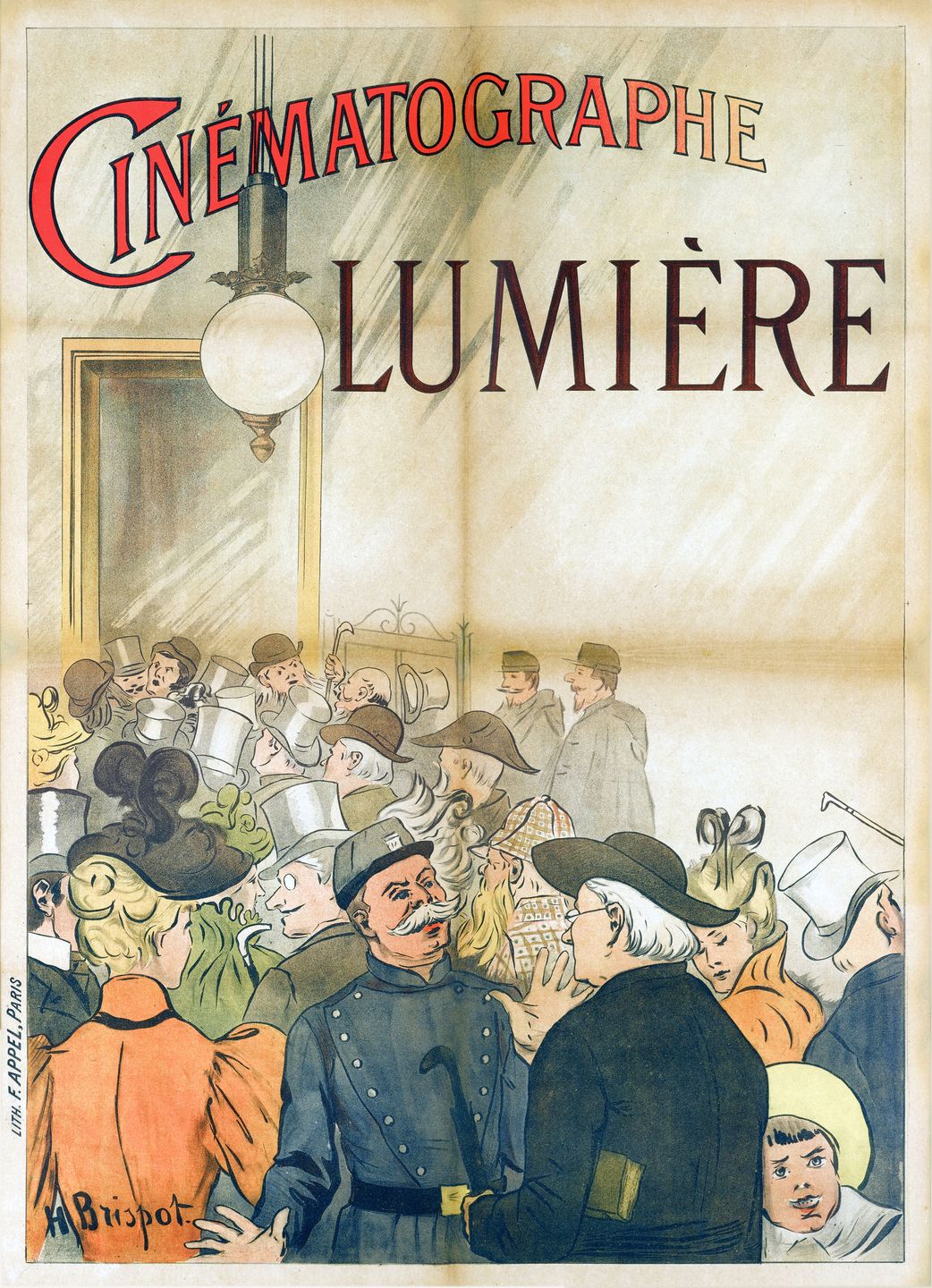
The Cinématographe, invented by the Lumière brothers. Henri Brispot, Public domain, via Wikimedia Commons
The First Movie Theater
On this day in 1895 — the Lumière brothers charged admission to watch ten short films in a Paris café, and cinema became a business.
3 min read
On December 28, 1895, Auguste and Louis Lumière held the first commercial public film screening in the basement of the Grand Café on the Boulevard des Capucines in Paris. They charged one franc for admission. Thirty-three people showed up. The program consisted of ten short films, each less than a minute long. Workers leaving a factory. A train arriving at a station. A baby being fed. Everyday scenes, captured in motion and projected onto a wall. The audience had never seen anything like it.
The Lumières did not invent motion pictures. Thomas Edison had developed the kinetoscope, a device that allowed one person at a time to view short films through a peephole. Others had experimented with projecting images. But the Lumières built something better: the Cinématographe, a single device that served as camera, projector, and printer. It was lightweight, portable, and could be hand-cranked. It worked reliably. Most importantly, it could project images large enough for an audience to watch together.
The most famous film from that first screening was "L'Arrivée d'un train en gare de La Ciotat," or "Arrival of a Train at La Ciotat Station." It showed a steam locomotive pulling into a station, moving directly toward the camera. The story goes that audience members screamed and ducked, terrified the train would burst through the screen. This is probably exaggerated, but it captures something true. The illusion of motion was powerful. People were not used to seeing life reproduced at full scale, moving and lifelike. Photography had frozen time. Cinema brought it back to life.
The Lumière brothers were not artists. They were engineers and businessmen. Their father owned a photography company, and they had made their fortune improving photographic plates. They saw cinema as a novelty, a curiosity with limited commercial potential. Louis Lumière reportedly said that cinema was "an invention without a future." He was catastrophically wrong. Within a year, the Lumières had sent cameramen around the world to film exotic locations and everyday life. Their catalog grew to over 1,400 films.
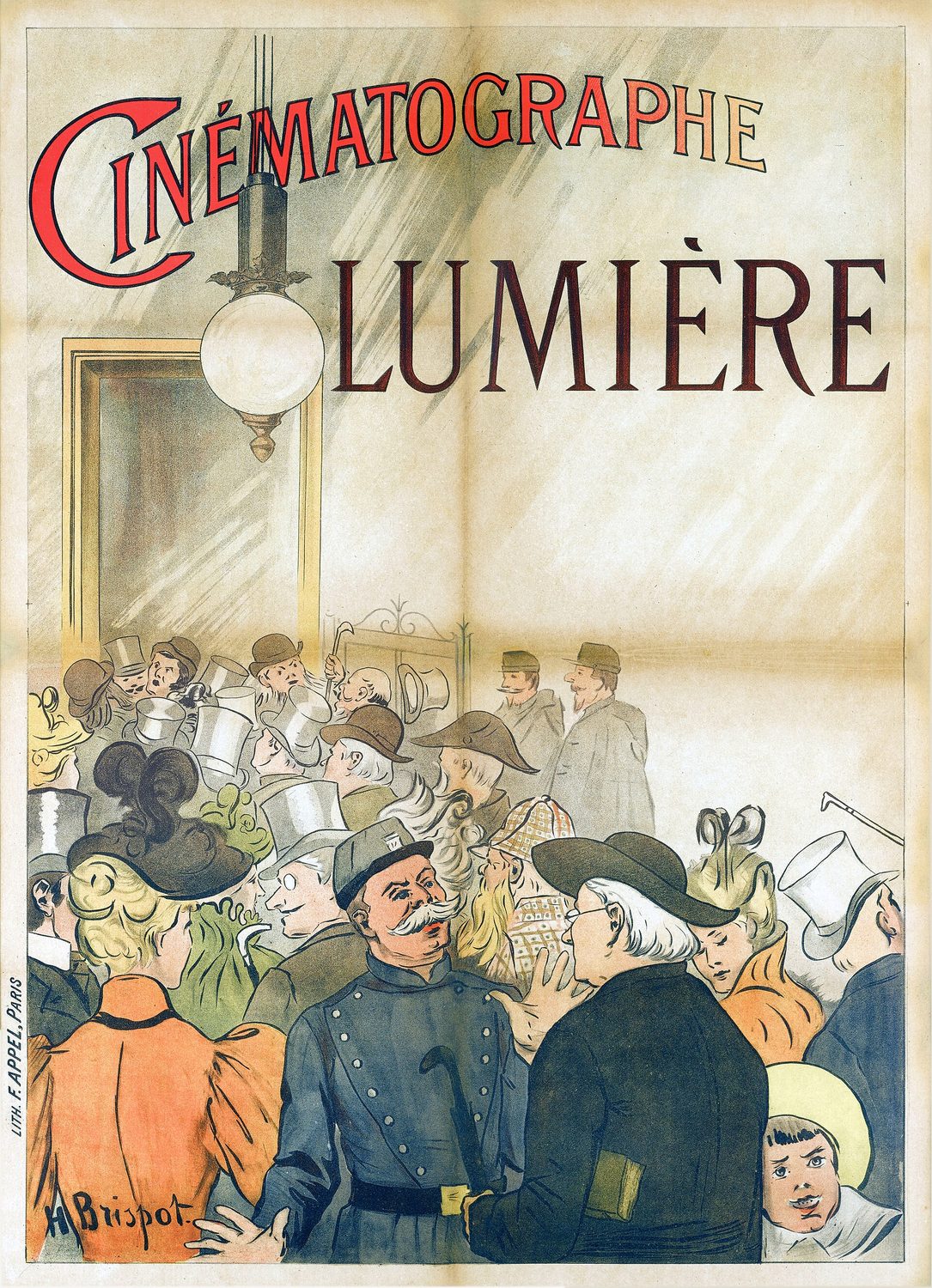
An early Lumière cinematograph scene, 1895. Public domain, via Wikimedia Commons
Cinema spread rapidly. By 1900, moving pictures were being shown in theaters across Europe and America. The films were still short, still silent, but they were evolving. Filmmakers began experimenting with narrative, cutting between scenes, using special effects. Georges Méliès, a magician turned filmmaker, made fantastical films like "A Trip to the Moon." Edwin S. Porter's "The Great Train Robbery" used crosscutting to create suspense. The medium was discovering its grammar.
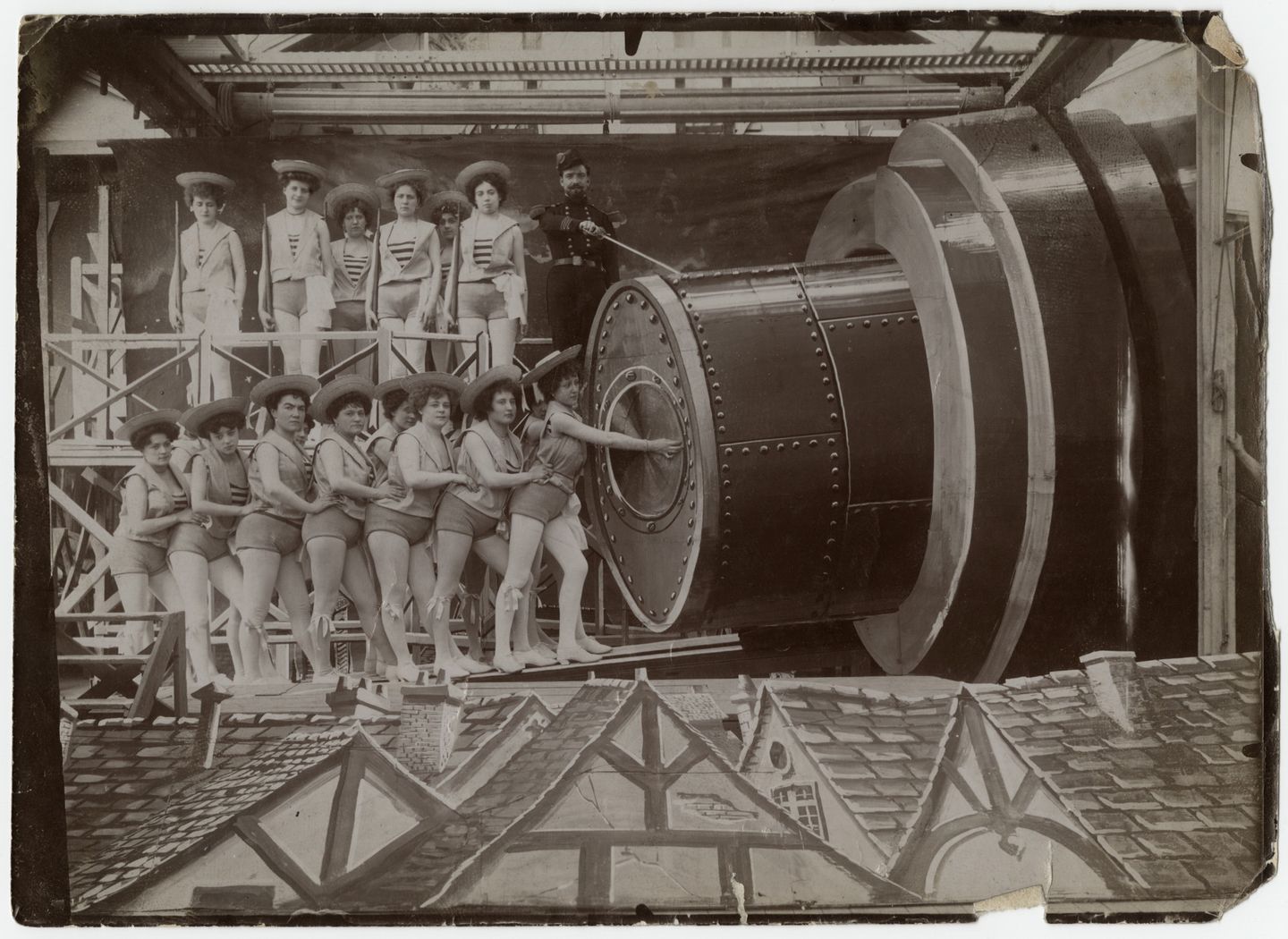
A still from Georges méliès' "a Trip to the Moon," 1902, where filmmakers began building on the Lumières' invention. Georges Méliès, Public domain, via Wikimedia Commons
What the Lumières understood, even if they did not fully appreciate its implications, was that people wanted to see the world. Not paintings or photographs, but life itself, in motion. Workers leaving a factory was not dramatic, but it was mesmerizing because it was real. The train arriving at the station was ordinary, yet extraordinary when projected at life size. Cinema offered a new way to experience reality, to witness events from a perspective that was not your own. As Edison's phonograph had done for sound, cinema preserved and replayed time.
The Lumière brothers eventually left the cinema business. They returned to photography and experimented with early color processes. Their contribution was technical: a reliable, portable system for capturing and projecting motion pictures. What others built on that foundation, from narrative storytelling to special effects to global distribution, went far beyond what the Lumières imagined. But the first screening in the Grand Café basement set the pattern. A darkened room. A projected image. An audience watching together, experiencing the same moment. Cinema was not just a technology. It was a new form of shared experience, a way to see the world through someone else's lens. And it started with ten short films and 33 curious strangers in a Paris café.
studio / on-this-day / Dec 28