studio / on-this-day / Dec 25
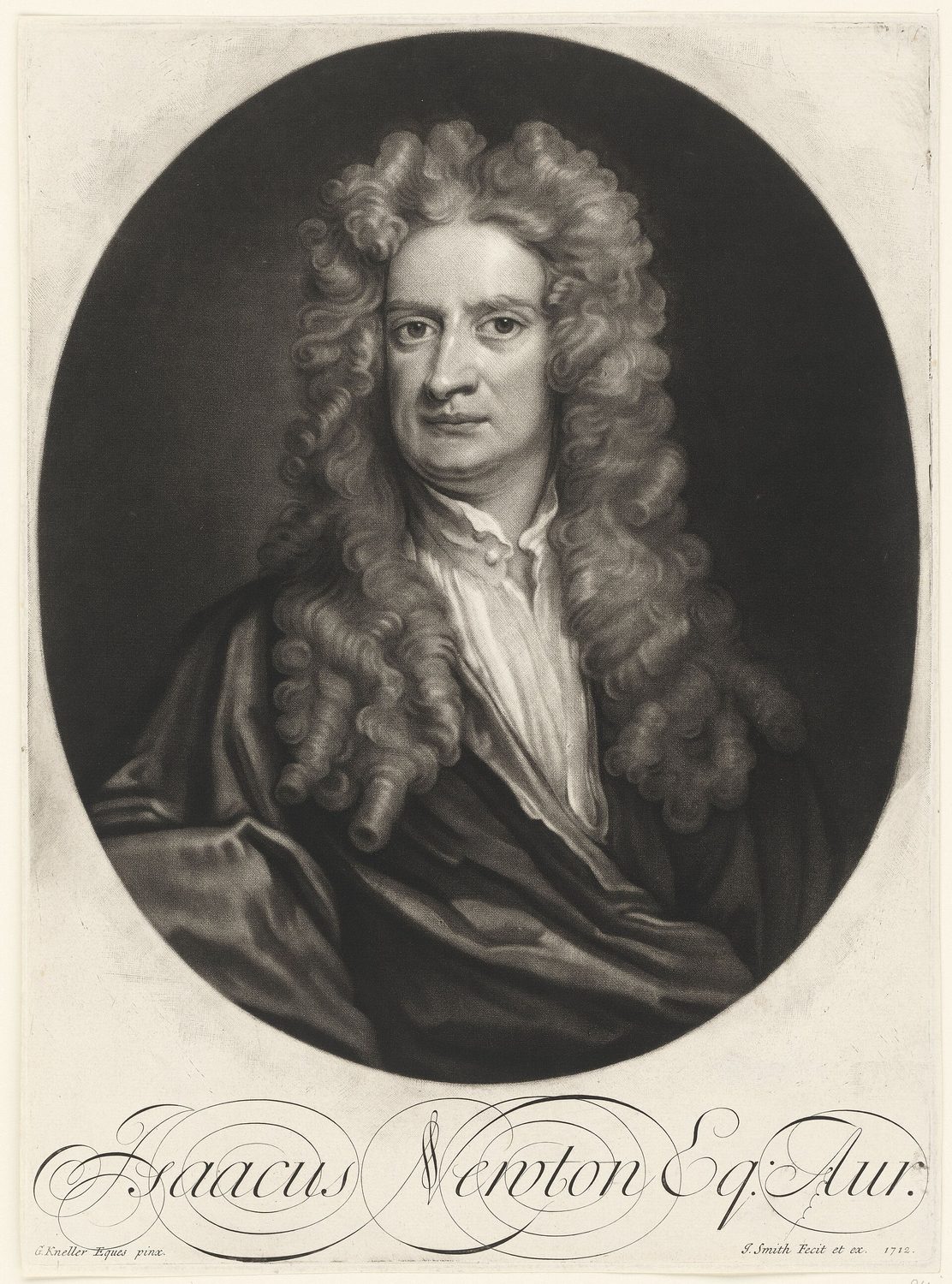
Isaac Newton, in a later portrait. Public domain, via Wikimedia Commons
The Universe Gets Its User Manual
On this day in 1642 — Isaac Newton was born, by the old calendar, and would go on to hand the universe something like a user manual.
3 min read
Isaac Newton was born on December 25, 1642, in Woolsthorpe, England, according to the Julian calendar still in use in Britain at the time. By the modern Gregorian calendar, it was January 4, 1643. He was born prematurely and not expected to survive. His father had died three months earlier. His mother remarried when he was three and sent him to live with his grandmother. By all accounts, his childhood was lonely and difficult. None of that predicted what he would become.
Newton attended Cambridge, where he studied mathematics, optics, and natural philosophy. When the Great Plague hit England in 1665, the university closed. Newton returned to Woolsthorpe and spent the next 18 months in isolation, thinking. It was during this period, later called his "annus mirabilis" or year of wonders, that he made some of his greatest discoveries. He developed the foundations of calculus. He discovered that white light is made of a spectrum of colors. And he began working out the mathematics of gravity.
The story of the falling apple is probably exaggerated, but it captures something true. Newton saw an apple fall and asked why it fell straight down, why it did not move sideways or upward. He realized that the same force pulling the apple to the ground might also be pulling the moon toward the Earth, keeping it in orbit. Gravity was not just terrestrial. It was universal, acting between all masses everywhere. This was a profound shift. The heavens and the Earth followed the same laws.
Newton published his masterwork, the "Philosophiæ Naturalis Principia Mathematica" or "Principia," in 1687. It described three laws of motion and the law of universal gravitation. Every object attracts every other object with a force proportional to their masses and inversely proportional to the square of the distance between them. With this, Newton could explain planetary orbits, the tides, the motion of comets, and the behavior of falling objects. It was the first unified theory of the physical world, a single set of rules that described everything from a thrown stone to the motion of planets.
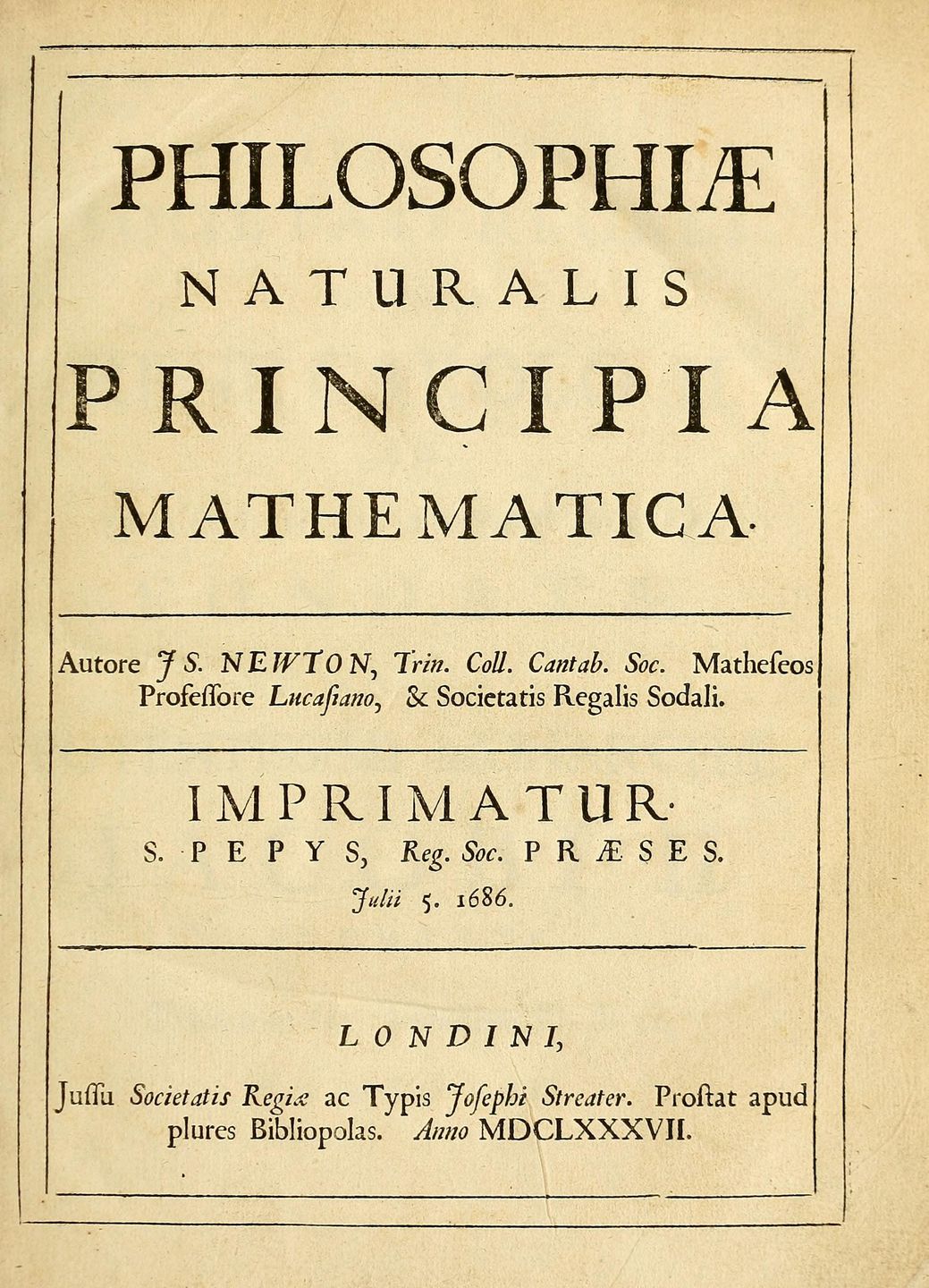
Title page of Newton's Principia Mathematica, 1687. The original uploader was Zhaladshar at English Wikisource., Public domain, via Wikimedia Commons
Newton also invented calculus, independently of Leibniz, though the two men disputed credit for decades. Calculus is the mathematics of change, a way to describe how things vary over time and space. It is the language of physics. Without it, modern science would not exist. Engineering, economics, computer graphics, and countless other fields depend on tools Newton developed in his twenties while hiding from the plague in a farmhouse.
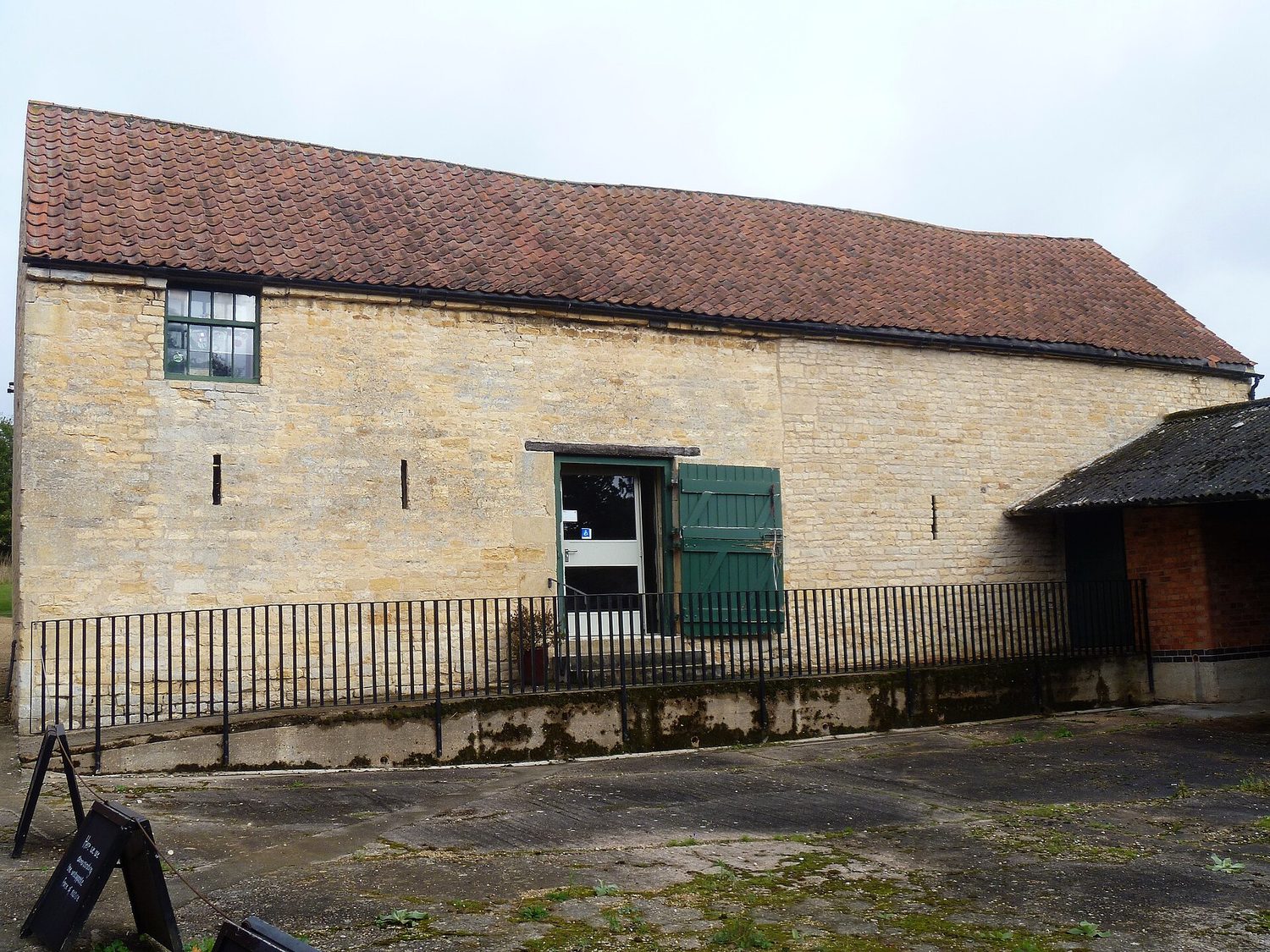
Woolsthorpe Manor, where Newton was born and did his plague-year work. Michael Dibb, CC BY-SA 2.0, via Wikimedia Commons
His work on light was equally revolutionary. He showed that a prism splits white light into colors because different colors refract at different angles. He built the first reflecting telescope, using mirrors instead of lenses to avoid chromatic aberration. The design is still used today in most large telescopes. He understood that light behaves in ways that are both particle-like and wave-like, though the full implications of that duality would not be understood for another 200 years.
Newton was not easy. He was secretive, obsessive, and vindictive. He feuded with rivals, including Robert Hooke and Gottfried Leibniz. He spent years on alchemy and biblical chronology, pursuits that led nowhere. He had nervous breakdowns. He was appointed Warden of the Royal Mint and pursued counterfeiters with ruthless efficiency, sending several to the gallows. He was knighted by Queen Anne in 1705, the first scientist honored for his work. As Einstein would later demonstrate, even the greatest scientific minds are shaped by their time and temperament.
Newton died in 1727 at the age of 84. He was buried in Westminster Abbey, honored as a national hero. His laws of motion and gravitation remained the foundation of physics for over 200 years, until Einstein's relativity showed they were approximations, accurate enough for most purposes but incomplete at extreme scales. Newton himself would have approved. He once wrote, "If I have seen further, it is by standing on the shoulders of giants." He understood that knowledge builds incrementally, that today's breakthrough becomes tomorrow's foundation. The universe had always followed rules. Newton just wrote them down, in mathematics precise enough that we could use them to navigate the solar system, predict eclipses, and eventually send machines beyond the reach of the sun. The manual was there all along. He showed us how to read it.
studio / on-this-day / Dec 25