studio / on-this-day / Dec 21
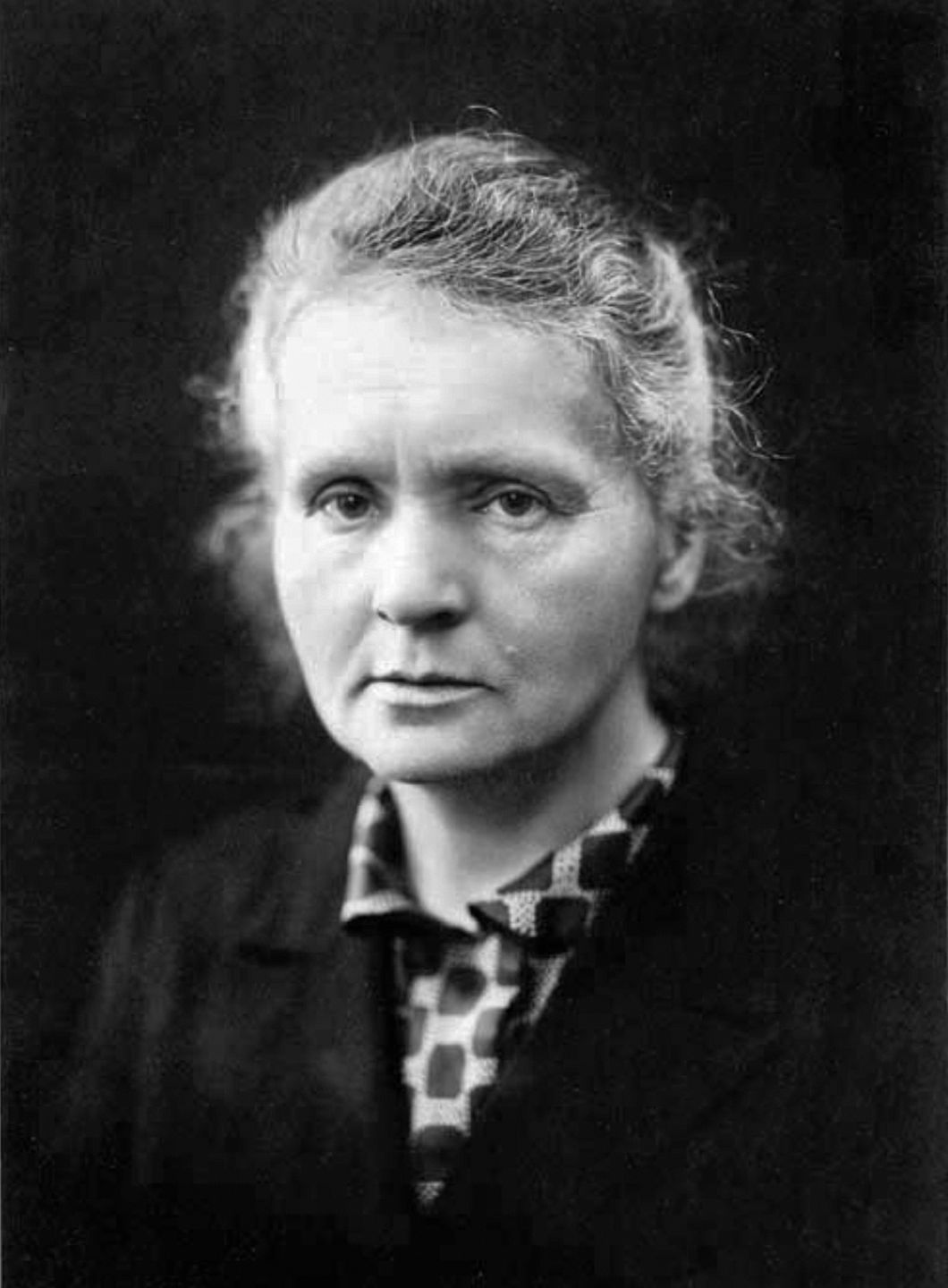
Marie Curie, circa 1920. Henri Manuel, Public domain, via Wikimedia Commons
The Element That Glows
On this day in 1898 — Marie and Pierre Curie announced radium, adding to the periodic table an element that quietly glowed in the dark.
3 min read
On December 21, 1898, Marie and Pierre Curie announced the discovery of radium. They had been working in a converted shed, processing tons of pitchblende, a mineral ore left over from uranium mining. The work was backbreaking. Marie stirred boiling vats of material with an iron rod nearly as tall as she was. Pierre handled the chemistry. Together they refined, distilled, and crystallized, isolating a substance that glowed faintly in the dark. They named it radium, from the Latin word for ray.
Radium was not the Curies' first discovery. Earlier that year, in July, they had announced polonium, named for Marie's homeland of Poland. Both elements were radioactive, a term Marie coined to describe the mysterious radiation emitted by certain materials. The Curies did not fully understand what they had found. They knew it was powerful. They did not yet know it was dangerous.
Marie Curie was born Maria Sklodowska in Warsaw in 1867, when Poland was partitioned and under Russian control. She moved to Paris to study at the Sorbonne, one of the few places in Europe where women could pursue advanced degrees in science. She met Pierre Curie, a physicist, and they married in 1895. Their honeymoon was a bicycle tour of France. Their life together was defined by shared work, mutual respect, and the kind of intellectual partnership that produces extraordinary results.
The discovery of radium was not accidental, but it was painstaking. The Curies had noticed that pitchblende was more radioactive than pure uranium, suggesting the presence of other elements. To isolate radium, they processed eight tons of pitchblende residue. The yield was one-tenth of a gram. It took four years. Marie's notebooks from this period are still radioactive, stored in lead-lined boxes, too dangerous to handle without protection.
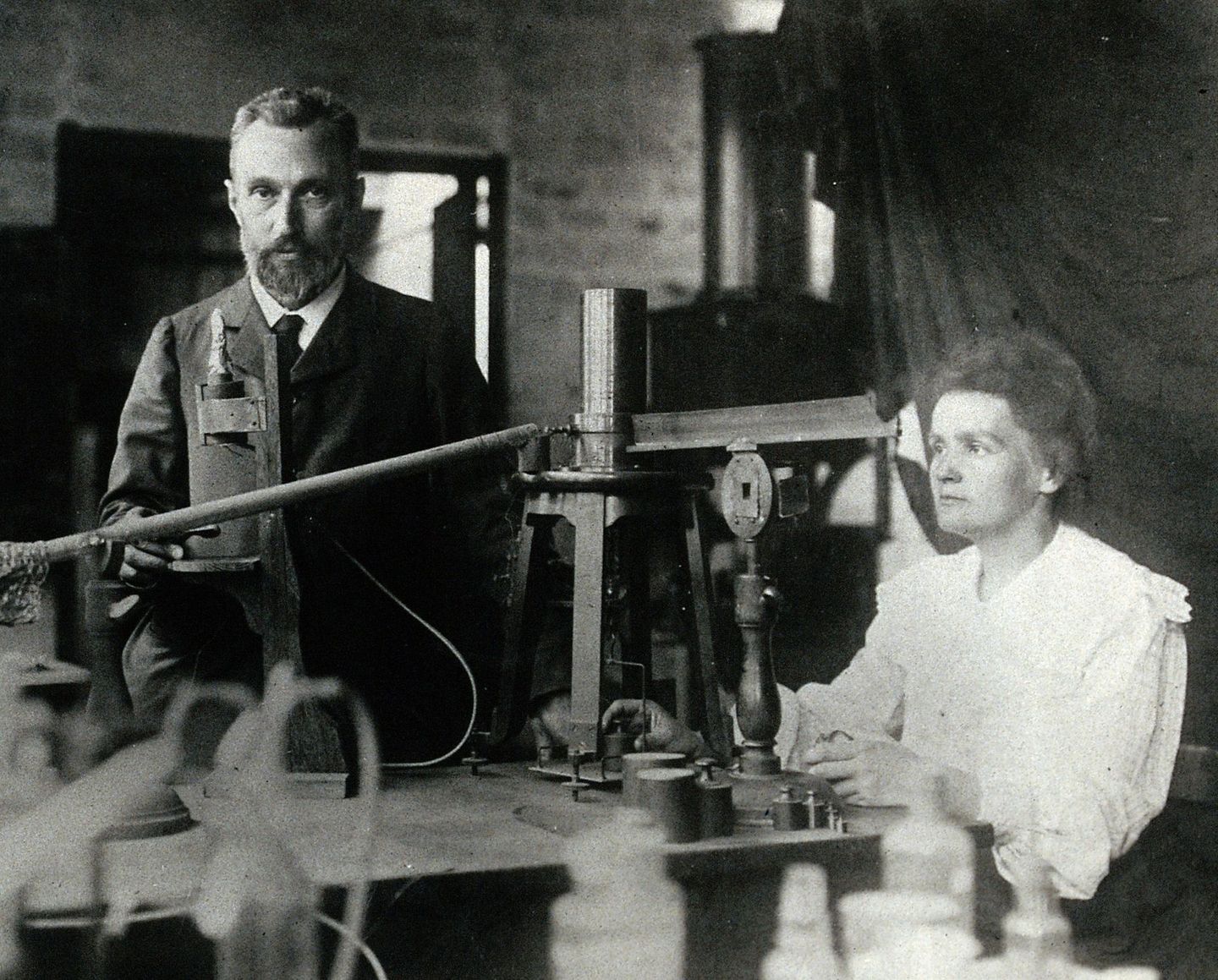
Pierre and Marie Curie in their laboratory, the converted shed where Radium was discovered. Public domain, via Wikimedia Commons
Radium became famous. It glowed. People wanted it. It was added to consumer products: luminous watch dials, beauty creams, health tonics. Radium water was marketed as a cure for everything from arthritis to impotence. The Radium Girls, young women who painted watch dials with radium-laced paint, licked their brushes to keep the tips sharp. They began dying of radiation poisoning in the 1920s. Their suffering led to labor protections and the understanding that radium was not miraculous. It was deadly.
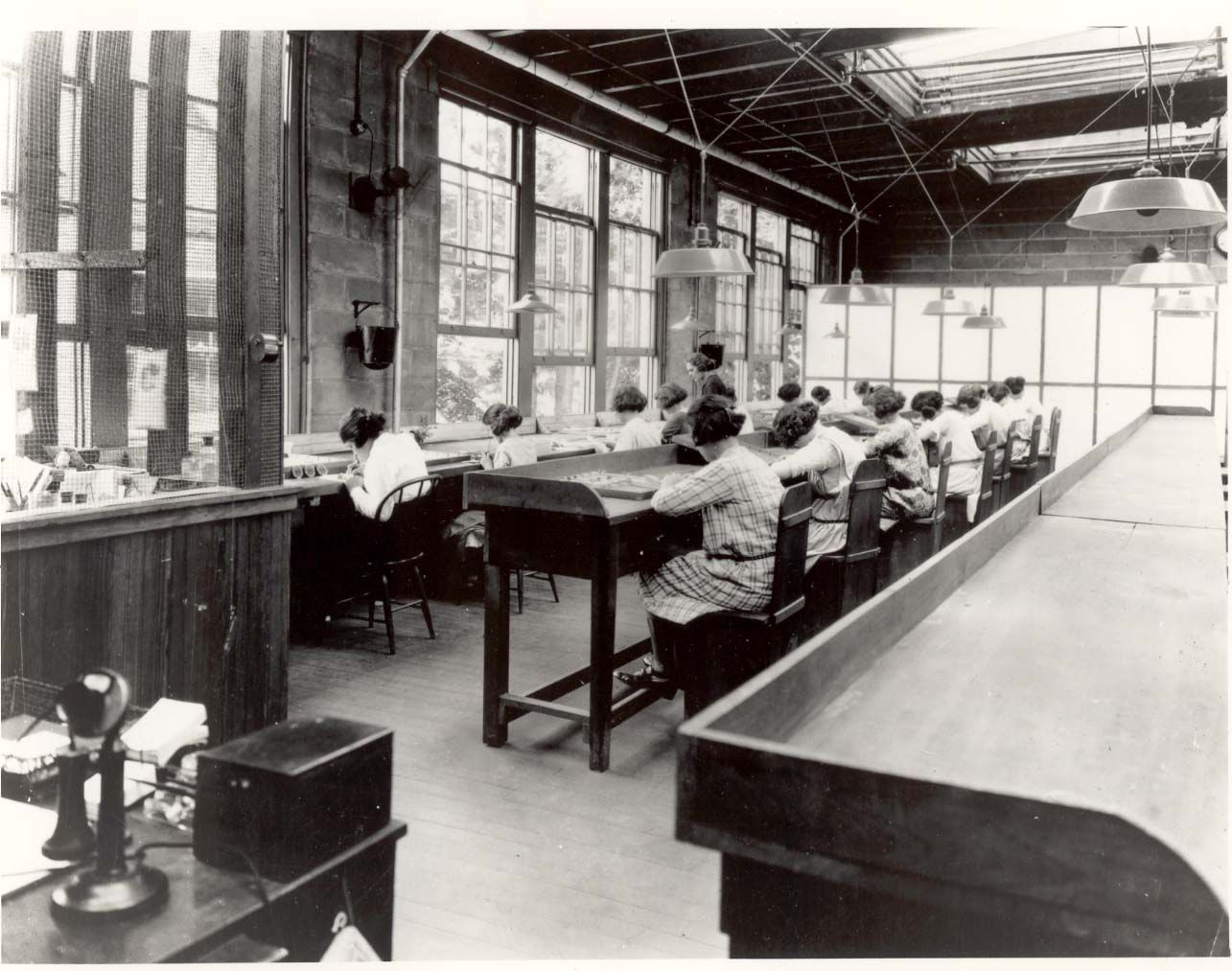
The Radium Girls painting luminous watch dials with Radium-laced paint, circa 1922. Public domain, via Wikimedia Commons
Marie Curie won the Nobel Prize in Physics in 1903, shared with Pierre and Henri Becquerel. She was the first woman to receive the prize. In 1911, after Pierre's death in a street accident in 1906, she won a second Nobel, this time in Chemistry, for isolating radium and polonium. She remains the only person to win Nobel Prizes in two different sciences. She used the prize money to fund her research and refused to patent the radium isolation process, believing scientific knowledge should be freely shared.
Curie died in 1934 from aplastic anemia, caused by prolonged exposure to radiation. She had carried test tubes of radium in her pockets. She had worked with bare hands in rooms filled with radioactive dust. The dangers were not understood until it was too late. Her legacy is complex. She opened the field of atomic physics. She proved that women could excel in science at the highest levels. And she paid for her discoveries with her health, working in conditions that would be unthinkable today. As the transistor would later show, transformative discoveries often come with costs that are not immediately visible.
Radium itself is now rarely used. Its medical applications have been replaced by safer isotopes. But its discovery changed everything. It revealed that atoms are not indivisible, that matter itself contains energy, that the universe operates according to rules we were only beginning to glimpse. Marie Curie spent her life illuminating those rules, one glowing element at a time. The element that glows still glows in museums, in lead containers, a reminder of what curiosity can uncover and what it can cost.
studio / on-this-day / Dec 21