studio / on-this-day / Dec 10
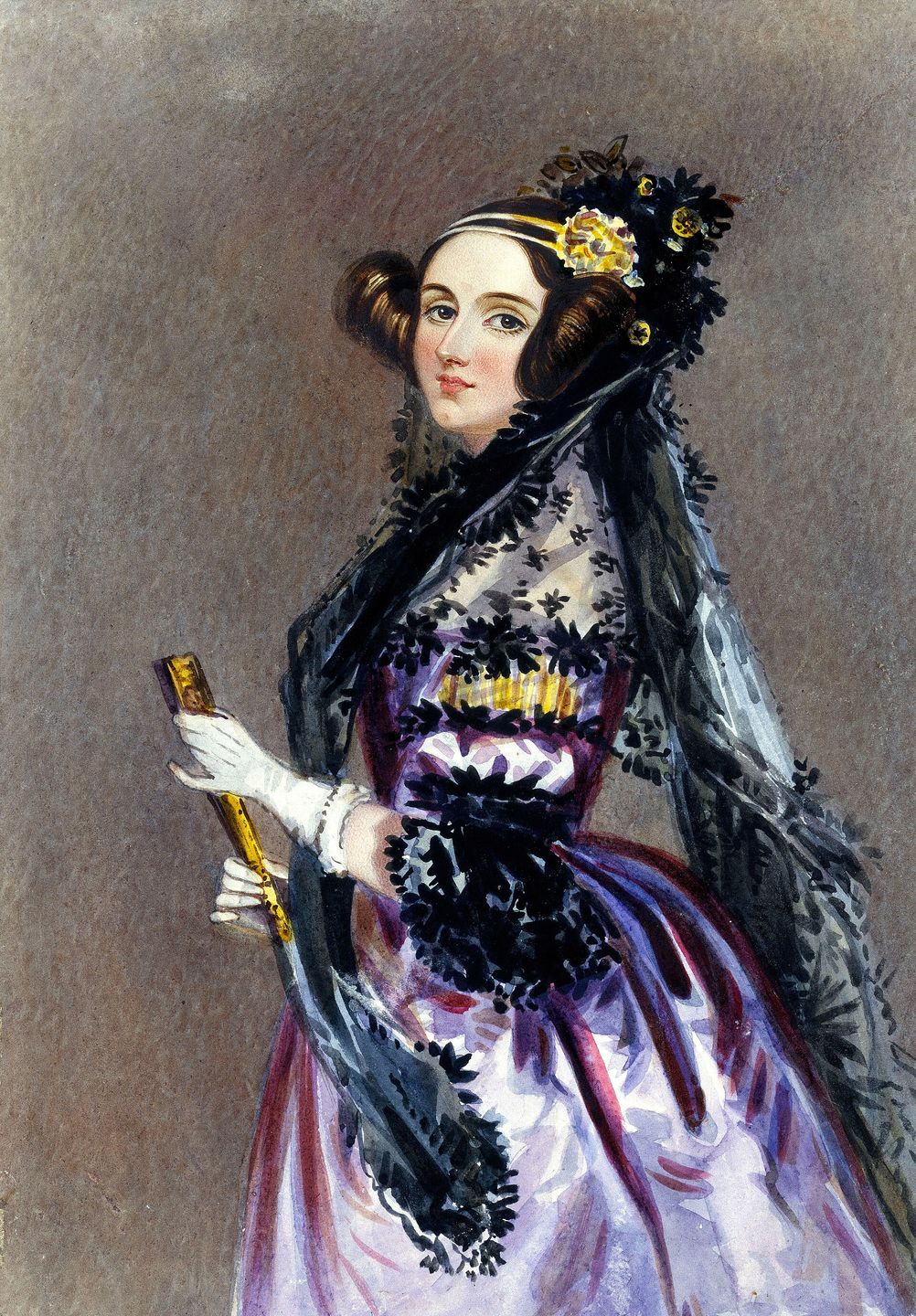
Ada Lovelace, portrait, circa 1840. Alfred Edward Chalon, Public domain, via Wikimedia Commons
The First Programmer
On this day in 1815 — Ada Lovelace was born, and would write the first algorithm meant for a machine a century before one existed to run it.
3 min read
Augusta Ada Byron was born on December 10, 1815, in London, the only legitimate child of the poet Lord Byron and mathematician Anne Isabella Milbanke. Her parents separated when she was a month old. She never saw her father again. Byron left England and died in Greece when Ada was eight. Her mother, determined that Ada would not inherit her father's volatile temperament, pushed her toward logic and mathematics. Ada was tutored in science and math from an early age, an unusual education for a woman in early 19th-century England. But it gave her tools that would later make her the first person to imagine what computers could be.
In 1833, at age 17, Ada met Charles Babbage, a mathematician and inventor who had designed a mechanical calculating machine called the Difference Engine. Babbage was working on a more ambitious project: the Analytical Engine, a programmable mechanical computer that used punch cards to control operations. It could perform any calculation, store data, and execute sequences of instructions. It was never built, but on paper, it was the first general-purpose computer. Babbage saw Ada's mathematical ability and corresponded with her for years. She became one of the few people who fully understood what the Analytical Engine could do.
In 1842, Italian engineer Luigi Menabrea published a paper on Babbage's machine in French. Ada translated it into English and added her own notes, which ended up being three times longer than the original paper. In those notes, published in 1843, Ada did something extraordinary. She didn't just explain how the machine worked. She described what it could become. She outlined an algorithm for the Analytical Engine to compute Bernoulli numbers, a sequence used in number theory. That algorithm is considered the first computer program. It included loops, conditional branching, and a step-by-step process written in a notation that foreshadowed modern programming languages.
But Ada went further. She imagined that the machine could do more than arithmetic. She wrote that it could manipulate symbols, not just numbers. If music, art, or language could be represented symbolically, the machine could process them. She saw computing as a universal tool for working with abstract patterns. She even speculated that the engine could compose music if given the right rules. This was radical. Most people saw the Analytical Engine as a fancy calculator. Ada saw it as a programmable, general-purpose machine for symbolic manipulation. She understood computing's conceptual possibilities a hundred years before computers existed.
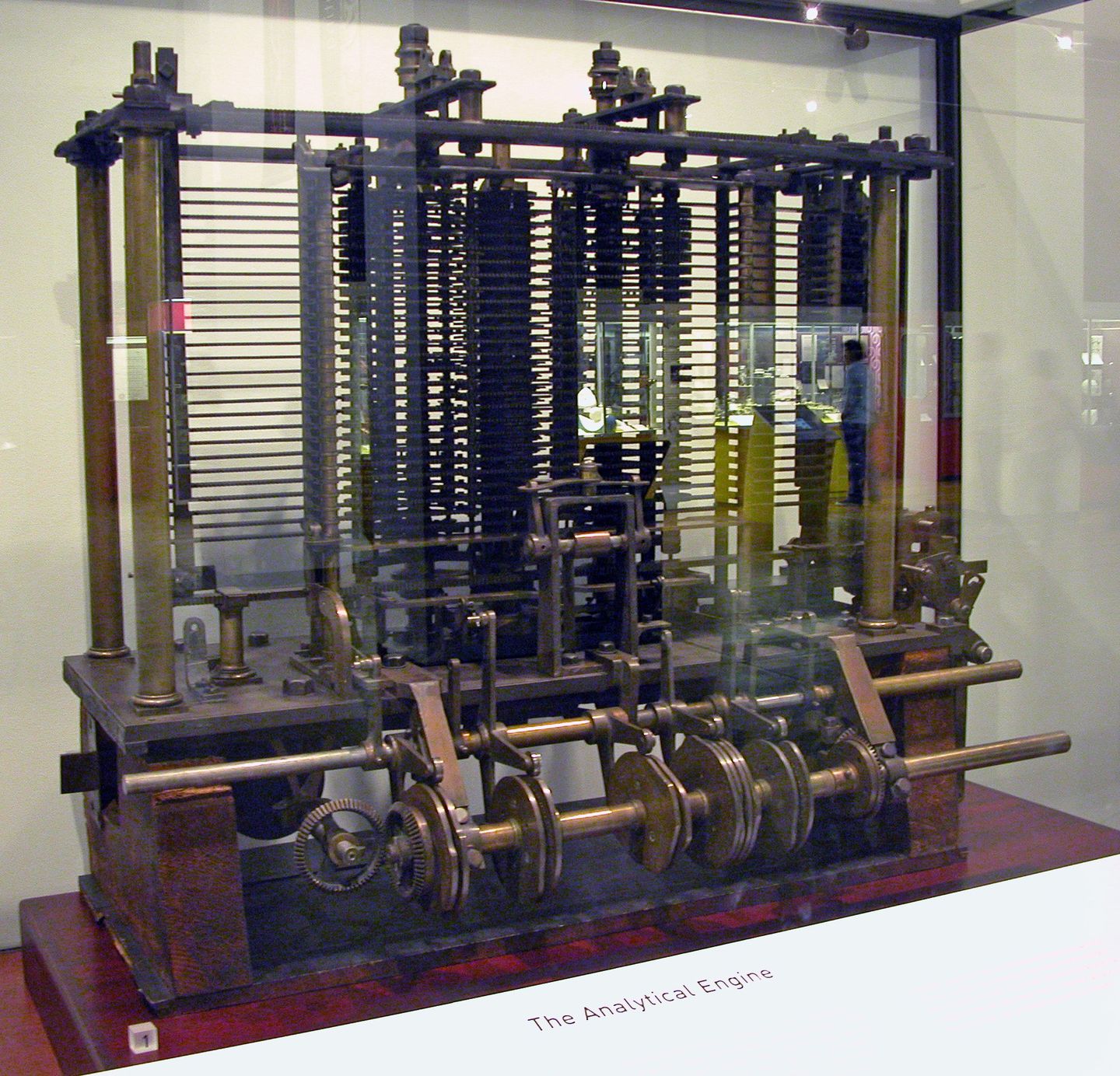
Part of Babbage's Analytical Engine, London science museum. Bruno Barral (ByB), CC BY-SA 2.5, via Wikimedia Commons
Ada's vision was dismissed in her lifetime. Babbage respected her intellect, but he was focused on building the machine, not theorizing about its potential. The Analytical Engine was never completed. Ada died in 1852 at age 36 from uterine cancer, the same age her father had died. Her notes were largely forgotten. It wasn't until the mid-20th century, when computing became a reality, that people rediscovered her work and recognized its significance. Alan Turing, who formalized the concept of computation in the 1930s, likely never read her notes. But what Ada described in 1843 anticipated the Turing machine, the theoretical foundation of all modern computers.
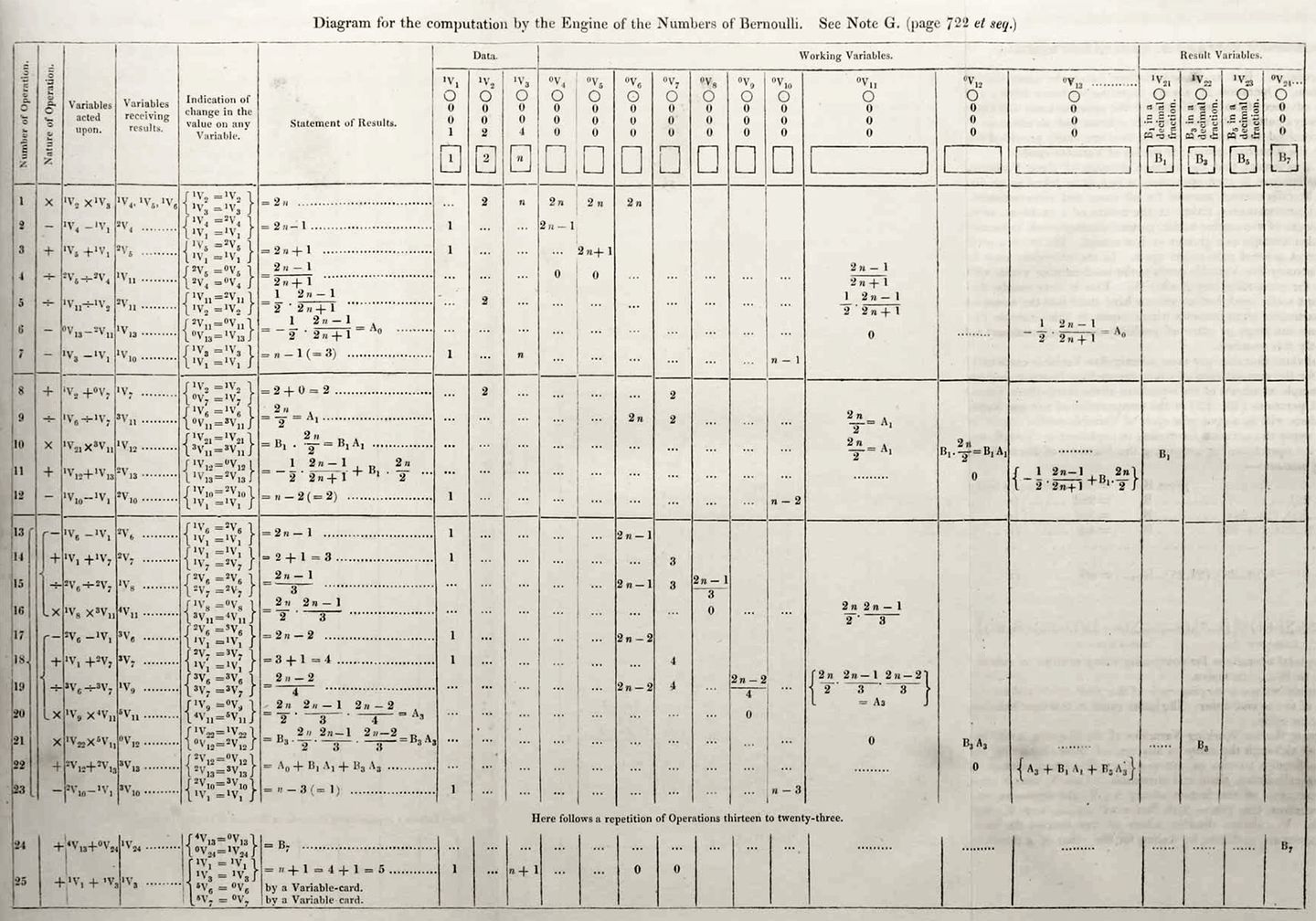
Lovelace's diagram for computing Bernoulli numbers, from her 1843 notes — often called the first computer program. Ada Lovelace, Public domain, via Wikimedia Commons
What makes Ada Lovelace historically important is not just that she wrote an algorithm. It's that she understood the fundamental abstraction that makes computing universal. She saw that a machine that can manipulate symbols according to rules can, in principle, manipulate any symbols. Numbers are symbols. But so are letters, musical notes, and logical propositions. A general-purpose computer doesn't calculate. It transforms patterns. That insight is the conceptual heart of software. Code is notation. Execution is transformation. Ada grasped this in 1843, long before anyone had electric circuits, transistors, or silicon chips.
In 1980, the U.S. Department of Defense named a programming language Ada in her honor. Her notes on the Analytical Engine are preserved in archives. October 15 is celebrated as Ada Lovelace Day, honoring women in science and technology. But the real tribute to Ada is every line of code ever written. She didn't build a computer. She described what computing could be. She saw the machine in the mathematics. And she wrote the first instructions for a device that wouldn't exist for another century. The program ran in her mind, on paper, in an imagined future. And when that future arrived, her vision was already there, waiting.
studio / on-this-day / Dec 10