studio / on-this-day / Dec 9
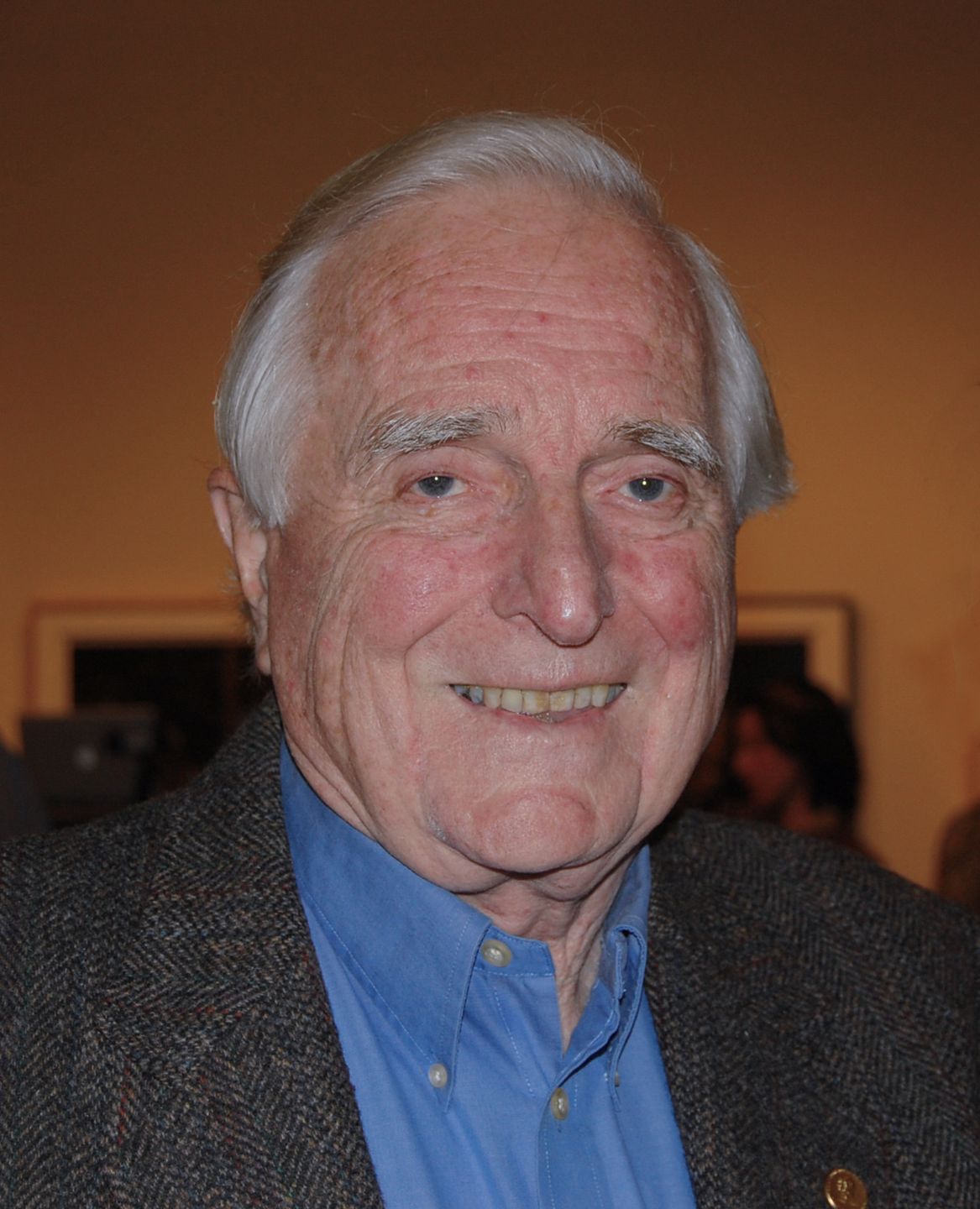
Douglas Engelbart, 2008. Alex Handy from Oakland, Nmibia, CC BY-SA 2.0, via Wikimedia Commons
The Mother of All Demos
On this day in 1968 — Douglas Engelbart demonstrated the computer mouse, hypertext, and video conferencing. "The mother of all demos."
3 min read
On December 9, 1968, at the Fall Joint Computer Conference in San Francisco, Douglas Engelbart sat at a custom-built console and delivered a 90-minute presentation that redefined what computers could be. He demonstrated a computer mouse, on-screen video teleconferencing, hypertext, collaborative real-time editing, and a windowed graphical user interface. It was the first public demonstration of nearly every foundational concept behind modern personal computing. The audience of about 1,000 computer scientists watched in stunned silence. What Engelbart showed them wasn't an incremental improvement. It was a different paradigm.
Engelbart worked at the Stanford Research Institute's Augmentation Research Center. His mission was not to build faster computers but to build tools that augmented human intellect. He believed that computers could help people think, collaborate, and solve complex problems if the interface was designed correctly. Most computers in 1968 were batch-processing machines. You submitted punch cards and waited for results. Engelbart envisioned interactive computing: a real-time conversation between human and machine, mediated by intuitive input devices and visual feedback.
The mouse was central to that vision. Engelbart had built the first prototype in 1964, a wooden shell with two metal wheels. By 1968, the design had evolved into a more refined device. He used it to move a cursor around the screen, select text, and navigate through documents. The mouse made computing spatial. You pointed at what you wanted. You clicked to interact. It was direct manipulation, a departure from typing cryptic commands into a terminal. The audience had never seen anything like it.
Engelbart also demonstrated hypertext, the concept that documents could contain links to other documents, creating a web of interconnected information. He clicked on a word, and the system jumped to a related file. He showed collaborative editing, where two users in different locations worked on the same document simultaneously, their changes visible in real time. He demonstrated video conferencing, projecting a live feed of his colleague Bill English, who was 30 miles away at the research lab, onto a screen above his head. Engelbart's system, called the oN-Line System or NLS, was a glimpse of a networked, interactive, multimedia future.
The presentation was technically flawless but conceptually overwhelming. The audience understood they were witnessing something important, but few grasped the full implications. Computing in 1968 was dominated by mainframes and terminals. Personal computers didn't exist yet. The idea that individuals would have machines with graphical interfaces, pointing devices, and networked collaboration tools seemed like science fiction. Engelbart was describing the internet, personal computing, and knowledge work infrastructure decades before they became commonplace.
What's remarkable is that Engelbart's vision was fully formed. He wasn't iterating toward something. He had already designed the end state. The mouse, hypertext, windowing, real-time collaboration: these weren't experiments. They were components of a coherent system for augmenting human intelligence. Engelbart saw computing not as calculation but as a medium for thought. He wanted to build tools that extended cognition the way writing extends memory or mathematics extends reasoning.
Douglas Engelbart during the 1968 Mother of All Demos. jeanbaptisteparis, CC BY 2.0, via Wikimedia Commons
The demo's influence was delayed but profound. Researchers from Xerox PARC attended the presentation. They took Engelbart's ideas and built the Alto, the first personal computer with a graphical user interface and a mouse. Steve Jobs visited Xerox PARC in 1979, saw the Alto, and incorporated its concepts into the Macintosh. The web, email, collaborative software, video calls, everything people interact with daily on computers traces back, in some way, to what Engelbart demonstrated in 1968.
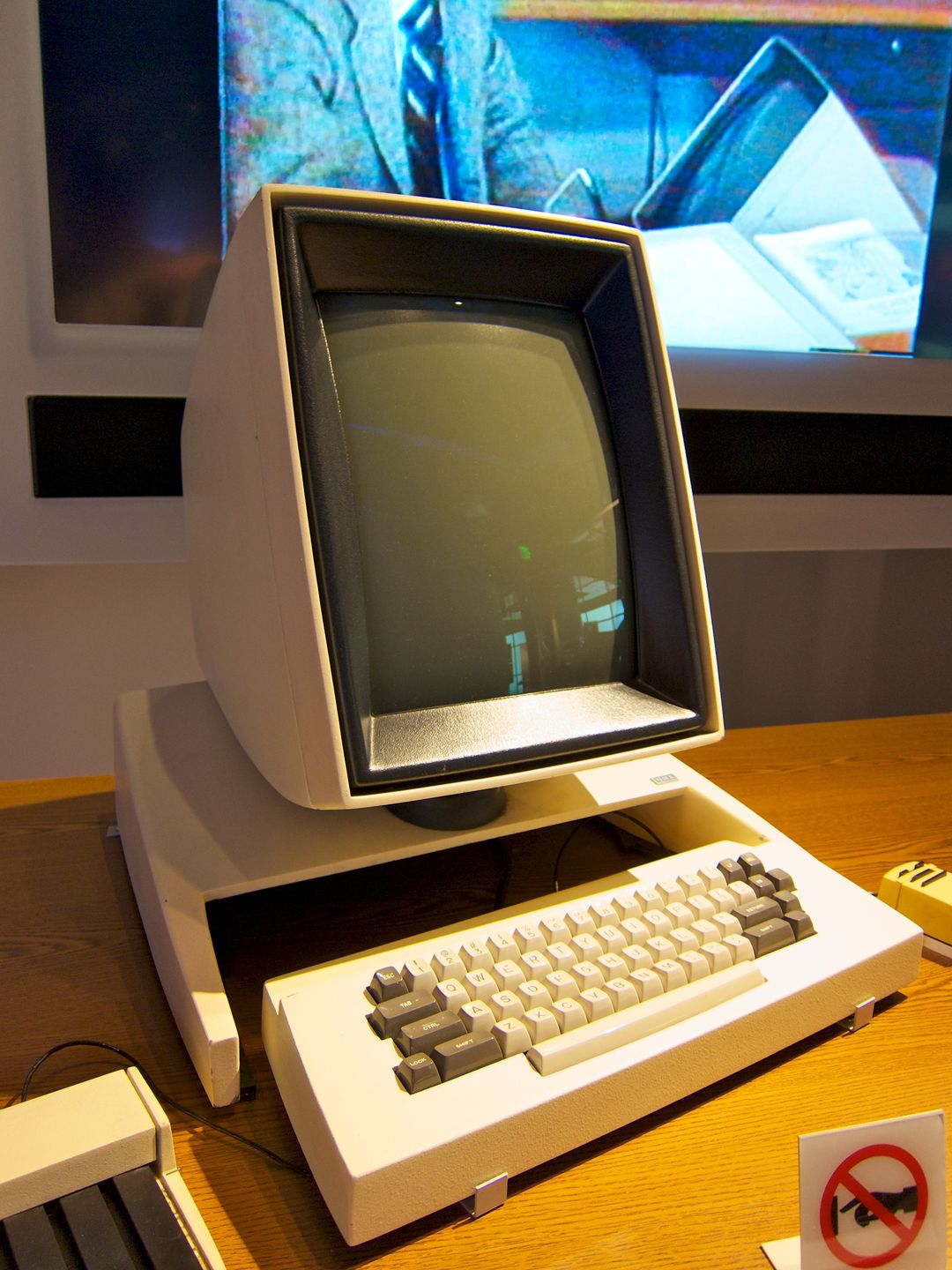
A Xerox Alto, which carried Engelbart's ideas into the first graphical personal Computer. Don DeBold, CC BY 2.0, via Wikimedia Commons
Engelbart spent the rest of his career trying to realize his vision of collective intelligence. He believed technology should enable groups to tackle complex, urgent problems: poverty, climate, governance. He was less interested in personal productivity than in collaborative problem-solving at scale. The tools he built were adopted, but often for purposes he didn't prioritize. The mouse became ubiquitous, but it was used to play games, shop online, and browse social media as much as it was used for the kind of deep, collaborative work Engelbart envisioned. Technology diffused. Intent didn't. That December afternoon in 1968, Engelbart showed the world what computers could become. He just couldn't control what people would do with them once they arrived.
studio / on-this-day / Dec 9